


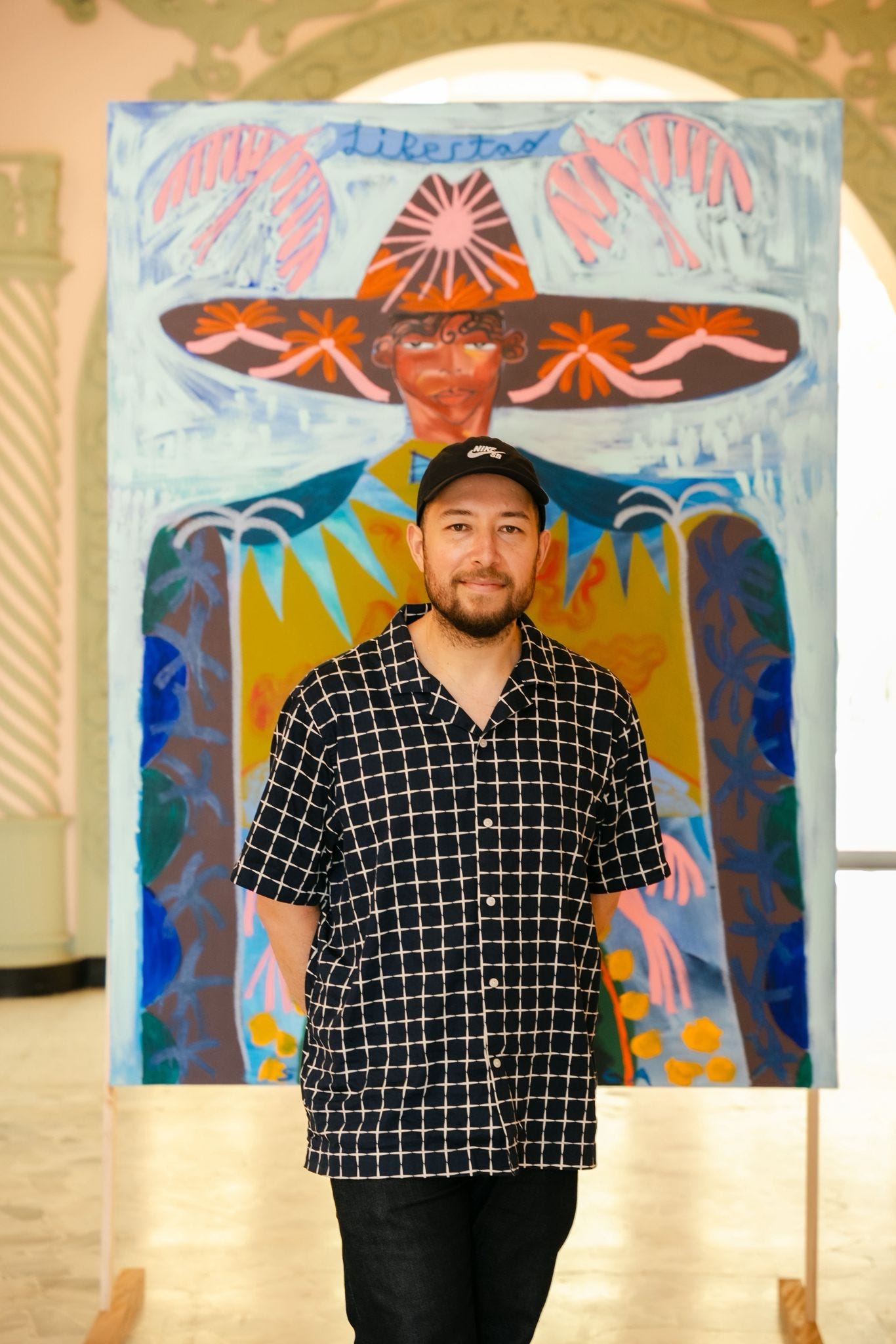
Working under the name Studio Lenca, José Campos is a Salvadoran-born, UK-based artist. Drawing on his personal history and experience of migration, as well as his Indigenous Lenca heritage, his work reflects on identity and belonging through processes of making that are both personal and collective.
In this conversation, we speak about his upbringing, the beginnings of Studio Lenca, and the place of community-based projects within his practice. We also reflect on the role of color and movement in his work, and on what it meant to present Cositas, his first solo exhibition in El Salvador.
Could you begin by telling us about your background, and how your journey took you from El Salvador to the United States and eventually to the UK?
SL: I was born in El Salvador, in a small rural town called Santiago Nonualco, during the Salvadoran civil war. When I was four, I fled with my mother and we travelled by land to San Francisco, where I grew up undocumented. That was my start in life.
I don’t really have memories of El Salvador from that time, only the stories my mother told me. But I always say that I come from a kind of third space, an in-between, where I was growing up Salvadoran in San Francisco because there was such a rich, vibrant Salvadoran community there, much of which had also been displaced.
The first time I went to the UK was as a dancer. I was performing with a contemporary dance company at the Edinburgh Fringe Festival, and that’s where I met my partner. He’s British, and a year later we moved to London together.
Dance was both what first brought you to the UK and one of your first artistic languages. What initially drew you to it, and what did it give you at that time?
SL: There was a local school in my neighbourhood, and I just asked if I could join. At first, I really only wanted to spend more time with friends who were doing ballet. They said yes because I was the only boy, so I could do all the male parts.
Dance was very different from my reality as an undocumented child. It actually offered me a space to be highly visible in a beautiful way, instead of having to hide. I could really be myself, I could be graceful, and I could take up space. I think that’s what ended up drawing me to it, it felt like an escape from my reality.
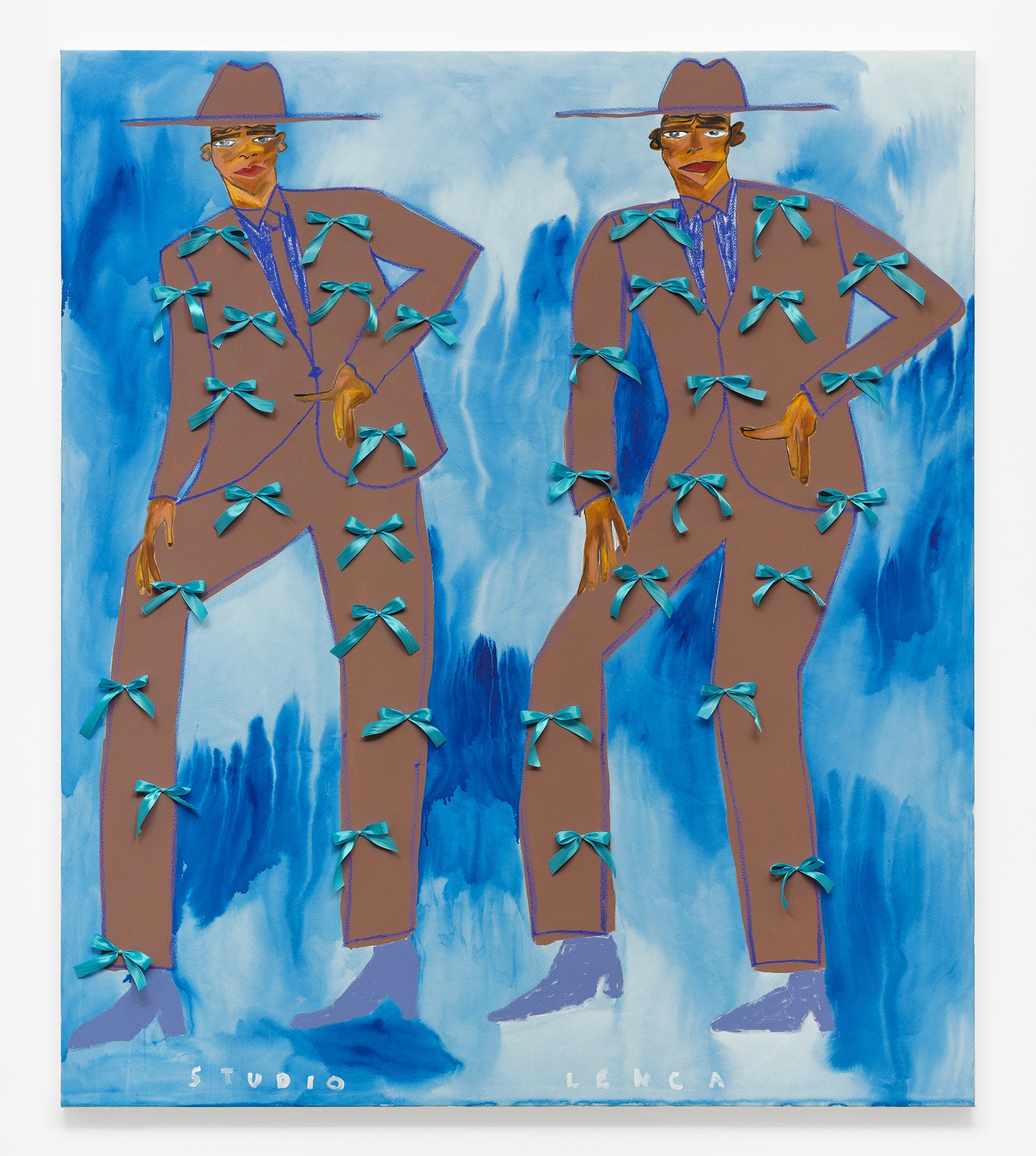
That said, my very first experience of being artistic was not dancing. It was making recuerdos for quinceañeras or baptisms with my mother, going to the Mission and to the stores that had ribbons and party favors. That’s really important to tell, because sometimes it’s about where creativity lies. It doesn’t have to be in a formal painting program. There is already so much knowledge and richness in those community experiences. For me, it began with a glue gun, with my mother, at the kitchen table.
“Dance was very different from my reality as an undocumented child…I could really be myself, I could be graceful, and I could take up space. I think that’s what ended up drawing me to it, it felt like an escape from my reality.”
What do you feel dance offers you that other mediums don’t?
SL: Being in a studio with others, I learned how to listen to bodies without words. I still use that as a painter. I learned about line, composition, texture, but through the body. It gave me an embodied approach that informs everything I do.
Why did you choose to work under the name Studio Lenca rather than your own name?
SL: I think it moves me away from this idea of the artist as the all-knowing figure, because sometimes my work is collective.
I really like the word Studio as this idea of a space for experimentation. A studio might look different to you than it does to me, and that’s important. For me, the kitchen table where I made things with my mother was a studio. The garage was a studio. When I became a teacher in secondary schools in London, my classroom became a studio too. When I was dancing, the studio was a dance studio. And now my studio includes all of those elements.
And Lenca, of course, refers to the Indigenous people of El Salvador and Honduras, and my family has connections to both places.
We have noticed that strong sense of community shaping many of your projects, including Rutas. Could you tell us more about that series?
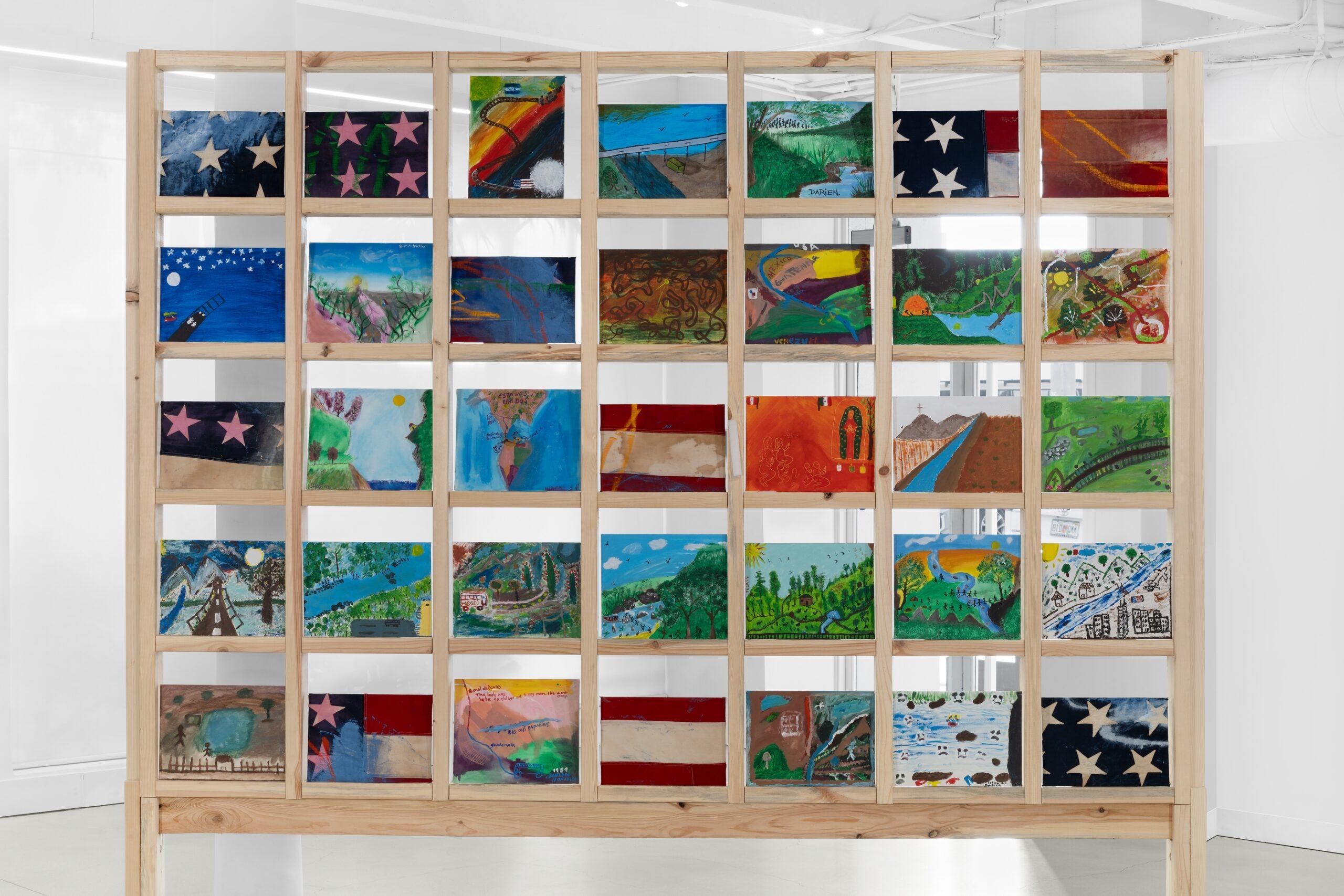
SL: Rutas had its first edition in Mexico City, where I worked with an albergue called Casa Tochan. They support people on their journeys toward the US border, and I invited participants to document them through painting. We would sit together in workshops, share stories, and paint. So it was a really relational process, about building rapport.
Since then, I’ve done the project in Brooklyn with Mixteca, and more recently in Manhattan with Glasswing, who I’ve worked with for several years. For me, it’s really important to partner with organizations that already understand the communities they serve. There are questions around safeguarding, ethics, and trust, and that matters a lot.
The goal is not to ask people to perform their trauma. It’s about creating a space where stories can emerge if people want to share them, and thinking about painting as a softer way of telling. When someone paints a map, you can feel the person who made it. I don’t edit the works or curate them. It is what it is: it’s almost like a snapshot of that moment.
You recently presented Cositas, your first solo exhibition in El Salvador. What did that mean for you?
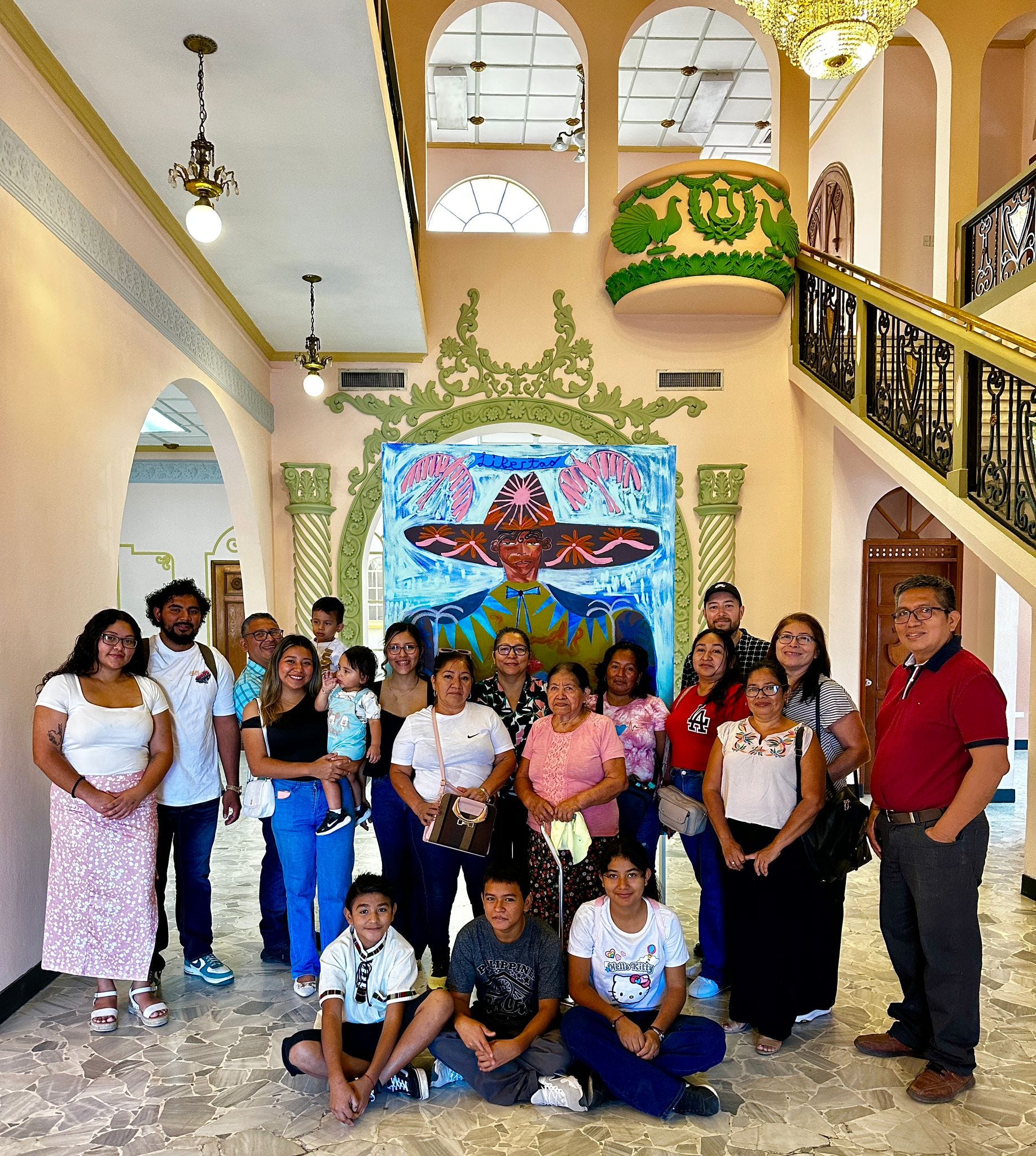
SL: It was really important. We had around 2,000 people come in only four days. For me that was a real learning point, because it made clear that people do want to go and see art in El Salvador.
I spent around 20 days in San Salvador making work. It was magical because usually I’m in Margate painting and trying to create a link to the country from afar. But this time I was actually there, painting in the place I had been holding onto from a distance.
The first people I showed the paintings to were my family. Around 18 of them came in two cars, all squeezed in together. That meant everything, usually my family sees the work online or from afar. Sometimes I have a show and wish my mother could be there, but she can’t. I think many immigrants know that feeling. This time, that distance wasn’t there. My family could actually be present.
It also made me think about a phrase, ni de aquí, ni de allá. I was born in El Salvador, but raised elsewhere because I was displaced. So returning to show work there felt like coming home, while also sharing my own experience of being Salvadoran.
How did being in El Salvador shape the work visually? Did it shift the way you approached your practice?
SL: Yes, it gave me energy. I love the use of color in El Salvador: the pink houses, the turquoise blues; you don’t get that in the UK.
I was also doing trips to different places, such as a town where hammocks are made. I spent hours looking at the telares and the strips of color in the weaving. I was thinking all the time: what is it about these colors that really draws me in? Then I would bring that back into the studio and channel it into the paintings.
Let’s go deeper into your paintings, these vibrant and distinctive figures that recur throughout your work. Who are they, and what role does color play for you?
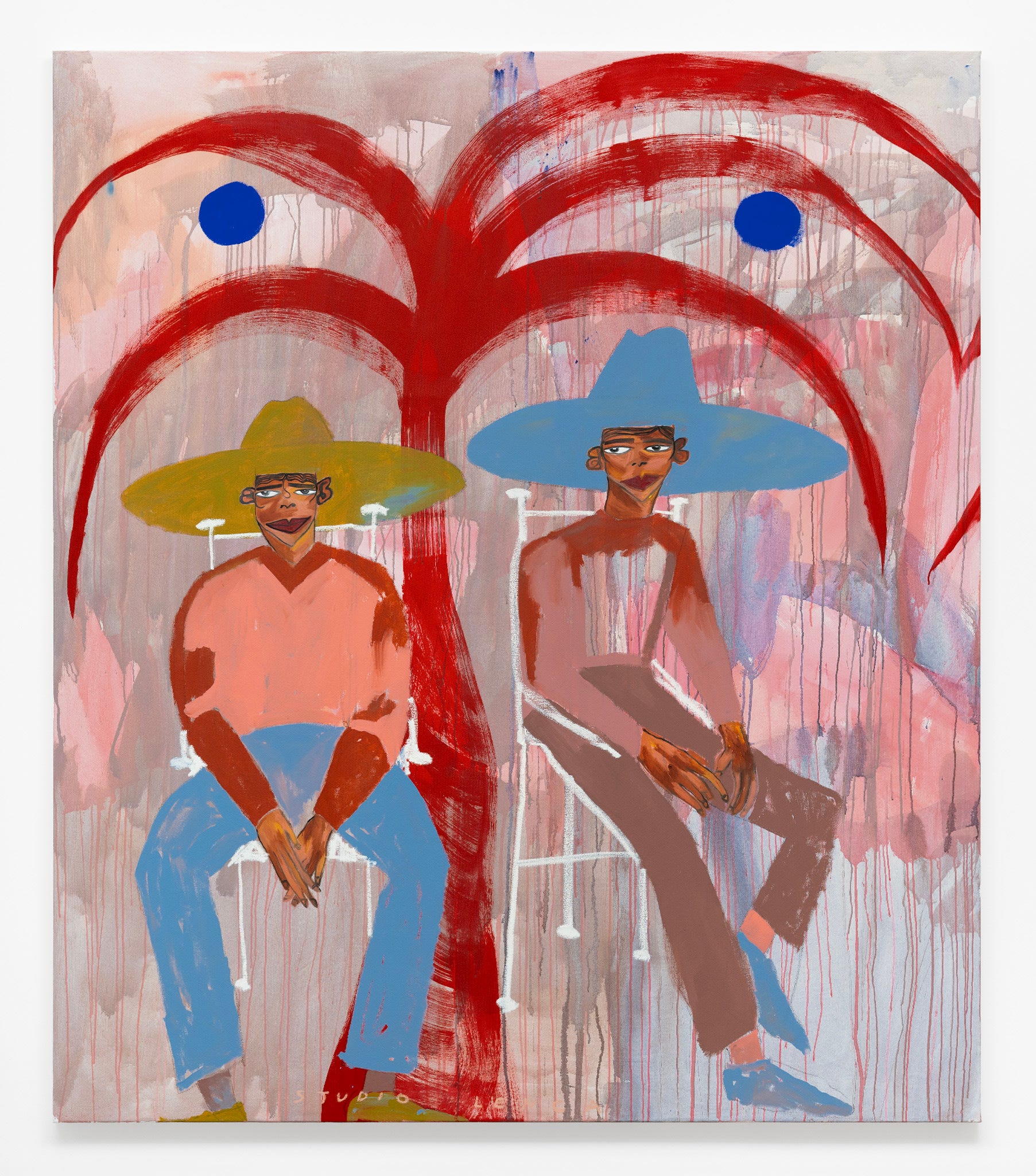
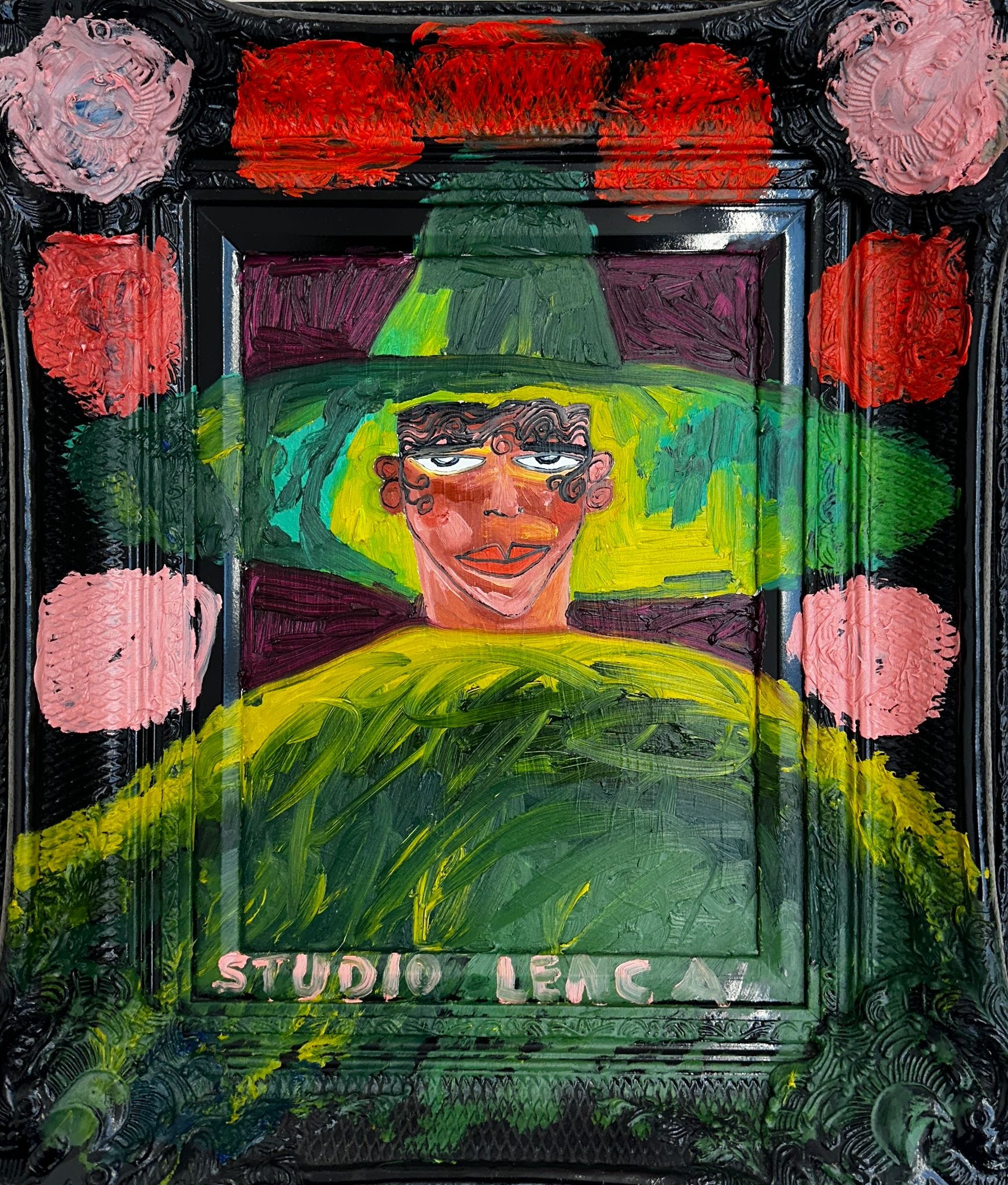
SL: I was recently having a conversation with someone in El Salvador, and they said it so nicely: “these figures are nobody, but they’re all of us.” I really liked that, they’re a visual anchor that talks about belonging, resilience, and joy as well. Joy is really important.
Originally, these figures came from looking at the Historiantes of El Salvador. They connected to my own interest in dance, but also to memory, because I remember seeing them in Santiago Nonualco as a child. They would dance in front of my tía’s house to raise money. I started painting them with these big hats, which also connects to my grandfather, who wore a big hat and always carried a machete.
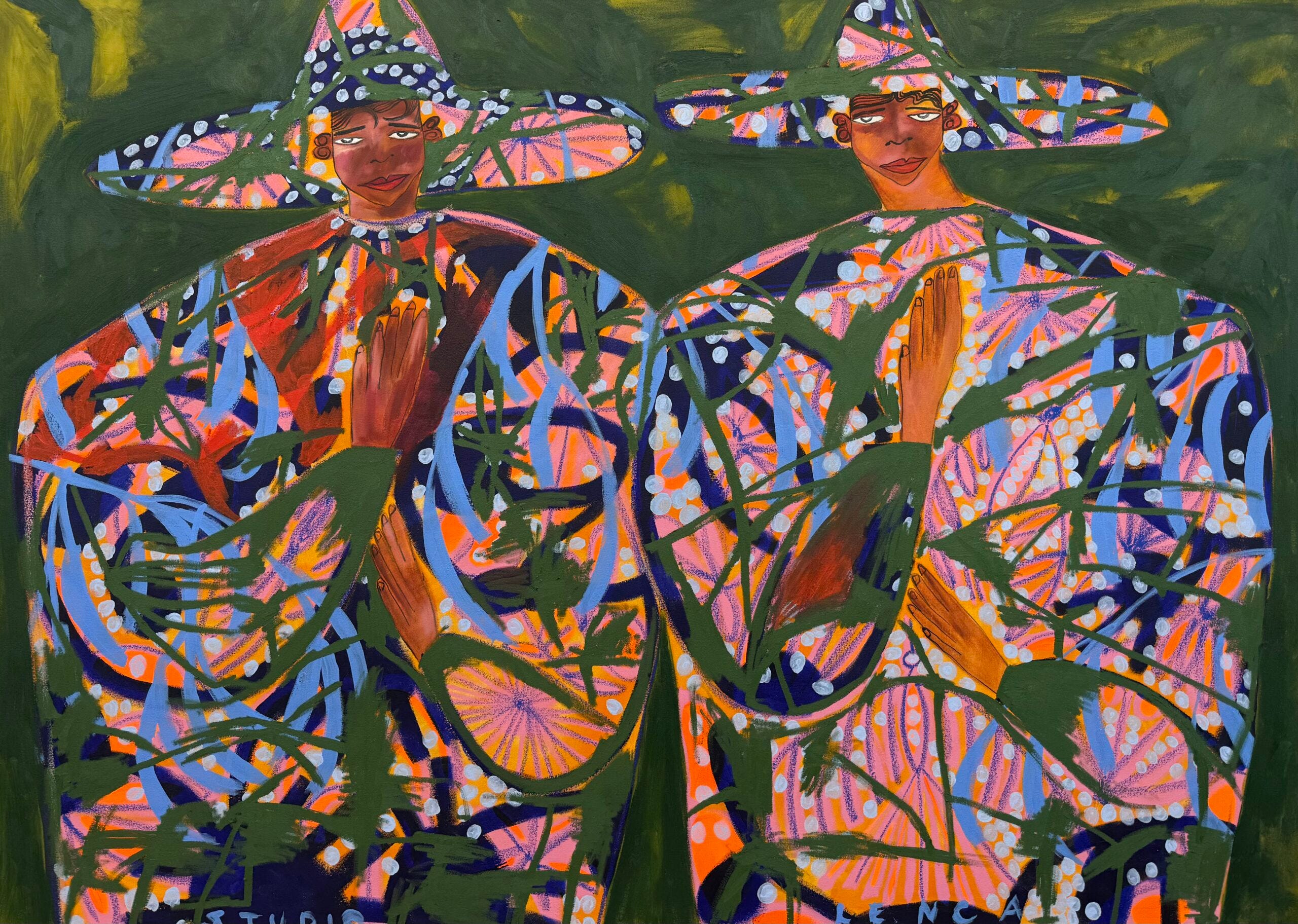
As for color, for me it’s very personal. I always think of painting almost like singing a song: it’s how you sing it that makes it yours. I don’t really follow rules with color; I just feel them, respond intuitively, and I think that’s part of what makes the paintings mine.
“I always think of painting almost like singing a song: it’s how you sing it that makes it yours.”
Your paintings often feel choreographic, as if the figures are pressing beyond the boundaries of the canvas.
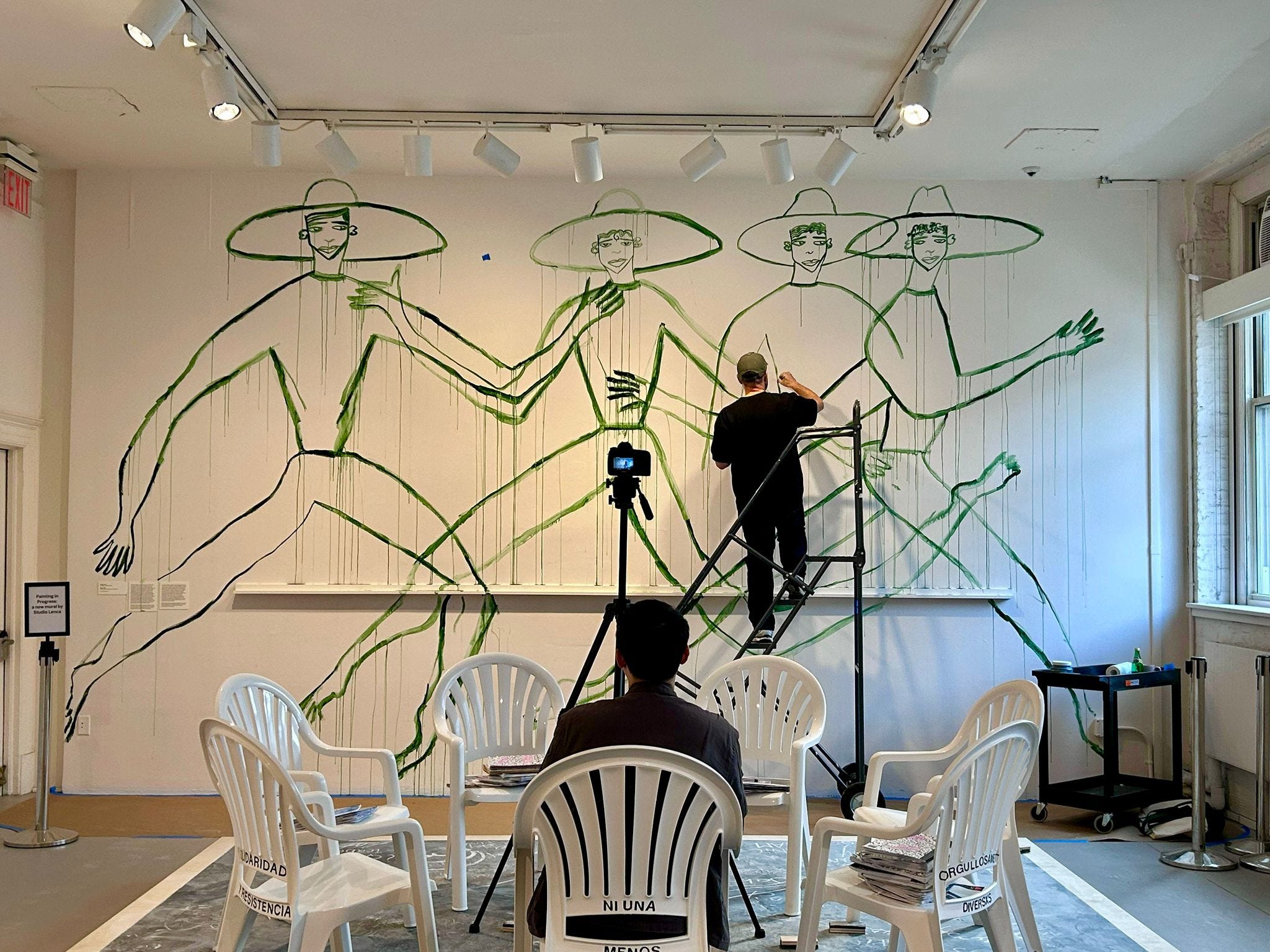
SL: My paintings come from looking to understand the rules and then breaking them. This is how I sometimes work in choreography. In the paintings I let the figures expand, assert themselves, and move beyond what’s expected.
“My paintings come from looking to understand the rules and then breaking them…I let the figures expand, assert themselves, and move beyond what’s expected.”
What are you currently working on?
SL: I’m currently working with Museo Reina Sofía on a community project with the neighborhood of Lavapiés to create art. I’m also working with the city of Boston on a project called Undocumented Monuments. I’ll be traveling to the city to make paper vessels which will be used as temporary public sculptures.
And if you could realise a dream project, what would it be?
SL: I think I would love to exhibit in San Francisco, because I haven’t shown there, and my story is very rooted in that city. That’s where I grew up, where I was raised in a Salvadoran community, and where so much of my life began.
I’d also love for my sister to come and see my work with her kids. Unfortunately, we’ve never had the chance to do that.
To learn more about Studio Lenca, visit:
En el estudio con: Studio Lenca
Trabajando bajo el nombre Studio Lenca, José Campos es un artista salvadoreño radicado en el Reino Unido. Partiendo de su historia personal y experiencia migratoria, así como de su herencia indígena lenca, su trabajo reflexiona sobre la identidad y el sentido de pertenencia a través de procesos de creación que son tanto personales como colectivos.
En esta conversación, hablamos sobre su infancia, los inicios de Studio Lenca y el lugar que ocupan los proyectos comunitarios en su práctica. También reflexionamos sobre el papel del color y el movimiento en su trabajo, así como sobre lo que significó presentar Cositas, su primera exposición individual en El Salvador.
¿Podrías comenzar contándonos sobre tu trayectoria y cómo tu camino te llevó de El Salvador a Estados Unidos y, finalmente, al Reino Unido?
SL: Nací en El Salvador, en un pequeño pueblo rural llamado Santiago Nonualco, durante la guerra civil salvadoreña. Cuando tenía cuatro años, huí con mi madre y viajamos por tierra hasta San Francisco, donde crecí sin documentos. Ese fue mi comienzo en la vida.
No tengo realmente recuerdos de El Salvador de esa época, solo las historias que mi madre me contaba. Pero siempre digo que vengo de una especie de tercer espacio, un intermedio, donde crecí siendo salvadoreño en San Francisco porque había una comunidad salvadoreña tan rica y vibrante allí, gran parte de la cual también había sido desplazada.
La primera vez que fui al Reino Unido fue como bailarín. Estaba actuando con una compañía de danza contemporánea en el Festival Fringe de Edimburgo, y fue allí donde conocí a mi pareja. Él es británico, y un año después nos mudamos juntos a Londres.
La danza fue tanto lo que te llevó por primera vez al Reino Unido como uno de tus primeros lenguajes artísticos. ¿Qué te atrajo inicialmente a ella y qué te aportó en ese momento?
SL: Había una escuela local en mi barrio, y simplemente pregunté si podía unirme. Al principio, realmente solo quería pasar más tiempo con amigos que hacían ballet. Dijeron que sí porque yo era el único hombre, así que podía hacer todas las partes masculinas.
La danza era muy distinta de mi realidad como niño indocumentado. De hecho, me ofrecía un espacio para ser altamente visible de una manera hermosa, en lugar de tener que esconderme. Podía ser realmente yo mismo, podía ser grácil, y podía ocupar espacio. Creo que eso fue lo que terminó atrayéndome, se sentía como una vía de escape de mi realidad.
Dicho esto, mi primera experiencia artística no fue la danza. Fue hacer recuerdos para quinceañeras o bautizos con mi madre, ir al barrio de la Mission, a las tiendas donde vendían cintas y artículos de fiesta. Es realmente importante decirlo, porque a veces se trata de dónde reside la creatividad. No tiene que estar en un programa formal de pintura. Ya existe tanto conocimiento y riqueza en esas experiencias comunitarias. Para mí, todo comenzó con una pistola de silicona, con mi madre, en la mesa de la cocina.
“La danza era muy distinta de mi realidad como niño indocumentado…Podía ser realmente yo mismo, podía ser grácil, y podía ocupar espacio. Creo que eso fue lo que terminó atrayéndome, se sentía como una vía de escape de mi realidad”.
¿Qué sientes que te ofrece la danza que otros medios no?
SL: Estando en un estudio con otros, aprendí a escuchar los cuerpos sin palabras. Todavía uso eso como pintor. Aprendí sobre línea, composición, textura, pero a través del cuerpo. Me dio un enfoque encarnado que informa todo lo que hago.
¿Por qué elegiste trabajar bajo el nombre Studio Lenca en lugar de tu propio nombre?
SL: Creo que me aleja de esta idea del artista como una figura omnisciente, porque a veces mi trabajo es colectivo.
Me gusta mucho la palabra Studio (estudio) como esta idea de un espacio para la experimentación. Un estudio puede verse distinto para ti que para mí, y eso es importante. Para mí, la mesa de la cocina donde hacía cosas con mi madre era un estudio. El garaje era un estudio. Cuando me convertí en profesor en escuelas secundarias en Londres, mi aula también se convirtió en un estudio. Cuando bailaba, el estudio era un estudio de danza. Y ahora mi estudio incluye todos esos elementos.
Y Lenca, por supuesto, se refiere a los pueblos indígenas de El Salvador y Honduras, y mi familia tiene vínculos con ambos lugares.
Hemos notado ese fuerte sentido de comunidad que da forma a muchos de tus proyectos, incluyendo Rutas. ¿Podrías contarnos más sobre esa serie?
SL: Rutas tuvo su primera edición en Ciudad de México, donde trabajé con un albergue llamado Casa Tochan. Ellos apoyan a las personas en sus trayectos hacia la frontera con Estados Unidos, e invité a los participantes a documentarlos a través de la pintura. Nos sentábamos juntos en talleres, compartíamos historias y pintábamos. Así que era un proceso muy relacional, de construir vínculos.
Desde entonces, he realizado el proyecto en Brooklyn con Mixteca, y más recientemente en Manhattan con Glasswing, con quienes he trabajado durante varios años. Para mí, es muy importante asociarme con organizaciones que ya entienden a las comunidades a las que sirven. Hay cuestiones de cuidado, ética y confianza, y eso importa mucho.
El objetivo no es pedirle a la gente que represente su trauma. Se trata de crear un espacio donde las historias puedan surgir si las personas quieren compartirlas, y pensar en la pintura como una forma más suave de narrar. Cuando alguien pinta un mapa, puedes sentir a la persona que lo hizo. No edito las obras ni las curo. Es lo que es: es casi como una captura de ese momento.
Recientemente presentaste Cositas, tu primera exposición individual en El Salvador. ¿Qué significó eso para ti?
SL: Fue realmente importante. Tuvimos alrededor de 2.000 personas en solo cuatro días. Para mí fue un verdadero aprendizaje, porque dejó claro que la gente sí quiere ir a ver arte en El Salvador.
Pasé alrededor de 20 días en San Salvador haciendo obra. Fue mágico porque normalmente estoy en Margate pintando y tratando de crear un vínculo con el país desde la distancia. Pero esta vez estaba realmente allí, pintando en el lugar que había estado sosteniendo desde lejos.
Las primeras personas a las que les mostré las pinturas fueron mi familia. Alrededor de 18 vinieron en dos coches, todos apretados juntos. Eso significó todo, normalmente mi familia ve el trabajo por internet o desde lejos. A veces tengo una exposición y desearía que mi madre pudiera estar allí, pero no puede. Creo que muchos inmigrantes conocen ese sentimiento. Esta vez, esa distancia no estaba. Mi familia podía estar realmente presente.
También me hizo pensar en una frase: “ni de aquí, ni de allá”. Nací en El Salvador, pero crecí en otro lugar porque fui desplazado. Así que volver para mostrar mi trabajo allí se sintió como volver a casa, mientras también compartía mi propia experiencia de ser salvadoreño.
¿Cómo influyó estar en El Salvador en el trabajo a nivel visual? ¿Cambió la manera en que abordas tu práctica?
SL: Sí, me dio energía. Me encanta el uso del color en El Salvador: las casas rosas, los azules turquesa; eso no lo tienes en el Reino Unido.
También hice viajes a diferentes lugares, como un pueblo donde se hacen hamacas. Pasé horas mirando los telares y las franjas de color en el tejido. Pensaba todo el tiempo: ¿qué es lo que tienen estos colores que realmente me atrae? Luego lo llevaba de vuelta al estudio y lo canalizaba en las pinturas.
Profundicemos en tus pinturas, esas figuras vibrantes y distintivas que aparecen a lo largo de tu trabajo. ¿Quiénes son y qué papel juega el color para ti?
SL: Recientemente estaba teniendo una conversación con alguien en El Salvador, y lo dijo muy bien: “estas figuras no son nadie, pero somos todos nosotros”. Me gustó mucho eso, son un ancla visual que habla de pertenencia, resiliencia y también de alegría. La alegría es realmente importante.
Originalmente, estas figuras surgieron al observar a los Historiantes de El Salvador. Se conectaban con mi propio interés en la danza, pero también con la memoria, porque recuerdo haberlos visto en Santiago Nonualco cuando era niño. Bailaban frente a la casa de mi tía para recaudar dinero. Empecé a pintarlos con estos grandes sombreros, lo que también conecta con mi abuelo, que llevaba un sombrero grande y siempre cargaba un machete.
En cuanto al color, para mí es muy personal. Siempre pienso en la pintura casi como cantar una canción: es cómo la cantas lo que la hace tuya. No sigo realmente reglas con el color; simplemente lo siento, respondo de manera intuitiva, y creo que eso es parte de lo que hace que las pinturas sean mías.
“Siempre pienso en la pintura casi como cantar una canción: es cómo la cantas lo que la hace tuya.”
Tus pinturas a menudo se sienten coreográficas, como si las figuras estuvieran empujando más allá de los límites del lienzo.
SL: Mis pinturas parten de observar para entender las reglas y luego romperlas. Así es como a veces trabajo en la coreografía. En las pinturas dejo que las figuras se expandan, se afirmen y vayan más allá de lo esperado.
“Mis pinturas parten de observar para entender las reglas y luego romperlas…dejo que las figuras se expandan, se afirmen y vayan más allá de lo esperado.”
¿En qué estás trabajando actualmente?
SL: Actualmente estoy trabajando con el Museo Reina Sofía en un proyecto comunitario con el barrio de Lavapiés para crear arte. También estoy trabajando con la ciudad de Boston en un proyecto llamado Undocumented Monuments. Viajaré a la ciudad para hacer vasijas de papel que se utilizarán como esculturas públicas temporales.
Y si pudieras realizar un proyecto soñado, ¿cuál sería?
SL: Creo que me encantaría exponer en San Francisco, porque no he expuesto allí, y mi historia está muy arraigada en esa ciudad. Es donde crecí, donde fui criado en una comunidad salvadoreña, y donde comenzó gran parte de mi vida.
También me encantaría que mi hermana pudiera venir a ver mi trabajo con sus hijos. Desafortunadamente, nunca hemos tenido la oportunidad de hacerlo.
Para saber más sobre Studio Lenca, visita:
This interview and the artist are nice and all, and I don’t mean to be a hater, I just subscribed to this substack specifically to hear about artists that live and work in latam. Every other page is basically only artists that work in New York and London and like that’s great for them, I would just like to hear from artists that aren’t working in the us or uk.
Gracias por compartir historias tan bonitas. Nos hacen sentirnos menos solos, a todos los que migramos.