


Speaking with Sandra Monterroso (Guatemala, 1974) is to understand that, in her work, there are no clear boundaries between art, memory, and political action. Each answer leads to another layer of meaning, as though her textiles, videos, and performances were connected by a single ancestral thread running through time. What emerges is not merely the trajectory of a contemporary artist, but the persistent development of a voice that has transformed artistic practice into a space of cultural resistance and decolonial reflection.
When I ask her about the continuity of her artistic practice, Sandra does not begin by talking about techniques or exhibitions. Her answer turns immediately to what she considers the core of her entire artistic genealogy: “the defence of Indigenous peoples in the reconstruction of my own identity as a Maya woman and artist.” This statement offers a key to understanding a body of work in which artistic languages change, but the underlying thought remains constant. Textiles, performance, and video emerge as different vehicles for the same exploration of identity, territory, and memory.
The conversation inevitably turns to textiles, one of the most recognisable aspects of her practice. Sandra recalls, however, that her initial approach to this medium was not part of a preconceived plan. It all began in 2008, while she was designing costumes for an audiovisual work entitled Meditando el error. Textiles, she explains, initially served as a scenographic resource, but something changed when she observed those pieces outside the context of the video. She discovered that they possessed a power of their own. From that moment on, she decided to continue exploring a language that would eventually become a fundamental aspect of her career.
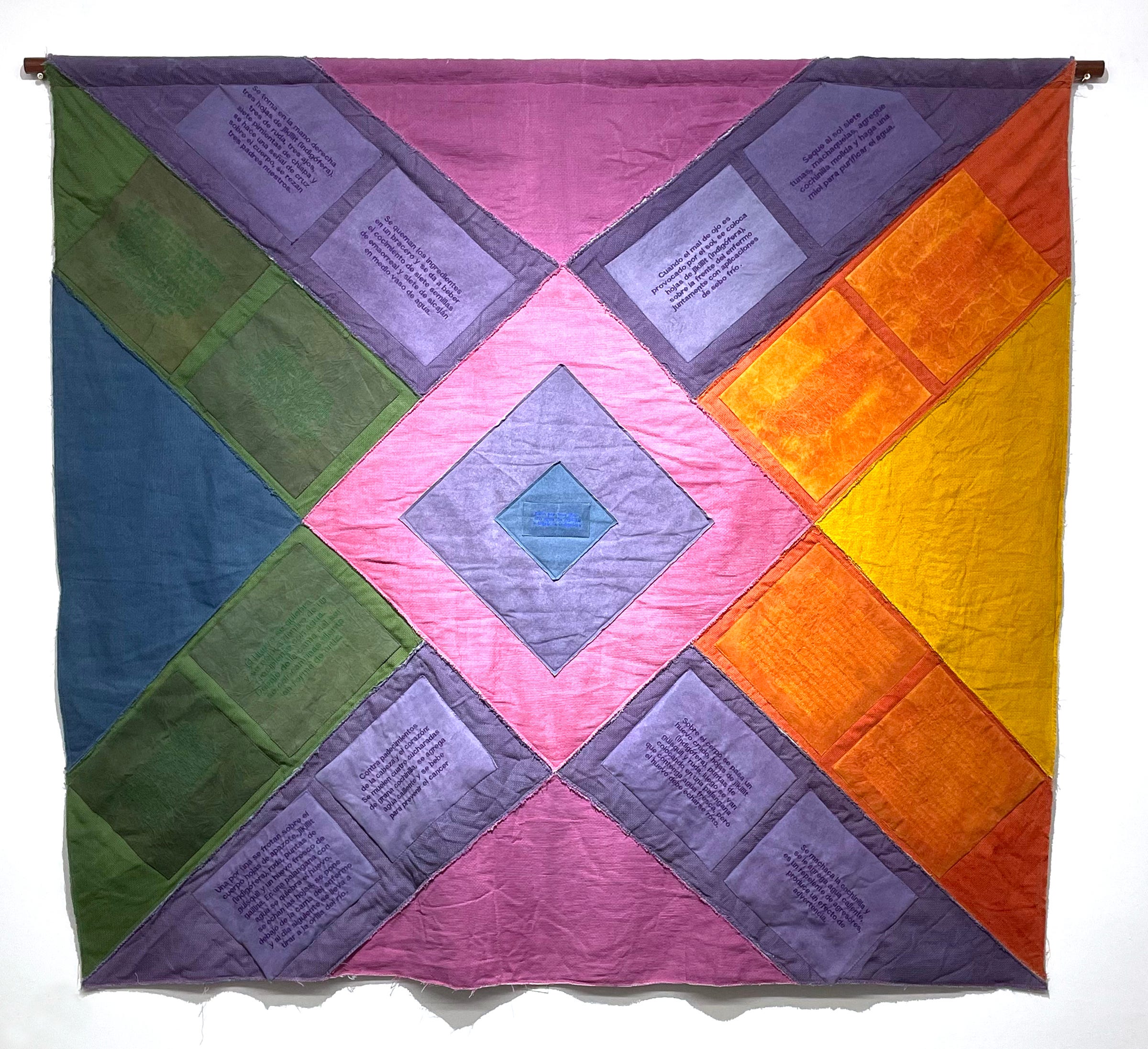
As she discusses the ancestral techniques she employs, she makes a revealing distinction. “I don’t like to call them crafts because I believe it is an ancient art that is connected to the present,” she explains. This distinction is significant. For Sandra, weaving, dyeing, and ancestral pigments are neither folkloric remnants nor practices frozen in time. They are living forms of knowledge that continue to generate meaning within contemporary art.
