


Last Friday, I visited La Gran Bienal Tropical for the first time, a group of works exhibited along the beach in Piñones, Loíza.
La Gran Bienal Tropical was founded and organized by Guggenheim curator Pablo León de la Barra and artist Radamés “Juni” Figueroa, who brought the spirit of independent, artist-led projects into a public beach in Puerto Rico. This year, it expanded through the involvement of curator Marina Reyes Franco and María Elena Ortiz, alongside other collaborators.
My first words were: “This is surreal”. Seeing art at the beach gave both the work and the landscape an entirely new context. Every corner was full of energy, diversity, color, texture, and randomness. The same Piñones beach I’ve visited a thousand times suddenly felt new again.
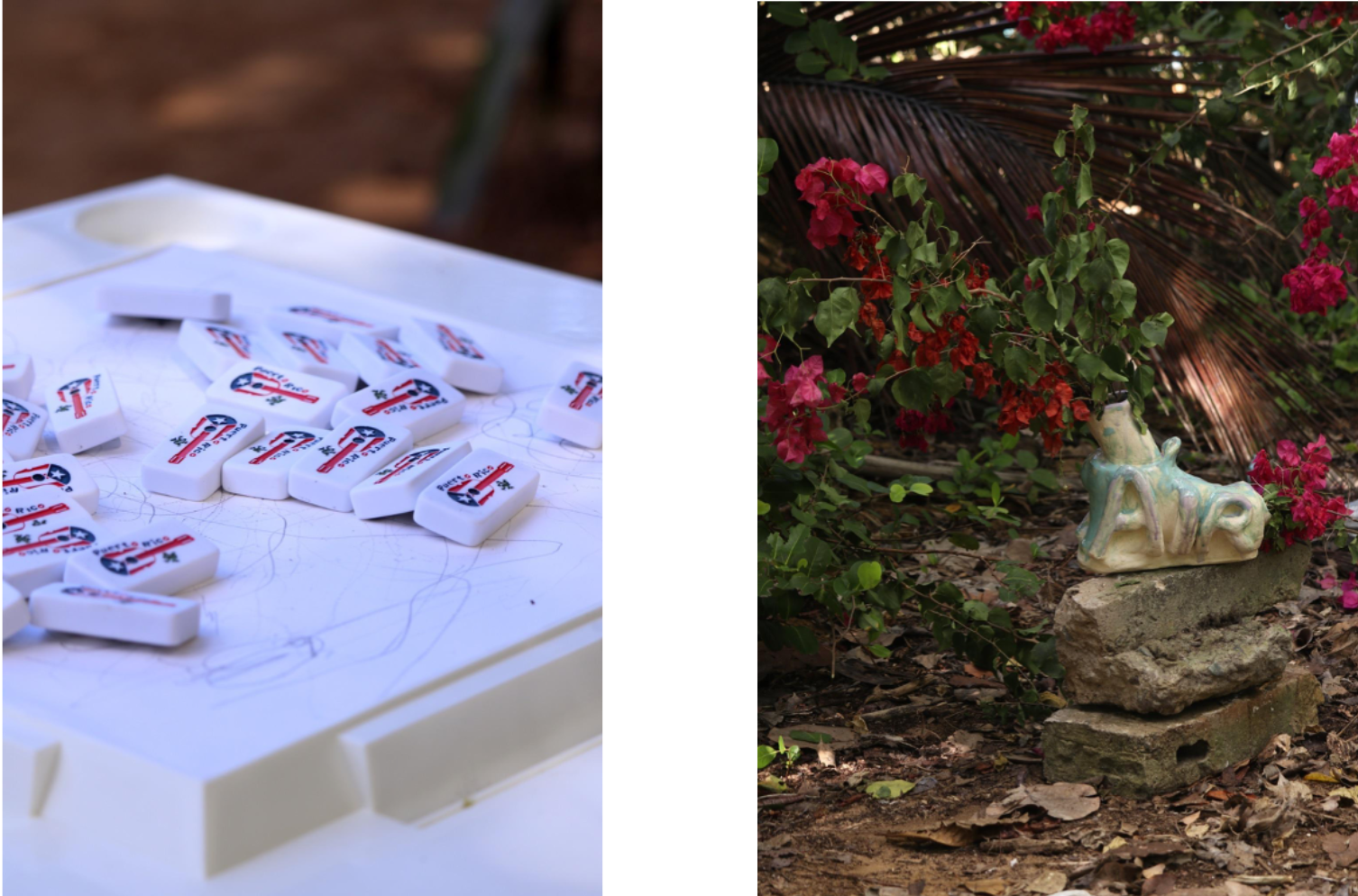
Many artists inhabited the space in familiar yet playful ways. One example was Alejandro Sakarello, who created a domino game with charcoal placed beneath each tile, leaving a trace of every movement. A game that usually leaves no evidence: sometimes scored, sometimes not, became a drawing made collectively. The marks said nothing about winning or losing; they were simply the residue of people playing.
This experience opened my eyes to the importance of stepping out of habitual ways of thinking. Artists were showcasing their work with pride and active involvement, many of them with long histories of institutional recognition and gallery representation. As I walked along the shore with my camera, I encountered every artist with ease, greeted by smiles, warmth, and genuine enthusiasm.
This felt refreshing. I’m used to spaces where gallerists scan people up and down before deciding whether to engage. This was not the case. The atmosphere was non-pretentious yet intentionally curated. It stepped away from the white cube and the impersonal silence of biennials we’ve seen before. Not a rejection of the institution, more like a field day for the art world.
“The atmosphere was non-pretentious yet intentionally curated. It stepped away from the white cube and the impersonal silence of biennials we’ve seen before.”
The first work I encountered was a doorway buried in the sand. I was immediately mesmerized. I was struck by artists such as Ángel Otero, Gisela Colón and Cristina Tufiño, who blended wonder, mystery, and the absurd into the landscape with ease. I felt calm; people took their time with each work.
Once on the beach, I regarded everything as art. My partner parked the car near a banner tied to a tree and couldn’t decide whether it was part of the exhibition or simply a banner tied to a tree. We moved the car just in case. We were in nature but the energy felt almost like an art fair: activated and busy. I spent several minutes watching a log float by the water, as if it were performing just for me. It felt just as deserving of contemplation; everything belonged.
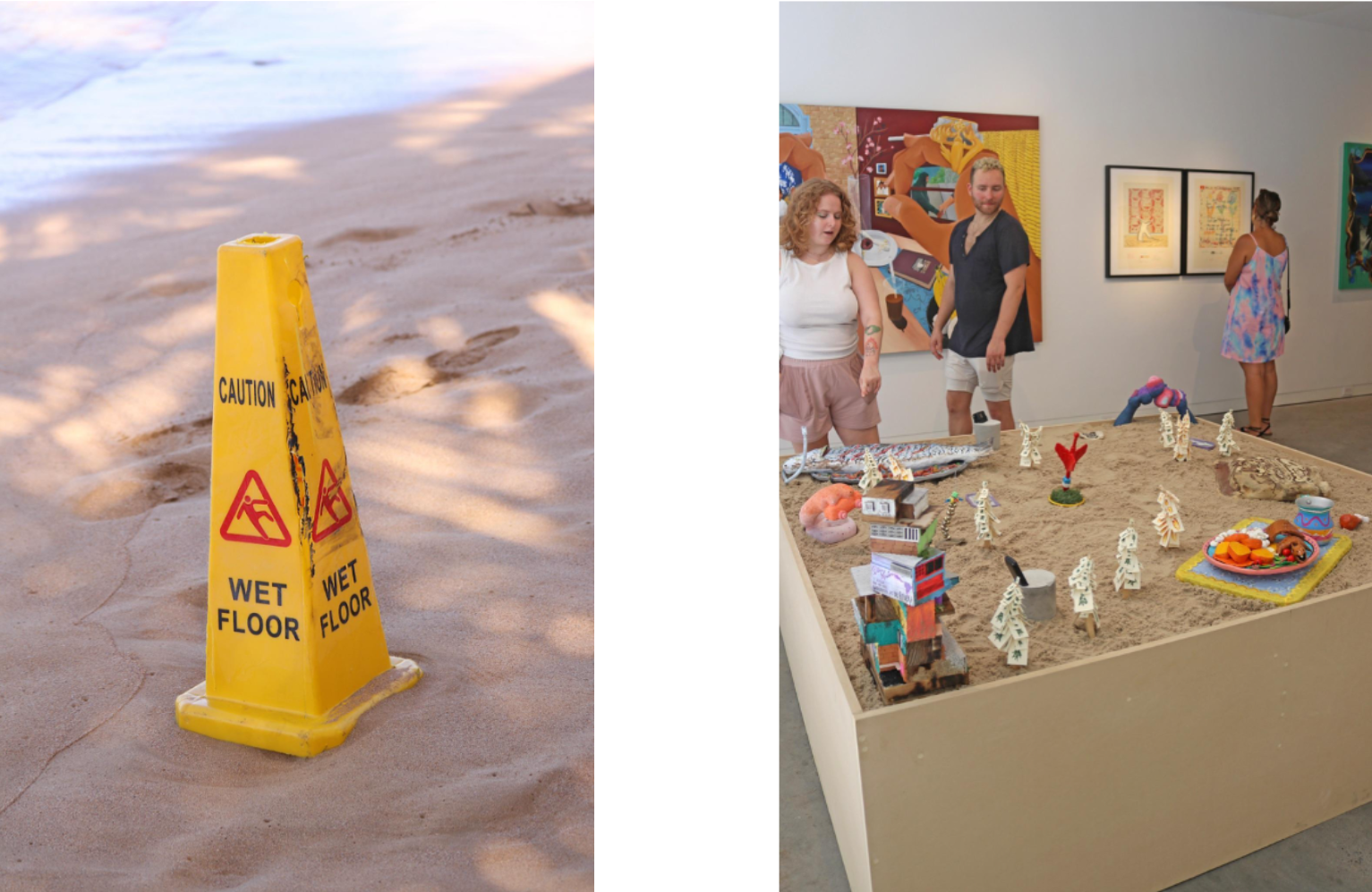
I briefly questioned the idea of art on the beach. Without the framing of the biennial, artwork might easily be read as litter or pollution. That made clear why the one-day format is necessary: a day where we collectively agree to turn the beach into a museum. What a sight!
Seeing artworks embedded in the sand reminded me of an exhibition I participated in three years ago, This Is Not Surrealism, curated by Sabroso Projects and Regular Normal at Dinner Gallery in New York. In the middle of the space was a large sandbox filled with artworks by various artists. La Gran Bienal Tropical felt like a life-size version of that sandbox.
Witnessing this event opened my mind to new ways of thinking about art. Many artists told me they were trying something new for the biennial: they were taking risks, doing work they had previously been afraid to attempt. That made me proud, and it inspired me to think differently about my own practice.
“Witnessing this event opened my mind to new ways of thinking about art. Many artists told me they were trying something new for the biennial: they were taking risks, doing work they had previously been afraid to attempt.”
Several of the performances were especially powerful. Kevin Quiles’s performance: seated on a beach chair, facing the sea, his face covered by a blue tarp, was both unsettling and deeply moving. It evoked the way many people were stripped of normalcy and identity in the aftermath of Hurricane Maria. This stood in contrast to Poncili Creación’s performance, which was at once humorous and disturbing: an iguana figure split in two, placed in the middle of the street, struggling to stay alive amid a traffic jam. The performance balanced shock and satire masterfully.
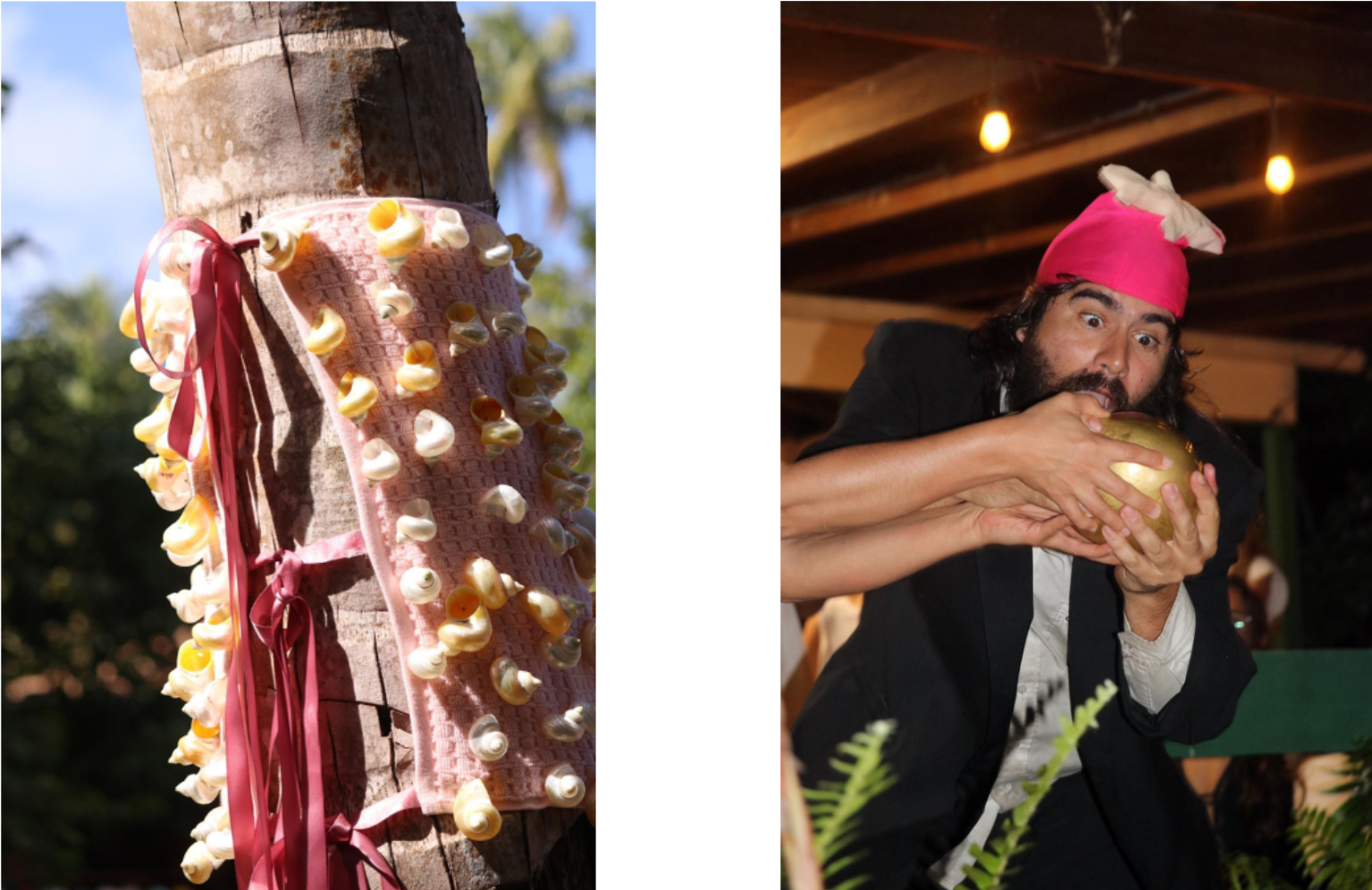
I was also struck by the craftsmanship and depth of Bony Ramirez’s work, who created a series of woven “skirts” tied to four palm trees. Tropifalda consisted of a three-piece triptych that served as a tribute and call to action against violence against trans women in the Caribbean.
If I were asked how the biennial could be strengthened, I would suggest clearer labelling for each installation. As a visual learner, I found it difficult to retain artists’ names and contextual information. Labels might also prevent moments like the one we experienced while parking.
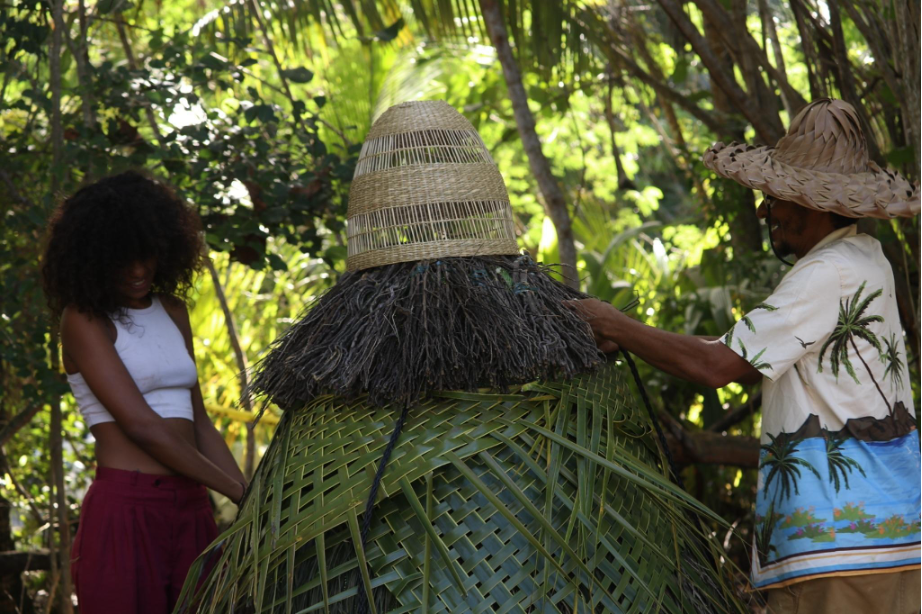
Lastly, I want to mention the trophies. By the end of the day, golden coconuts and pineapples were awarded to a selection of artists whose work stood out. While I deeply respect each artist and their practice, I didn’t read these gestures as declarations of “better” or “worse.” Art isn’t inherently good or bad, and any notion of winning, though playful and celebratory, is ultimately shaped by opinion. Beyond that, I enjoyed the sense of discovery: finding works like Easter eggs hidden along the shore.
Being present as a spectator rather than an artist offered me a different but equally valuable proximity. It allowed me to spend time with other artists and their work, and grasp the essence of the biennial. The jury made thoughtful choices, the majority of the work felt meaningful and relevant. The concept itself is strong and I’m excited to see how La Gran Bienal Tropical continues to evolve.
About our Guest Writer:
Larissa De Jesús Negrón (B.1994, Puerto Rico) is a multidisciplinary artist and writer whose work explores storytelling and self-portraiture as a way to process personal experience. Guided by intuition and surrealist automatism, her practice blends spontaneity with emotional depth, resulting in a playful yet introspective visual language.
Having recently returned to Puerto Rico after nine years in New York, she’s focused on reimagining the island through fresh eyes. Depicting its nature, culture, and everyday rituals with a sense of wonder. Her paintings echo the dreamlike spirit of Henri Rousseau, drawing on memory, place, and the complexities of identity to create intimate narratives that invite connection.
Apuntes sobre La Gran Bienal Tropical en Puerto Rico
El viernes pasado visité La Gran Bienal Tropical por primera vez, un conjunto de obras exhibidas a lo largo de la playa en Piñones, Loíza.
La Gran Bienal Tropical fue fundada y organizada por el curador del Guggenheim Pablo León de la Barra y el artista Radamés “Juni” Figueroa, quienes llevaron el espíritu de los proyectos independientes y liderados por artistas a una playa pública en Puerto Rico. Este año, se expandió gracias a la participación de la curadora Marina Reyes Franco y María Elena Ortiz, junto con otros colaboradores.
Mis primeras palabras fueron: “Esto es surreal”. Ver arte en la playa le dio tanto a las obras como al paisaje un contexto completamente nuevo. Cada rincón estaba lleno de energía, diversidad, color, textura y azar. La misma playa de Piñones que he visitado mil veces de repente se sentía nueva otra vez.
Muchos artistas habitaron el espacio de maneras familiares pero a la vez lúdicas. Un ejemplo fue Alejandro Sakarello, quien creó un juego de dominó con carbón colocado debajo de cada ficha, dejando un rastro de cada movimiento. Un juego que normalmente no deja evidencia: a veces se anota, a veces no; se convirtió en un dibujo realizado de manera colectiva. Las marcas no decían nada sobre ganar o perder; eran simplemente el residuo de personas jugando.
Esta experiencia me abrió los ojos a la importancia de salir de las formas habituales de pensar. Los artistas mostraban su trabajo con orgullo y una participación activa, muchos de ellos con largas trayectorias de reconocimiento institucional y representación en galerías. Mientras caminaba por la orilla con mi cámara, me encontré con cada artista con facilidad, recibida por sonrisas, calidez y un entusiasmo genuino.
Esto se sintió refrescante. Estoy acostumbrada a espacios donde los galeristas examinan a las personas de arriba abajo antes de decidir si interactúan. Este no fue el caso. La atmósfera era no pretenciosa, pero intencionalmente curada. Se alejaba del cubo blanco y del silencio impersonal de las bienales que hemos visto antes. No era un rechazo de la institución, sino más bien una jornada de campo para el mundo del arte.
“La atmósfera era no pretenciosa, pero intencionalmente curada. Se alejaba del cubo blanco y del silencio impersonal de las bienales que hemos visto antes.”
La primera obra que encontré fue una puerta enterrada en la arena. Quedé inmediatamente cautivada. Me impactaron artistas como Ángel Otero, Gisela Colón y Cristina Tufiño, quienes incorporaron la maravilla, el misterio y lo absurdo al paisaje con naturalidad. Me sentí en calma; las personas se tomaban su tiempo con cada obra.
Una vez en la playa, consideré todo como arte. Mi pareja estacionó el auto cerca de un cartel atado a un árbol y no podía decidir si era parte de la exposición o simplemente un cartel atado a un árbol. Movimos el auto por si acaso. Estábamos en la naturaleza, pero la energía se sentía casi como la de una feria de arte: activa y dinámica. Pasé varios minutos observando un tronco flotar en el agua, como si estuviera actuando solo para mí. Se sentía igual de digno de contemplación; todo pertenecía.
Cuestioné brevemente la idea de arte en la playa. Sin el marco de la bienal, las obras podrían leerse fácilmente como basura o contaminación. Eso dejó claro por qué el formato de un solo día es necesario: un día en el que colectivamente acordamos convertir la playa en un museo. ¡Qué escena!
Ver obras incrustadas en la arena me recordó a una exposición en la que participé hace tres años, This Is Not Surrealism, curada por Sabroso Projects y Regular Normal en Dinner Gallery, en Nueva York. En el centro del espacio había un gran arenero lleno de obras de distintos artistas. La Gran Bienal Tropical se sentía como una versión a escala real de ese arenero.
Presenciar este evento me abrió la mente a nuevas formas de pensar el arte. Muchos artistas me dijeron que estaban probando algo nuevo para la bienal: estaban tomando riesgos, haciendo trabajos que antes habían tenido miedo de intentar. Eso me hizo sentir orgullosa y me inspiró a pensar de manera distinta sobre mi propia práctica.
“Presenciar este evento me abrió la mente a nuevas formas de pensar el arte. Muchos artistas me dijeron que estaban probando algo nuevo para la bienal: estaban tomando riesgos, haciendo trabajos que antes habían tenido miedo de intentar.”
Varias de las performances fueron especialmente potentes. La performance de Kevin Quiles: sentado en una silla de playa, de frente al mar, con el rostro cubierto por una lona azul, fue a la vez inquietante y profundamente conmovedora. Evocaba la forma en que muchas personas fueron despojadas de la normalidad y de su identidad tras el huracán María. Esto contrastaba con la performance de Poncili Creación, que era a la vez humorística y perturbadora: una figura de iguana partida en dos, colocada en medio de la calle, luchando por mantenerse con vida en medio de un embotellamiento. La performance equilibraba magistralmente el impacto y la sátira.
También me impresionó la destreza y la profundidad del trabajo de Bony Ramirez, quien creó una serie de “faldas” tejidas atadas a cuatro palmeras. Tropifalda consistía en un tríptico de tres piezas que funcionaba como un homenaje y un llamado a la acción contra la violencia hacia las mujeres trans en el Caribe.
Si me preguntaran cómo podría fortalecerse la bienal, sugeriría un etiquetado más claro para cada instalación. Como aprendiz visual, me resultó difícil retener los nombres de los artistas y la información contextual. Las etiquetas también podrían evitar momentos como el que vivimos al estacionar.
Por último, quiero mencionar los trofeos. Al final del día, cocos y piñas doradas fueron otorgados a una selección de artistas cuyo trabajo destacó. Aunque respeto profundamente a cada artista y su práctica, no interpreté estos gestos como declaraciones de “mejor” o “peor”. El arte no es inherentemente bueno o malo, y cualquier noción de competencia, aunque lúdica y celebratoria, está en última instancia moldeada por la opinión. Más allá de eso, disfruté la sensación de descubrimiento: encontrar obras como huevos de Pascua escondidos a lo largo de la orilla.
Estar presente como espectadora y no como artista me ofreció una cercanía distinta pero igualmente valiosa. Me permitió pasar tiempo con otros artistas y sus obras, y comprender la esencia de la bienal. El jurado tomó decisiones reflexivas, y la mayoría de los trabajos se sentían significativos y relevantes. El concepto en sí es sólido y me entusiasma ver cómo La Gran Bienal Tropical continúa evolucionando.
Sobre nuestra escritora invitada:
Larissa De Jesús Negrón (n. 1994, Puerto Rico) es una artista y escritora multidisciplinaria cuya obra explora la narración y el autorretrato como formas de procesar la experiencia personal. Guiada por la intuición y el automatismo surrealista, su práctica combina espontaneidad y profundidad emocional, dando lugar a un lenguaje visual lúdico y a la vez introspectivo.
Tras regresar recientemente a Puerto Rico luego de nueve años en Nueva York, se encuentra enfocada en reimaginar la isla desde una mirada renovada, retratando su naturaleza, cultura y rituales cotidianos con un sentido de asombro. Sus pinturas evocan el espíritu onírico de Henri Rousseau, y se nutren de la memoria, el territorio y las complejidades de la identidad para construir narrativas íntimas que invitan a la conexión.
Sounds great and an experience I would love to have made! Well done to the curators and the artists.
Sounds like such an incredible event!