


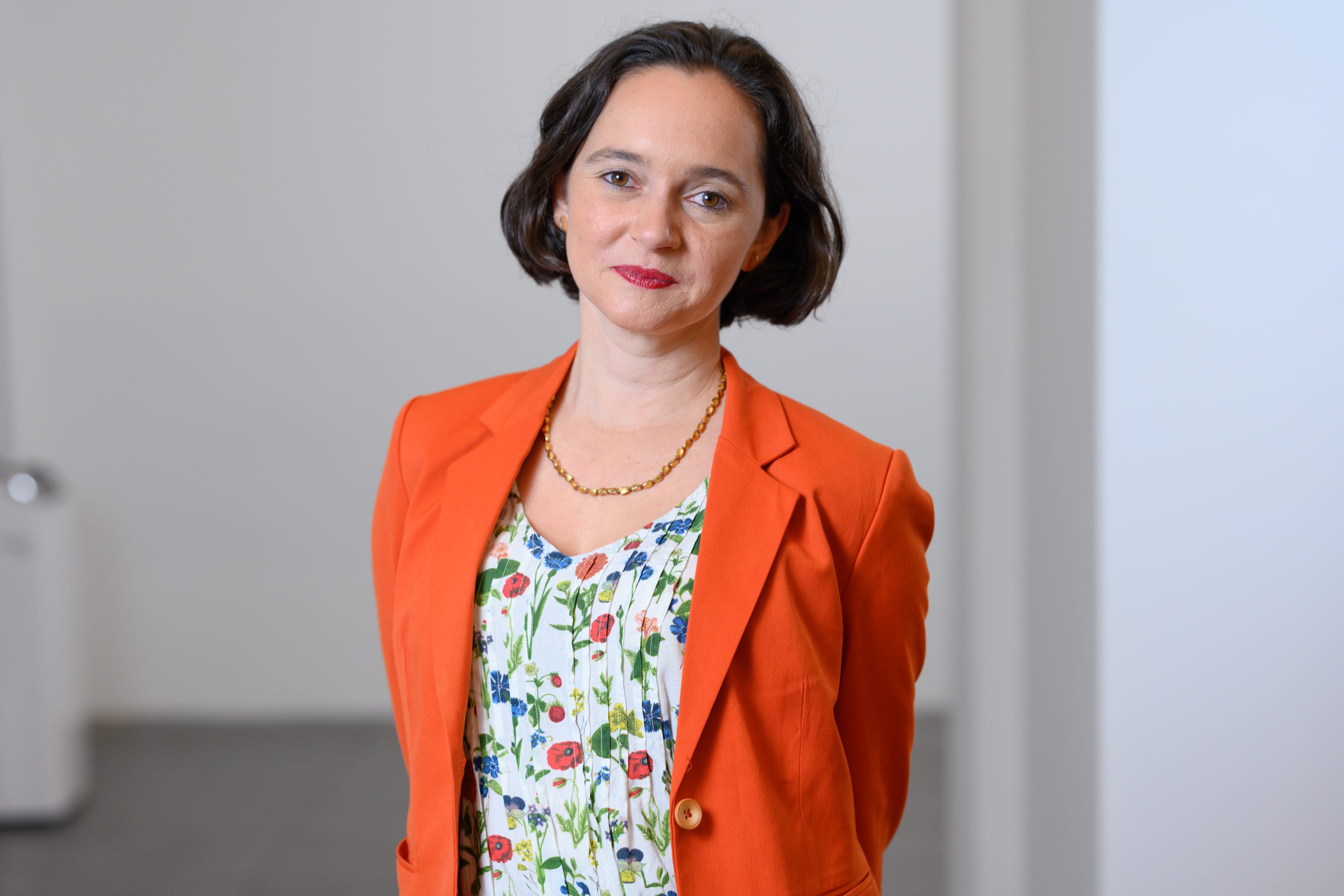
Susanna V. Temkin is the Interim Chief Curator at El Museo del Barrio in New York, an institution founded in 1969 and deeply rooted in Puerto Rican, Latine, Latin American, and Caribbean art and culture.
In this conversation, Temkin reflects on El Museo’s history, its evolving mission, and its relationship with the community of East Harlem. She also discusses the museum’s permanent collection and the fall exhibitions opening this week, including Octopus & Others: Acts of Collaboration & Poetics and Teddy Sandoval and the Butch Gardens School of Art.
Support Art in Latin America. Unlock exclusive benefits.
El Museo del Barrio was founded within a Puerto Rican and New York context, but its scope has expanded over time. What has remained fundamental to the museum’s history and mission?
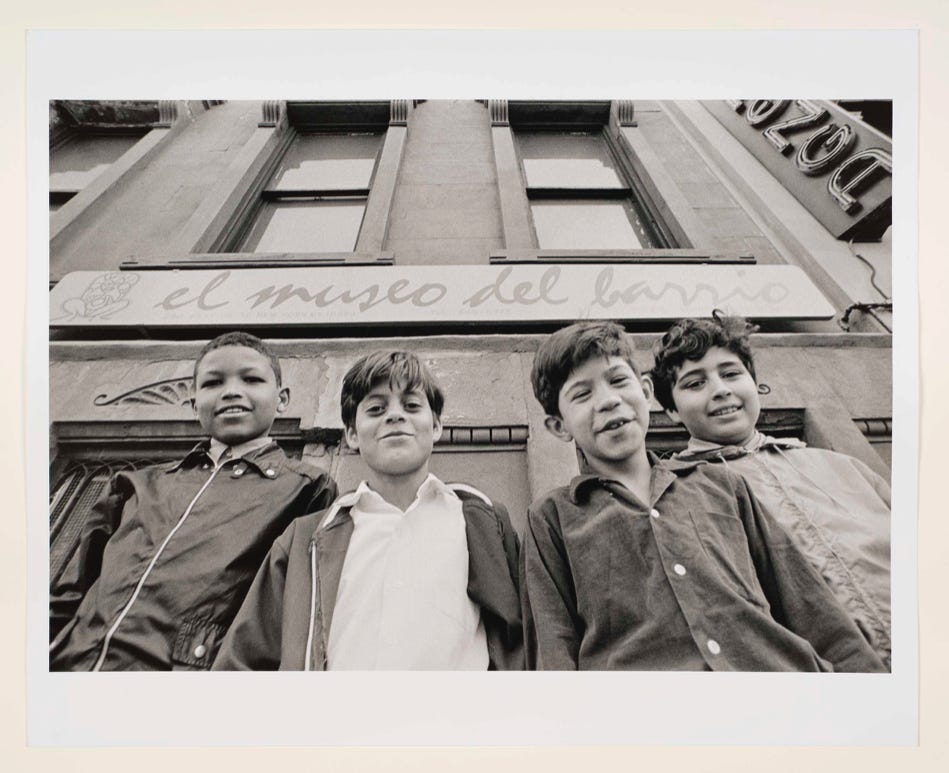
ST: When El Museo was founded by artist Raphael Montañez Ortiz, it was also the moment of the Civil Rights movement. Puerto Rico was very much at the heart of the museum, but even very early on, El Museo was inclusive of artists from different backgrounds, so there was always this broader interest in visibility of those who had been underrepresented.
What has remained fundamental are the two pillars the museum grew out of: artists and education. We’re an artist-founded institution, and education has been central from the beginning. Our mission also speaks explicitly about developing the next generation of museumgoers. El Museo is a place where you can see yourself reflected in the art on the walls, but it is also a place where the next generation of scholars, artists, and museum professionals can develop.
Today, El Museo works across Latin American, Latine, Caribbean, Puerto Rican, and diasporic histories. How do you approach those distinctions in your curatorial practice?
ST: I never want to impose an identity on someone; I’ll always follow however they want to self-describe. At the same time, I believe in the diaspora. There’s a tendency, as humans, to want to categorize and want easy answers, but that’s not how we work as individuals or societies, who mix and interact with one another.
When it comes to El Museo, many people think we have a geographic focus, but we really don’t. I think it’s interesting to work transnationally and cross-culturally, but also intergenerationally. It’s when different generations meet that some of those conversations around identity can emerge very strongly. Nuyoricans who were on the front lines of the Nuyorican moment in the 1970s may still very much want to be called Nuyoricans, whereas younger generations may want to call themselves Diasporican. That allows us to talk about the particularities not only of culture, but also of perspective and generation.
“El Museo is a place where you can see yourself reflected in the art on the walls, but it is also a place where the next generation of scholars, artists, and museum professionals can develop.”
How does El Museo maintain its relationship with East Harlem while also speaking to national and international audiences?
ST: We’ve been in this building [The Heckscher Building at 1230 Fifth Avenue] since 1977. It’s an interesting junction: we’re on Fifth Avenue, which is the glamorous Museum Mile, and we’re also still here in East Harlem/El Barrio/Spanish Harlem. We have a cross section of people who visit and a lot of international audiences, but in a recent audience survey our biggest zip code demographic was still our immediate neighborhood.
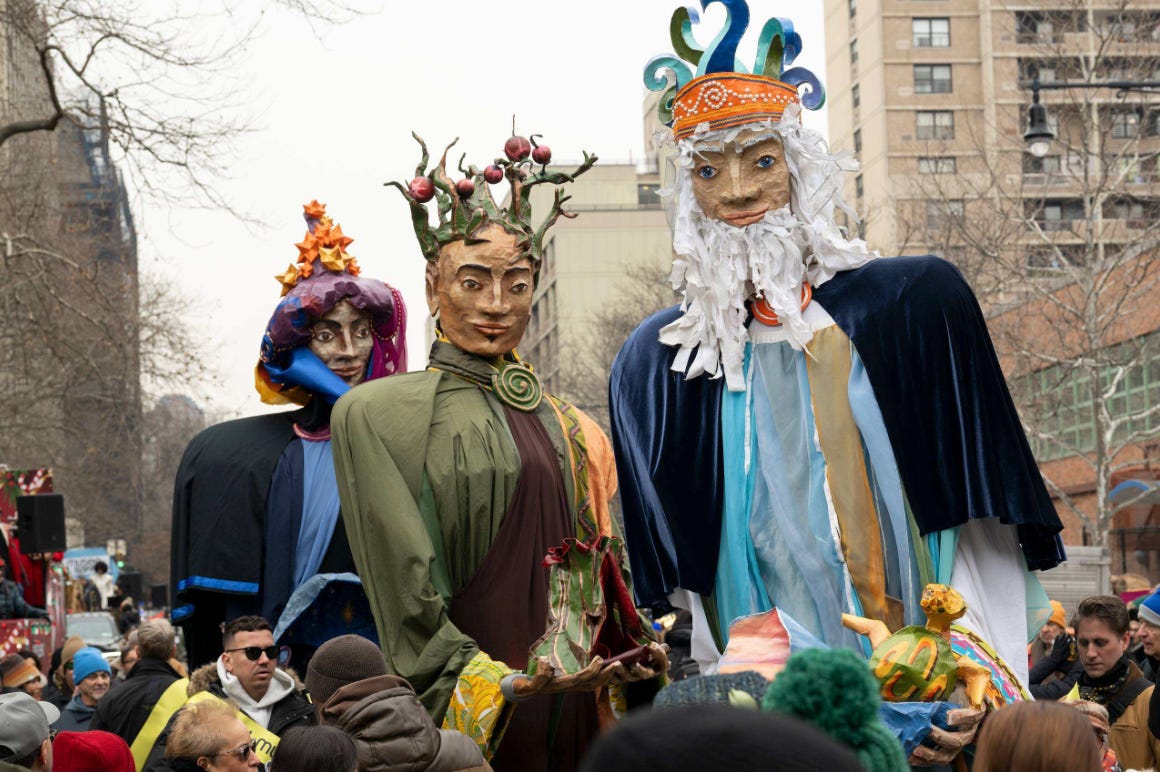
That relationship with the community also extends beyond the museum itself. We organize festivals that take place literally in the streets, including our Día de los Reyes parade, where we bring actual camels into the streets of New York City in the middle of January. East Harlem is such a special neighborhood because people engage in many different ways. Sometimes they hear something happening, come outside, bring their chairs and drinks, and join in. Dancing is very central to our block party, Uptown Bounce, or Museum Mile. So maintaining that relationship is not always about people entering the museum; sometimes it’s about the museum becoming part of the life of the neighborhood.
What can El Museo contribute to conversations around Latin American and Latine art that larger institutions may not?
ST: Only recently are we seeing a greater presence of Latine and Latin American art in more mainstream institutions. That speaks not only to the artists who have always been active, but also to the fact that there are more Latine museum professionals. The pipeline is changing.
We can often be an artist’s first institutional platform and be there at an important early moment in their career. Sometimes we present an artist and later learn that a work from the exhibition has been acquired by another museum.
Because we are a smaller institution, we can also take risks and respond more quickly. I think that allows us to remain at the forefront of introducing artists and histories that may take longer to enter larger institutions. I’m very proud that El Museo can be such an important first step in an artist’s career.
“We can often be an artist’s first institutional platform and be there at an important early moment in their career.”
Do you see El Museo’s permanent collection as a form of canon-building? What gaps is the museum trying to address?
ST: The collection really reflects the communities that have shaped El Museo. So many works have come as donations from artists or local collectors, and that has shaped our holdings. We have strong Nuyorican holdings, and over the years we’ve refined how we want to collect: what strengths we want to continue, such as Puerto Rican art and printmaking, and where we need to pay more attention, including Indigenous artists, Afro-diasporic artists, graffiti and urban culture, and queer artists.
We want the artists and art forms we represent, including craft traditions, to be recognized within the so-called canon. But we also realize what a Eurocentric concept a canon is. We’re interested in acknowledging that there are multiple histories or narratives and no singular definition of what a canon can be. So while the collection allows us to assert the importance of these artists and traditions, we try to think about how it also gives us a way to push against the idea of one fixed or singular art-historical narrative.
“We’re interested in acknowledging that there are multiple histories or narratives and no singular definition of what a canon can be. So while the [museum’s permanent] collection allows us to assert the importance of these artists and traditions, we try to think about how it also gives us a way to push against the idea of one fixed or singular art-historical narrative.”
To what extent can exhibitions reshape art history, and what helps an artist’s institutional recognition last beyond a show?
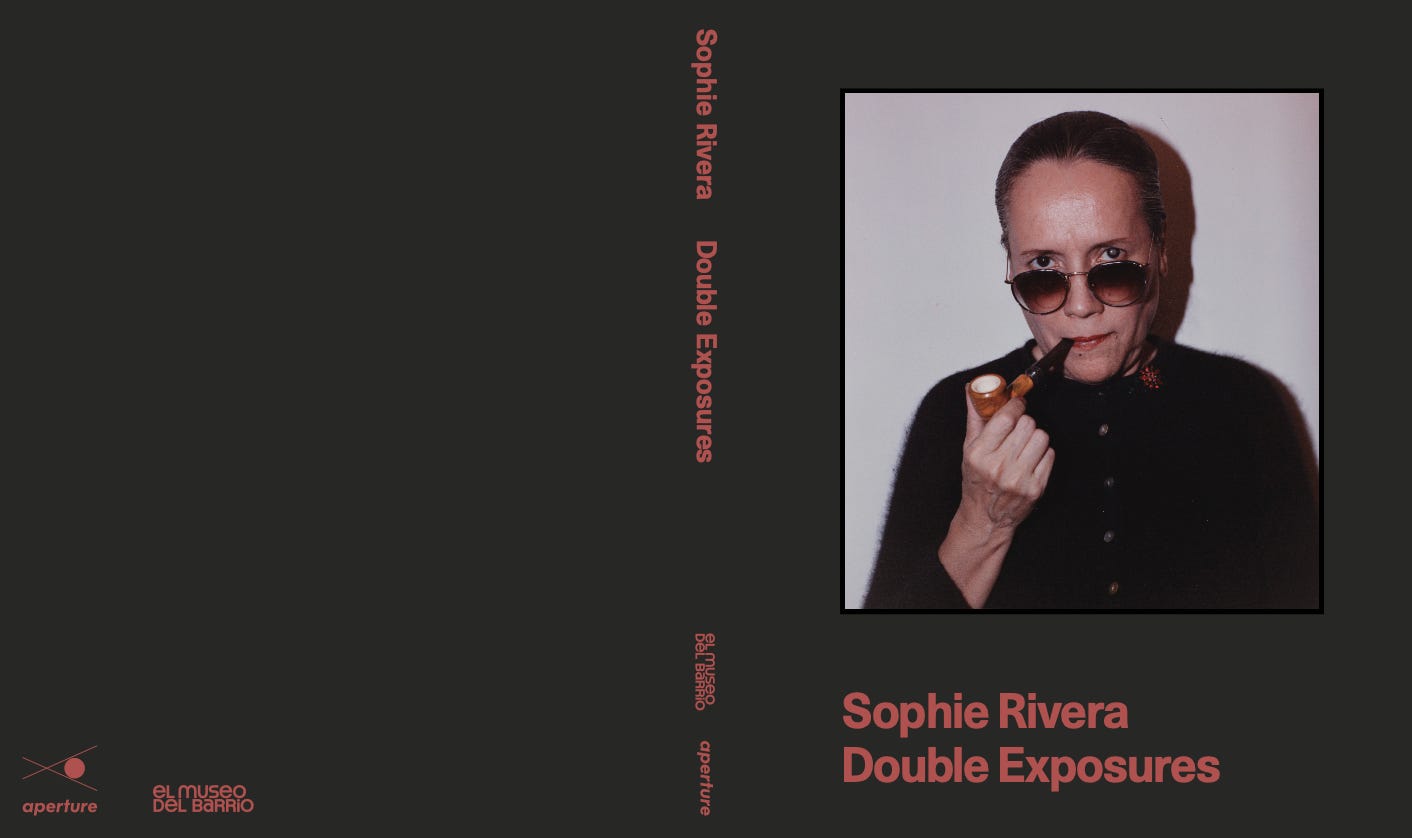
ST: I’m an art historian, and something I’m really passionate about is not just the exhibition, but the publication. We love our exhibitions, but ultimately they’re ephemeral, and the books are what last. El Museo has been publishing since the 1970s. More recently, our Sophie Rivera: Double Exposures book, for example, was that photographer’s first monograph ever published. I think that’s a really important contribution.
Exhibitions also become places for dialogue with audiences, critics, future scholars, and professors working in the field. They can become a place for collections-building too. We showed Juan Francisco Elso’s Por América, and shortly thereafter that work was acquired by the MoMA. I think that is a testament to what an exhibition can do in terms of visualizing different artists and histories.
At a time when questions around immigration and belonging are especially present in the United States, how do you see El Museo’s role?
ST: We recently presented the first survey of Coco Fusco in the United States. At a particular moment, many people were asking, ‘Are you going to adapt the show to be safer politically?’ For us, the answer was a resounding no. At El Museo, we realized that if we changed what we did, who or what we show, we wouldn’t be able to be true to ourselves or to our mission. El Museo fundamentally has to be a place that takes a stand against some of what we’re witnessing.
I also believe in the power of art to create a safe haven, a place where you can have a break from everything taking place around you, even when the art is discussing very challenging issues. A museum as a sanctuary. Standing strong in presenting these works is a statement in itself.
“At a particular moment, many people were asking, ‘Are you going to adapt the show to be safer politically?’ For us, the answer was a resounding no. At El Museo, we realized that if we changed what we did, who or what we show, we wouldn’t be able to be true to ourselves or to our mission.”
The fall shows are coming up this week. One of them, Octopus & Others: Acts of Collaboration & Poetics, returns to Papo Colo’s 1982 project Octopus. Why is it important to revisit that history now?
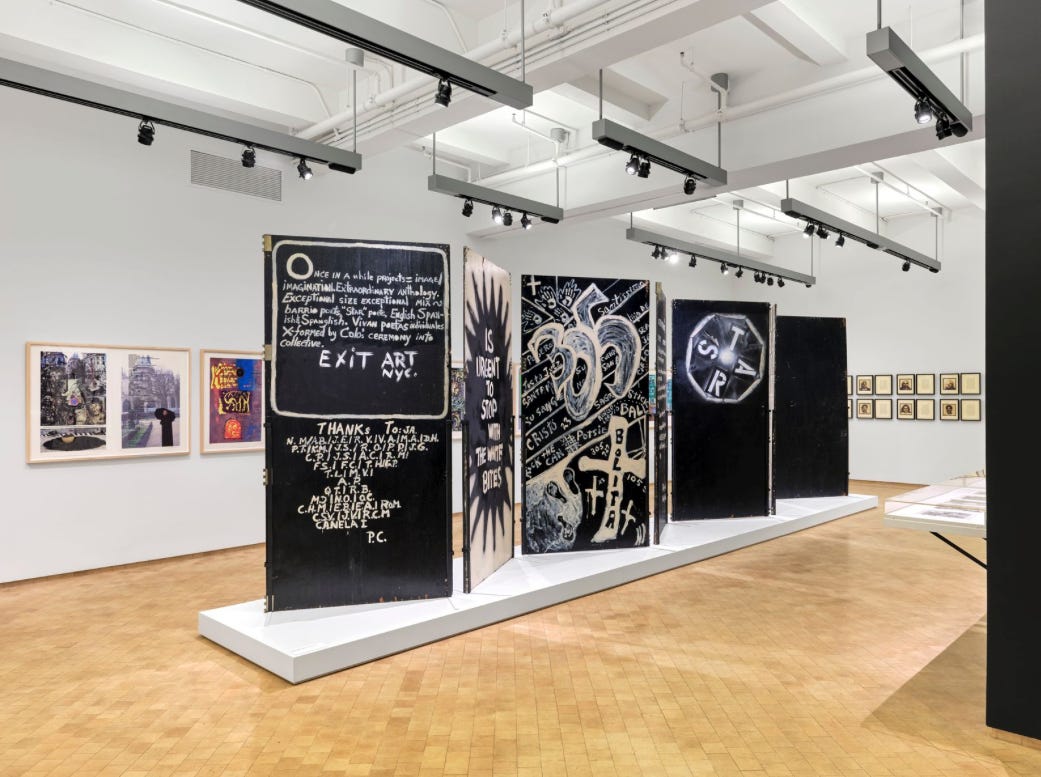
ST: The starting point for this exhibition was a donation from artist Papo Colo. Octopus was a collaborative project from 1982 that brought together artists, poets, and other cultural figures working across New York. It is a project that has been discussed often, and the images in our archives are incredibly compelling, but much of its history had remained relatively unknown. Papo very generously donated some of the surviving panels from the project, which gave us an opportunity to return to it in a much more concrete way, and really learn more about some of the mythology around this work.
What makes Octopus especially interesting is the network it created, bringing figures from East Harlem’s Latino community, such as Pedro Pietri and Juan Sánchez, into dialogue with artists working across New York like David Hammons, Vito Acconci, Tehching Hsieh. Revisiting the project today allows us to make those connections visible again and to reactivate the collaborative spirit that placed El Museo within a broader avant-garde history. The curator of the show, Zuna Maza, has also connected this history to younger generations working today, including Mev Luna and Joey de Jesus.
El Museo is also presenting the traveling exhibition Teddy Sandoval and the Butch Gardens School of Art. What does bringing it to El Museo add to the conversation?
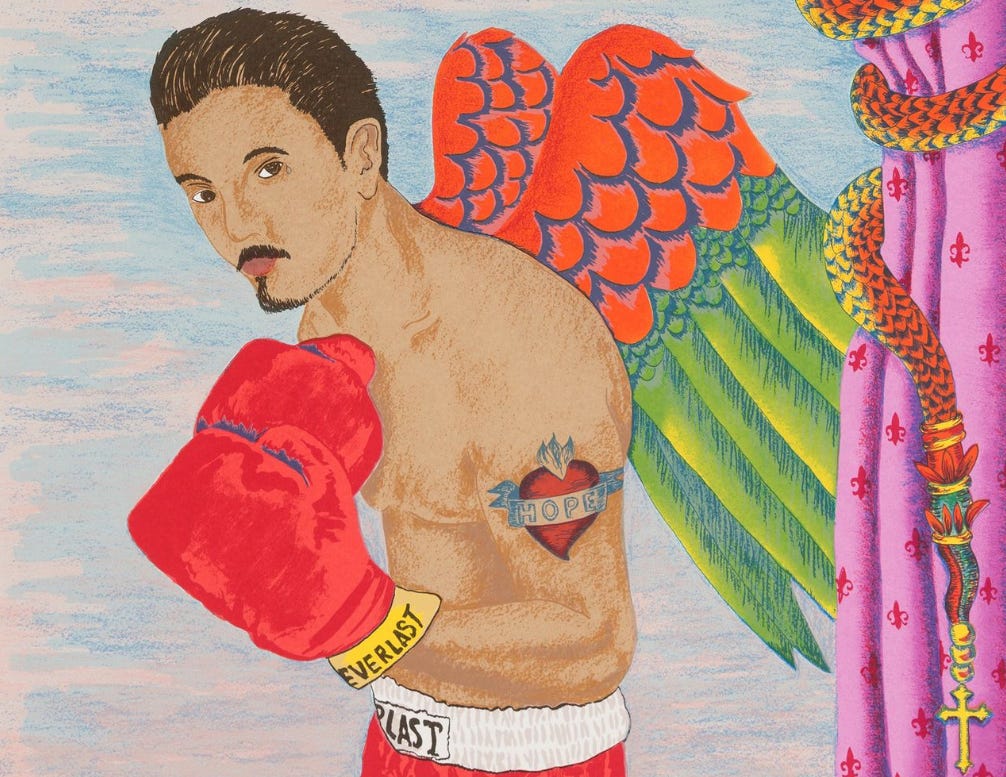
ST: We really wanted to bring this exhibition [which is traveling through Independent Curators International, and curated by C. Ondine Chavoya and David Evans Frantz] to El Museo because we’re interested in expanding our commitment to queer artists, which is an area where we feel we can still do more. And New York doesn’t very often get to see West Coast artists, so this felt like a really exciting opportunity to bring some of those histories here.
When we brought the show to El Museo, organizing curator Lee Sessions was also able to make some interventions by adding works from our permanent collection and bringing in a few local loans. That allowed us to expand the conversation beyond the original exhibition. Like Octopus, it’s also very much an intergenerational show, and I think that makes it possible to talk about different affinities and parallel histories taking place on the West Coast, the East Coast, and in other regions in between.
Looking ahead, what kinds of histories and conversations do you want El Museo to continue making space for?
ST: Artist-centric, always. That remains at the heart of what we do. We want to keep opening up broader conversations around artists and the histories they bring with them, while also thinking about how to bring more people into those conversations. We’re El Museo del Barrio, but all audiences are welcome, you don’t have to be Latine or Latin American to come in and enjoy and learn from the exhibitions.
We also want to make space for artists and histories that still haven’t received the recognition they deserve, especially across generations. Personally, I’m very committed to showing women artists and to thinking intergenerationally. Amalia Mesa-Bains is a perfect example. She has been working for decades and only received her retrospective now that she is in her 80s. The same can be said for our recent Candida Alvarez show, and even Coco Fusco. I think it’s really important to recognize artists while they’re still here to be part of that conversation.
“We want to keep opening up broader conversations around artists and the histories they bring with them, while also thinking about how to bring more people into those conversations. We’re El Museo del Barrio, but all audiences are welcome, you don’t have to be Latine or Latin American to come in and enjoy and learn from the exhibitions.”
To learn more about Susanna Temkin and El Museo del Barrio, visit:
Dentro de El Museo del Barrio con Susanna V. Temkin
Susanna V. Temkin es la curadora en jefe interina de El Museo del Barrio de Nueva York, una institución fundada en 1969 y profundamente arraigada en el arte y la cultura puertorriqueña, latine, latinoamericana y caribeña.
En esta conversación, Temkin reflexiona sobre la historia de El Museo, la evolución de su misión y su relación con la comunidad de East Harlem. También habla sobre la colección permanente del museo y las exposiciones de otoño que se inauguran esta semana, entre ellas Octopus & Others: Acts of Collaboration & Poetics y Teddy Sandoval and the Butch Gardens School of Art.
Apoya a Art in Latin America. Accede a beneficios exclusivos.
El Museo del Barrio fue fundado dentro de un contexto puertorriqueño y neoyorquino, pero su alcance se ha ampliado con el tiempo. ¿Qué ha permanecido como algo fundamental en la historia y la misión del museo?
ST: Cuando El Museo fue fundado por el artista Raphael Montañez Ortiz, también era el momento del movimiento por los derechos civiles. Puerto Rico estaba muy en el centro del museo, pero incluso desde muy temprano, El Museo incluía a artistas de distintos orígenes, así que siempre existió este interés más amplio por dar visibilidad a quienes habían estado subrepresentados.
Lo que ha permanecido como algo fundamental son los dos pilares de los que surgió el museo: los artistas y la educación. Somos una institución fundada por un artista, y la educación ha sido central desde el principio. Nuestra misión también habla explícitamente de formar a la próxima generación de visitantes de museos. El Museo es un lugar donde puedes verte reflejado en el arte que está en las paredes, pero también es un lugar donde la próxima generación de académicos, artistas y profesionales de museos puede desarrollarse.
Hoy, El Museo trabaja con historias latinoamericanas, latines, caribeñas, puertorriqueñas y diaspóricas. ¿Cómo abordas esas distinciones dentro de tu práctica curatorial?
ST: Nunca quiero imponerle una identidad a alguien; siempre voy a seguir la manera en que esa persona quiera describirse a sí misma. Al mismo tiempo, creo en la diáspora. Existe una tendencia, como seres humanos, a querer categorizar y querer respuestas fáciles, pero así no es como funcionamos como individuos ni como sociedades, que se mezclan e interactúan entre sí.
Cuando se trata de El Museo, muchas personas piensan que tenemos un enfoque geográfico, pero en realidad no es así. Creo que es interesante trabajar de manera transnacional y transcultural, pero también intergeneracional. Es cuando distintas generaciones se encuentran que algunas de esas conversaciones en torno a la identidad pueden surgir con mucha fuerza. Los nuyoricans que estuvieron en primera línea del momento nuyorican en la década de 1970 quizá todavía quieran ser llamados nuyoricans, mientras que las generaciones más jóvenes quizá quieran llamarse Diasporican. Eso nos permite hablar de las particularidades no solo de la cultura, sino también de la perspectiva y de la generación.
“El Museo es un lugar donde puedes verte reflejado en el arte que está en las paredes, pero también es un lugar donde la próxima generación de académicos, artistas y profesionales de museos puede desarrollarse.”
¿Cómo mantiene El Museo su relación con East Harlem y, al mismo tiempo, se dirige a públicos nacionales e internacionales?
ST: Hemos estado en este edificio [The Heckscher Building en 1230 Fifth Avenue] desde 1977. Es una intersección interesante: estamos en Fifth Avenue, que es el glamuroso Museum Mile, y también seguimos aquí, en East Harlem/El Barrio/Spanish Harlem. Tenemos una sección transversal de personas que nos visitan y mucho público internacional, pero en una encuesta reciente a nuestros visitantes, el código postal con mayor representación seguía siendo el de nuestro vecindario inmediato.
Esa relación con la comunidad también se extiende más allá del propio museo. Organizamos festivales que tienen lugar literalmente en las calles, incluido nuestro desfile del Día de los Reyes, en el que llevamos camellos de verdad a las calles de Nueva York a mediados de enero. East Harlem es un barrio muy especial porque la gente participa de muchas maneras distintas. A veces escuchan que algo está pasando, salen, traen sus sillas y sus bebidas, y se suman. El baile es muy central en nuestra fiesta de barrio, Uptown Bounce, o en Museum Mile. Así que mantener esa relación no siempre tiene que ver con que la gente entre al museo; a veces se trata de que el museo pase a formar parte de la vida del barrio.
¿Qué puede aportar El Museo a las conversaciones en torno al arte latinoamericano y latine que quizá las instituciones más grandes no pueden aportar?
ST: Solo recientemente estamos viendo una mayor presencia del arte latine y latinoamericano en instituciones más mainstream. Eso habla no solo de los artistas, que siempre han estado activos, sino también del hecho de que hay más profesionales de museos latines. La vía de acceso está cambiando.
Muchas veces podemos ser la primera plataforma institucional de un artista y estar presentes en un momento importante y temprano de su carrera. A veces presentamos a un artista y después nos enteramos de que una obra de la exposición ha sido adquirida por otro museo.
Como somos una institución más pequeña, también podemos asumir riesgos y responder con mayor rapidez. Creo que eso nos permite mantenernos a la vanguardia en la presentación de artistas e historias que quizá tarden más en entrar en instituciones más grandes. Me siento muy orgullosa de que El Museo pueda ser un primer paso tan importante en la carrera de un artista.
“Muchas veces podemos ser la primera plataforma institucional de un artista y estar presentes en un momento importante y temprano de su carrera.”
¿Ves la colección permanente de El Museo como una forma de construcción de canon? ¿Qué vacíos está tratando de abordar el museo?
ST: La colección realmente refleja a las comunidades que han dado forma a El Museo. Muchas obras han llegado como donaciones de artistas o de coleccionistas locales, y eso ha dado forma a nuestros fondos. Tenemos una colección nuyorican muy sólida y, a lo largo de los años, hemos afinado la manera en que queremos coleccionar: qué fortalezas queremos seguir desarrollando, como el arte puertorriqueño y el grabado, y dónde necesitamos prestar más atención, incluidos los artistas indígenas, los artistas afrodiásporicos, el grafiti y la cultura urbana, y los artistas queer.
Queremos que los artistas y las formas de arte que representamos, incluidas las tradiciones artesanales, sean reconocidos dentro del llamado canon. Pero también somos conscientes de lo eurocéntrico que es el concepto de canon. Nos interesa reconocer que existen múltiples historias o narrativas y que no hay una única definición de lo que puede ser un canon. Así que, aunque la colección nos permite afirmar la importancia de estos artistas y tradiciones, intentamos pensar también en cómo nos da una manera de cuestionar la idea de una única narrativa histórico-artística fija o singular.
“Nos interesa reconocer que existen múltiples historias o narrativas y que no hay una única definición de lo que puede ser un canon. Así que, aunque la colección [permanente del museo] nos permite afirmar la importancia de estos artistas y tradiciones, intentamos pensar también en cómo nos da una manera de cuestionar la idea de una única narrativa histórico-artística fija o singular.”
¿Hasta qué punto pueden las exposiciones reformular la historia del arte, y qué ayuda a que el reconocimiento institucional de un artista perdure más allá de una exposición?
ST: Soy historiadora del arte, y algo que realmente me apasiona no es solo la exposición, sino también la publicación. Amamos nuestras exposiciones, pero al final son efímeras, y los libros son lo que permanece. El Museo publica desde la década de 1970. Más recientemente, nuestro libro Sophie Rivera: Double Exposures, por ejemplo, fue la primera monografía que se publicó sobre esa fotógrafa. Creo que esa es una contribución realmente importante.
Las exposiciones también se convierten en espacios para el diálogo con el público, los críticos, futuros investigadores y profesores que trabajan en el campo. También pueden convertirse en un espacio para la construcción de colecciones. Mostramos Por América de Juan Francisco Elso y, poco después, esa obra fue adquirida por el MoMA. Creo que eso demuestra lo que una exposición puede hacer en términos de visibilizar a distintos artistas e historias.
En un momento en el que las cuestiones en torno a la inmigración y la pertenencia están especialmente presentes en Estados Unidos, ¿cómo ves el papel de El Museo?
ST: Recientemente presentamos la primera retrospectiva panorámica de Coco Fusco en Estados Unidos. En un momento determinado, muchas personas preguntaban: “¿Van a adaptar la exposición para que sea políticamente más segura?”. Para nosotros, la respuesta fue un rotundo no. En El Museo, nos dimos cuenta de que si cambiábamos lo que hacíamos, a quién o qué mostramos, no podríamos ser fieles a nosotros mismos ni a nuestra misión. Fundamentalmente, El Museo tiene que ser un lugar que adopte una postura frente a algunas de las cosas que estamos presenciando.
También creo en el poder del arte para crear un refugio seguro, un lugar donde puedas tomarte un respiro de todo lo que está ocurriendo a tu alrededor, incluso cuando el arte aborda temas muy difíciles. Un museo como santuario. Mantenernos firmes en la presentación de estas obras es una declaración en sí misma.
“En un momento determinado, muchas personas preguntaban: ‘¿Van a adaptar la exposición para que sea políticamente más segura?’. Para nosotros, la respuesta fue un rotundo no. En El Museo, nos dimos cuenta de que si cambiábamos lo que hacíamos, a quién o qué mostramos, no podríamos ser fieles a nosotros mismos ni a nuestra misión.”
Las exposiciones de otoño se inauguran esta semana. Una de ellas, Octopus & Others: Acts of Collaboration & Poetics, vuelve al proyecto Octopus de Papo Colo, de 1982. ¿Por qué es importante revisitar esa historia ahora?
ST: El punto de partida de esta exposición fue una donación del artista Papo Colo. Octopus fue un proyecto colaborativo de 1982 que reunió a artistas, poetas y otras figuras culturales que trabajaban en distintos ámbitos de Nueva York. Es un proyecto del que se ha hablado a menudo, y las imágenes de nuestro archivo son increíblemente poderosas, pero gran parte de su historia seguía siendo relativamente desconocida. Papo donó muy generosamente algunos de los paneles que sobrevivieron del proyecto, lo que nos dio la oportunidad de volver a él de una manera mucho más concreta y de aprender realmente más sobre parte de la mitología que rodea esta obra.
Lo que hace que Octopus sea especialmente interesante es la red que creó, al poner a figuras de la comunidad latina de East Harlem, como Pedro Pietri y Juan Sánchez, en diálogo con artistas que trabajaban en distintos lugares de Nueva York, como David Hammons, Vito Acconci y Tehching Hsieh. Revisitar el proyecto hoy nos permite volver a hacer visibles esas conexiones y reactivar el espíritu colaborativo que situó a El Museo dentro de una historia de vanguardia más amplia. La curadora de la exposición, Zuna Maza, también ha conectado esta historia con generaciones más jóvenes que trabajan hoy, entre ellas Mev Luna y Joey de Jesus.
El Museo también está presentando la exposición itinerante Teddy Sandoval and the Butch Gardens School of Art. ¿Qué aporta a la conversación el hecho de presentarla en El Museo?
ST: Teníamos muchas ganas de traer esta exposición [que está itinerando a través de Independent Curators International y está curada por C. Ondine Chavoya y David Evans Frantz] a El Museo porque nos interesa ampliar nuestro compromiso con los artistas queer, que es un área en la que sentimos que todavía podemos hacer más. Y en Nueva York no se tiene muy a menudo la oportunidad de ver a artistas de la Costa Oeste, así que nos pareció una oportunidad realmente emocionante para traer algunas de esas historias hasta aquí.
Cuando trajimos la exposición a El Museo, la curadora organizadora Lee Sessions también pudo realizar algunas intervenciones, incorporando obras de nuestra colección permanente y algunos préstamos locales. Eso nos permitió ampliar la conversación más allá de la exposición original. Al igual que Octopus, también es en gran medida una exposición intergeneracional, y creo que eso hace posible hablar sobre distintas afinidades e historias paralelas que tienen lugar en la Costa Oeste, la Costa Este y en otras regiones entre ambas.
Mirando hacia el futuro, ¿para qué tipo de historias y conversaciones quieres que El Museo siga creando espacio?
ST: Centrado en los artistas, siempre. Eso sigue estando en el corazón de lo que hacemos. Queremos seguir abriendo conversaciones más amplias en torno a los artistas y las historias que traen consigo, al mismo tiempo que pensamos en cómo incorporar a más personas a esas conversaciones. Somos El Museo del Barrio, pero todos los públicos son bienvenidos; no tienes que ser latine ni latinoamericano para venir, disfrutar y aprender de las exposiciones.
También queremos crear espacio para artistas e historias que todavía no han recibido el reconocimiento que merecen, especialmente a través de distintas generaciones. Personalmente, estoy muy comprometida con mostrar a mujeres artistas y con pensar de manera intergeneracional. Amalia Mesa-Bains es un ejemplo perfecto. Lleva décadas trabajando y solo ahora, cuando está en sus 80 años, recibió su retrospectiva. Lo mismo puede decirse de nuestra reciente exposición de Candida Alvarez, e incluso de Coco Fusco. Creo que es realmente importante reconocer a los artistas mientras todavía están aquí para formar parte de esa conversación.
“Queremos seguir abriendo conversaciones más amplias en torno a los artistas y las historias que traen consigo, al mismo tiempo que pensamos en cómo incorporar a más personas a esas conversaciones. Somos El Museo del Barrio, pero todos los públicos son bienvenidos; no tienes que ser latine ni latinoamericano para venir, disfrutar y aprender de las exposiciones.”
Para saber más sobre Susanna Temkin y El Museo del Barrio, visita: