


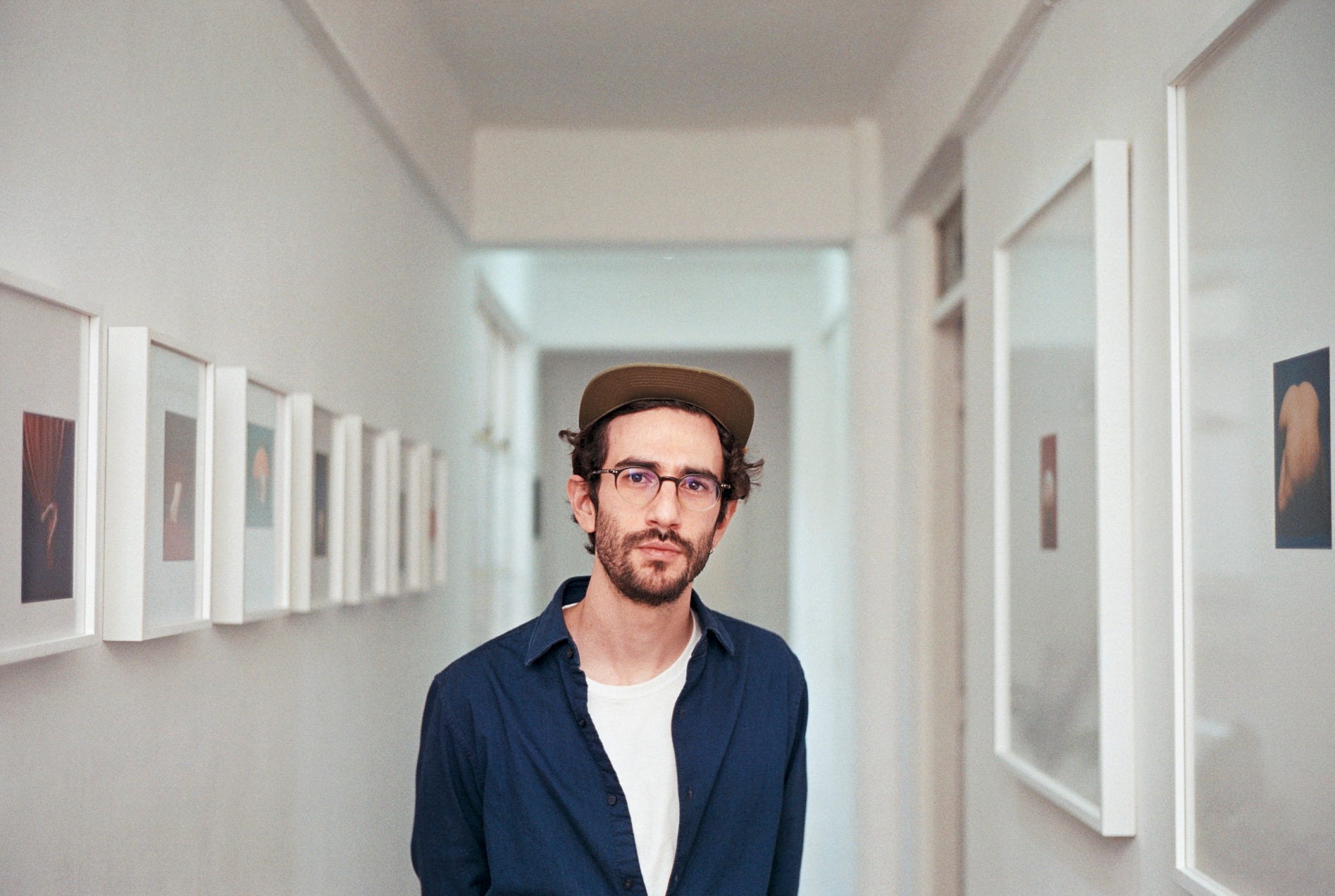
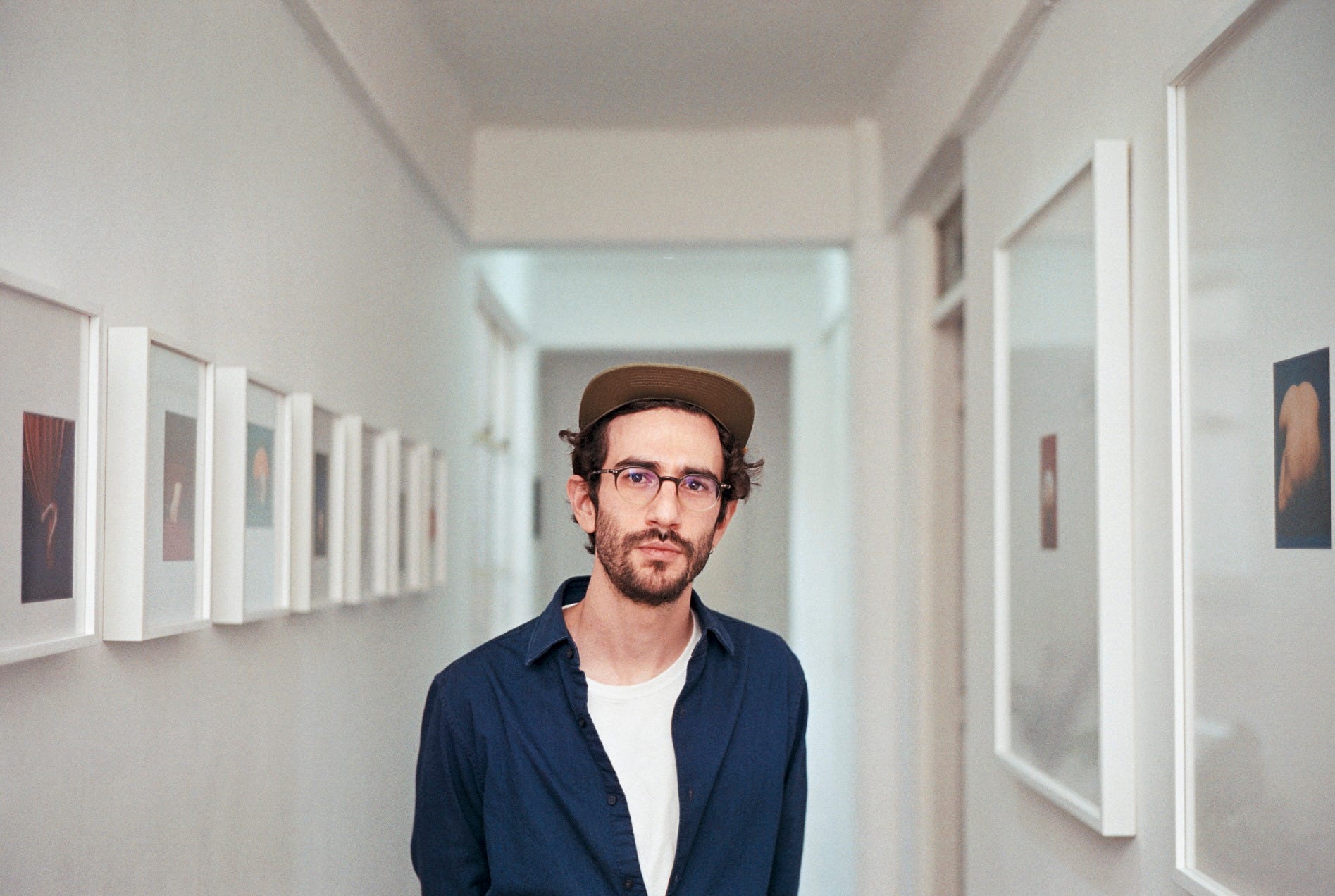
Rodrigo Chapa is a Mexican artist whose practice is rooted in photography, continuously pushing against the boundaries of the medium. Working through staged scenes and material interventions, his work explores the relationship between memory and perception.
In this interview, Rodrigo reflects on his early engagement with photography and on the ways in which his work moves between image, object, and illusion. He discusses his approach to colour, key series such as Many Moons, Memorias, and Episodios, and his interest in blurring the lines between photography, painting, and cinema.
At what moment did you realize you were interested in photography?
RC: I have a very bad memory; I don’t know exactly when I started taking photos, but I do remember that my first camera was a toy from the 90s, a 110 format one, of the Teenage Mutant Ninja Turtles. When I got over the trend, I took that camera apart to remove a Ninja Turtle that was inside, between the lens and the film, and it would print onto every photo, and I kept taking photos with it. I still have those printed pictures, but not the memory of having taken them.
Photography, for me, has always been a way of remembering. I have three archives: one for the commercial work I do, one as an artist, and one of memories, of personal things. I have many photos that I don’t remember taking; they are memories I wouldn’t have if it weren’t for them. The first photos I took, I have them printed. It was an activity I did with my mom: she would take me to develop and print.
There was a series I worked on from 2015 to 2019, more or less, called Memorias, which speaks precisely about this. It approached my relationship with photography through the search for how to print these memories. I recreated some moments that I didn’t have photographed: a series of staged scenes of memories that lived in my head but that I didn’t photograph at the time. There was an interesting element there: the reinterpretation of things, because the memory one has, after some time, tends to change; it evolves over time. That seemed interesting to me, especially in my case, since I know I forget many details. So I created a kind of narrative based on real events, but with some fiction.
How do you understand your practice and what are you interested in exploring through the photographic medium?
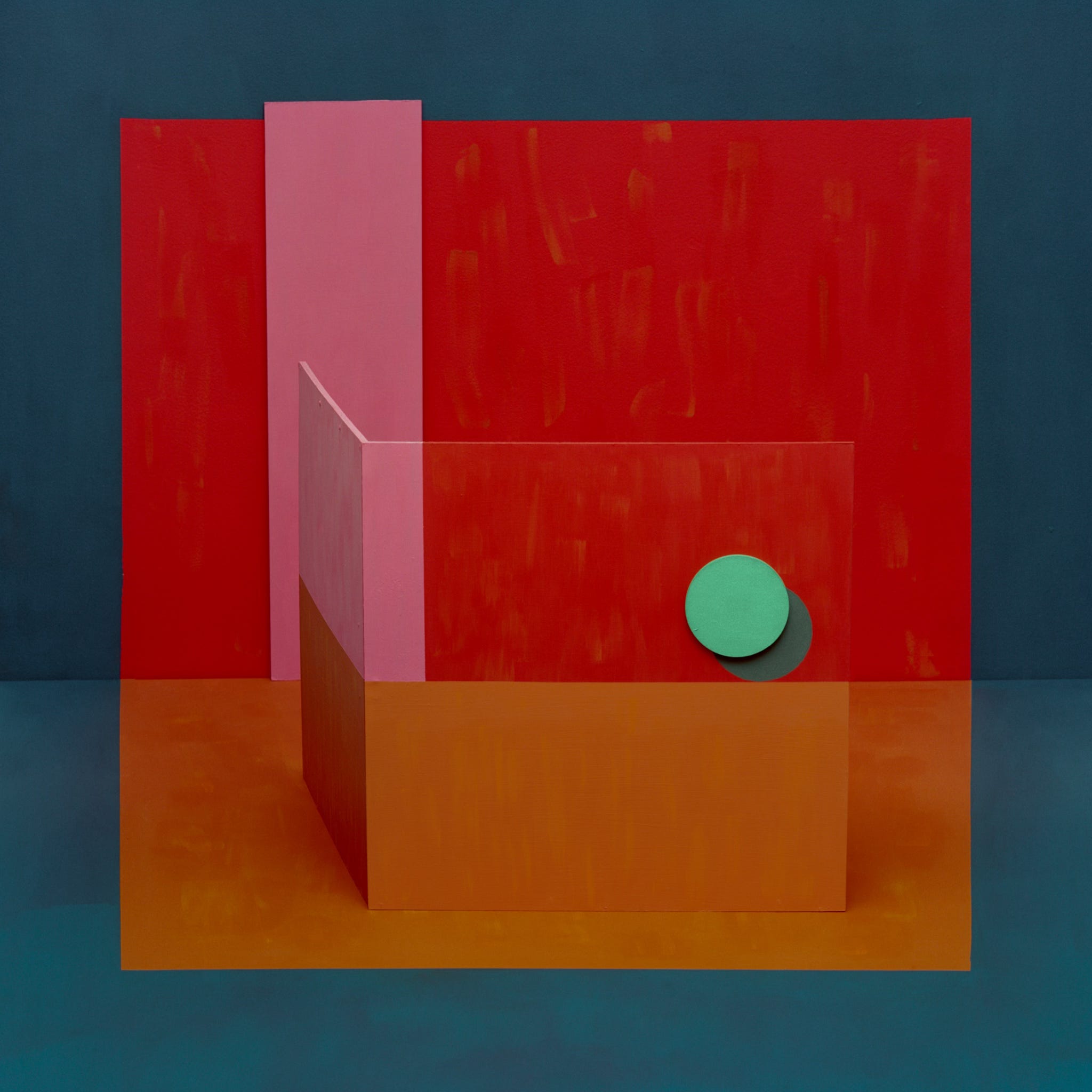
RC: I think the constant in my work has been to test the limits of the medium, to challenge the traditional process and the definition of what is and what is not photography. I have approached it in very different ways.
In the series Many Moons, which I began in 2012, I made illustrations that I then printed onto transparent slide material, and placed them inside a medium format camera, between the film and the lens (similar to my Ninja Turtle). Seeing the illustration in the negative had a very confusing effect; it is evidently photography, but it doesn’t look like it.
After that, I worked on Memorias. If Many Moons was playing with pushing photography to see where the limits are between illustration and photography, Memorias was doing that with cinematography. If you take a frame out of a film reel, it is a photograph, but it is also cinema. So the discourse went in that direction: to explore how far the photograph can be pushed, where it ends.
When I presented Episodios at Paris Photo with Concordia Studio, some people came up to me and said: “You don’t belong here, what you do is painting,” almost offended. I understand them: photography enthusiasts used to seeing Cartier-Bresson and Doisneau at that fair. They are also my idols, but we are two centuries past the invention of photography, and I think it is interesting to see where else it can go.
My process is always very introspective. It’s like a meditation. Everything is very inward: getting to know oneself, spending hours and hours with oneself. Having an excuse to do that is, I think, what excites me most about the process.
“I think the constant in my work has been to test the limits of the medium, to challenge the traditional process and the definition of what is and what is not photography.”
How do you know when a set is finished and ready to be photographed?
RC: I think it has to be visually interesting enough. For me, that is the most important thing.
For a long time, I felt this pressure to be able to justify a photographic project with words before starting to take photos. When you apply for a prize or an exhibition, you have to justify yourself conceptually. I have never been good at that. At the end of the day, what interests me most is what I see. For me, it is a visual medium; the way to connect with the work is visual, so I prefer to start from there.
What role does editing play within your practice?
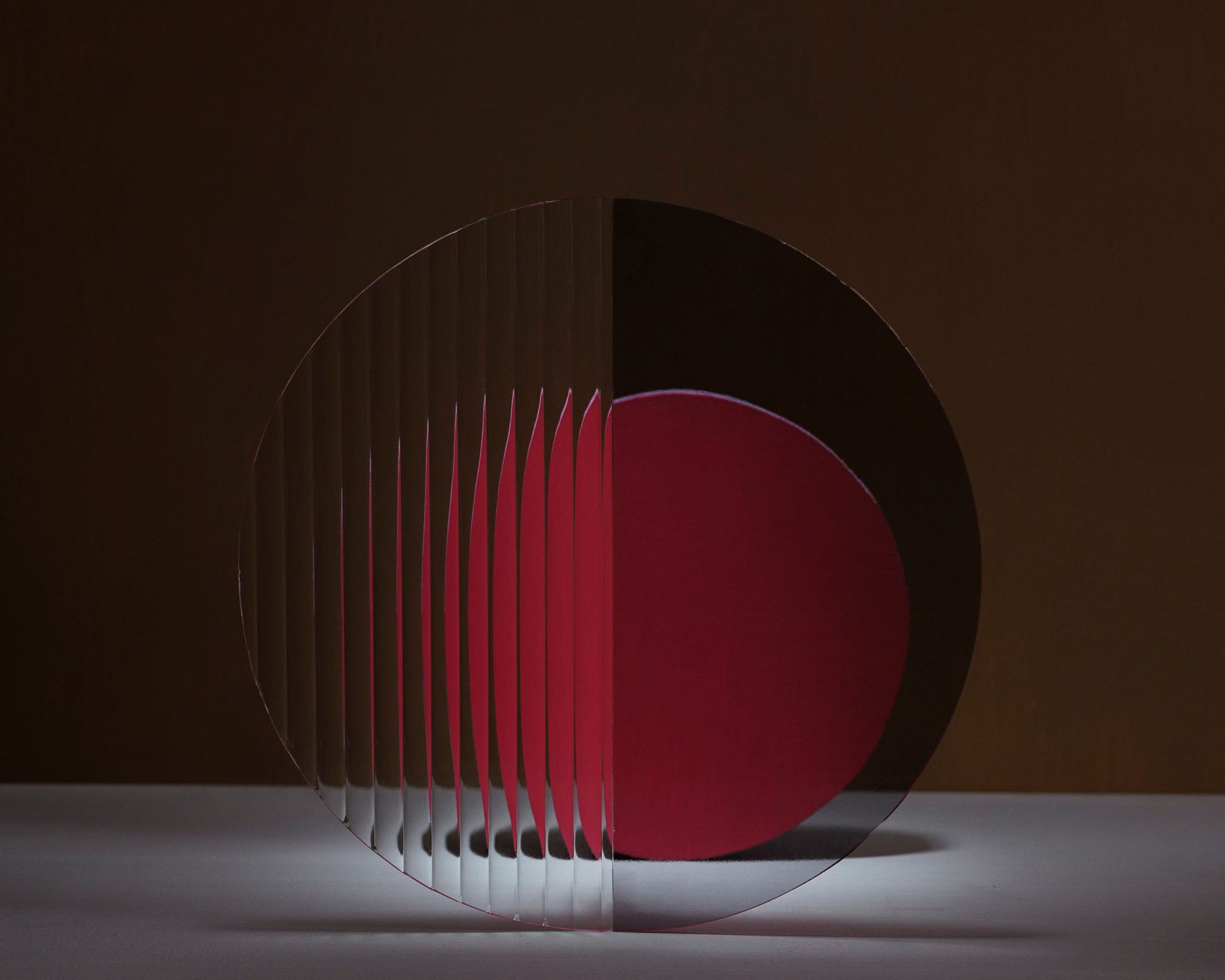
RC: There isn’t much editing in my current practice; generally, I spend most of my time doing tests with a digital camera, and when everything is ready, I switch cameras, sometimes to a large format one or sometimes to a medium format one, and I take one or two photos.
Throughout your practice, color has taken on a very particular place. What influences have shaped that part of your work?
RC: When I started, I did portraiture and worked only in black and white because I didn’t know how to handle color. I hadn’t studied it enough to know what to do with it.
Eventually, I began to explore color, visiting exhibitions and reading books. At that time, I became very interested in the work of abstract expressionists and connected a lot with the work of Rothko and Newman. And also with that of Yves Klein. But above all with Rothko; I think he achieves a lot with very little. I also found it very interesting how he spoke about his work as a performative act, where the painting was more like the record of the work.
“I became very interested in the work of abstract expressionists…but above all with Rothko; I think he achieves a lot with very little.”
How do you define the color palette within an image or a series? Is it something more intuitive or does it respond to a more structured idea?
RC: It has a lot to do with format.
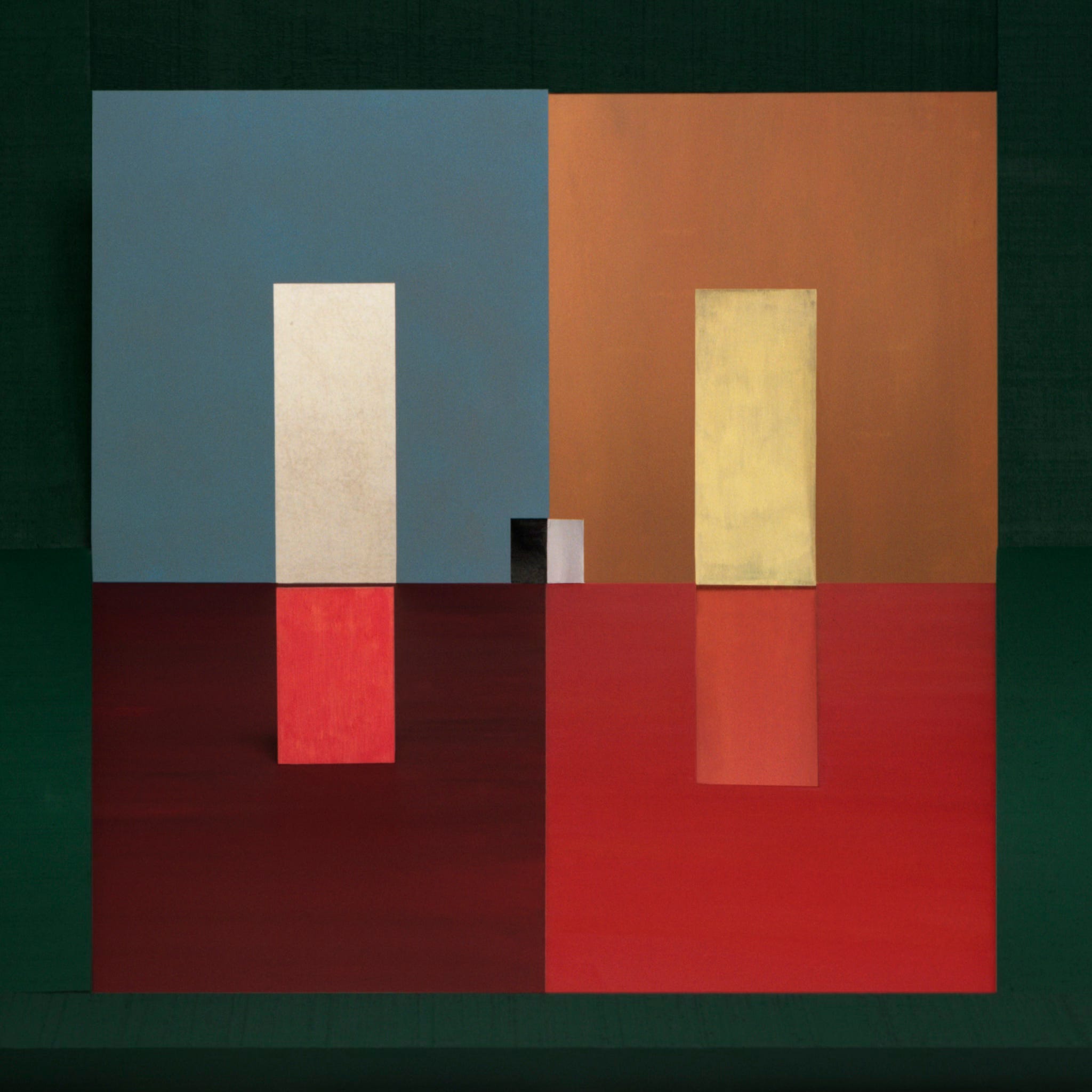
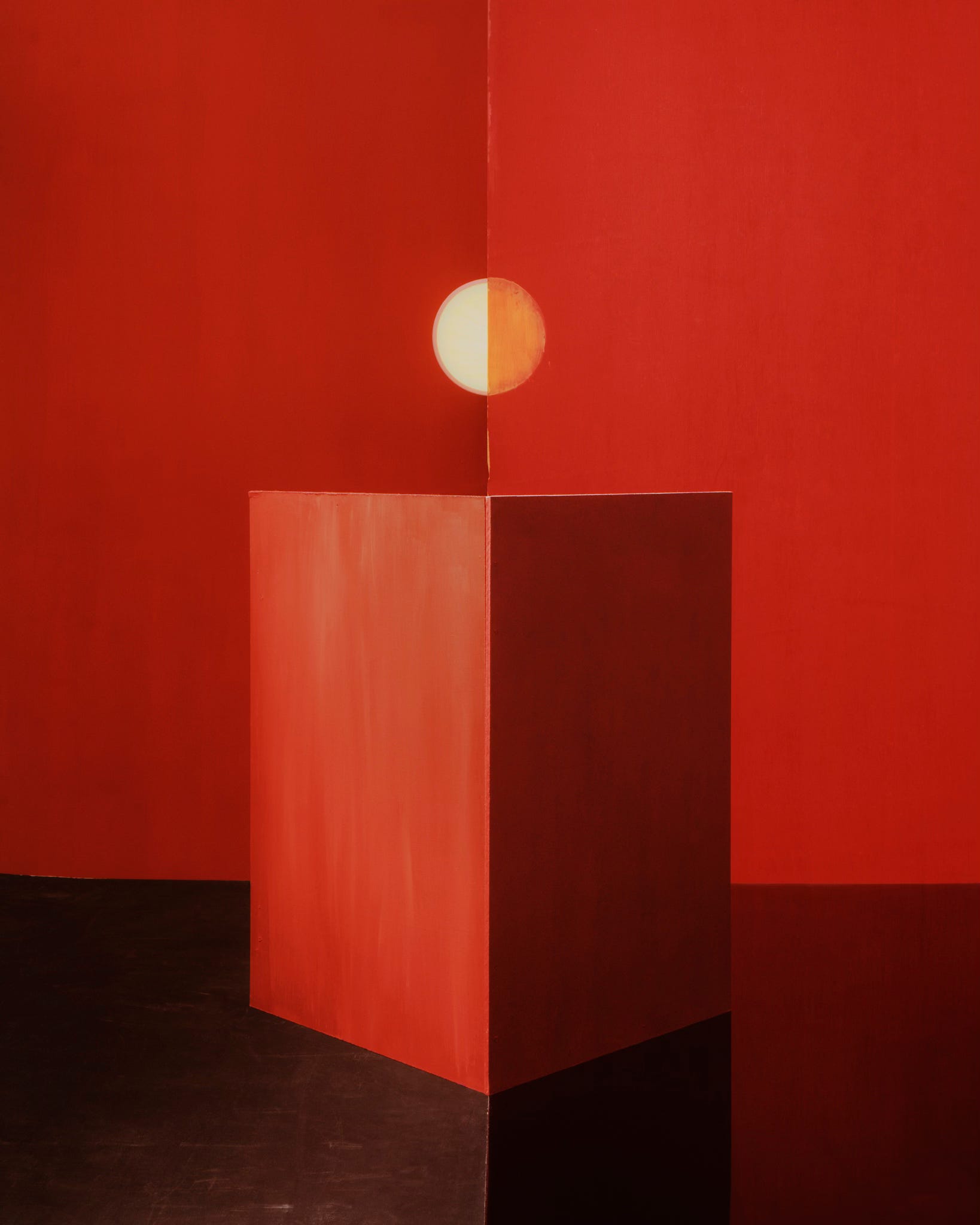
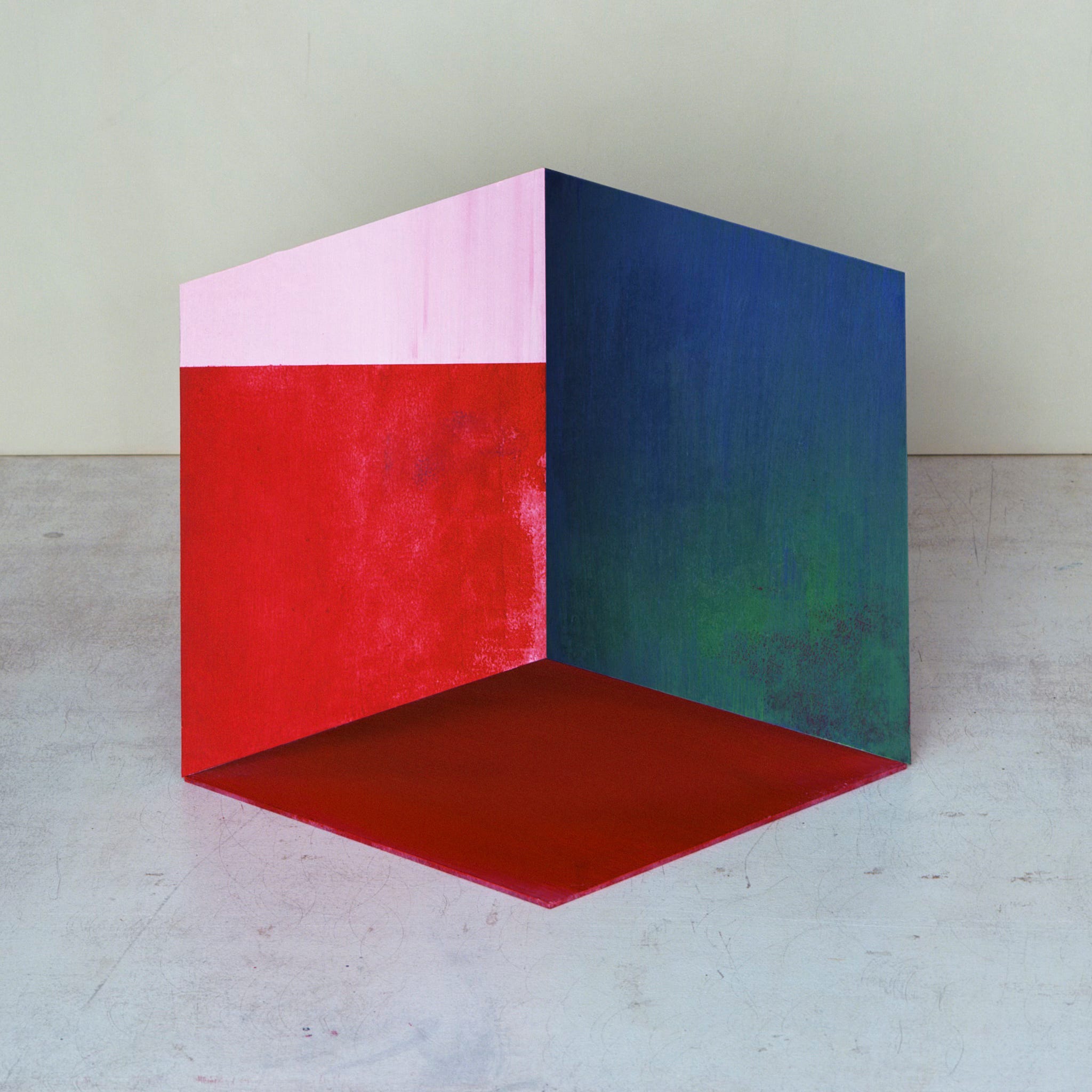
I tend to produce some very small pieces, around 12 centimeters, or very large ones, close to two meters; when defining a palette, I think about the size of color. That is, in addition to thinking whether it is red or yellow, you have to think how much red and how much red next to how much yellow. Whether there is a line or a gradient from red to orange. How the red was applied: whether the brushstrokes are visible, whether it is solid, opaque or translucent, whether beneath the red there was an orange that shows through in some areas, whether the surface is smooth or has texture. Sometimes I have placed a lamp on the set, so that there is a luminous yellow. So color, form, texture, and format go together. For me, it is still an ongoing investigation.
What are you working on now and where do you feel your practice is heading?
RC: I feel that Episodios still needs a lot of work. In this series, I have been exploring one by one the characteristics that seem inherent to photography: perspective, for example. Unlike painting, photography cannot not have vanishing points. In some photos, I have cancelled or exaggerated the sense of perspective. I am also interested in playing with the three-dimensionality and the materiality of the elements.
To learn more about Rodrigo Chapa, visit:
En el estudio con: Rodrigo Chapa
Rodrigo Chapa es un artista mexicano cuya práctica está arraigada en la fotografía, y que continuamente empuja los límites del medio. A través de escenas construidas e intervenciones materiales, su trabajo explora la relación entre memoria y percepción.
En esta entrevista, Rodrigo reflexiona sobre su acercamiento temprano a la fotografía y sobre las maneras en que su trabajo se mueve entre imagen, objeto e ilusión. Habla de su aproximación al color, de series clave como Many Moons, Memorias y Episodios, y de su interés por difuminar los límites entre fotografía, pintura y cine.
¿En qué momento te diste cuenta de que te interesaba la fotografía?
RC: Tengo muy mala memoria, no sé cuándo empecé a tomar fotos exactamente, pero sí recuerdo que mi primera cámara fue un juguete de los años 90, de formato 110, de las Tortugas Ninja. Cuando se me pasó la moda, desarmé esa cámara para quitar una Tortuga Ninja que estaba adentro, entre el lente y la película, y se imprimía en cada foto, y seguí tomando fotos con ella. Aún tengo esas fotos impresas, más no la memoria de haberlas tomado.
La fotografía, para mí, siempre ha sido una manera de recordar. Tengo tres archivos: uno para el trabajo comercial que hago, uno como artista y uno de recuerdos, de cosas personales. Tengo muchas fotos que no recuerdo haber tomado; son recuerdos que no tendría si no fuera por ellas. Las primeras fotos que tomé las tengo impresas. Era una actividad que hacía con mi mamá: ella me llevaba a revelar e imprimir.
Hubo una serie en la que trabajé de 2015 a 2019, más o menos, que se llama Memorias, que habla justamente de esto. Abordaba mi relación con la fotografía desde la búsqueda de cómo imprimir estos recuerdos. Recreé algunos momentos que no tenía fotografiados: una serie de puestas en escena de memorias que vivían en mi cabeza, pero que no fotografié en su momento. Ahí había un elemento interesante: la reinterpretación de las cosas, porque la memoria que uno tiene, después de un tiempo, suele modificarse; evoluciona con el tiempo. Eso me pareció interesante, especialmente en mi caso, que sé que olvido muchos detalles. Entonces, hice una especie de narrativa basada en hechos reales, pero con algo de ficción.
¿Cómo entiendes tu práctica y qué te interesa explorar a través del medio fotográfico?
RC: Creo que la constante en mi trabajo ha sido probar los límites del medio, retar el proceso tradicional y la definición de lo que es y lo que no es fotografía. Lo he abordado de maneras muy distintas.
En la serie Many Moons, que comencé en el 2012, hacía ilustraciones que después imprimía sobre material transparente de diapositiva, y las colocaba dentro de una cámara de medio formato, entre la película y el lente (parecido a mi Tortuga Ninja). Ver la ilustración en el negativo tenía un efecto muy confuso; evidentemente es fotografía, pero no parece.
Después de eso trabajé en Memorias. Si Many Moons estaba jugando con empujar la fotografía para ver dónde están los límites entre ilustración y fotografía, Memorias estaba haciendo eso con la cinematografía. Si tú sacas un fotograma de un carrete de película, es una fotografía, pero también es cine. Entonces, el discurso iba por ahí: explorar hasta dónde se puede empujar la foto, dónde termina.
Cuando presenté Episodios en Paris Photo con Concordia Studio, algunas personas se acercaron a decirme: “Tú no perteneces aquí, lo que tú haces es pintura”, casi ofendidos. Los entiendo: aficionados a la fotografía acostumbrados a ver en esa feria a Cartier-Bresson y Doisneau. Ellos también son mis ídolos, pero estamos a dos siglos de que se inventó la fotografía, y creo que es interesante ver para dónde más se puede ir.
Mi proceso siempre es muy introspectivo. Es como una meditación. Todo es muy hacia adentro: conocerse, pasar horas y horas con uno mismo. Tener una excusa para hacerlo creo que es lo que más me emociona del proceso.
“Creo que la constante en mi trabajo ha sido probar los límites del medio, retar el proceso tradicional y la definición de lo que es y lo que no es fotografía.”
¿Cómo sabes que un set está terminado y listo para ser fotografiado?
RC: Creo que tiene que ser visualmente lo suficientemente interesante. Para mí, eso es lo más importante.
Mucho tiempo sentí esta presión de saber justificar con palabras un proyecto fotográfico antes de empezar a hacer fotos. Cuando te presentas para un premio o una exposición, tienes que justificarte conceptualmente. Yo nunca he sido bueno en eso. Al final de cuentas, lo que más me interesa es lo que veo. Para mí es un medio visual; la manera de conectar con la obra es visual, entonces prefiero partir de ahí.
¿Qué papel juega la edición dentro de tu práctica?
RC: No hay mucha edición en mi práctica actual; por lo general, paso la mayor parte del tiempo haciendo pruebas con una cámara digital y, cuando ya está todo listo, cambio de cámara, a veces por la de gran formato o a veces alguna de formato medio, y hago una foto o dos.
A lo largo de tu práctica, el color ha ido tomando un lugar muy particular. ¿Qué influencias han marcado esa parte de tu trabajo?
RC: Cuando empecé, hacía retrato y hacía solamente blanco y negro porque no sabía manejar el color. No lo había estudiado lo suficiente como para saber qué hacer con él.
Eventualmente empecé a explorar el color, visitando exposiciones y leyendo libros. En ese momento me interesé mucho por el trabajo de los expresionistas abstractos y conecté mucho con el trabajo de Rothko y Newman. Y también con el de Yves Klein. Pero, sobre todo, con Rothko; me parece que logra mucho con muy poco. También me pareció muy interesante cómo él hablaba de su obra como un acto performático, donde la pintura era más bien el registro de la obra.
“Me interesé mucho por el trabajo de los expresionistas abstractos…pero, sobre todo, con Rothko; me parece que logra mucho con muy poco.”
¿Cómo defines la paleta de color dentro de una imagen o una serie? ¿Es algo más intuitivo o responde a una idea más estructurada?
RC: Tiene mucho que ver con el formato.
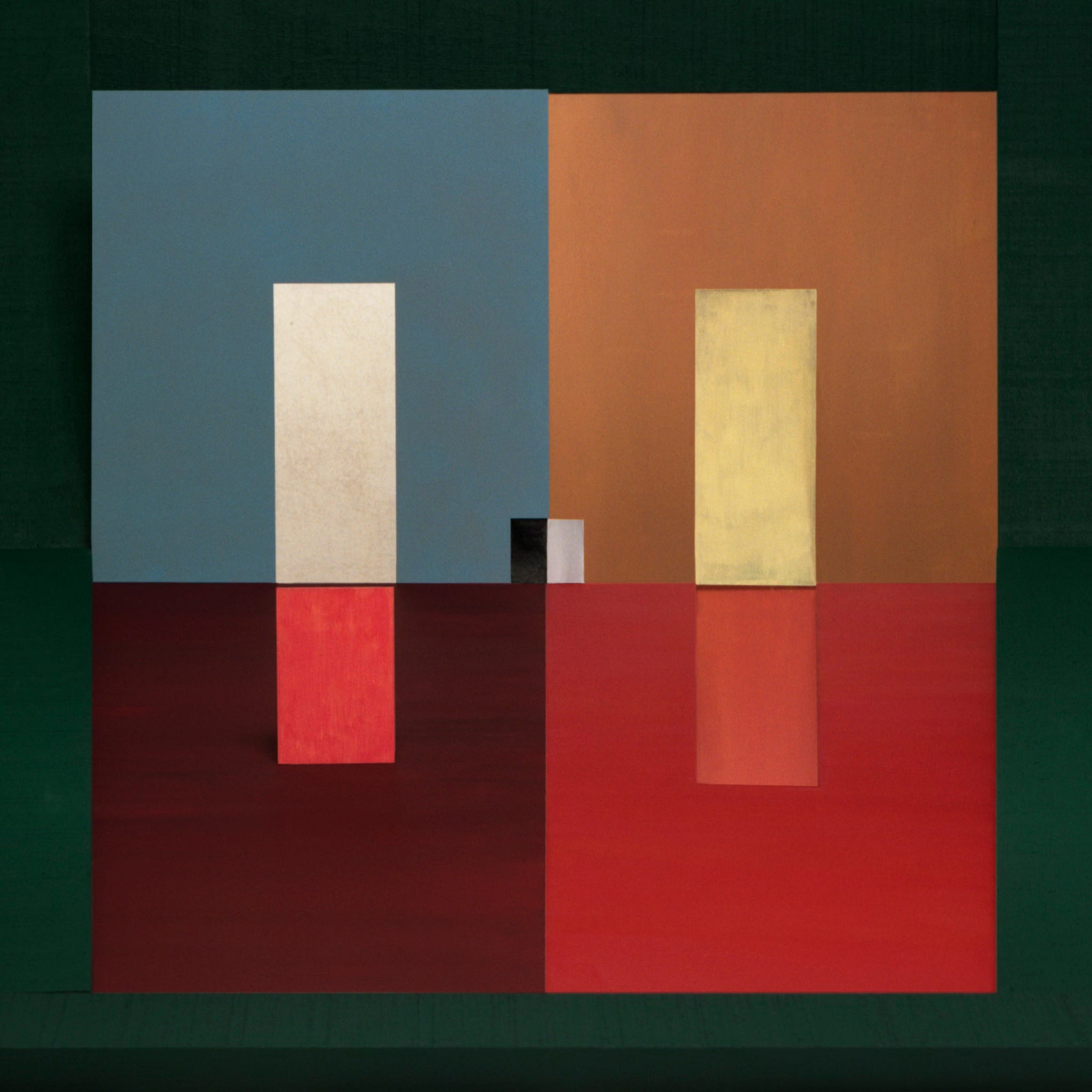
Suelo producir algunas piezas muy pequeñas, como de 12 centímetros, o muy grandes, de cerca de dos metros; al definir una paleta, pienso en el tamaño del color. O sea que, además de pensar si es rojo o es amarillo, hay que pensar cuánto rojo y cuánto rojo junto a cuánto amarillo. Si del rojo al naranja hay una línea o un gradiente. Cómo se aplicó el rojo: si se ven las pinceladas, si es sólido, opaco o traslúcido, si abajo del rojo había un naranja que se asoma en algunas partes, si la superficie es lisa o tiene textura. Algunas veces he puesto en el set una lámpara, de manera que hay un amarillo luminoso. Entonces, color, forma, textura y formato van juntos. Para mí, sigue siendo una investigación.
¿En qué estás trabajando ahora y hacia dónde sientes que se dirige tu práctica?
RC: Siento que a Episodios aún le falta mucho trabajo. En esta serie he ido explorando una por una las características que parecen inherentes a la fotografía: la perspectiva, por ejemplo. A diferencia de la pintura, la fotografía no puede no tener puntos de fuga. En algunas fotos he cancelado o exagerado la sensación de la perspectiva. Me interesa también jugar con la tridimensionalidad y la materialidad de los elementos.
Para conocer más sobre Rodrigo Chapa, visita:
I'm happy I took the time to read this interview. Rodrigo's approach to photography is a concept I never considered, and I respect how it challenges conventions. As a creative, it is necessary to push the medium forward.