


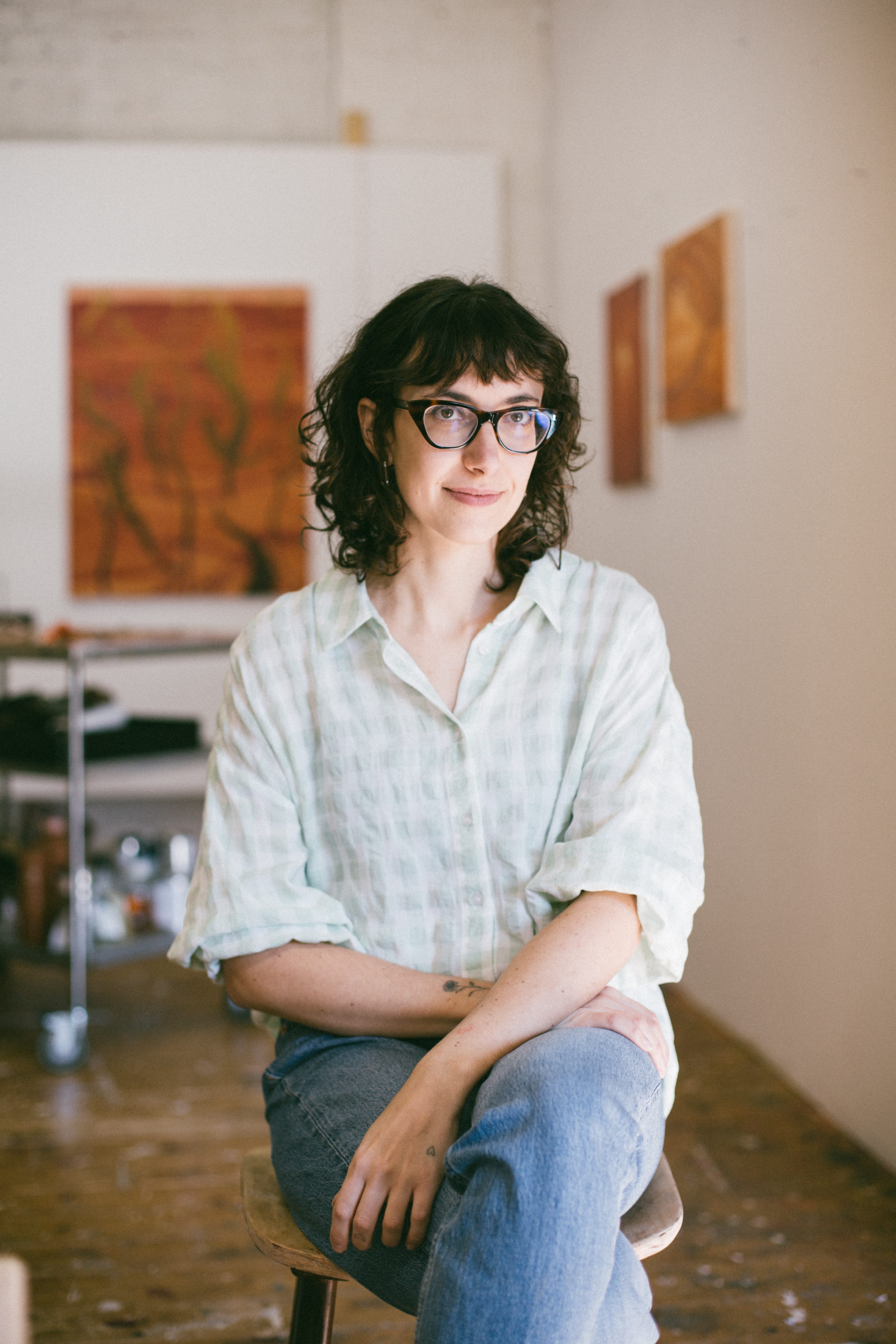
Paula Turmina is a Brazilian multidisciplinary artist who lives and works in London. Paula views the canvas and other surfaces as metaphorical landscapes, using them to investigate themes of time and storytelling through a science fiction lens.
In this interview, Paula invites us to explore more about her artistic journey, the inspiration behind her works, and shares details about her most recent art residency and exhibition in Mexico City.
Portrait photo by: Asafe Ghalib
Q: Could you provide us a brief introduction about yourself and your work?
Paula Turmina: I come from the Brazilian countryside in the south and have been living in London for 11 years now. I started painting when I arrived in London. Before that, I used to draw a lot, but I wasn't really aware that being an artist could be an actual work.
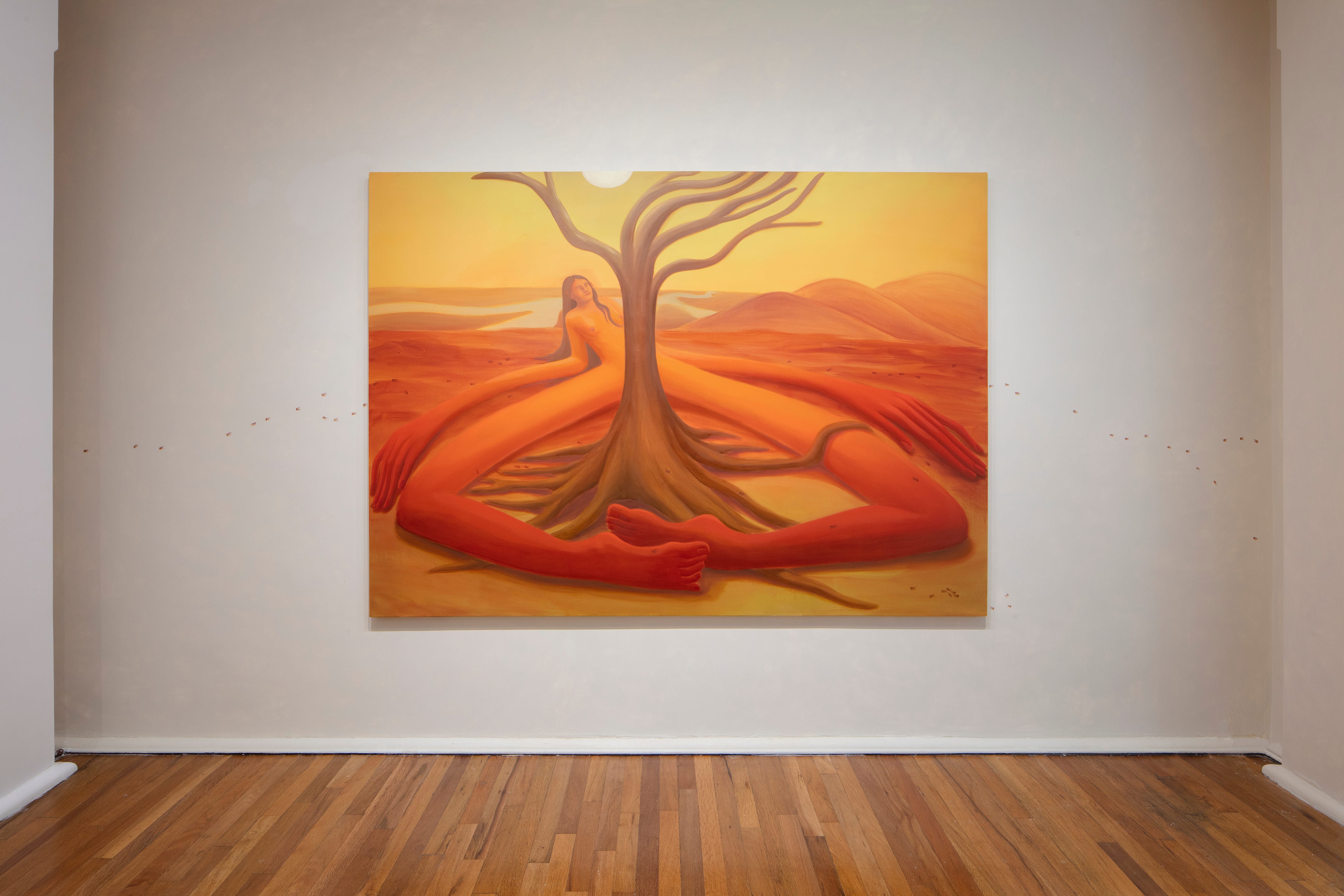
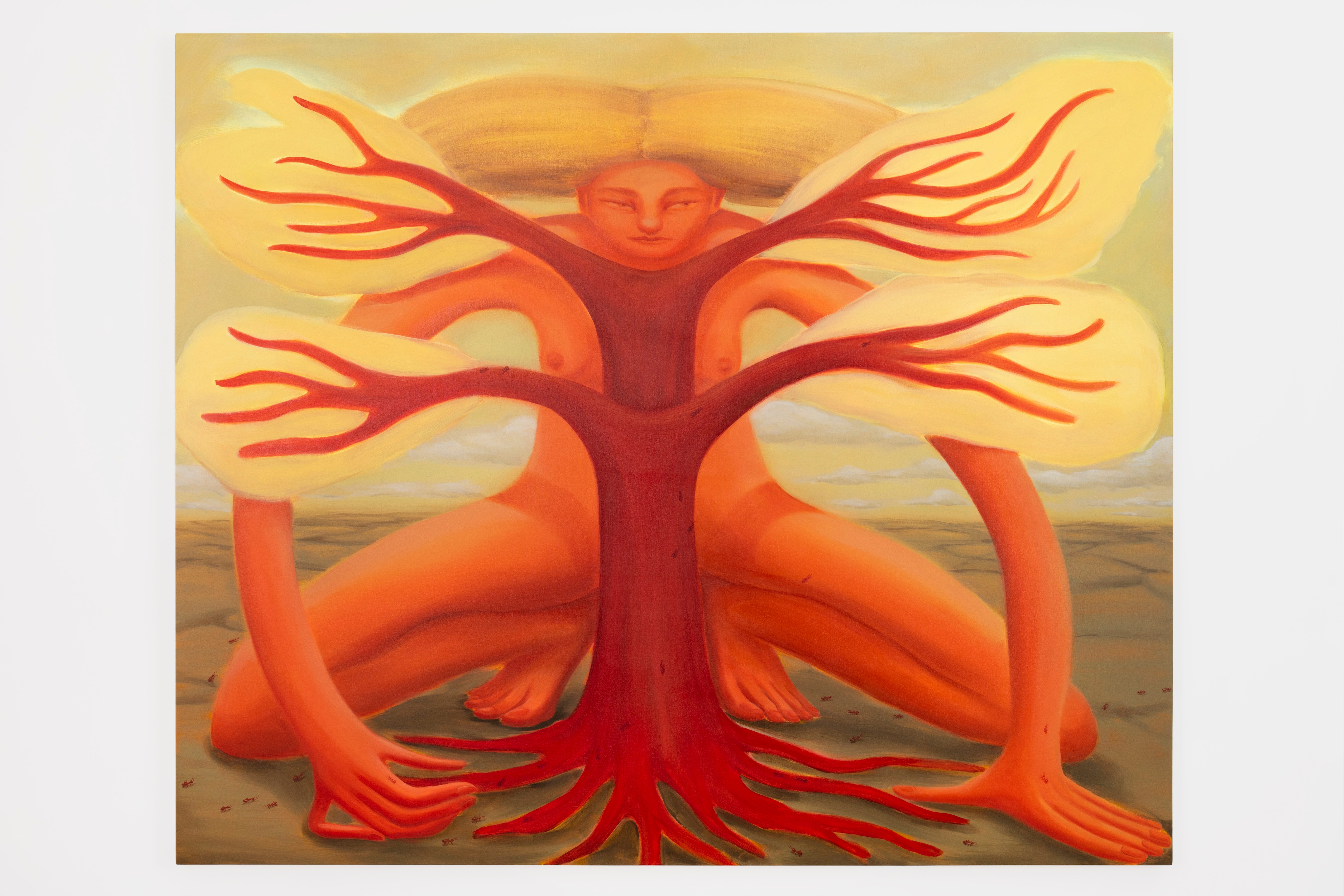
Colour became an important quest for me since I discovered that Brazil’s main export commodity during early colonial explorations was brazilwood - a tree that can give a red dye. Since then, I’ve been thinking how colours can evoke feelings and shape history, and I started to create a world through the warm hues that both refer to that past history as well as current climate issues and feelings of escapism, such as colonising Mars (also red). I found that doing research in these areas gave me freedom in others such as the gestures and figuration, which are more fluid and intuitive.
The core of my work is to explore the relationship between human and other-than-human beings, whilst thinking of the earth as a body too. The very act of painting is a way of connecting with the physical, the earthly, and the humane of it all.
“The very act of painting is a way of connecting with the physical, the earthly, and the humane of it all”
Q: What's the starting point for creating a new piece?
Paula Turmina: My process usually starts from drawing, most of the time from imagination and occasionally from a reference, which could be an old painting, my sister, or the environment I’m in. I don’t have a systematic process; it's quite chaotic, and for most part of it, I’m not sure of what I’m doing. Sometimes key words or feelings help me navigate the images, and once it starts to take shape, I shift to a more intentional gesture where I can direct what's been created to become what I envision, sometimes more successfully than others.
I use thin layers of oil paint to start the process, which is when I start defining the image. By this point, I get rid of the reference - from previous experience, I realised that trying to make a drawing into a painting can only lead to frustration. This way is more fun for me too, moving the paint around and seeing where it goes. There is something about gestures and colours which are endlessly exciting and difficult, and those early stages end up dictating the finished piece, despite how many layers it will take.
Q: We know that you have a passion for reading. Can you share with us some books or authors that have influenced your practice? We are also aware that you often draw inspiration from sci-fi: What attracts you to this genre?
Paula Turmina: I love reading, but I am a very slow reader. I am constantly in an inner battle to decide which of the 3 or 4 books I’m reading I’ll pick up next because I know it will take time. Overall, I switch between academic books on topics that interest me and old sci-fi books. Currently, I am reading Gina by Reto Pulfer, The Sirens of Titan by Kurt Vonnegut and my friend’s thesis: A Viscous Law and the Sticky Bodies of Cocoa by Renan Nery Porto.
One of the writers who has influenced me the most is Octavia Butler. I’m drawn to sci-fi since I’ve realized it can be a medium that speaks to our present climate and social issues through fiction. I'm also interested in how it is extrapolated and explored under different physical and social laws, which makes me realise how precious and random our condition is. Since I became more fascinated with it, I started to see the world around me as this really special thing where slugs, frogs, flowers, humans, computers, and so on can exist together.
“I’m drawn to sci-fi since I’ve realized that it can be a medium that speaks to our present climate and social issues through fiction”
Q: Do you incorporate narrative elements from your favourite books into your artworks? If yes, could you share a glimpse of where we might find them?
Paula Turmina: Never. Not because I don’t want to or think it's bad, but mostly because I don’t have that sort of discipline. Surely, things I’ve read slip through the work and bring me new ideas, but during the process, it usually changes and takes new shapes. Text is a very generative medium and I think that it coexists with painting, but to me, they cannot be doing the same thing.
“Text is a very generative medium and I think that it coexists with painting, but to me, they cannot be doing the same thing”
Q: What other influences do you draw upon in your work besides books?
Paula Turmina: From some of my favourite artists: Lee Lozano, Paul Thek, Gertrude Abercrombie, Goya, Leonilson, Frank Walter and Paul Klee.
I am also inspired by movies; one that has been on my mind for a while now is Bacurau, and I am only just starting to delve deeper into Pasolini’s work. It's been so insightful, and I am learning a lot from him.
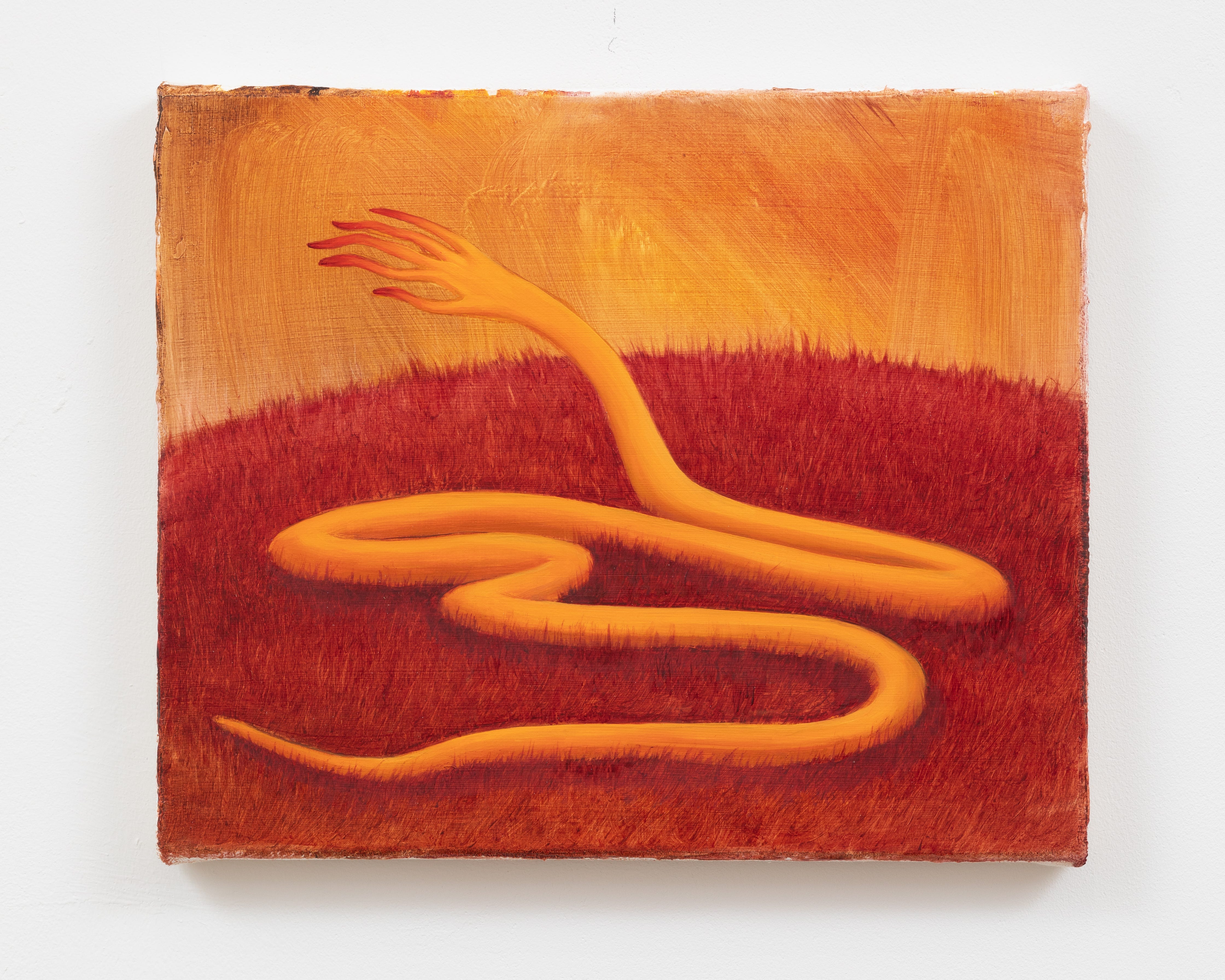
Q: Your canvases appear to portray a post-apocalyptic world. Can you expand on the emotional landscape you aim to convey through these scenes?
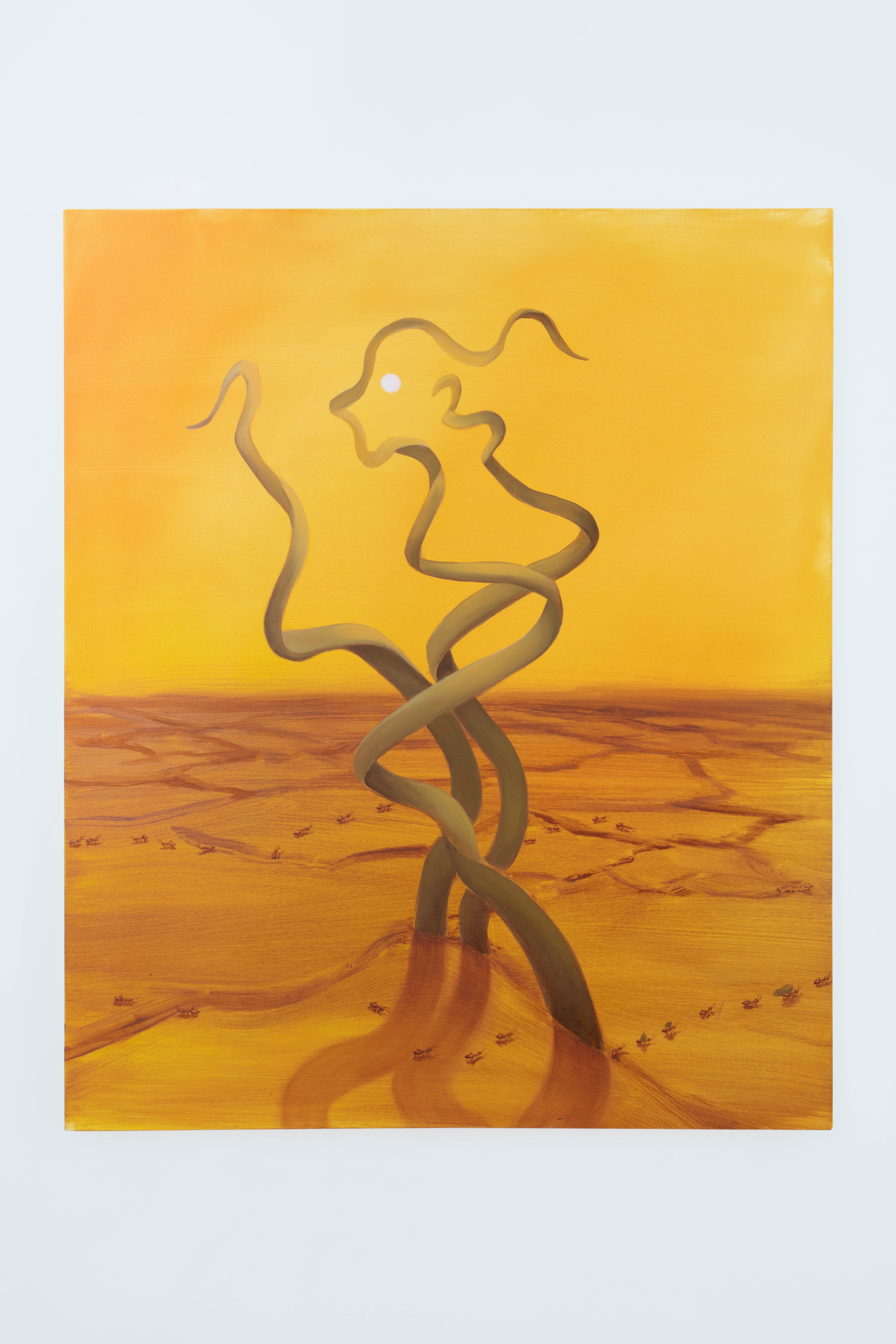
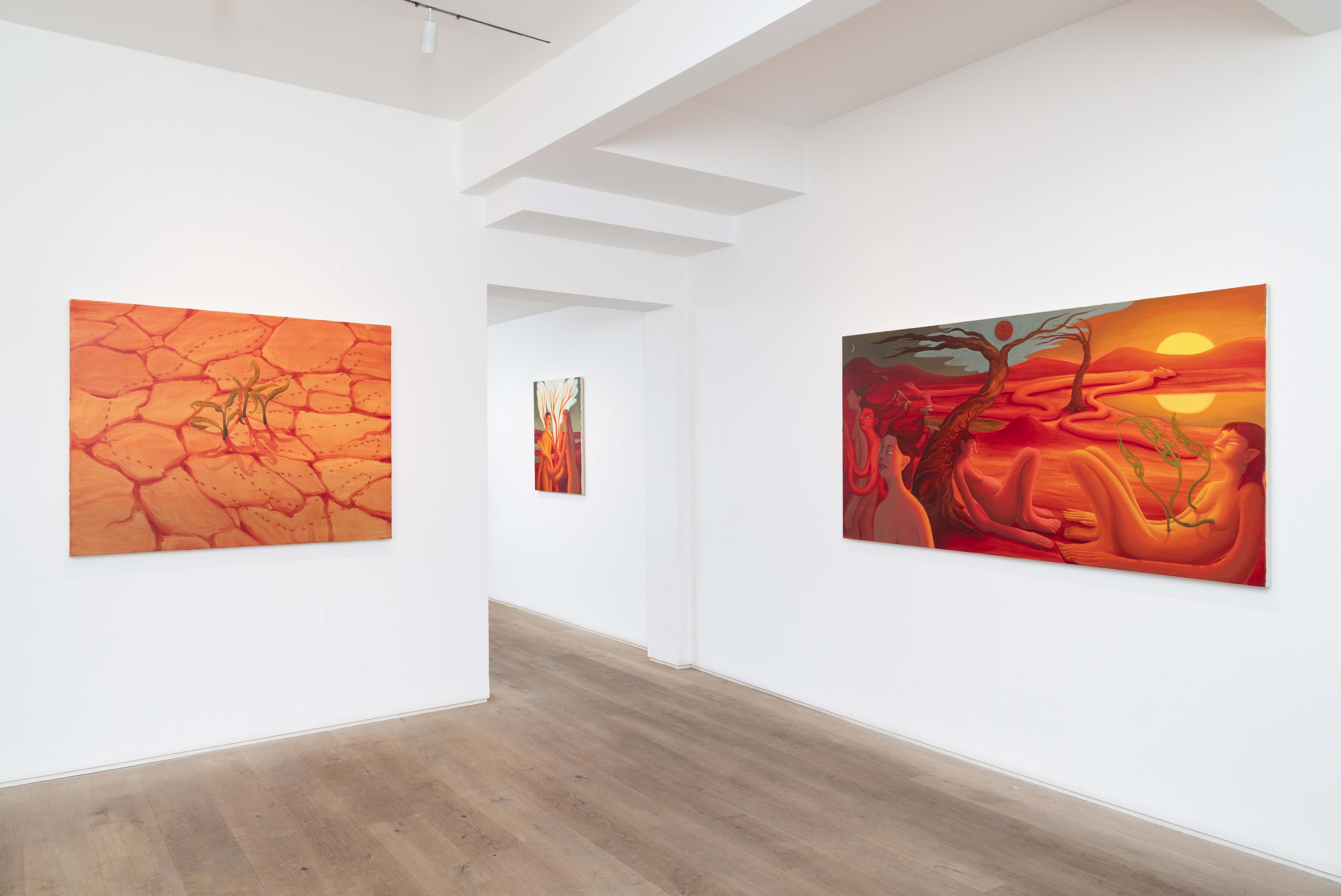
Paula Turmina: Yes, there is a sort of melancholy and nostalgia in the landscapes I am depicting. They’re mostly from imagination, but they refer simultaneously to a past history and a future (in a speculative form). I am always so thankful to people when they tell me they have seen a landscape that reminds them of my paintings, because it seems to bring it to life.
In Tarkovsky’s Stalker, the earth is sort of shape-shifting and the character is loosely trying to find his way to the ‘zone’; I feel a bit like that in my work. When I’m painting these landscapes, I’m trying to capture some thoughts and feelings in an unknown and unpredictable environment. Of course, my work is figurative, so there is an immediate understanding of what’s happening, yet there are complex things that can appear through the marks.
“When I’m painting these landscapes, I’m trying to capture some thoughts and feelings in an unknown and unpredictable environment”
Q: You refer to the absurdity of political discourse in your work. Could you elaborate on how you visually approach this theme?
Paula Turmina: Living in this time and age, I cannot help but think of the rapid environmental changes and dread the future in a warmer world, and how this is rooted in a system of violence. In my work, I’m responding to it by making decisions both in the creative part and outside of it that can take me closer to what I see as a more caring way of living. When I speak of the absurdity in politics, it is about the fact that I don’t find this sense of care in discussions.
But in terms of art making, absurdity is a term that is generative because extrapolating and creating seemingly nonsensical pieces can spark different conversations, ones that are not binary. I think of Waiting for Godot by Samuel Beckett a lot, which, over time, makes me see new things and connect the story to many different topics. These thoughts are not so literally portrayed in my work, but they give me fuel to insert some contradictions and leave room for mystery in the work.
“Living in this time and age, I cannot help but think of the rapid environmental changes and dread the future in a warmer world, and how this is rooted in a system of violence”
Q: Does your Brazilian upbringing influence your art? If so, in what ways?
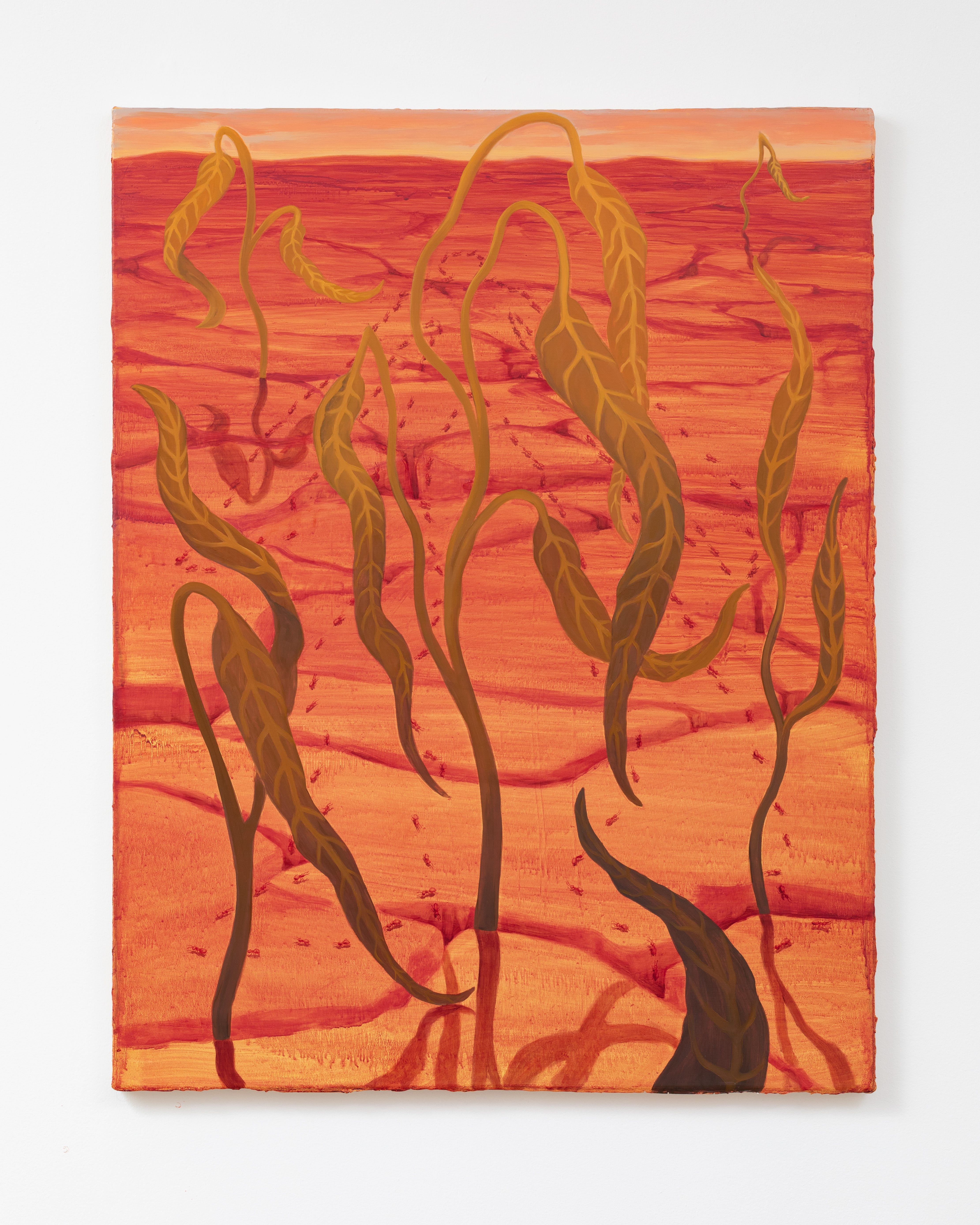
Paula Turmina: Definitely. In my humour, the ants in my paintings, the noise of the forest and cities, the red earth, the intense rains, the messiness and creativity that comes with having to sort things on the spot, the spiritual search. Personally, I still have the habit of always hugging instead of shaking hands.
Q: How was your recent artist residency in Mexico City? Did it change your perspective on art and/or your creative process?
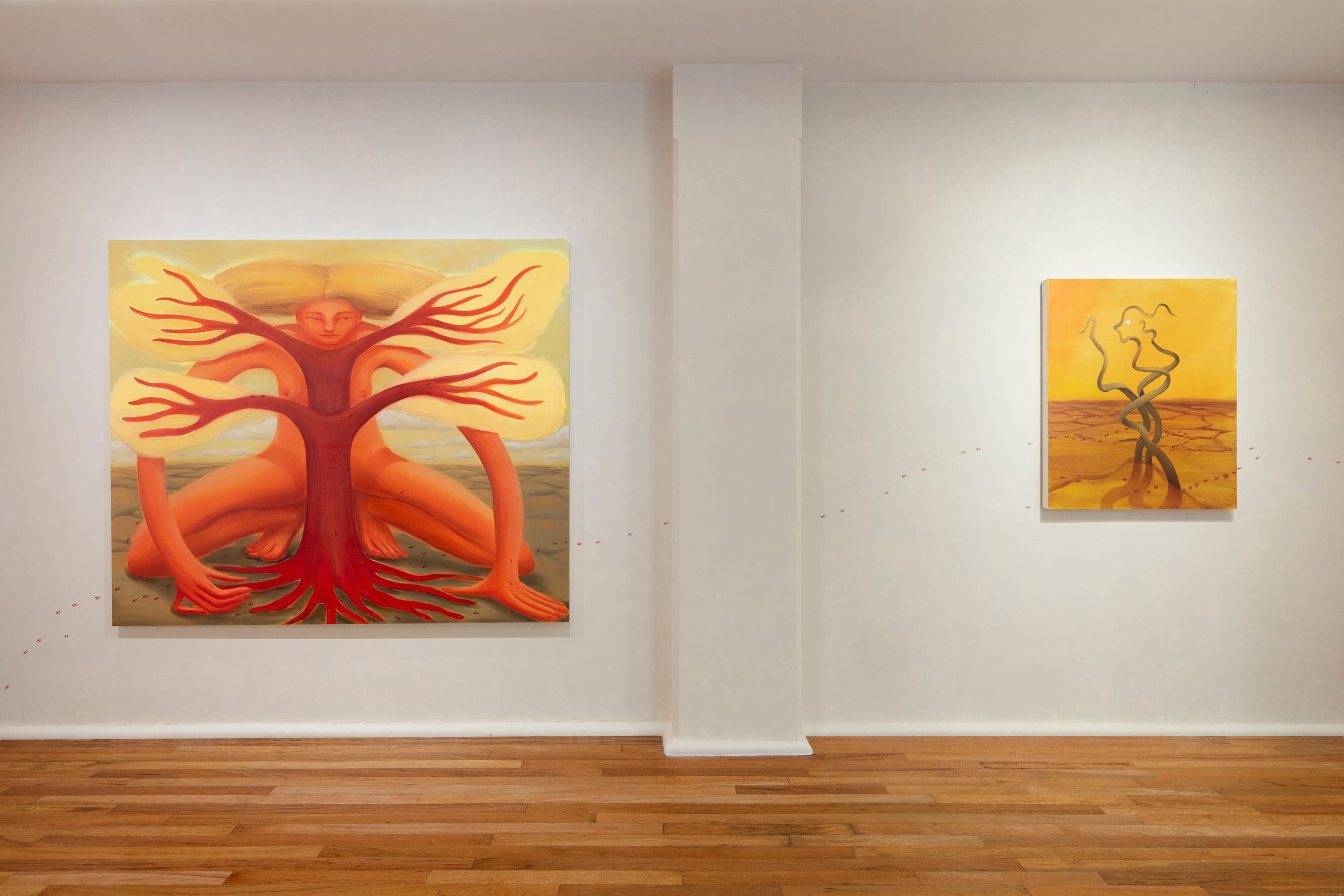
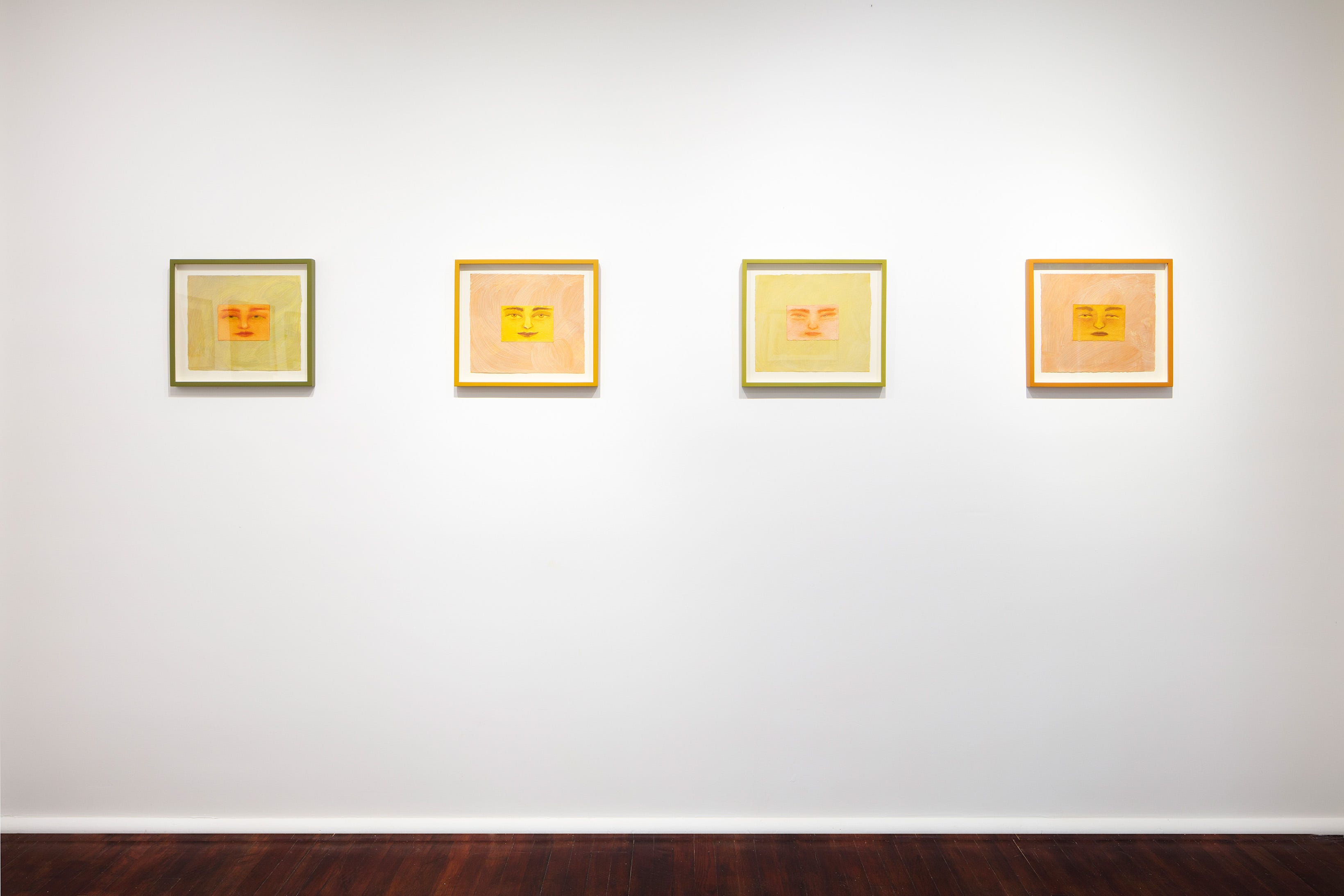
Paula Turmina: I had a beautiful time in Mexico; it was my first time visiting the country, and it felt very homely. I stayed for two and half months and was working towards an exhibition with Ambar Quijano, who also provided me the space to do it.
It was amazing to make a new body of work in a new environment, and I was thinking a lot about adaptation and tremors as forces of change - both in a sense of allowing myself to respond to and change with the place, as well as Mexico City being an earthquake zone that is in constant movement. These themes reflected on the work I did there, where the bodies (humans, ants, plants, earth) depicted are sort of mimicking others, in a state of flux. I also fell in love with the food, met amazing people and really enjoyed seeing what was going on in the art scene there, it felt very thought-provoking.
All the sun symbols from Mesoamerican cultures were also a huge source of inspiration and shock for me. I never noticed before, for example, that the Aztec sun stone’s central figure is holding a heart in each hand - the drama! I felt it all quite intensely, so much that I got a tattoo with the artist Maria Conejo to make it memorable.
“It was amazing to make a new body of work in a new environment, and I was thinking a lot about adaptation and tremors as forces of change…”
Q: What changes would you like to see in the art world?
Paula Turmina: Better distribution of capital. Slow down the pace. Foster deeper discussions. Increase attention to the Global South.
To learn more about Paula Turmina, visit:
Paula Turmina es una artista multidisciplinaria brasileña que vive y trabaja en Londres. Paula considera el lienzo y otras superficies como paisajes metafóricos, que utiliza para investigar temas relacionados con el tiempo y la narrativa a través de una lente de ciencia ficción.
En esta entrevista, Paula nos invita a explorar más a fondo su trayectoria artística, la inspiración que hay detrás de sus obras y nos comparte detalles sobre su más reciente residencia artística y exhibición en la Ciudad de México.
Foto tomada por: Asafe Ghalib
P: ¿Podrías darnos una breve introducción sobre ti y tu trabajo?
Paula Turmina: Vengo de Brasil, del campo en el sur y vivo en Londres desde hace 11 años. Empecé a pintar cuando llegué a Londres. Antes de eso, solía dibujar mucho, pero no era realmente consciente de que ser artista podía ser un trabajo real.
El color se convirtió en una búsqueda importante para mí desde que descubrí que la principal mercancía de exportación de Brasil durante las primeras exploraciones coloniales era el Palo Brasil, un árbol que puede dar un tinte rojo. Desde entonces, he estado pensando en cómo los colores pueden evocar sentimientos y dar forma a la historia, y empecé a crear un mundo a través de los tonos cálidos que se refieren tanto a esa historia pasada como a los problemas climáticos actuales y los sentimientos de escapismo, como la colonización de Marte (también rojo). Descubrí que investigar esos aspectos me daba libertad en otros, como los gestos y la figuración, que son más fluidos e intuitivos.
El núcleo de mi trabajo es explorar la relación entre los seres humanos y los que no lo son, pensando también en la tierra como un cuerpo. El propio acto de pintar es una forma de conectar con lo físico, lo terrenal y lo humano.
“El propio acto de pintar es una forma de conectar con lo físico, lo terrenal y lo humano”
P: ¿Cuál es tu punto de partida para crear una nueva obra?
Paula Turmina: Mi proceso suele partir del dibujo, la mayoría de las veces de la imaginación y ocasionalmente de una referencia, que puede ser un cuadro antiguo, mi hermana o el entorno en el que me encuentro. No tengo un proceso sistemático; es bastante caótico y, durante la mayor parte del mismo, no estoy segura de lo que estoy haciendo. A veces, las palabras clave o los sentimientos me ayudan a navegar por las imágenes, y una vez que empiezan a tomar forma, paso a un gesto más intencionado en el que puedo dirigir lo que se ha creado para que se convierta en lo que imagino, a veces con más éxito que otras.
Utilizo finas capas de pintura al óleo para iniciar el proceso, que es cuando empiezo a definir la imagen. En este punto, me deshago de la referencia; por experiencias anteriores, me he dado cuenta de que intentar convertir un dibujo en una pintura sólo puede conducir a la frustración. Para mí es más divertido mover la pintura y ver adónde va. Hay algo en los gestos y los colores que es tan emocionante como difícil, y esas primeras fases acaban dictando la obra acabada, a pesar de las capas que pueda necesitar.
P: Sabemos que te apasiona la lectura. ¿Puedes compartir con nosotros algunos libros o autores que hayan influido en tu práctica? También sabemos que a menudo te inspiras en la ciencia ficción: ¿Qué te atrae de este género?
Paula Turmina: Me encanta leer, pero soy una lectora muy lenta. Estoy constantemente en una batalla interior para decidir cuál de los 3 o 4 libros que estoy leyendo voy a coger a continuación porque sé que me va a llevar tiempo. En general, alterno entre libros académicos sobre temas que me interesan y viejos libros de ciencia ficción. Actualmente, estoy leyendo Gina de Reto Pulfer, Las sirenas de Titán de Kurt Vonnegut y la tesis de mi amigo: La ley viscosa y los cuerpos pegajosos del cacao, de Renan Nery Porto.
Una de las escritoras que más me ha influido es Octavia Butler. Me atrae la ciencia ficción desde que me di cuenta que puede ser un medio que hable de nuestro clima actual y de los problemas sociales a través de la ficción. También me interesa cómo se extrapola y explora bajo distintas leyes físicas y sociales, lo que me hace darme cuenta de lo preciosa y aleatoria que es nuestra condición. Desde que me fascinó más, empecé a ver el mundo que me rodea como algo realmente especial en el que pueden coexistir babosas, ranas, flores, seres humanos, ordenadores, etcétera.
“Me atrae la ciencia ficción desde que me di cuenta que puede ser un medio que habla de nuestro clima actual y de los problemas sociales a través de la ficción”
P: ¿Incorporas elementos narrativos de tus libros favoritos en tus obras de arte? Si es así, ¿podrías indicarnos dónde podemos encontrarlos?
Paula Turmina: Nunca. No porque no quiera o me parezca mal, sino sobre todo porque no tengo esa disciplina. Seguramente, cosas que he leído se deslizan en la obra y me aportan nuevas ideas, pero durante el proceso, suele cambiar y tomar nuevas formas. El texto es un medio muy generativo y creo que convive con la pintura, pero para mí no pueden estar haciendo lo mismo.
“El texto es un medio muy generativo y creo que convive con la pintura, pero para mí no pueden estar haciendo lo mismo”
P: ¿En qué otras fuentes, además de los libros, te inspiras para tu trabajo?
Paula Turmina: De algunos de mis artistas favoritos: Lee Lozano, Paul Thek, Gertrude Abercrombie, Goya, Leonilson, Frank Walter y Paul Klee.
También me inspiran las películas; una que tengo en mente desde hace tiempo es Bacurau, y estoy empezando a profundizar en la obra de Pasolini. Ha sido muy enriquecedor y estoy aprendiendo mucho de él.
P: Tus lienzos parecen retratar un mundo postapocalíptico. ¿Puedes explicarnos el contexto emocional que quieres transmitir a través de estas escenas?
Paula Turmina: Sí, hay una especie de melancolía y nostalgia en los paisajes que represento. En su mayoría proceden de la imaginación, pero remiten simultáneamente a una historia pasada y a un futuro (de forma especulativa). Siempre estoy muy agradecida con la gente cuando me dicen que han visto un paisaje que les recuerda a mis pinturas, porque parece que le da vida.
En Stalker, de Tarkovsky, la tierra cambia de forma y el personaje intenta encontrar su camino hacia la "zona"; yo me siento un poco así en mi trabajo. Cuando pinto estos paisajes, intento captar algunos pensamientos y sentimientos en un entorno desconocido e impredecible. Por supuesto, mi obra es figurativa, así que hay una comprensión inmediata de lo que ocurre, pero hay cosas complejas que pueden aparecer a través de las pinceladas.
“Cuando pinto estos paisajes, intento captar algunos pensamientos y sentimientos en un entorno desconocido e impredecible”
P: En tu obra haces referencia a la absurdidad del discurso político. ¿Podrías explicarnos cómo abordas visualmente este tema creativo?
Paula Turmina: Viviendo en esta época, no puedo evitar pensar en los rápidos cambios medioambientales y temer por el futuro en un mundo más cálido, y en cómo esto está arraigado en un sistema de violencia. En mi trabajo, respondo a ello tomando decisiones, tanto en la parte creativa como fuera de ella, que puedan acercarme a lo que considero una forma de vida más solidaria. Cuando hablo de lo absurdo en política, me refiero al hecho de que no encuentro este sentido del cuidado en las discusiones.
Pero en términos de creación artística, lo absurdo es un término generativo porque extrapolar y crear piezas aparentemente sin sentido puede desencadenar conversaciones diferentes, que no sean binarias. Pienso mucho en Esperando a Godot, de Samuel Beckett, que, con el tiempo, me hace ver cosas nuevas y conectar la historia con muchos temas diferentes. Estos pensamientos no se plasman tan literalmente en mi obra, pero me dan energía para insertar algunas contradicciones y dejar espacio para el misterio en la obra.
“Viviendo en esta época, no puedo evitar pensar en los rápidos cambios medioambientales y temer por el futuro en un mundo más cálido, y en cómo esto está arraigado en un sistema de violencia”
P: ¿Influye tu formación brasileña en tu arte? Si es así, ¿de qué manera?
Paula Turmina: Sin duda. En mi humor, las hormigas en mis cuadros, el ruido del bosque y de las ciudades, la tierra roja, las lluvias intensas, el desorden y la creatividad que conlleva tener que resolver las cosas en el acto, la búsqueda espiritual. Personalmente, sigo teniendo la costumbre de abrazar siempre en vez de dar la mano.
P: ¿Cómo fue tu reciente residencia artística en la Ciudad de México? ¿Cambió tu perspectiva del arte y/o tu proceso creativo?
Paula Turmina: Me lo pasé muy bien en México; era la primera vez que visitaba el país y me sentí muy a gusto. Me quedé dos meses y medio y estuve trabajando en una exhibición con Ambar Quijano, quien también me proporcionó el espacio para hacerlo.
Fue increíble realizar una nueva obra en un entorno nuevo, y pensé mucho en la adaptación y el movimiento como fuerzas de cambio, tanto en el sentido de permitirme responder al lugar y cambiar con él, como en el hecho de que Ciudad de México sea una zona sísmica en constante movimiento. Estos temas se reflejaron en el trabajo que realicé allí, donde los cuerpos (humanos, hormigas, plantas, tierra) representados imitan en cierto modo a otros, en un estado de flujo. También me enamoré de la comida, conocí a gente increíble y disfruté mucho viendo lo que ocurría en la escena artística del lugar, me pareció que provocaba mucha reflexión.
Todos los símbolos solares de las culturas mesoamericanas también fueron una gran fuente de inspiración y me causaron un gran asombro. Nunca me había dado cuenta, por ejemplo, de que la figura central de la piedra del sol azteca sostiene un corazón en cada mano: ¡qué drama! Lo sentí todo muy intensamente, tanto que me hice un tatuaje con la artista María Conejo para que fuera inolvidable.
“Fue increíble realizar una nueva obra en un entorno nuevo, y pensé mucho en la adaptación y el movimiento como fuerzas de cambio…”
P: ¿Qué cambios te gustaría ver en el sector del arte?
Paula Turmina: Una mejor distribución del capital. Reducir el ritmo. Fomentar debates más profundos. Prestar más atención al Sur Global.
Para saber más sobre Paula Turmina, visita: