


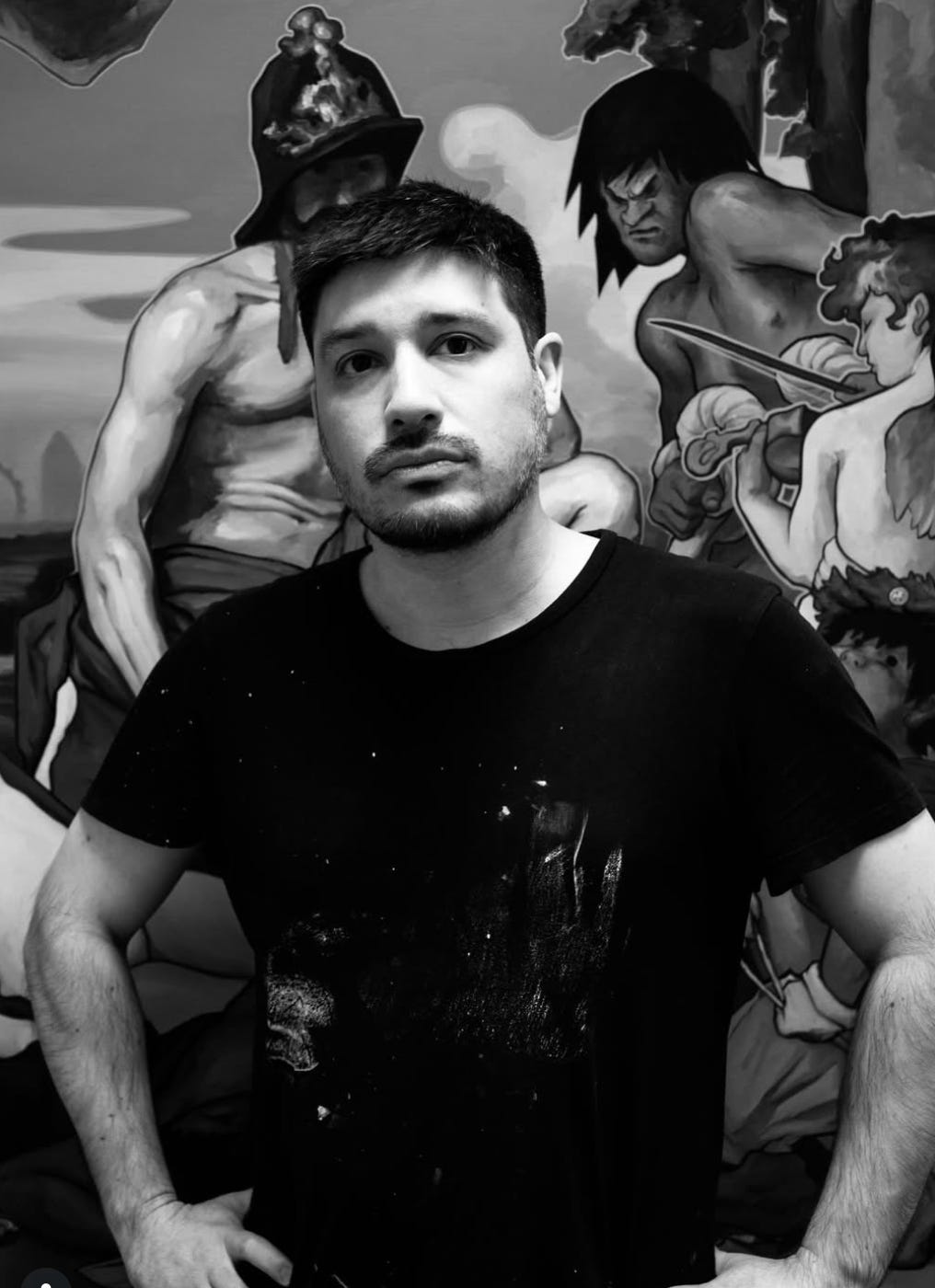
Nelson Hernández is a Chilean artist currently based in the United Kingdom. His practice is rooted in painting, while expanding through a continuous dialogue with digital tools. Drawing from a wide range of references, from popular culture and animation to art history, his work constructs layered compositions where disparate visual languages coexist, often producing moments of tension between the familiar and the unexpected.
In this interview, Nelson reflects on his path back to painting, the role of portraiture in shaping key moments of his career, and the development of a process that moves between physical and digital space. He speaks about questions of identity and cultural hybridity, as well as the place of humor and irony in engaging the viewer and unfolding meaning within his work.
Nelson Hernández is one of four artists participating in our first exhibition in London, WHAT WE TAKE, co-curated by Art in Latin America and CM Art Advisory, at Pipeline. The show remains on view through March 28.
How did your interest in art begin?
NH: I grew up in a house where my father painted and carved wood. So I grew up surrounded by art books; it was something very natural. At the same time, I was very interested in things like manga, comics, and cartoons. For me, it was always obvious, from a very young age, that I was going to study art. After graduating from art school, something happened: I never considered that I could dedicate myself to art, and I simply started working in graphic design for several years. I didn’t even give being a visual artist a chance. Until at some point I had a kind of realization: I asked myself what I was doing with my life, if I had always wanted to be a painter. That’s when I decided to start from scratch.
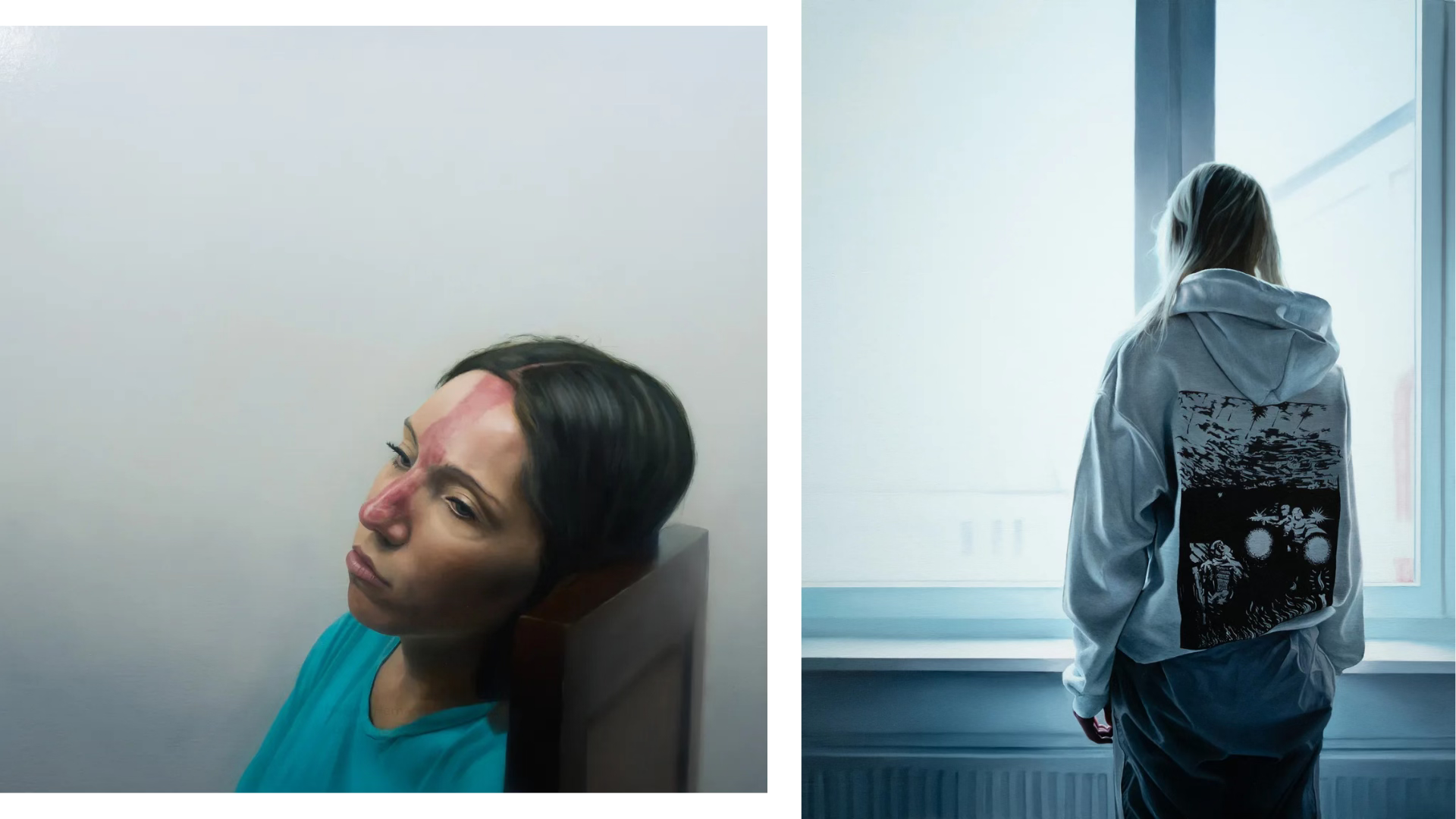
I set myself the goal of making one drawing a day: I began with small drawings using a Bic pen, but I was consistent. That period was essential for recovering my technical skills and also for exploring what interested me, what didn’t interest me, and where the images came from. After all that technical process, something unexpected happened: one day I saw a woman with a mark on her face, a kind of mole, and I found it deeply interesting. I became interested in the idea of doing a portrait, although it felt like a strange decision at the time, because I was submitting it to a young art competition in Chile, where the work that is usually rewarded tends to be more experimental or risky, and what I brought was quite traditional. However, I think that was precisely why it ended up standing out in an unexpected way. I submitted it, won, and that’s when I said, “well, apparently I’m a painter now.”
Since then, I haven’t stopped painting. Interestingly, something still happens to me with portraits. They are not necessarily what defines my practice, but they have appeared at important moments. Last year I made one of a Ukrainian friend, I submitted it to the National Portrait Gallery competition in London and it was selected. Now it will be shown again in a second stage of the exhibition in Newcastle. So I feel that, although my work does not seek to focus on portraits, there is something there that has accompanied me and that, in some way, has brought me luck. I think I shouldn’t stop doing it.
In your work, references to popular culture and art history coexist. How do you select the images you decide to work with?
NH: That type of reference has always appeared in my work, but it was during my master’s in London that I was able to formulate it better.
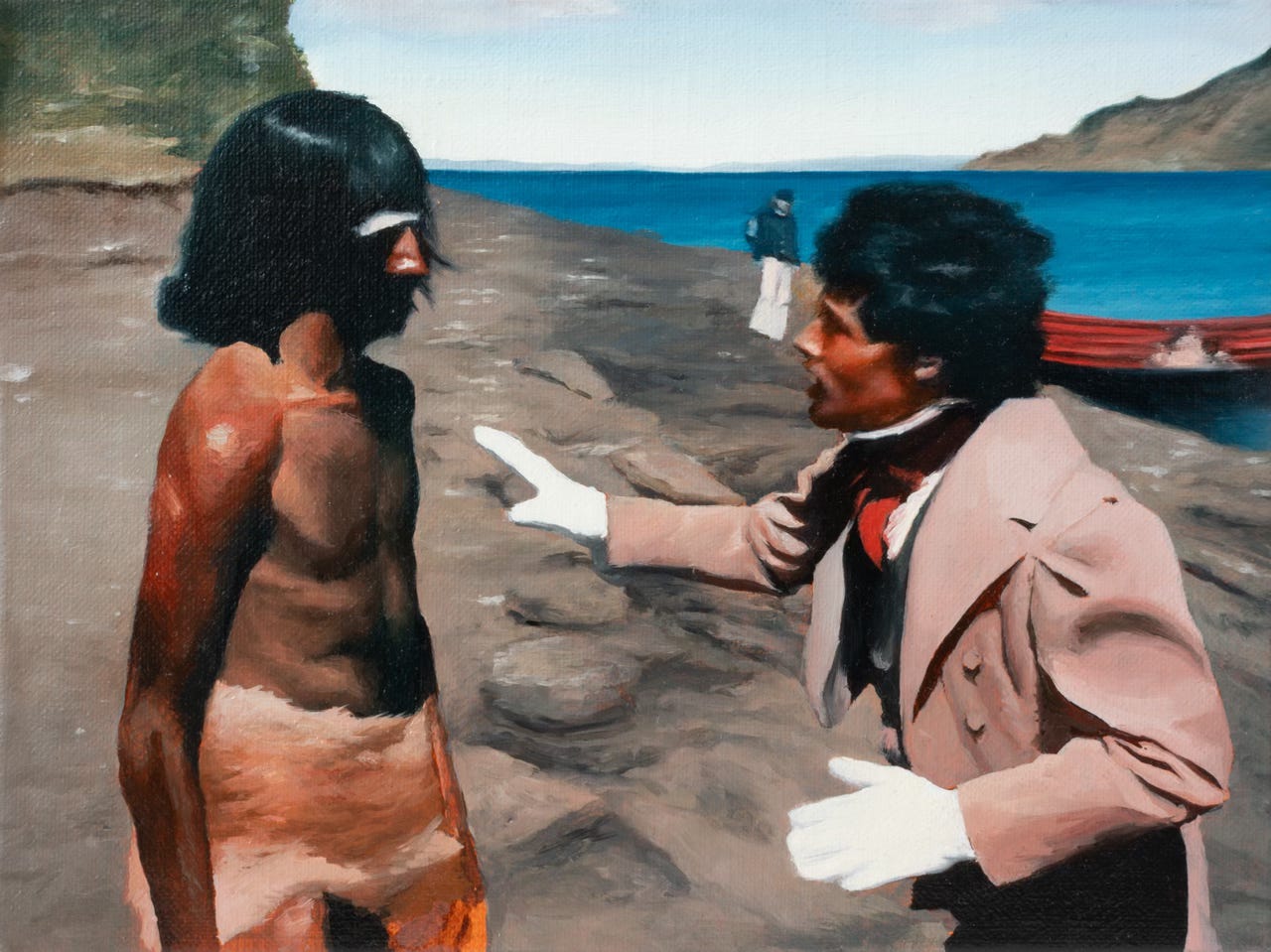
When I arrived, the question appeared: what does it mean to be Latin American? There is a whole apparatus that defines that, but I did not feel within those canons. I was born in Chilean Patagonia, so many ideas associated with being Latin American, such as the tropical, do not speak to me. So I asked myself: what does it mean to be Latin American for me? I remembered the story of Jimmy Button, a Yaghan boy who was bought for a button and then taken to England by FitzRoy with the intention of “civilizing” him and then returning him as a translator. When he came back, he had forgotten his language and was rejected by his community.
That story seemed to me like a metaphor for my own trajectory: someone who travels between territories and loses something in that transit. I realized that my Latin American experience has to do with the loss of the local and the arrival of a global culture. I grew up watching television, Cartoon Network series, consuming images, reading European history. So my work responds to that: to a constant mixture of references. That is why comic characters appear alongside references from art history. It is not about the characters themselves, but about that coexistence of everything at the same time.
“I realized that my Latin American experience has to do with the loss of the local and the arrival of a global culture. I grew up watching television, Cartoon Network series, consuming images, reading European history. So my work responds to that: to a constant mixture of references.”
Humor and irony are recurring elements in your work. What role do they play in your practice?
NH: I believe that the viewer’s attention is not a free gift. One has to call them and give them something in return.
My works have several layers. First, something visually attractive that draws attention, such as the colors or the technique. Then, when someone comes closer, they begin to discover things, and if they want, they can go even deeper by researching, reading, understanding the references.
It is difficult to reach the viewer immediately with something very dramatic. There has to be a process, as there is in a film or a song. Painting also has that trajectory: a first impression, a second reading, and a third, deeper instance. For me, humor and irony help to open that door.
In your practice, you incorporate digital tools prior to making a painting. How do you integrate this into your process?
NH: I was always asking myself how I could better construct the scenes I wanted to paint.
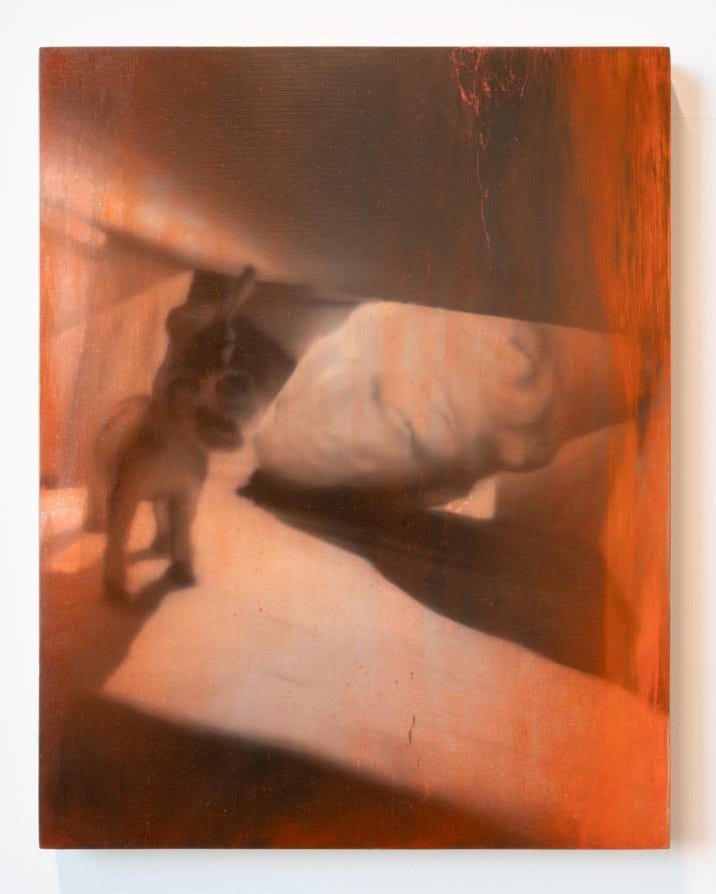
At first, I would buy toys, cut them, glue them, and build physical compositions, but that limited me a lot. If I wanted to change the scale, move a figure, or modify the light, I didn’t have much freedom. So I started to think about how to transfer that same procedure to another terrain. One day I thought of digitizing everything: I began to use 3D software, to build digital scenes that I later used as a base for painting. And then I realized that I could scan objects with my phone. A video is enough, as it contains multiple images from different angles, and that allows you to reconstruct an object in 3D. So now I can capture anything, in museums, on the street, wherever, and incorporate it into my work.
What is interesting is that this method not only solved a practical problem, but also began to have conceptual meaning. I realized that what I was doing was not so different from what already happens in museums. You go, for example, to the British Museum, and you find an African sculpture next to a Chinese sculpture: they are separated by thousands of kilometers and thousands of years, and yet they coexist in the same space, one next to the other. If you think about it, that is a bit absurd. But, in the end, it is also the absurdity we live in.
I became interested precisely in that: bringing that logic into painting and constructing scenes where toys, everyday objects, fragments of classical sculptures, and references to different visual traditions coexist, all at the same time. I don’t necessarily need someone to recognize every element, though welcome if they do; what interests me is the general sensation produced by that coexistence between things that, in principle, should not be together. That is where a tension begins to appear between the revered and the banal, between the epic and the absurd. And I think it is in that friction where the image begins to become truly interesting.
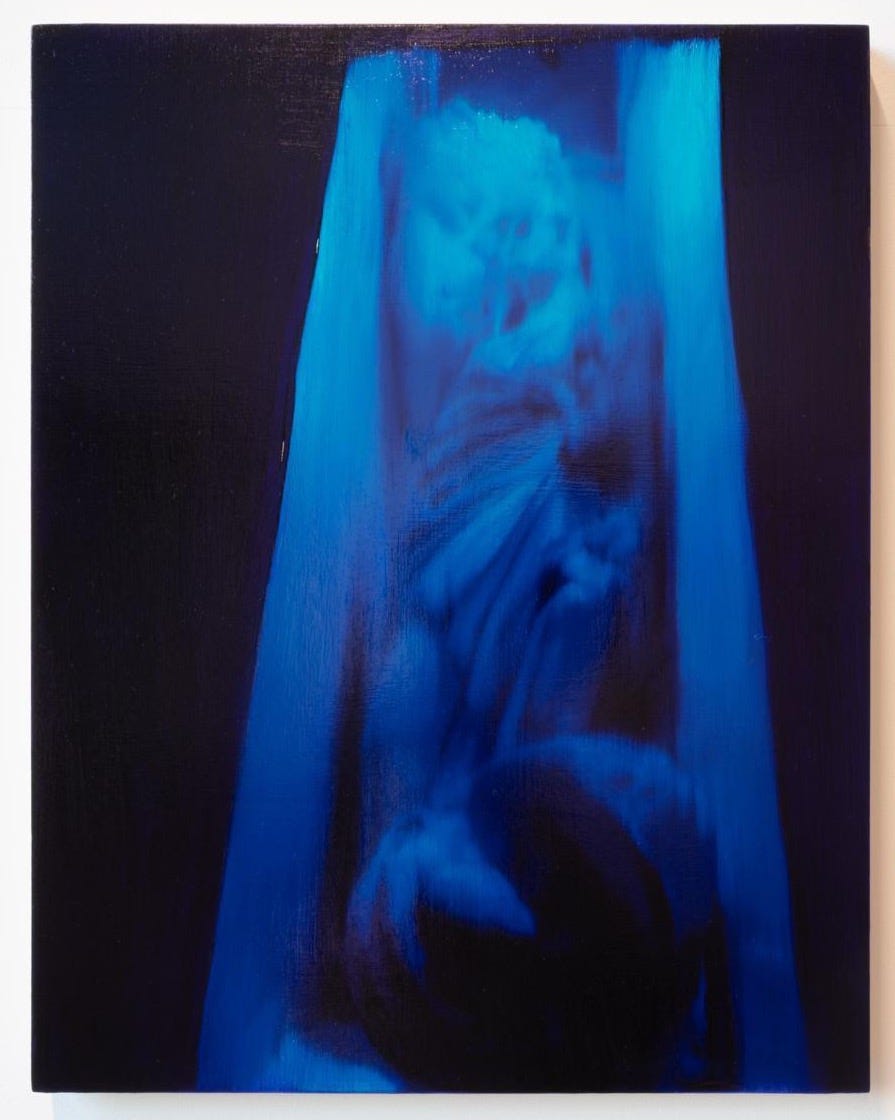
“What interests me is the general sensation produced by that coexistence between things that, in principle, should not be together. That is where a tension begins to appear between the revered and the banal, between the epic and the absurd. And I think it is in that friction where the image begins to become truly interesting.”
What references have been important for you?
NH: One tends to name very highbrow things, but for me that leap was very important: from watching, for example, Cartoon Network as a child, the animations of Hanna-Barbera, Top Cat, and suddenly encountering Akira on VHS. I remember watching it and thinking that I was facing something thousands of years more advanced. The same thing happened to me with Ghost in the Shell.
In painting, Gerhard Richter has been a constant reference. I am very interested in his approach to painting in itself, the idea that painting does not need to justify itself from the outside. I am also interested in how he moves between different styles, techniques, and images without losing a sense of identity. That has been important for me, because a question that always returns in my work is what a portrait made by me would look like, or a still life, or a more complex scene, and how each of those possibilities can change without ceasing to belong to the same universe.
But, in reality, I find references everywhere. I am fascinated by looking at painting, cinema, animation, images of all kinds. There is always something that interests me about someone and that I somehow store for later.
Looking ahead, what would you like to explore?
NH: I don’t think it is about radical changes, but rather refinements. The works are never completely resolved; there is always a part that one understands and another that one does not, but that margin of uncertainty seems very valuable to me. Many times, only with distance do you understand why something was interesting, and from there you move forward.
I feel that I am now at a point of review and momentum at the same time: observing from a distance, better understanding what emerged in the recent works, and seeing which lines are worth continuing to develop.
I really enjoy painting, but not because it is a comfortable process. I enjoy it because it is a constant challenge. I always feel that the next painting has to push a little further beyond what I already know how to do. I think of it like a gymnast at the Olympics: you know which movements you master, but in competition you try precisely what you have not yet achieved. There is a risk of ruining everything, yes, but that is also where the reward lies: discovering something you didn’t know you were capable of doing.
“I really enjoy painting, but not because it is a comfortable process. I enjoy it because it is a constant challenge.”
To learn more about Nelson Hernández, visit:
En el estudio con: Nelson Hernández
Nelson Hernández es un artista chileno actualmente radicado en el Reino Unido. Su práctica está anclada en la pintura, pero se expande a través de un diálogo continuo con herramientas digitales. A partir de una amplia gama de referencias, desde la cultura popular y la animación hasta la historia del arte, su obra construye composiciones en capas donde coexisten lenguajes visuales dispares, generando a menudo tensiones entre lo familiar y lo inesperado.
En esta entrevista, Nelson reflexiona sobre su regreso a la pintura, el papel del retrato en momentos clave de su trayectoria y el desarrollo de un proceso que se mueve entre lo físico y lo digital. También aborda cuestiones de identidad e hibridez cultural, así como el lugar que ocupan el humor y la ironía en la activación del espectador y en la construcción de sentido dentro de su obra.
Nelson Hernández es uno de los cuatro artistas que participan en nuestra primera exposición en Londres, WHAT WE TAKE, co-curada por Art in Latin America y CM Art Advisory, en Pipeline. La muestra estará abierta hasta el 28 de marzo.
¿Cómo empezó tu interés en el arte?
NH: Yo crecí en una casa donde mi papá pintaba y esculpía madera. Entonces, crecí rodeado de libros de arte; era algo muy natural. Al mismo tiempo, me interesaban mucho cosas como el manga, el cómic, los dibujos animados. Para mí siempre fue obvio, desde muy pequeño, que iba a estudiar arte.
Después de egresar de la escuela de Arte, algo pasó: nunca consideré que podía dedicarme al arte y simplemente comencé a trabajar en diseño gráfico durante varios años. Ni siquiera le di una oportunidad a ser artista visual. Hasta que en algún momento tuve una especie de realización: me pregunté qué estaba haciendo con mi vida, si siempre había querido ser pintor. Ahí decidí empezar de cero.
Me propuse hacer un dibujo al día: partí con dibujos pequeños en lápiz Bic, pero fui constante. Esa época fue esencial para recuperar lo técnico y también para explorar qué me interesaba, qué no me interesaba y de dónde salían las imágenes. Luego de todo ese proceso técnico, sucedió algo inesperado: un día vi a una mujer con una marca en el rostro, un tipo lunar, y me pareció profundamente interesante. Me interesó la idea del retrato, aunque era una decisión extraña en ese momento, porque lo presenté a un concurso de arte joven en Chile, donde normalmente se premia lo más experimental o arriesgado, y yo llevé algo bastante tradicional. Sin embargo, creo que justamente por eso es que terminó resultando inesperado. Lo presenté y gané, y ahí dije: “bueno, al parecer soy pintor ahora”.
Desde ahí no he dejado de pintar. Curiosamente, me sigue pasando algo con los retratos. No son necesariamente lo que define mi práctica, pero sí han aparecido en momentos importantes. El año pasado hice uno de una amiga ucraniana, lo presenté al concurso del National Portrait Gallery en Londres y fue seleccionado. Ahora se va a mostrar nuevamente en una segunda etapa de la exposición en Newcastle. Entonces, siento que, aunque mi trabajo no busque centrarse en retratos, hay algo ahí que me ha acompañado y que, de algún modo, me ha traído suerte. Creo que no tengo que dejar de hacerlo.
En tu obra conviven referencias a la cultura popular e historia del arte. ¿Cómo seleccionas las imágenes con las que decides trabajar?
NH: Ese tipo de referentes siempre han aparecido en mi trabajo, pero fue durante mi máster en Londres que pude formularlo mejor. Cuando llegué, apareció la pregunta: ¿qué significa ser latinoamericano? Existe todo un aparato que define eso, pero yo no me sentía dentro de esos cánones. Yo nací en la Patagonia chilena, entonces muchas ideas asociadas a lo latinoamericano, como lo tropical, no me hablan.
Entonces me pregunté: ¿qué significa ser latinoamericano para mí? Recordé la historia de Jimmy Button, un niño yagán que fue comprado por un botón y luego llevado a Inglaterra por FitzRoy con la intención de “civilizarlo” y luego devolverlo como traductor. Cuando volvió, había olvidado su idioma y fue rechazado por su comunidad. Esa historia me pareció una metáfora de mi propio recorrido: alguien que viaja entre territorios y pierde algo en ese tránsito. Me di cuenta de que mi experiencia latinoamericana tiene que ver con la pérdida de lo local y la llegada de una cultura global. Crecí viendo televisión, series en Cartoon Network, consumiendo imágenes, leyendo historia europea. Entonces, mi trabajo responde a eso: a una mezcla constante de referencias. Por eso aparecen personajes de cómic junto a referencias de la historia del arte. No se trata de los personajes en sí, sino de esa coexistencia de todo al mismo tiempo.
“Me di cuenta de que mi experiencia latinoamericana tiene que ver con la pérdida de lo local y la llegada de una cultura global. Crecí viendo televisión, series en Cartoon Network, consumiendo imágenes, leyendo historia europea. Entonces, mi trabajo responde a eso: a una mezcla constante de referencias.”
El humor y la ironía atraviesan tu obra. ¿Qué lugar ocupan dentro de tu obra?
NH: Yo creo que la atención del espectador no es un regalo gratuito. Uno tiene que llamarlo y darle algo a cambio.
Mis obras tienen varias capas. Primero, algo visualmente atractivo que llama la atención, como los colores o la técnica. Luego, cuando alguien se acerca, empieza a descubrir cosas, y, si quiere, puede profundizar aún más investigando, leyendo, entendiendo las referencias.
Es difícil llegar al espectador de golpe con algo muy dramático. Tiene que haber un proceso, como lo hay en una película o una canción. La pintura también tiene ese recorrido: una primera impresión, una segunda lectura y una tercera instancia más profunda. Para mí, el humor y la ironía ayudan a abrir esa puerta.
En tu práctica incorporas herramientas digitales previamente a realizar una pintura. ¿Cómo lo integras dentro de tu proceso?
NH: Siempre me preguntaba cómo podía construir mejor las escenas que quería pintar.
Al principio compraba juguetes, los cortaba, los pegaba y armaba composiciones físicas, pero eso me limitaba mucho. Si quería cambiar la escala, mover una figura o modificar la luz, no tenía demasiada libertad. Entonces empecé a pensar en cómo trasladar ese mismo procedimiento a otro terreno. Un día se me ocurrió digitalizarlo todo: empecé a usar software 3D, a construir escenas digitales que después usaba como base para pintar. Luego me di cuenta de que podía escanear objetos con el celular. Basta un video, que contiene múltiples imágenes desde distintos ángulos, y eso permite reconstruir un objeto en 3D. Entonces ahora puedo capturar cualquier cosa, en museos, en la calle, donde sea, e incorporarlos a mi obra.
Lo interesante es que ese método no solo resolvía un problema práctico, sino que también empezó a tener sentido conceptual. Me di cuenta de que lo que estaba haciendo no era tan distinto de lo que ya ocurre en los museos. Uno va, por ejemplo, al Museo Británico, y se encuentra con una escultura africana al lado de una escultura china: las separan miles de kilómetros y miles de años, y, sin embargo, conviven en el mismo espacio, una junto a la otra. Si lo piensas, eso es un poco absurdo. Pero, en el fondo, también es el absurdo en el que vivimos.
Me empezó a interesar justamente eso: llevar esa lógica a la pintura y construir escenas donde convivieran juguetes, objetos cotidianos, fragmentos de esculturas clásicas y referencias a distintas tradiciones visuales, todo al mismo tiempo. No necesito necesariamente que alguien reconozca cada elemento, bienvenido si lo hace; lo que me interesa es la sensación general que produce esa convivencia entre cosas que, en principio, no deberían estar juntas. Ahí empieza a aparecer una tensión entre lo venerado y lo banal, entre lo épico y lo absurdo. Y creo que es en esa fricción donde la imagen empieza a volverse realmente interesante.
“Lo que me interesa es la sensación general que produce esa convivencia entre cosas que, en principio, no deberían estar juntas. Ahí empieza a aparecer una tensión entre lo venerado y lo banal, entre lo épico y lo absurdo. Y creo que es en esa fricción donde la imagen empieza a volverse realmente interesante.”
¿Qué referencias han sido importantes para ti?
NH: Uno tiende a nombrar cosas muy cultas, pero para mí fue bien importante ese salto entre ver, por ejemplo, Cartoon Network cuando era niño, las animaciones de Hanna-Barbera, Don Gato y su pandilla, y, de repente, encontrarme con Akira en VHS. Recuerdo haberla visto y pensar que estaba frente a algo miles de años más adelantado. Lo mismo me pasó con Ghost in the Shell.
En pintura, Gerhard Richter ha sido una referencia constante. Me interesa mucho su aproximación a la pintura por sí misma, la idea de que la pintura no necesita justificarse desde afuera. También me interesa cómo se mueve entre distintos estilos, técnicas e imágenes sin perder una identidad propia. Eso para mí ha sido importante, porque una pregunta que siempre vuelve en mi trabajo es cómo se vería un retrato hecho por mí, o un bodegón, o una escena más compleja, y cómo cada una de esas posibilidades puede cambiar sin dejar de pertenecer al mismo universo.
Pero, en realidad, encuentro referencias en todas partes. Me fascina mirar pintura, cine, animación, imágenes de todo tipo. Siempre hay algo que me interesa de alguien y que de alguna manera guardo para más adelante.
Mirando hacia adelante, ¿qué te gustaría explorar?
NH: No creo que se trate de cambios radicales, sino de refinamientos. Las obras nunca están completamente resueltas, siempre hay una parte que uno entiende y otra que no, pero ese margen de incertidumbre me parece muy valioso. Muchas veces, solo con distancia, entiendes por qué algo era interesante, y desde ahí vas avanzando.
Siento que ahora estoy en un punto de revisión y de impulso al mismo tiempo: observando de lejos, entendiendo mejor lo que apareció en las obras recientes y viendo qué líneas vale la pena seguir desarrollando. Disfruto mucho pintar, pero no porque sea un proceso cómodo. Lo disfruto porque es un desafío constante. Siempre siento que la siguiente pintura tiene que empujar un poco más allá de lo que ya sé hacer. Pienso en eso como un gimnasta en las olimpiadas: uno sabe qué movimientos domina, pero en competencia intentas hacer justamente lo que aún no has logrado. Hay un riesgo de arruinarlo todo, sí, pero también ahí está la recompensa: descubrir algo que no sabías que podías hacer.
“Disfruto mucho pintar, pero no porque sea un proceso cómodo. Lo disfruto porque es un desafío constante.”
Para saber más sobre Nelson Hernández, visita: