


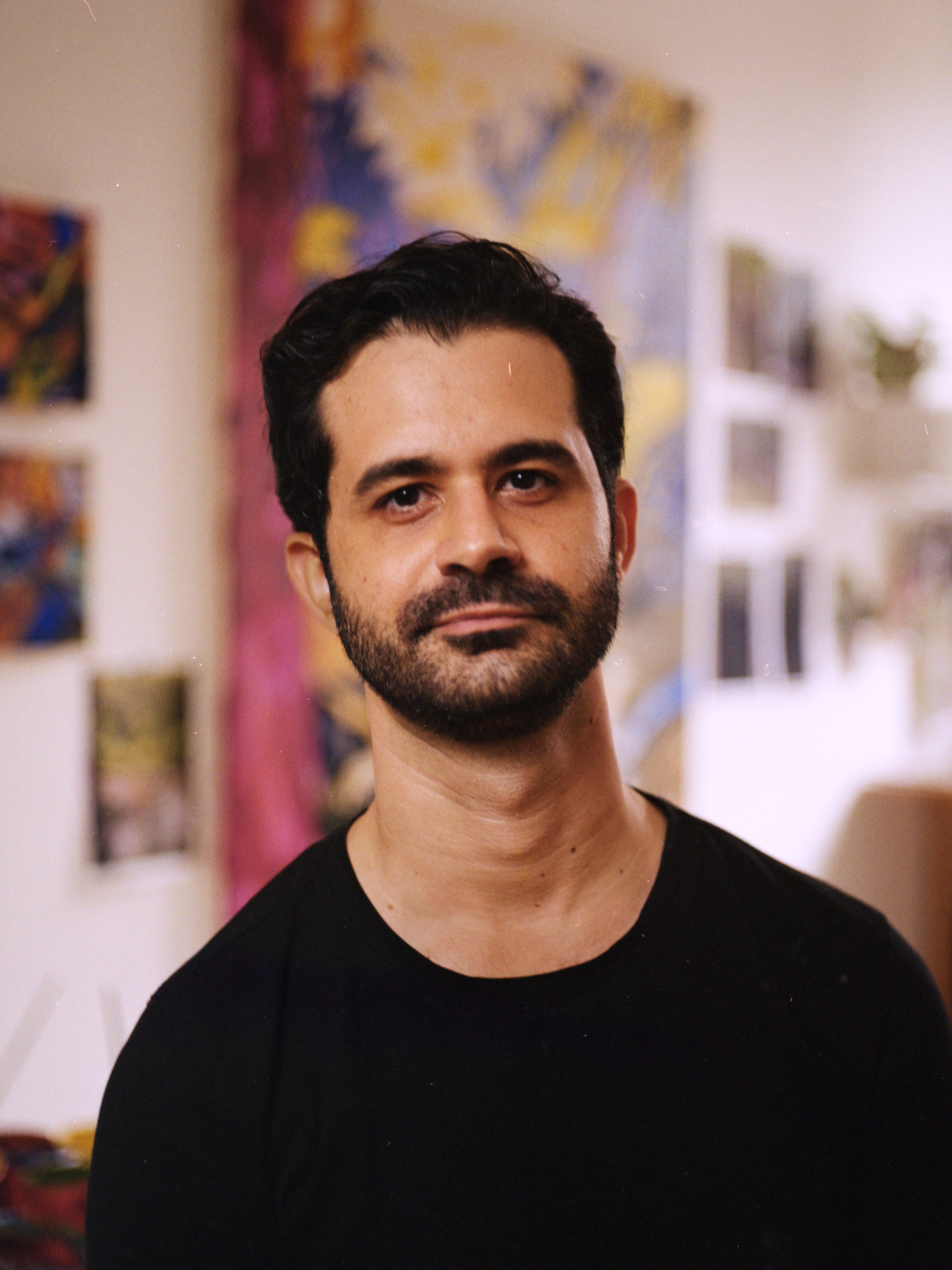
Jun Martínez is a Puerto Rican painter whose practice encompasses a decade of immersive contemplation in natural environments, translating his perceptions and memories into a language of painterly materiality. Through dense and atmospheric compositions, his work approaches landscape as a space of memory and belonging, where the natural environment becomes inseparable from lived experience.
In this conversation, Jun reflects on his early encounters with drawing and painting, his training in Puerto Rico, and the ways in which the island continues to inform his visual language. He also speaks about how living in London has transformed his relationship with landscape, and about his first presentation with Cecilia Brunson Projects during London Gallery Weekend.
Jun, how did your relationship with painting begin?
JM: My relationship with art was present from a very early age, although not necessarily as an idea of a profession or a future. There were no visual artists in my family, not even as a hobby. My parents came more from the world of music: my father worked in radio, my paternal grandfather did too, and my mother was a publicist for musicians. But when I was little, I liked to draw little figures and cartoons. My family noticed that interest and, without really knowing what they were planting, enrolled me in art courses, summer camps, and spaces where that could develop.
There was a teacher, in one of those courses, who saw what I was doing and told my family: “This child needs to be placed in a specialized school.” She was the first person to tell them that there was something there that deserved extra attention. So, at the age of twelve, they enrolled me in the Escuela Central de Artes Visuales in Puerto Rico, and that changed my life.
Even so, as a child, I never thought I would become an artist. In fact, I wanted to be a scientist, because my grandmother was a chemistry teacher and I loved going to the laboratory. Perhaps there is something of that which translates into my studio today: the ingredients, the color mixtures, the oils, the thinners. Something of that enchantment with the laboratory eventually carried over into painting.
“As a child, I never thought I would become an artist. In fact, I wanted to be a scientist, because my grandmother was a chemistry teacher and I loved going to the laboratory. Perhaps there is something of that which translates into my studio today: the ingredients, the color mixtures, the oils, the thinners. Something of that enchantment with the laboratory eventually carried over into painting.”
How do you remember your first steps in the art world, at the Escuela Central de Artes Visuales?
JM: It was not the art world as I understand it now; it was the world through art, life lived through art. It was a magical place.
At seventeen, I began putting together creative research proposals, mounting exhibitions, and learning how to transform a space and hang work. Curiously, without knowing it, I was already working with themes of Puerto Rican identity and the relationship between identity and land. I did not realize this until I arrived in London at the age of thirty-two and looked back. Since adolescence, I had been looking to the land in order to process those reflections, before having any thematic notion that identity was a question art could explore.
When the time came to pursue my bachelor’s degree, I was already convinced that this was what I wanted to do. That is how I came to study Fine Arts at the University of Puerto Rico.
You began your artistic training in Puerto Rico. What did that context give you that you feel you could not have found elsewhere?
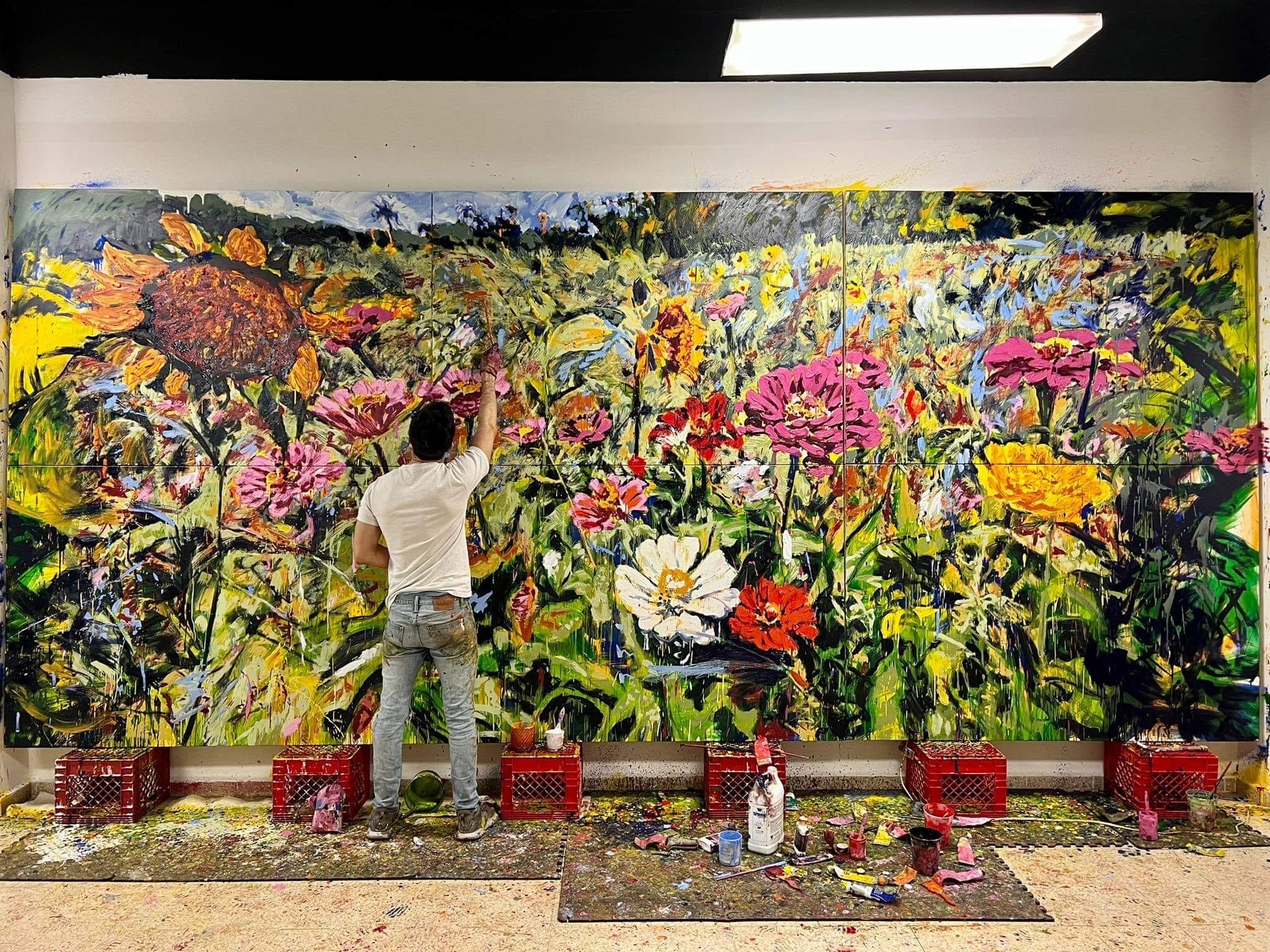
JM: Completing my bachelor’s degree in Puerto Rico was one of the most important decisions of my life. It allowed me to complete my formation as an artist from the place with which I identify, from the history that feels like my own, from the examples of craft and nation-building that Puerto Rican artists have offered through their work.
University life is very close to the country’s social problems and struggles, and all of that became embedded in my work. In Puerto Rico, I understood that a commitment to art is also a commitment to the reality that surrounds you.
“In Puerto Rico, I understood that a commitment to art is also a commitment to the reality that surrounds you.”
And now that you live in London, how would you describe the language your work is taking on today?
JM: Today, I would say that my work is born from a conversation with the natural environments that formed me and those I continue to encounter. What emerges from there are expressions of a language that I have been learning through those conversations.
I just installed an exhibition here and, when I looked at it, I thought: what I am seeing is me speaking as I am able to speak, from where I am, in the moment I am in. These are the paintings that Jun Martínez can make in London in 2026, three years after living here, with the relationship I still maintain with Puerto Rico and the Caribbean. My painting is very much about processing through action, through being in the studio painting. I am the kind of artist who sees things afterward: the language of color and medium always moves ahead of words. Words catch up later.

There is an intensity in the color palette you use that immediately draws attention. Where does that relationship with color come from?
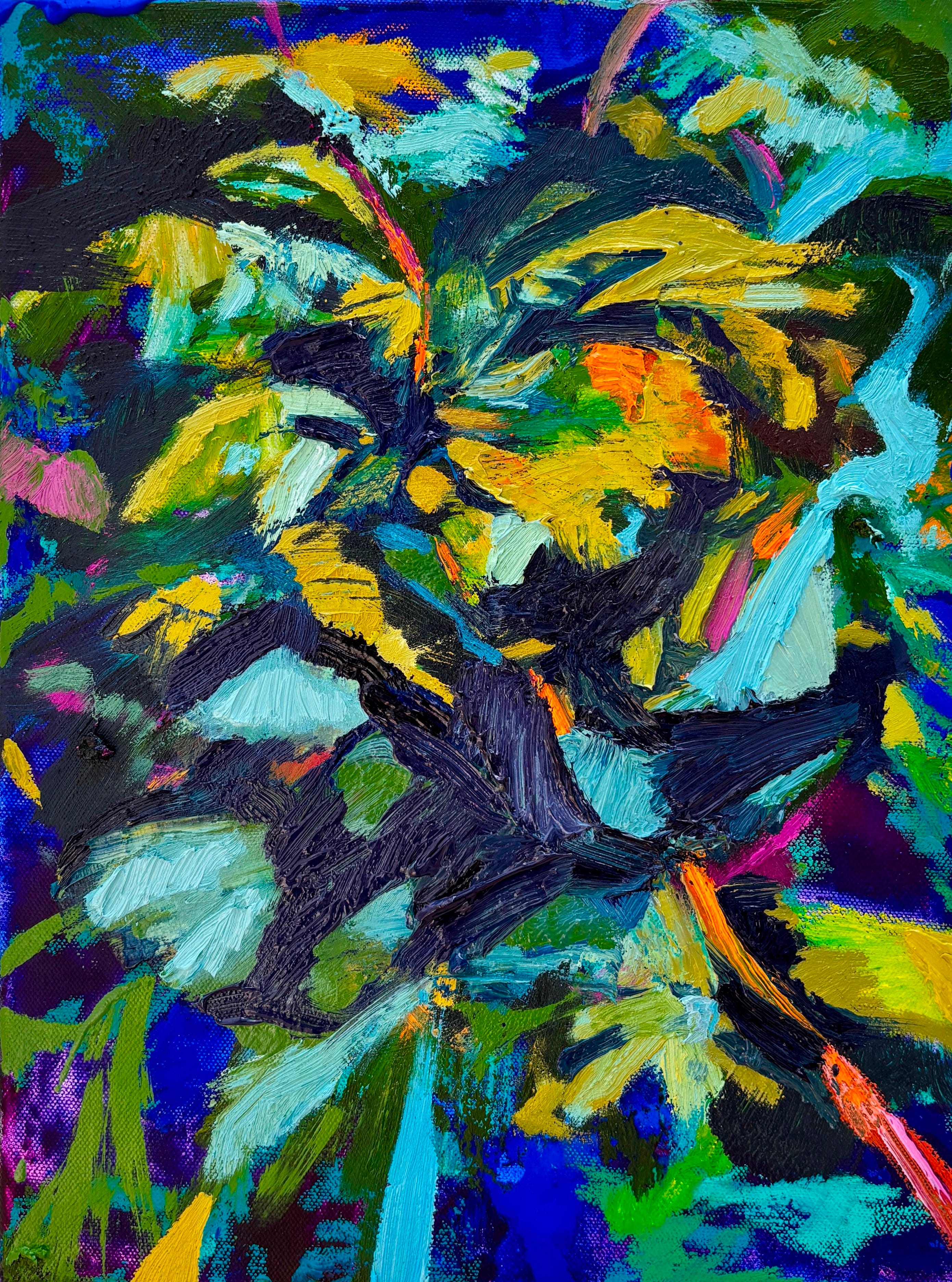
JM: It begins with light. My initial relationship with color is a relationship with the light of Puerto Rico. When I have been in other places — a residency in Vermont, for example — I have painted with the light of that place: winter light over white snow. What is happening to me now in London is interesting: I am painting references to the Puerto Rican landscape with my English light. So yes, they are intense colors, but the palette is very different from the one I used when painting in Puerto Rico, where the response to light was very direct, almost automatic.
At first glance, my paintings can be read as colorful and vibrant, but I think that anyone who allows themselves more time with the work sees the darkness, the violence upon the landscape. Because, although there is always a celebration of the land, there is also a solidarity with it. When one is aware of the world’s imbalances, of how power is distributed, of injustices, one understands that people suffer as the land suffers.
I had a very strong reaction the first times I saw Anselm Kiefer’s paintings in Germany, and that violence inscribed in his landscapes. But, as a Puerto Rican, from my experience of how we process grief, I could not make work about the mourning of my land without life also being present. Where I come from, even in moments of suffering, life moves through us. We have very sad songs with very danceable rhythms. We can be protesting with great anger and, at the same time, with great revelry. They are apparent contradictions, but they are equally valid expressions of grief and rage. My painting tries to approach that.
“At first glance, my paintings can be read as colorful and vibrant, but I think that anyone who allows themselves more time with the work sees the darkness, the violence upon the landscape. Because, although there is always a celebration of the land, there is also a solidarity with it. When one is aware of the world’s imbalances, of how power is distributed, of injustices, one understands that people suffer as the land suffers.”
Your work is always in constant dialogue with the land of Puerto Rico. What happens to that dialogue when you have it from a distance?
JM: It is still being reconfigured. For almost a decade, my work has had to do with the land and with how landscape takes shape in the imagination. For a long time, I held those reflections from within, and they were very special for that very reason. But, by moving away, I think they have acquired a less direct dimension. They have become contaminated, in a good sense.
I often say that I resist nostalgia, but nostalgia is there, whether I choose it or not. And the more I resisted it, the more nostalgic my paintings ended up becoming. So, I am increasingly allowing myself to paint as I am and as I go, and to have patience. I had a reflection recently: if it is true that I am a painter of Puerto Rico, a painter of the land of Puerto Rico, then I am also a painter of where I am. So, when someone sees my current work and sees tropical plants, rivers, and earth, that is the language. But the content is my experience of being here. The two things come together.
What kinds of conversations would you like to open up about Puerto Rico?
JM: Puerto Rico is very present on global platforms today, and that makes me very happy. But I worry that the narratives reduce the complexity of the Puerto Rican experience. There is so much poetic and historical richness that cannot fit into a single narrative.
More than the conversations I would like to open up, what matters to me is the tone in which we have them: not to edify Puerto Rico’s suffering or resistance so that they can be consumed, but rather to continue contributing to respect for an experience that is deeply flesh and blood.
You are about to open an exhibition at Cecilia Brunson Projects. What can you tell us in advance?
JM: There are ten paintings in very varied formats, from small pieces of around twenty centimeters to works over two meters.
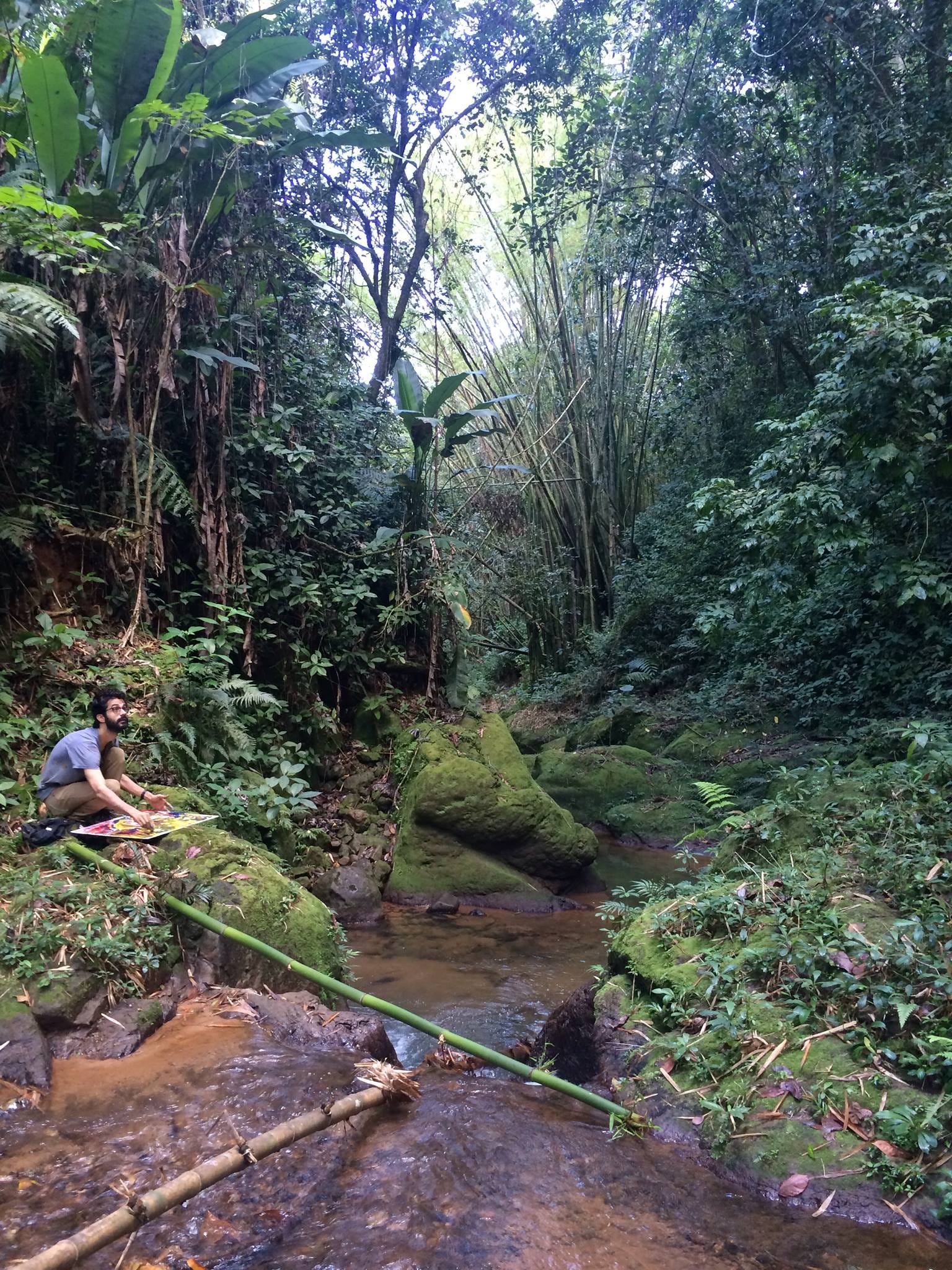
The installation was conceived to create an immersive sensation, which is something very important to me. During the first years of my practice, I painted only outdoors. My work was born directly from being inside the landscape. It was only in 2017, with Hurricane Maria, that I learned to paint inside a studio out of necessity. Today, being in London, I project photographs that I take myself in Puerto Rico onto the walls of the studio. So, if I cannot physically be in the landscape, I enter the photograph of the landscape.
I think the exhibition is an extension of that: I want the viewer to enter and feel that they are entering the landscape as well. If there is any mission in what I do, it is for painting to return both myself and the viewer to the land. It is not about remaining inside the painting, it is about leaving it and reconnecting with nature.
The paintings I am presenting come from the place I inhabit today. In concrete terms: I live in London, but I miss my climate, the sounds of the river, the coquí, the flamboyant trees, the yellow oaks, the blue of the sky. What the works are giving me is something like a third place: not there, not here, but the integration of the two through color, textures, and that immersive perspective.
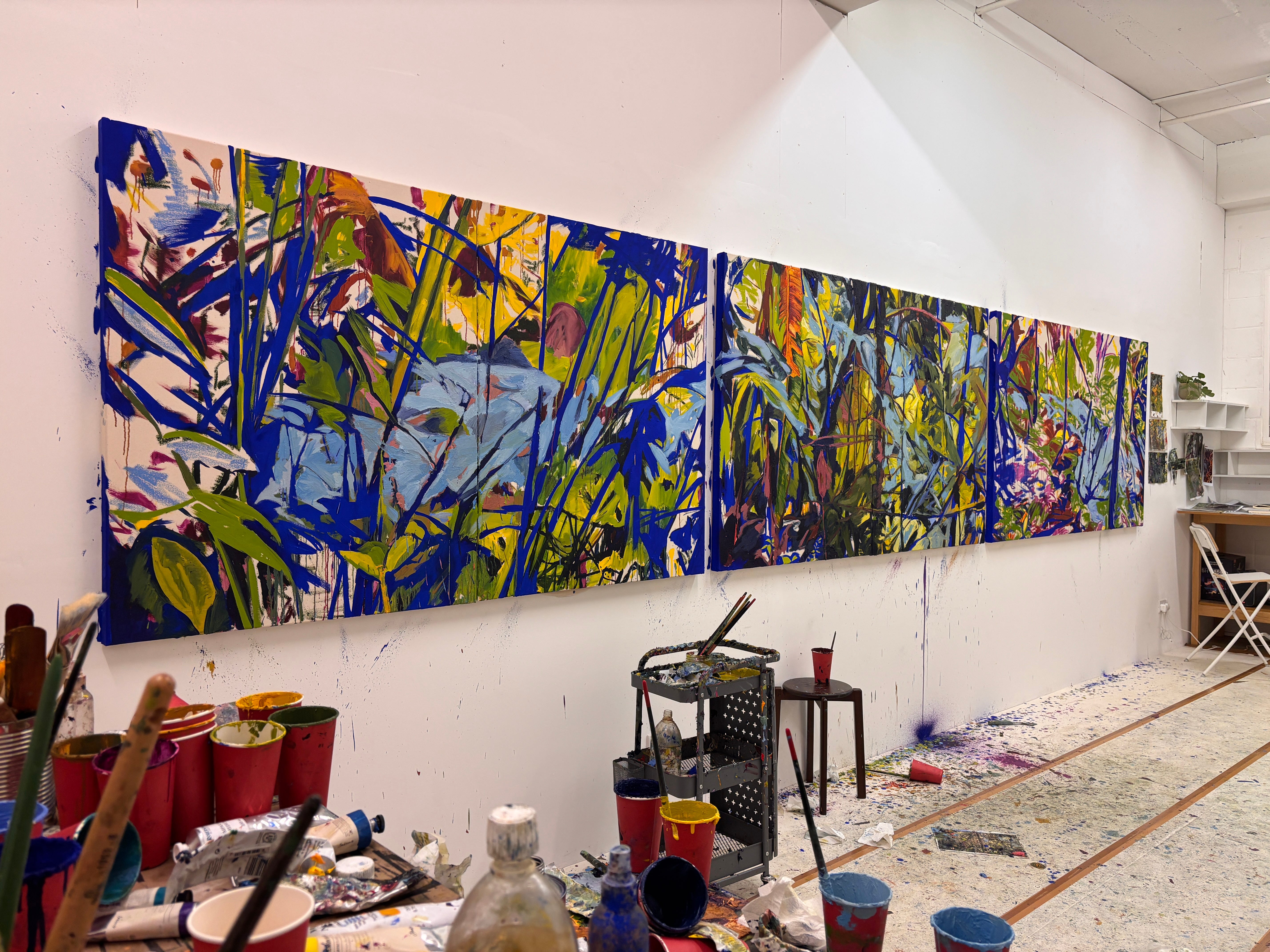
“If there is any mission in what I do, it is for painting to return both myself and the viewer to the land. It is not about remaining inside the painting, it is about leaving it and reconnecting with nature.”
To learn more about Jun Martinez, visit:
En el estudio con: Jun Martínez
Jun Martínez es un pintor puertorriqueño cuya práctica abarca una década de contemplación inmersiva en entornos naturales, traduciendo sus percepciones y memorias en un lenguaje de materialidad pictórica. A través de composiciones densas y atmosféricas, su obra aborda el paisaje como un espacio de memoria y pertenencia, donde el entorno natural se vuelve inseparable de la experiencia vivida.
En esta conversación, Jun reflexiona sobre sus primeros acercamientos al dibujo y la pintura, su formación en Puerto Rico y las formas en que la isla continúa informando su lenguaje visual. También habla sobre cómo vivir en Londres ha transformado su relación con el paisaje y sobre su primera presentación con Cecilia Brunson Projects durante London Gallery Weekend.
Jun, ¿cómo empieza tu relación con la pintura?
JM: Mi relación con el arte estuvo presente desde muy temprano, aunque no necesariamente como una idea de profesión o de futuro. En mi familia no había artistas visuales, ni siquiera de hobby. Mis padres venían más bien del mundo de la música: mi papá trabajaba en la radio, mi abuelo paterno también, y mi mamá era relacionista pública de músicos. Pero cuando era pequeño me gustaba dibujar figuritas y caricaturas. Mi familia notó ese interés y, sin saber muy bien lo que estaban sembrando, me pusieron en cursos de arte, campamentos de verano y espacios donde eso pudiera desarrollarse.
Hubo una maestra, en uno de esos cursos, que vio lo que yo hacía y le dijo a mi familia: “A este niño hay que ponerlo en una escuela especializada”. Fue la primera persona que les dijo que ahí había algo que merecía atención extra. Entonces, a los doce años, me matricularon en la Escuela Central de Artes Visuales en Puerto Rico, y eso me cambió la vida.
Aun así, de pequeño nunca pensé que sería artista. De hecho, yo quería ser científico, porque mi abuela era maestra de química y a mí me encantaba ir al laboratorio. Quizás hay algo de eso que hoy se traduce en mi taller: los ingredientes, las mezclas de colores, los aceites, los diluyentes. Algo de ese encanto del laboratorio terminó trasladándose, eventualmente, a la pintura.
“De pequeño nunca pensé que sería artista. De hecho, yo quería ser científico, porque mi abuela era maestra de química y a mí me encantaba ir al laboratorio. Quizás hay algo de eso que hoy se traduce en mi taller: los ingredientes, las mezclas de colores, los aceites, los diluyentes. Algo de ese encanto del laboratorio terminó trasladándose, eventualmente, a la pintura.”
¿Cómo recuerdas tus primeros pasos en el mundo del arte, en la Escuela Central de Artes Visuales?
JM: No era el mundo del arte como lo entiendo ahora; era el mundo a través del arte, la vida vivida desde el arte. Era un lugar mágico.
A los diecisiete años, empecé a armar propuestas de investigación creativa, montaba exhibiciones y aprendí a transformar un espacio y colgar obra. Curiosamente, sin saberlo, ya estaba trabajando con temas de identidad puertorriqueña y la relación entre identidad y tierra. No me di cuenta de eso hasta que llegué a Londres a los treinta y dos años y miré hacia atrás. Llevaba desde la adolescencia mirando a la tierra para procesar esas reflexiones, antes de tener cualquier noción temática de que la identidad era una pregunta que el arte exploraba.
Cuando llegó el momento de hacer el bachillerato, ya estaba convencido de que esto era lo que quería hacer. Así llegué a estudiar Bellas Artes en la Universidad de Puerto Rico.
Iniciaste tu formación artística en Puerto Rico. ¿Qué te dio ese contexto que sientes que no podrías haber encontrado en otro lugar?
JM: Hacer el bachillerato en Puerto Rico fue una de las decisiones más importantes de mi vida. Me permitió terminar mi formación como artista desde el lugar con el cual me identifico, desde la historia que me resulta propia, desde los ejemplos de oficio y de construcción de país que los artistas puertorriqueños han ofrecido a través de sus obras.
La vida universitaria está muy cercana a los problemas y luchas sociales del país, y todo eso se impregnó en mi obra. En Puerto Rico entendí que el compromiso con el arte es también un compromiso con la realidad que te rodea.
“En Puerto Rico entendí que el compromiso con el arte es también un compromiso con la realidad que te rodea.”
Y ahora que vives en Londres, ¿cómo describirías el lenguaje que está tomando tu obra hoy?
JM: Hoy diría que mi obra nace de una conversación con los entornos naturales que me formaron y los que sigo conociendo. Lo que sale de ahí son expresiones de un lenguaje que he ido aprendiendo en esas conversaciones.
Acabo de montar una exhibición aquí y, cuando la miré, pensé: lo que estoy viendo soy yo hablando como puedo hablar, desde donde estoy, en el momento en el que estoy. Son las pinturas que Jun Martínez puede hacer en Londres en el 2026, a tres años de vivir aquí, con la relación que todavía conservo con Puerto Rico y el Caribe. Mi pintura es mucho de procesar a través de la acción, de estar en el taller pintando. Soy el tipo de artista que ve las cosas después: el lenguaje del color y del medio siempre va más adelante que las palabras. Las palabras las alcanzan después.
Hay una intensidad en la paleta de colores que usas que llama la atención de inmediato. ¿De dónde viene esa relación con el color?
JM: Empieza con la luz. Mi relación inicial con el color es una relación con la luz de Puerto Rico. Cuando he estado en otros lugares —una residencia en Vermont, por ejemplo—, he pintado con la luz de ese lugar: la luz de invierno sobre la nieve blanca. Lo que me está pasando ahora en Londres es interesante: estoy pintando referencias del paisaje puertorriqueño con mi luz inglesa. Entonces sí, son colores intensos, pero la paleta es muy distinta a la que usaba pintando en Puerto Rico, donde la respuesta a la luz era muy directa, casi automática.
A primera vista, mis pinturas pueden leerse como coloridas y vibrantes, pero creo que quien se permite más tiempo con la obra ve la oscuridad, la violencia sobre el paisaje. Porque, aunque siempre hay una celebración de la tierra, hay también una solidaridad con ella. Cuando uno es consciente de los desbalances del mundo, de cómo se distribuyen los poderes, de las injusticias, uno entiende que la gente sufre como sufre la tierra.
Tuve una reacción muy fuerte las primeras veces que vi las pinturas de Anselm Kiefer en Alemania y con esa violencia inscrita en sus paisajes. Pero, como puertorriqueño, desde mi experiencia con cómo procesamos el duelo, yo no podía hacer obra sobre el luto de mi tierra sin que estuviera también presente la vida. De donde vengo, aun en los momentos de sufrimiento, la vida nos atraviesa. Tenemos canciones muy tristes con ritmos muy bailables. Podemos estar protestando con mucha ira y, a la vez, con mucho jolgorio. Son aparentes contradicciones, pero son expresiones igualmente válidas de duelo y de rabia. Mi pintura trata de acercarse a eso.
“A primera vista, mis pinturas pueden leerse como coloridas y vibrantes, pero creo que quien se permite más tiempo con la obra ve la oscuridad, la violencia sobre el paisaje. Porque, aunque siempre hay una celebración de la tierra, hay también una solidaridad con ella. Cuando uno es consciente de los desbalances del mundo, de cómo se distribuyen los poderes, de las injusticias, uno entiende que la gente sufre como sufre la tierra.”
Tu obra siempre está en constante diálogo con la tierra de Puerto Rico. ¿Qué le pasa a ese diálogo cuando lo tienes desde la distancia?
JM: Todavía se está reconfigurando. Por casi una década, mi trabajo ha tenido que ver con la tierra y con cómo el paisaje toma forma en la imaginación. Por mucho tiempo, esas reflexiones las tuve desde adentro, y eran muy especiales por eso mismo. Pero, al alejarme, creo que han adquirido una dimensión menos directa. Se han contaminado, en el buen sentido.
Digo mucho que me resisto a la nostalgia, pero la nostalgia está ahí, la escoja yo o no. Y mientras más la resistía, mis pinturas terminaban siendo más nostálgicas. Entonces, cada vez me estoy permitiendo más pintar como estoy y como voy, y tener paciencia. Tuve una reflexión hace poco: si es verdad que soy un pintor de Puerto Rico, un pintor de la tierra de Puerto Rico, también soy un pintor de donde estoy. Entonces, cuando alguien ve mi obra actual y ve plantas tropicales, ríos y tierra, ese es el lenguaje. Pero el contenido es mi experiencia de estar acá. Las dos cosas se juntan.
¿Qué tipo de conversaciones te gustaría abrir sobre Puerto Rico?
JM: Puerto Rico está muy presente en plataformas globales hoy, y me alegra mucho. Pero me preocupa que las narrativas reduzcan la complejidad de la experiencia puertorriqueña. Hay mucha riqueza poética e histórica que no cabe en una sola narrativa.
Más que conversaciones que me gustaría abrir, me importa el tono en el que las tenemos: no edificar los sufrimientos ni las resistencias de Puerto Rico para que se consuman, sino seguir abonando al respeto por una experiencia que es muy de carne y hueso.
Estás a punto de inaugurar una exposición en Cecilia Brunson Projects. ¿Qué nos puedes adelantar?
JM: Son diez pinturas en formatos muy variados, desde piezas pequeñas de unos veinte centímetros hasta obras de más de dos metros.
La instalación se pensó para crear una sensación inmersiva, que es algo muy importante para mí. Durante mis primeros años de práctica, pintaba solamente al aire libre. Mi obra nacía directamente de estar dentro del paisaje. Fue solo en 2017, con el huracán María, que aprendí a pintar dentro de un taller por necesidad. Hoy, estando en Londres, proyecto fotografías que yo mismo tomo de Puerto Rico sobre las paredes del estudio. Así, si no puedo estar físicamente en el paisaje, me meto en la foto del paisaje.
Creo que la exhibición es una extensión de eso: quiero que el espectador entre y sienta que se está metiendo en el paisaje también. Si hay alguna misión en lo que hago, es que la pintura me devuelva a la tierra, a mí y al que la mira. No es quedarse dentro de la pintura, es salir de ella y volver a tener esa relación con la naturaleza.
Las pinturas que estoy presentando vienen del lugar en el que habito hoy. En términos concretos: vivo en Londres, pero extraño mi clima, los sonidos del río, el coquí, los flamboyanes, los robles amarillos, el azul del cielo. Lo que las obras me están dando es algo así como un tercer lugar: no allá, no acá, sino la integración de los dos a través del color, las texturas y esa perspectiva inmersiva.
“Si hay alguna misión en lo que hago, es que la pintura me devuelva a la tierra, a mí y al que la mira. No es quedarse dentro de la pintura, es salir de ella y volver a tener esa relación con la naturaleza.”
Para saber más sobre Jun Martínez, visita: