


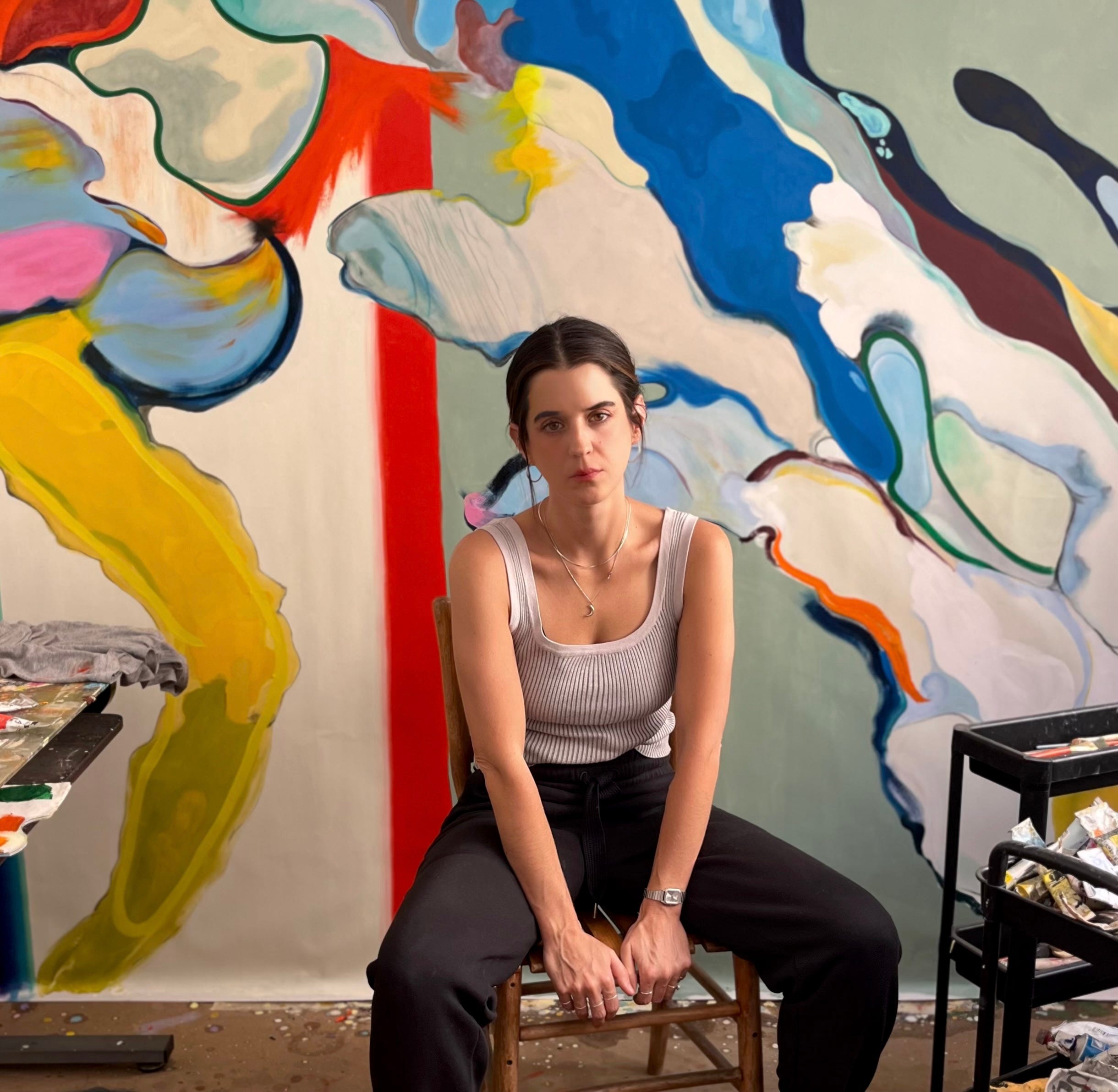
From her studio in Mexico City, Juana Subercaseaux has been developing a deeply intuitive, material, and open-to-the-unknown body of work.
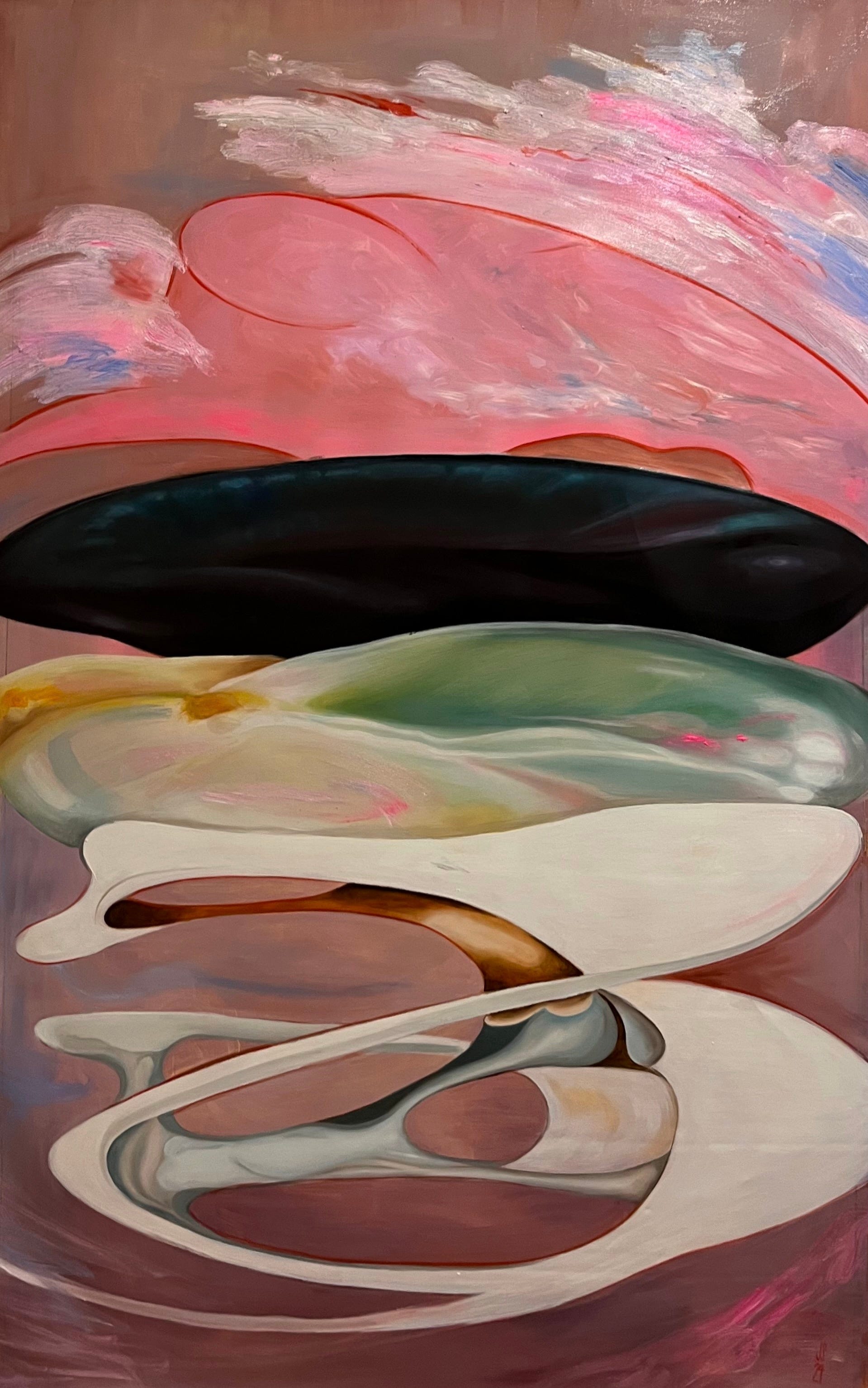
Through oil paint, Juana explores ways of representing the intangible: chemical reactions, energetic events, states of transformation. In this interview, she talks about her beginnings, her shift toward the non-figurative, and her wish for the painting to paint itself. She also reflects on her arrival in Mexico and what it means to paint from mystery, without a plan or a model.
Q: For those encountering your work for the first time, how would you describe it? What themes or sensations do you seek to explore?
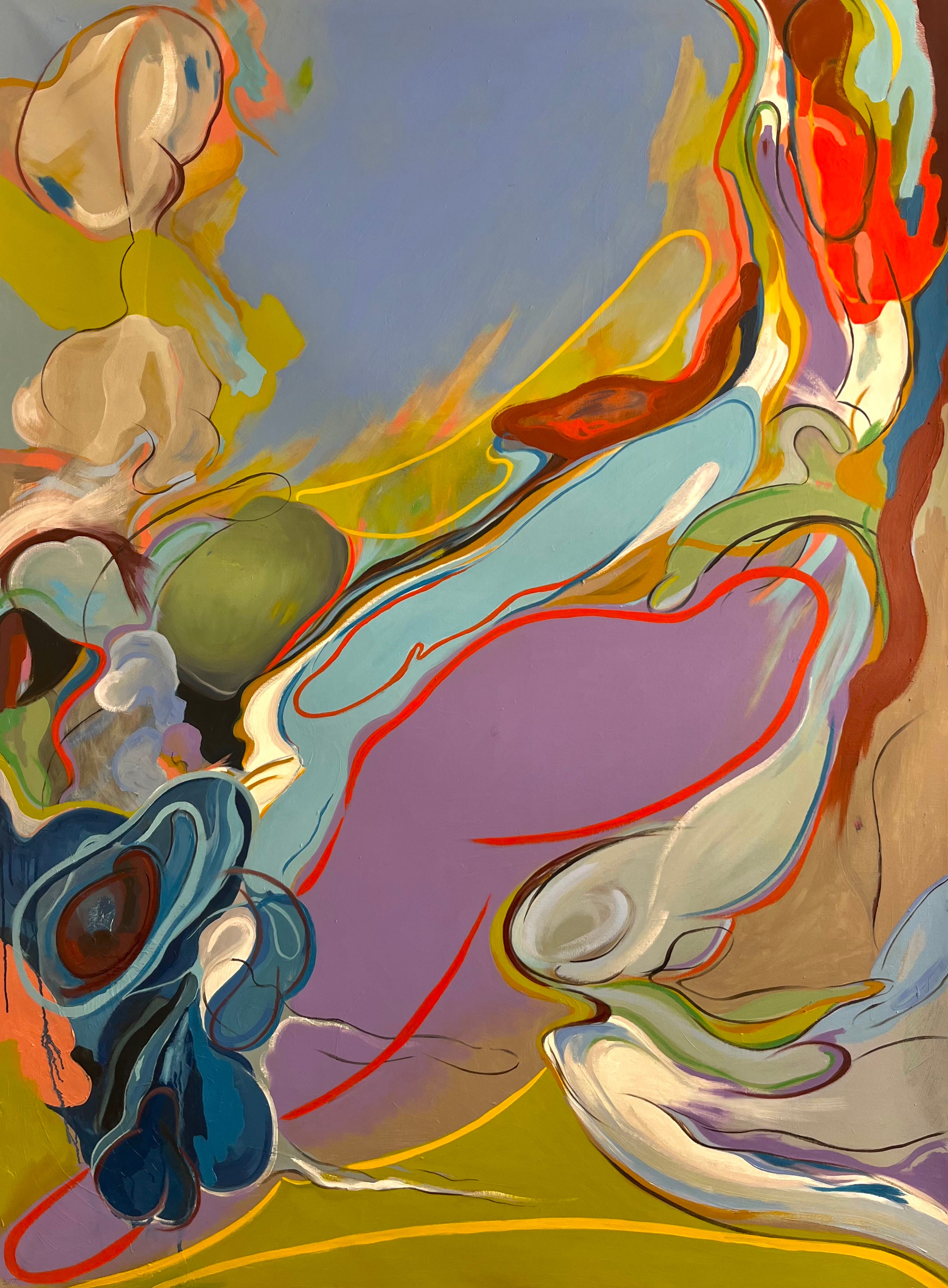
Juana Subercaseaux: I started out painting landscapes, but they were fictional places, without characters or subjects. They were places in transition, where something was happening, but it wasn’t entirely clear what, always with a certain sense of mystery or even apocalypse.
Over time, the horizon line disappeared and I began to be drawn to elements of nature from a more dreamlike, mental place. That search gradually shifted from the “natural” toward the organic. Lately, I’ve been working with more scientific ideas, like energy or matter changing state: from solid to gas, for example. I’m interested in the question of how to represent an event, rather than an image with a certain narrative. A sensation, an energy, rather than something that can be read literally.
Q: Where does your need to create come from?
Juana Subercaseaux: I come from a very artistic family and was lucky to attend a school that nurtured those aspects, so creative spaces were always available in my environment. It was natural.
As a child, I had a revelation that was as profound as it was simple: realizing that I could create any image I could imagine, any at all. That images, including all those created in the past and those still to come in the future, are infinite, I suppose. That idea, so simple yet so vast, has stayed with me ever since.
“As a child, I had a revelation that was as profound as it was simple: realizing that I could create any image I could imagine … That idea, so simple yet so vast, has stayed with me ever since.”
Q: How did you arrive at painting this way? Have these themes always interested you?
Juana Subercaseaux: Yes, I’ve always been more interested in painting from a mental, immersive place. I was never particularly drawn to naturalistic painting, portraits, or painting from a model. I’ve always had this fantasy of being a kind of medium for the painting. I fantasize about setting aside my own will or personal taste and letting the painting act on its own.
It’s a constant struggle between control and letting go! It’s difficult to paint or draw something that doesn’t resemble anything. The mind seeks patterns; it always wants to identify familiar things. That’s why I usually work from a stain, from a gesture, and let that guide me. It’s like having a conversation with the unpredictable.
“I’ve always had this fantasy of being a kind of medium for the painting. I fantasize about setting aside my own will or personal taste and letting the painting act on its own.”
Q: What role do titles play in your work?
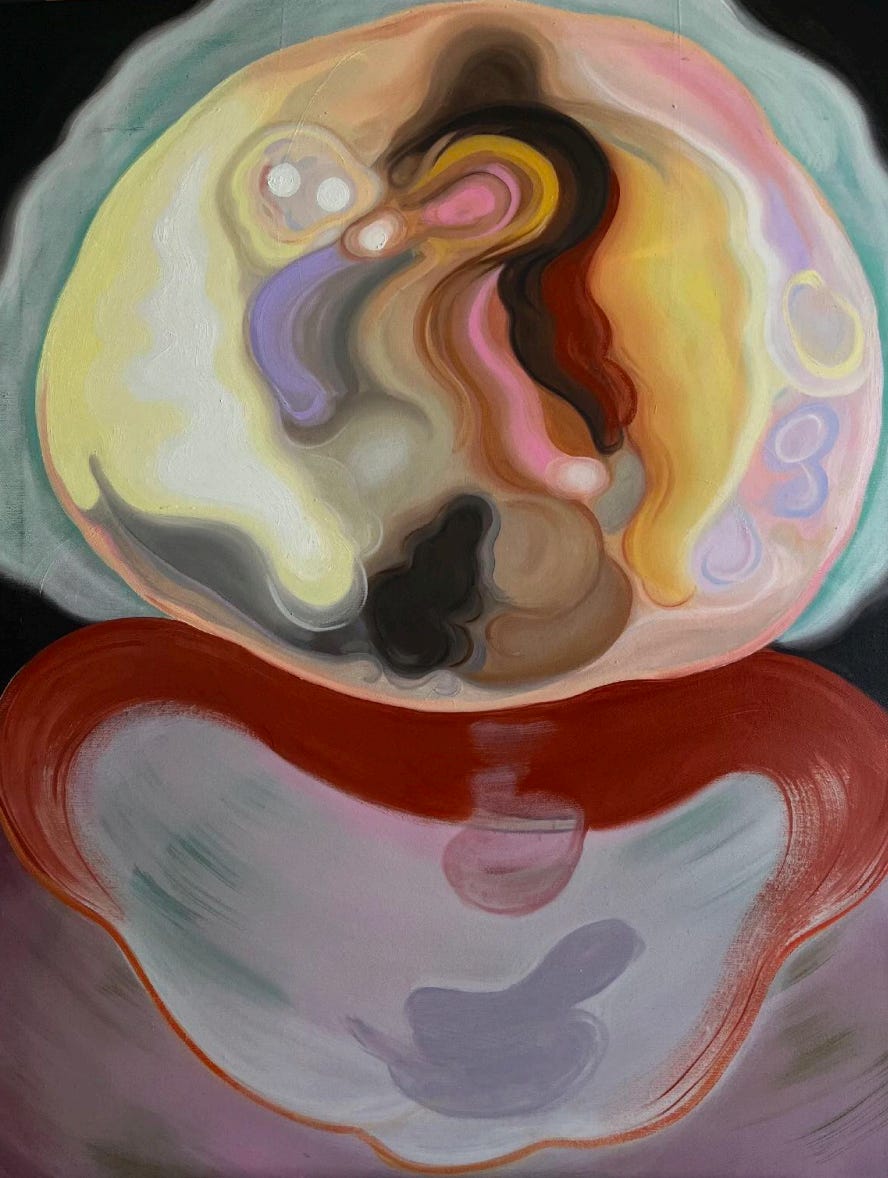
Juana Subercaseaux: I like them to open possibilities, not to lock in meanings. Sometimes I use lines from poems or songs I like, which I save with the intention of using them at some point, either as an idea or as a title. For example, once I drew inspiration from a line by Rimbaud that says: “I await God like a candy.” I loved that idea: waiting for something with such longing and linking it metaphorically to a candy. From that, I used the image of a candy as a material, with its shine, transparency, and colors, to represent the transformation of a liquid into a solid.
Q: Have you always worked with oil? Why did you choose it as your medium?
Juana Subercaseaux: Yes. I come from a family of painters, my sister, my uncles, my grandmother, all painted. I grew up hearing about painting at the table, between meals. It was part of the family.
Since childhood, I’ve been fascinated by the smell of solvents, the feeling of mixing science with alchemy. I feel oil paint is the closest you can get to owning a color. I love that each pigment has a different weight, that it dries at different speeds, that it has unpredictable chemical behaviors. Some colors even provoke a physical reaction in me. It’s a living, unstable medium, one you can think and feel through at the same time. I can’t remember exactly how a text by Walter Benjamin went, but the idea was that painting (oil paint) is the closest way to materialize the color of fantasy. The closest you can get to “owning blue” is having blue oil paint. That really resonated with me, and I loved the idea of thinking of paint tubes as materialized fantasy.
“I feel oil paint is the closest you can get to owning a color. I love that each pigment has a different weight, that it dries at different speeds, that it has unpredictable chemical behaviors.”
Q: What is a typical day like in your studio?
Juana Subercaseaux: I have a very structured routine. I work Monday to Friday, from 10 to 6 or 7, with an hour for lunch. But what happens inside the studio changes every day. Some days are very productive; others I spend more time looking at the paintings than painting them. Or I sweep the floor. Sometimes I’m simply not in the right mental state to paint, and that’s okay. I’ve learned to read my own energy and try to channel it in the best way possible.
Q: Is there something you haven’t painted yet but would like to try?
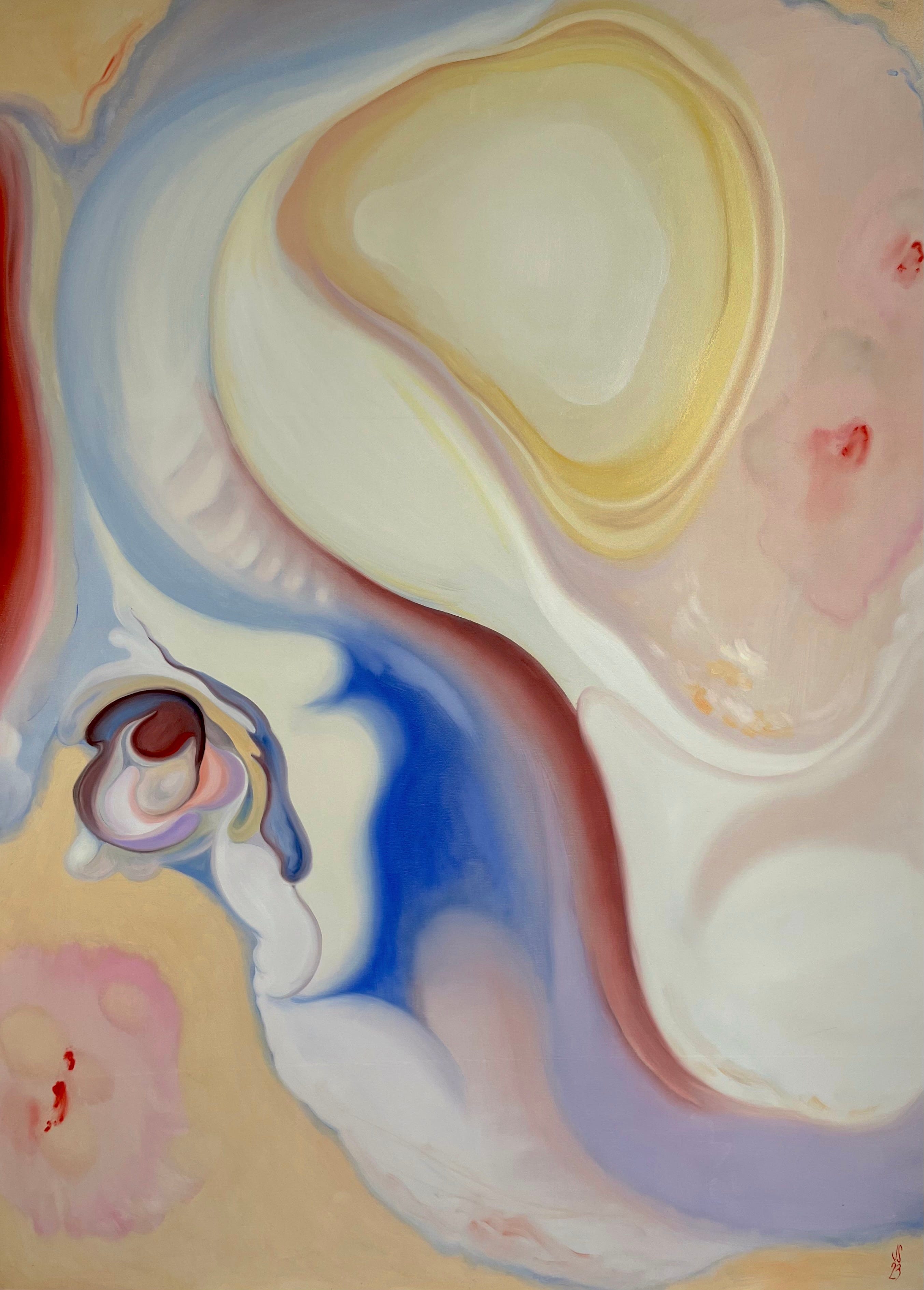
Juana Subercaseaux: Moving toward abstraction is a constant for me. Personally, I’m drawn to art that moves between things, in ambiguities, in spaces that have no name. I think we live in a world where things must be labeled, categorized, pointed out; otherwise they’re seen as threatening. The mysterious, the indeterminate, the unknown are understood as chaotic, and chaos is the enemy. It’s precisely those in-between spaces I try to represent.
I see abstraction as the next step in painting’s evolution. What captivates me is the possibility of moving someone, of communicating or leaving a mark through images that are ambiguous, works that engage perception more than they rely on narrative or symbols. But it’s a constant challenge. I see it as a kind of bravery, a constant practice of radical openness.
“Personally, I’m drawn to art that moves between things, in ambiguities, in spaces that have no name.”
Q: How has your experience living in Mexico City been?
Juana Subercaseaux: Mexico has welcomed me warmly. I came for a month to see if I liked it, and two days in I had already decided to stay. I feel this city has been very generous to me; I feel lucky.
Socially, it’s been easy. I see openness and diverse creative spaces. There’s a lot of movement, the market is bigger and more stimulating.
To learn more about Juana Subercaseaux, visit:
OPEN CALL FOR CONTRIBUTORS:
Art in Latin America is a platform dedicated to celebrating and amplifying the contemporary art scene with Latin American roots. Our community reaches over 10,000 followers, and our newsletter reaches more than 4,300 monthly readers across 82 countries.
As we continue to grow, we’re inviting guest contributors to join us. We welcome writing on contemporary art in Latin America and its diasporas, from critical essays and interviews to artist projects, exhibition reviews, and experimental formats. This is an opportunity to publish short, insightful texts (up to 2,000 words) that critically engage with the art scenes shaping Latin America today, shared across our online platforms.
We’re looking for pieces that go beyond the surface, situating art within its wider cultural, political, and social contexts, and bringing forward fresh perspectives.
Writers of all backgrounds and experience levels (including students, emerging voices and early-career professionals) are encouraged to apply. All submissions must be original and authored solely by the applicant.
Submit your application in either Spanish or English, including:
A 200–300 word pitch outlining your proposed topic
A short bio (up to 150 words).
One writing sample (published or unpublished).
Deadline: Sunday, September 7th, 2025
Send to: contact@artinlatam.com with the subject line: CONTRIBUTION PROPOSAL
Desde su estudio en Ciudad de México, Juana Subercaseaux ha estado desarrollando una obra profundamente intuitiva, matérica y abierta a lo desconocido.
A través del óleo, Juana investiga formas de representar lo intangible: reacciones químicas, eventos energéticos, estados de transformación. En esta entrevista, Juana nos habla de sus inicios, su tránsito hacia lo no figurativo y su deseo de que la pintura se pinte sola. También reflexiona sobre su llegada a México y lo que significa pintar desde el misterio, sin plan ni modelo.
Q: Para quienes se acercan por primera vez a tu trabajo, ¿cómo describirías tu obra? ¿Qué temas o sensaciones te interesa explorar?
Juana Subercaseaux: Comencé pintando paisajes, pero eran lugares ficticios, sin personajes ni sujetos. Eran lugares que estaban en transición, donde algo estaba sucediendo, pero no se entendía muy bien qué, o con cierto sentido de misterio o incluso apocalipsis.
Con el tiempo, la línea del horizonte desapareció y empecé a interesarme por elementos de la naturaleza desde un lugar más onírico, mental. Esa búsqueda fue derivando desde lo “natural” hacia lo orgánico. Últimamente trabajo con ideas más científicas, como energía o materia cambiando de estado, de sólido a gaseoso, por ejemplo. Me interesa la pregunta sobre cómo representar un evento más que una imagen con cierta narrativa. Una sensación, una energía, más que algo que pueda leerse literalmente.
Q: ¿De dónde nace tu necesidad de crear?
Juana Subercaseaux: Vengo de una familia bastante artística y tuve la suerte de ir a una escuela donde también se potenciaban esos aspectos, por lo que en mi entorno los espacios creativos estaban disponibles y era natural. Cuando era niña, tuve una revelación tan profunda como simple a la vez: entender que podía crear cualquier imagen que se me ocurriera, cualquiera. Que las imágenes, con todas las que fueron creadas en el pasado y las que quedan por crear en el futuro, son infinitas, supongo. Esa idea, tan sencilla y a la vez tan inmensa, me marcó para siempre.
“Cuando era niña, tuve una revelación tan profunda como simple a la vez: entender que podía crear cualquier imagen que se me ocurriera … Esa idea, tan sencilla y a la vez tan inmensa, me marcó para siempre.”
Q: ¿Cómo llegaste a pintar de esta forma? ¿Siempre te interesaron estos temas?
Juana Subercaseaux: Sí, desde siempre me ha interesado más la pintura desde un lugar mental, inmersivo. No me llamaba mucho la atención pintar de una forma naturalista, los retratos o la pintura con modelo. Siempre he tenido esta fantasía de ser una especie de médium de la pintura. Fantaseo con dejar de lado mi voluntad o gusto personal, y dejar que la pintura actúe por sí sola.
¡Es una lucha constante entre el control y el descontrol! Es difícil pintar o dibujar algo que no se parece a nada. La mente busca patrones, siempre quiere identificar cosas conocidas. Por eso, usualmente trabajo desde una mancha, desde un gesto, y dejo que eso me guíe. Es como una conversación con lo impredecible.
“Siempre he tenido esta fantasía de ser una especie de médium de la pintura. Fantaseo con dejar de lado mi voluntad o gusto personal, y dejar que la pintura actúe por sí sola.”
Q: ¿Qué lugar ocupan los títulos en tu trabajo?
Juana Subercaseaux: Me gusta que abran posibilidades, no que encierren significados. A veces uso frases de poemas o canciones que me gustan y voy guardando, con la intención de usarlas en algún momento, ya sea como idea o como título. Por ejemplo, una vez usé de inspiración una frase de Rimbaud que dice: “Espero a Dios como golosina.” Me gustó esa idea: esperar algo con tantas ansias y establecer la metáfora con la golosina. A partir de eso usé la figura de la golosina como material, con sus brillos, transparencias y colores, para representar la imagen de un líquido transformándose en un sólido.
Q: ¿Siempre trabajaste con óleo? ¿Por qué lo elegiste como medio?
Juana Subercaseaux: Sí. Vengo de una familia muy pintora: mi hermana, mis tíos, mi abuela, todos pintaban. Crecí escuchando sobre la pintura en la mesa, entre comidas. Era parte de la familia. Desde niña me fascinaba el olor de los diluyentes, la sensación de estar mezclando ciencia con alquimia.
Siento que el óleo es lo más cercano a poseer un color. Me encanta que cada pigmento tenga un peso distinto, que seque a diferentes ritmos, que tenga comportamientos químicos imprevisibles. Hay colores que incluso me provocan una reacción física. Es un medio vivo, inestable, con el que se puede pensar y sentir al mismo tiempo. No me acuerdo exactamente cómo era un texto de Walter Benjamin, pero la idea que planteaba era que la pintura (el óleo) es la manera más cercana de materializar el color de la fantasía. Lo más cercano a poseer “el azul” es un óleo azul. Esto me resonó mucho y me pareció muy bello poner a los tubos de colores en términos de fantasía materializada.
“Siento que el óleo es lo más cercano a poseer un color. Me encanta que cada pigmento tenga un peso distinto, que seque a diferentes ritmos, que tenga comportamientos químicos imprevisibles.”
Q: ¿Cómo es un día típico en tu estudio?
Juana Subercaseaux: Tengo una rutina súper estructurada. Trabajo de lunes a viernes, de 10 a 6 o 7, con una hora de almuerzo. Pero lo que sucede dentro del estudio cambia cada día. Hay días muy productivos, y otros donde paso más tiempo mirando las pinturas que pintando. O barro el piso. A veces simplemente no estoy en el estado mental correcto para pintar, y está bien. He aprendido a leer bien mi energía y tratar de conducirla de la mejor manera posible.
Q: ¿Hay algo que no hayas pintado aún, pero que te gustaría intentar?
Juana Subercaseaux: Avanzar hacia la abstracción para mí es una constante. Personalmente me interesa el arte que se mueve entremedio de las cosas, en las ambigüedades, en los espacios que no tienen nombre. Creo que vivimos en un mundo en que las cosas deben ser señaladas, etiquetadas y categorizadas porque, si no, son amenazantes. Lo misterioso, lo indeterminado o lo desconocido es entendido como caótico, y el caos es el enemigo. Son precisamente esos espacios intermedios los que intento representar.
La abstracción, para mí, es una progresión de la pintura. Me fascina la idea de conmover a alguien, comunicar o causar una impresión con imágenes ambiguas, que apelan a la percepción más que a la narrativa o a los símbolos. Pero es un reto constante; lo veo como una valentía, un desafío constante de apertura radical.
“Personalmente me interesa el arte que se mueve entremedio de las cosas, en las ambigüedades, en los espacios que no tienen nombre.”
Q: ¿Cómo ha sido tu experiencia viviendo en Ciudad de México?
Juana Subercaseaux: México me ha recibido muy bien. Vine por un mes a ver si me gustaba, y a los dos días ya había decidido quedarme. Siento que esta ciudad ha sido muy generosa conmigo, me siento afortunada.
Socialmente ha sido fácil, veo que hay apertura y espacios creativos diversos. Hay mucho movimiento, el mercado es más grande y más estimulante.
Para saber más sobre Juana Subercaseaux, visita:
CONVOCATORIA ABIERTA PARA COLABORADORES
Art in Latin America es una plataforma dedicada a celebrar y amplificar la escena del arte contemporáneo con raíces latinoamericanas. Nuestra comunidad cuenta con más de 10,000 seguidores, y nuestro boletín llega a más de 4,300 lectores mensuales en 82 países.
Estamos creciendo y queremos invitar a colaboradores a formar parte de nuestro proyecto. Aceptamos textos sobre arte contemporáneo en América Latina y sus diásporas, que pueden ir desde ensayos críticos y entrevistas hasta proyectos de artistas, reseñas de exposiciones y formatos experimentales. Esta es una oportunidad para publicar textos breves y reflexivos (de hasta 2,000 palabras) que analicen de manera crítica las escenas artísticas que dan forma al arte latinoamericano hoy en día, en nuestras plataformas digitales.
Buscamos piezas que vayan más allá de la superficie, situando el arte dentro de sus contextos culturales, políticos y sociales más amplios, y que aporten perspectivas frescas. Animamos a postular a escritores de todos los perfiles y niveles de experiencia (incluyendo estudiantes, voces emergentes y profesionales en etapa inicial). Todos los textos deben ser originales y de autoría exclusiva del postulante.
Envía tu postulación en español o inglés, incluyendo:
Un texto de entre 200 y 300 palabras presentando el tema propuesto.
Una breve biografía (máx. 150 palabras).
Una muestra de escritura (publicada o no publicada).
Fecha límite: Domingo 7 de septiembre de 2025
Enviar a: contact@artinlatam.com con el asunto PROPUESTA DE COLABORACIÓN