


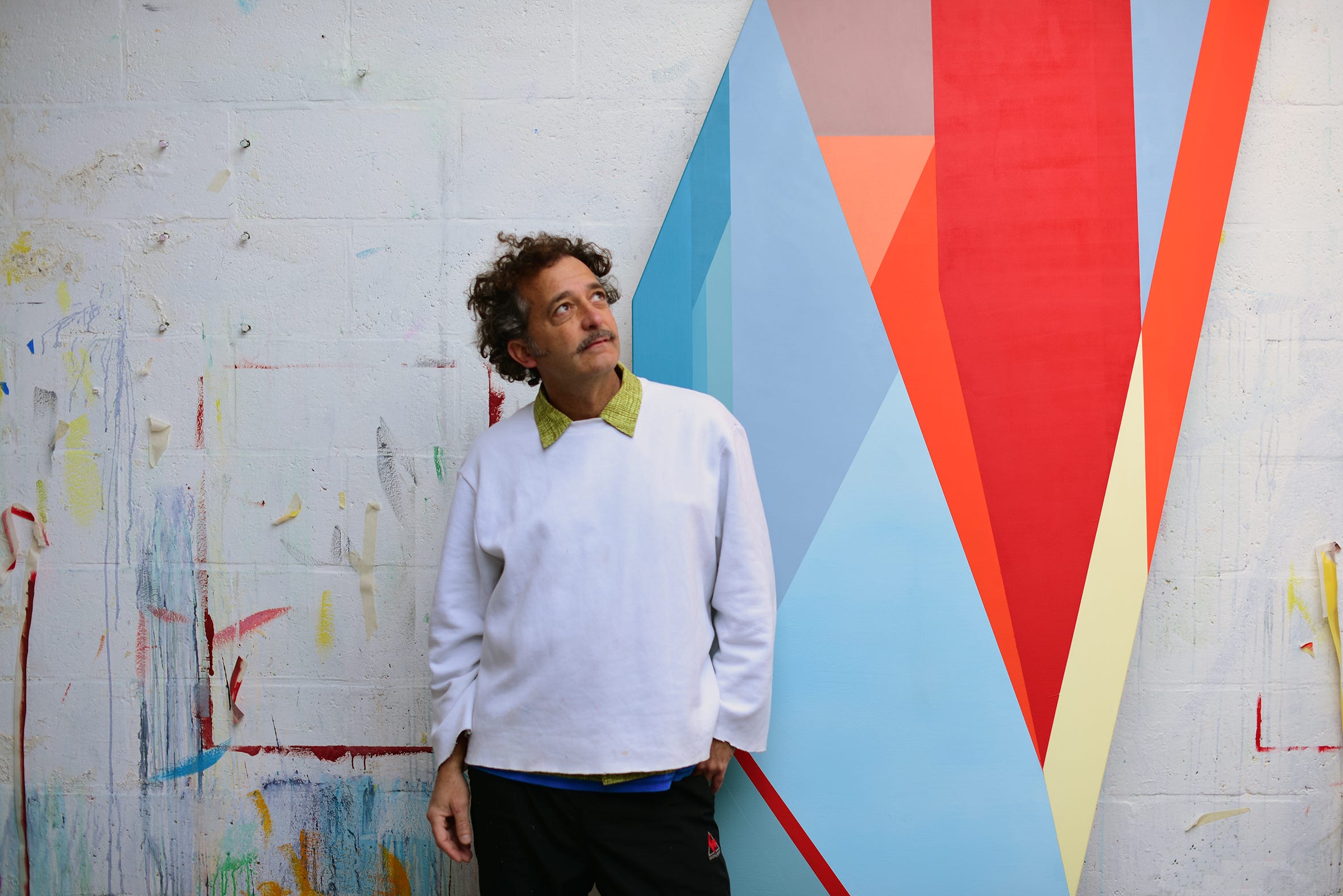
Jaime Gili is a Venezuelan artist based in London whose abstract practice draws on the visual culture and urban landscapes of Venezuela. Working across painting, public art, and design, his work explores color, movement, architecture, and the relationship between abstraction and everyday life.
In this interview, Gili reflects on his artistic education in Caracas, Barcelona, and London, the influence of Venezuelan abstraction, his relationship with Caracas, and the ideas behind recent projects including Conuco and his forthcoming book.
Editor’s note: This conversation took place before the two earthquakes that struck Venezuela on June 24, 2026. Following the events, the interviewee, Jaime, wished to add the following note:
“I took part in this interview a few days before the earthquakes. My optimistic tone would not be the same if the interview were taking place now, when I am still struggling to comprehend the tremendous injustice and the pain over so many deaths and losses continues to grow.
Today, I believe this terrible tragedy is the worst of a succession of cycles of hope and unity, followed by brutal blows of despair and loneliness, that we have experienced in Venezuela for several decades. These cycles continue because of my compatriots’ instinctive determination to keep moving forward with a brave face, sustained by faith and optimism, always and despite everything.”
From a very young age, you were constantly drawing. How do you remember those first connections with art?
JG: Without a doubt, from a very young age, making art was what I enjoyed most and, fortunately, my family always supported me. My father, an industrial designer, had a drawing table at home and a beautiful library of art and philosophy; and my mother, who is a seamstress and always had a very active workshop in the houses where we lived, still sews today, at over eighty years old. So I grew up between those two things: straight lines and technical drawing and, on the other hand, the soft curves of pattern-making paper and the colors of fabrics. I grew up drawing and watching people draw and create.
In Caracas, you began by studying design and eventually moved towards painting. What was that journey like, especially in a context where there was no formal school of painting?
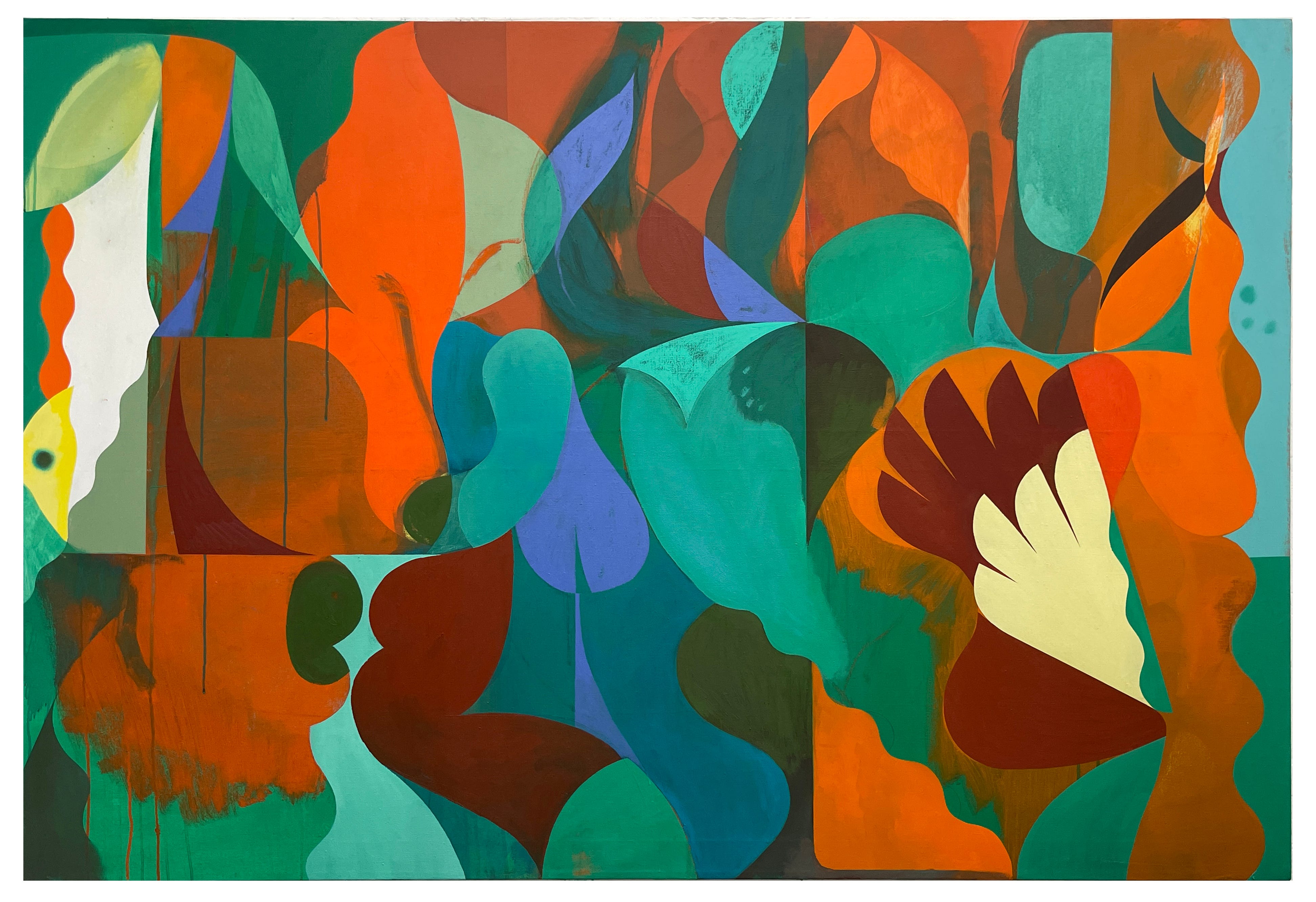
JG: It was somewhat circumstantial. In Caracas, there was no formal school of painting at university level, but there was a great school of design: the Instituto de Diseño Fundación Neumann, a kind of tropical Bauhaus with an incredible atmosphere, where architects, historians, and artists taught classes. It was supposed to be a design school, but, in reality, they were training us for a country that did not yet exist: a country that would one day produce furniture, textiles, objects, visual culture. I think that idea of preparing oneself for something that does not yet exist is still very present in Venezuela.
Then I went to Barcelona. There, the education consisted solely of the studio. There was not much contact with the outside world or much hope of changing anything, but that gave me a very serious discipline. That was where I understood that design was not my thing, because in design they generally give you the rules and you have to solve the problem in the most interesting way possible. I wanted to set my own rules and then break them; perhaps that is why I gradually moved towards painting.
When I arrived in London, it was the complete opposite: it was not about the closed studio, but about how you present the work to the outside world, how you make an exhibition, how you explain what you do to the world. In the end, I think everything balanced out very well: on the one hand, the hope and the dream in Venezuela; on the other, the constant work in Barcelona, without expecting external reward; and, finally, London, situating us and presenting us in relation to the world.
“I wanted to set my own rules and then break them; perhaps that is why I gradually moved towards painting.”
Your work has always been connected to abstraction. Where does that relationship come from?
JG: I think the influence comes greatly from my father and his stubborn modernity; then, from the IDD in Caracas, from the professors there, who were very connected to that Venezuelan abstract tradition of the second half of the twentieth century: Alejandro Otero, Gego, Gerd Leufert, Nedo, Soto, Cruz-Diez, Juvenal Ravelo, and many other artists who always cultivated a relationship with design, architecture, and public space.
But my work contains a tension. On the one hand, that period was experiencing the official discourse, which greatly favored kinetic artists for major public commissions. On the other hand, there was a more punk branch, more connected to the street, less interested in a fine, polished finish.
I was always interested in the mixture of those two things. I have always said that those traditions come together in the semi-anonymous paintings on Caracas buses: geometry, the street, color, the popular, and that this is what nourishes me; not one extreme or the other, but the place where they meet.
What visual memories of Caracas continue to appear in your work?
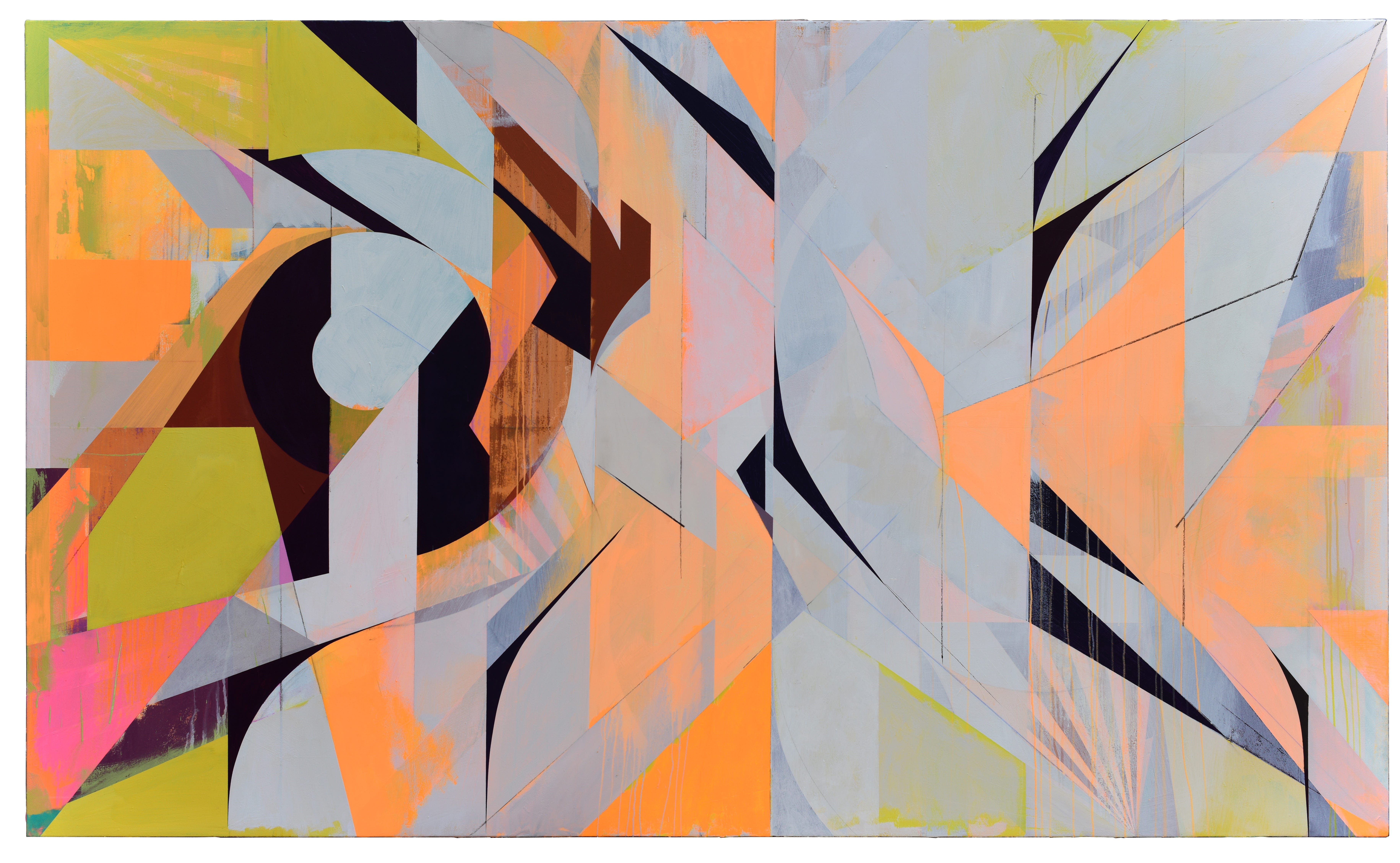
JG: The street is very important. I think there is a way in which we are Caribbean that is different from that of the coastal Caribbean.
That produces something particular: an urban Caribbean within a metropolis like Caracas. It is an intuitive matter; I think there is a way of being Caribbean in an urban context.
“I think there is a way of being Caribbean in an urban context.”
In your recent works, there is a very clear relationship with functionality. How are you thinking about that connection?
JG: With that legacy of the tropical Bauhaus I was talking about, I am very interested in art being able to have a function beyond aesthetics: a utility. My latest project has been a screen-printed blind for The Showroom. I realized that, with summers becoming increasingly hot in London, they were going to need to block the sunlight from entering their office spaces, which have an enormous glass roof, and I proposed the blind to them. For the title of the work, I connected the idea to Alexander Calder’s work at the Central University of Venezuela, known as the Nubes de Calder, which has an acoustic function within the hall.
The piece is called Nubes for The Showroom. I am interested in maintaining a thread with that history of integration between art, architecture, and practical use. The forms that appear there come from a series I made in 2010 about the artificial lakes of Parque del Este, in Caracas, designed by a team led by Roberto Burle Marx. It is a park that I enjoyed greatly as a child and continue to enjoy as an adult. It has lakes with very amoeboid forms, and perhaps the curvier part of my work emerged from there, coexisting with the geometric and rectilinear part.
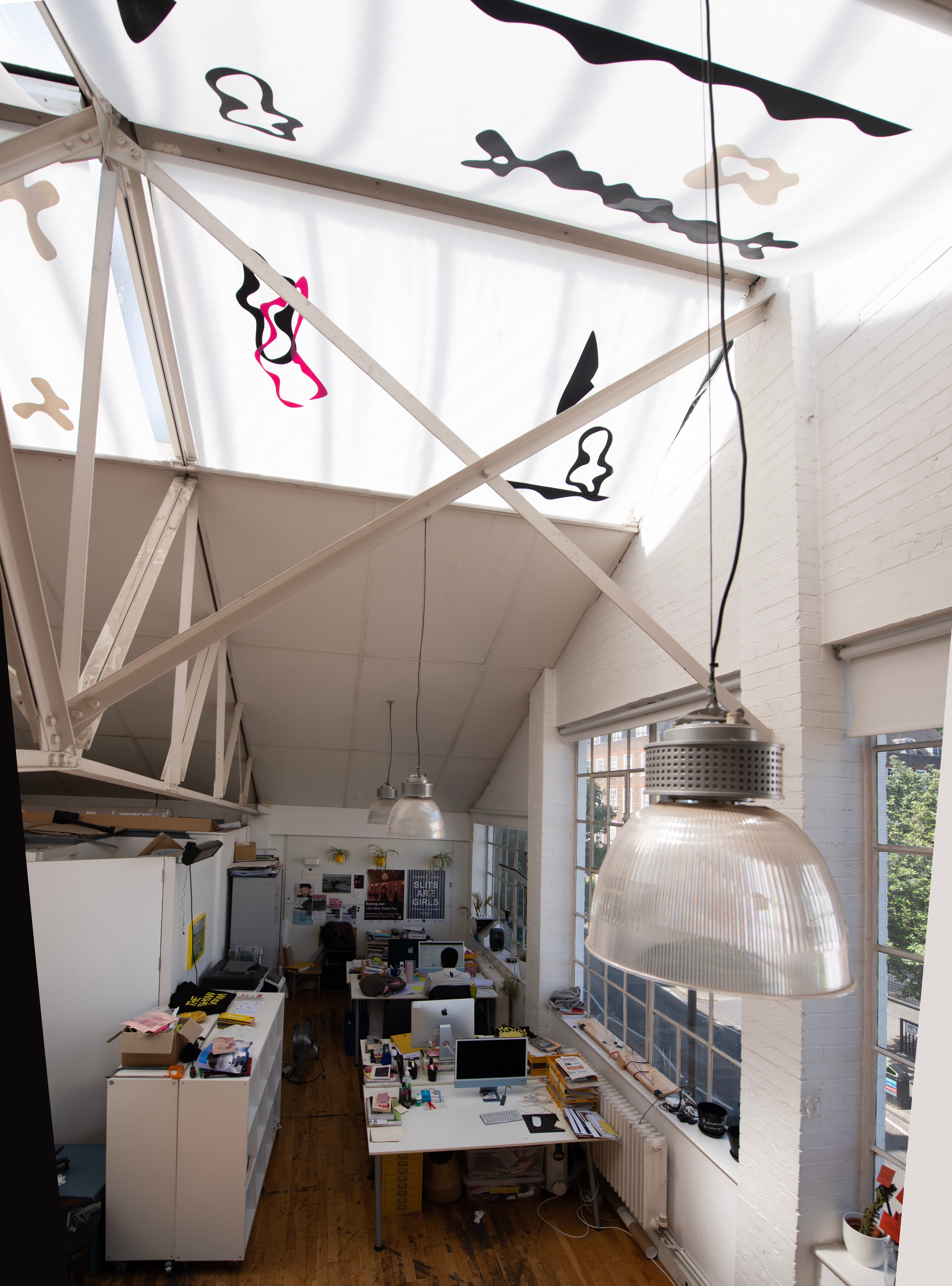
“I am very interested in art being able to have a function beyond aesthetics: a utility…in maintaining a thread with that history of integration between art, architecture, and practical use.”
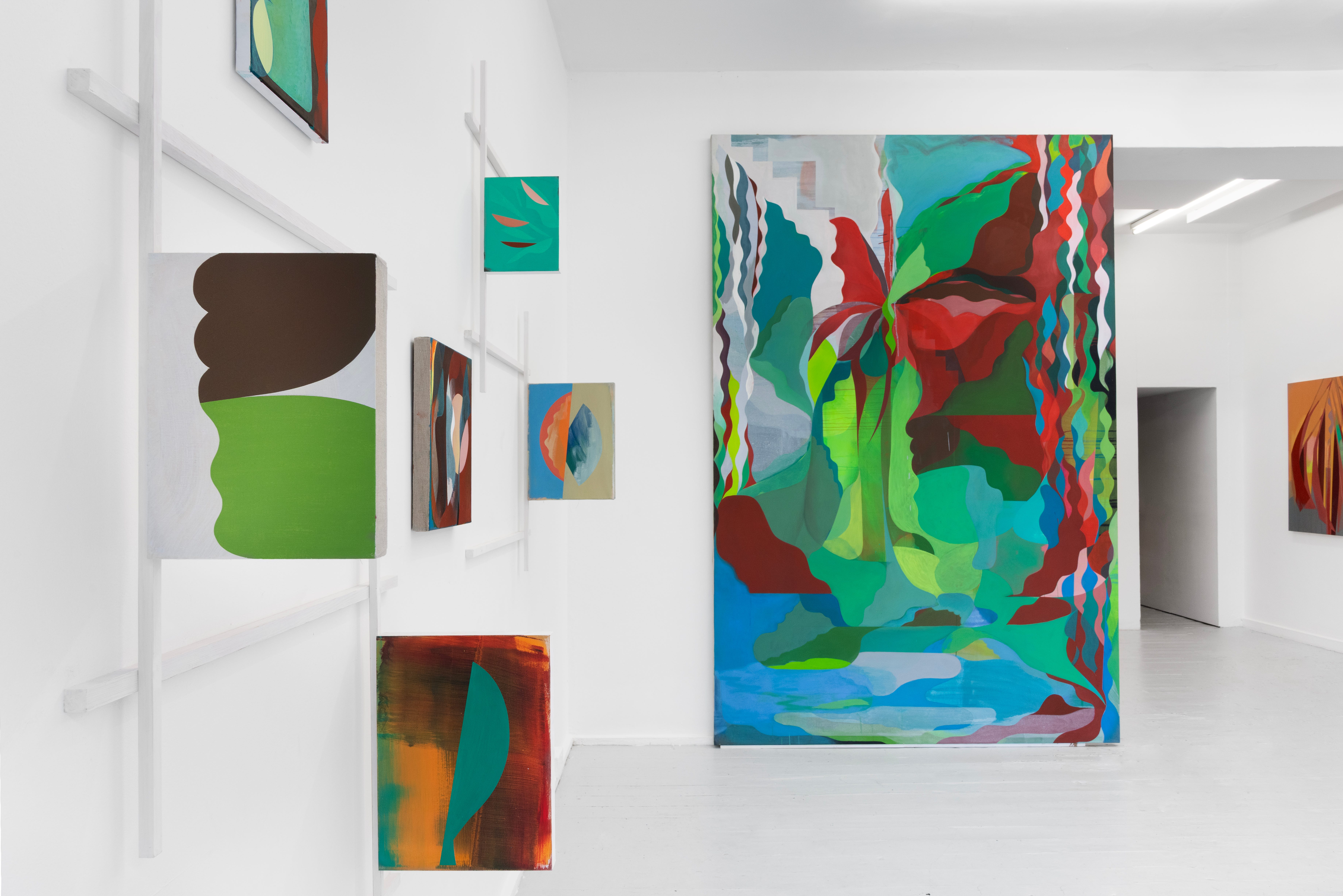
Your recent exhibition, “Conuco,” at Somers Gallery, also opens up a relationship between abstraction and literature. How did that series begin?
JG: In Conuco, a more literary reference appears. One of the series comes from La vorágine, by José Eustasio Rivera. It is a book with very elaborate, very baroque prose, but, when it describes the jungle, you feel that this is the perfect prose for speaking about an aggressive, excessive landscape that forces you to look closely, without distance. Everything is made up of complex and nearby details; you shift your gaze slightly and another universe appears, equally complex and equally close, lying in wait. I wanted to make a painting that resembled that prose. Then there is also the subject of the conuco and a certain formal investigation into the way things grow in the tropics.
That exhibition, in fact, began with a trip to Caracas, visiting a friend’s vegetable garden, the conuco. It was not only the idea of planting and being self-sufficient, although that also has to do with necessity and with recovering ancestral practices. What interested me most was how everything grows in the tropics, that excessive fertility, that abundance, in a space like my friend’s, with a very particular topography. But, although it began there, the subject is global: people who grow what they eat, working the land they have nearby. Everyone has to have some kind of relationship with the earth.
Is there an exhibition that you consider especially important in your career?
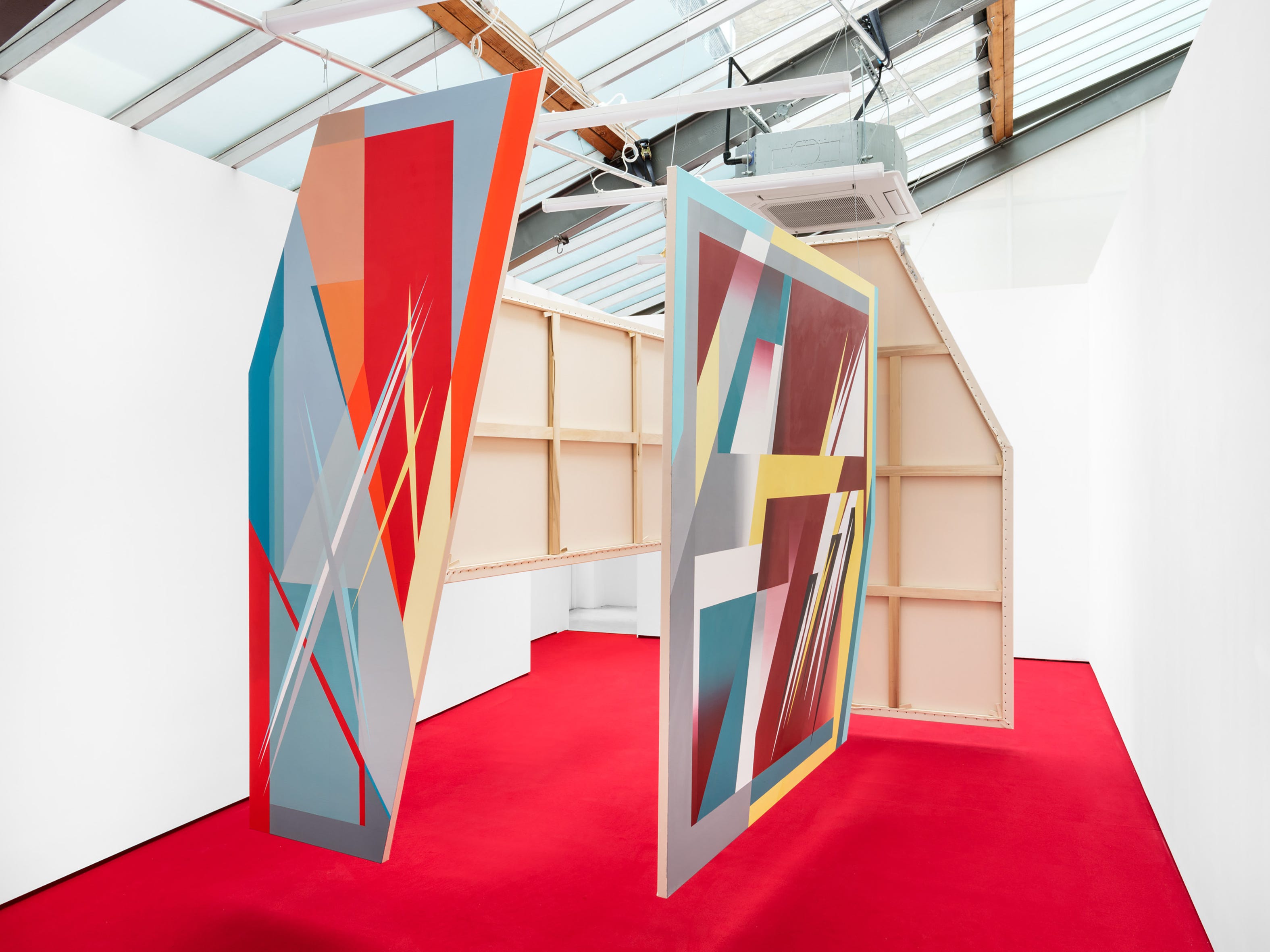
JG: I think an important exhibition for me, although little known, was Loop, at Cecilia Brunson Projects, in London. I would not say it was a conclusion, but it was a moment in which I was able to become aware of that legacy and of the thread that my father’s generation constructed and wove. They tried to cut that thread for us, and several incredibly valuable people and private institutions in Venezuela have continued, almost in secret, trying to ensure that it did not break.
That exhibition had to do with the year 1967, which for me was like a peak of our modernity, and the year in which my father arrived in Venezuela. Perhaps the problem began from that point onwards, because of the excess of optimism and the influx of dollars without much control. Venezuela has always had that dream: that oil should not be what is necessary for survival, but rather something extra, something that provides a bonus after a society is already functioning well, as in Norway. But, well, that is a dream.
You have developed an abstract practice from a Latin American context, while living in London. How do you think about that position?
JG: When I was studying at the Royal College of Art, we abstract painters were very few, 3 out of 20, in a group where a more traditional, very English form of figuration predominated, connected to landscape and portraiture. At that moment, it was important to become aware of where I came from and to continue it.
Nostalgia is often discussed from a place of sadness, as though it implied wanting to be somewhere else and being unable to do so. But I have thought a great deal about that idea, and I believe that in London we have built an important Latin American community. We are united by language, but also by the possibility of exchanging references, readings, literature, visual arts. Although we are abroad, we continue learning from one another.
That said, I think it is very important to keep returning and to keep working in our countries. If we do not, nothing makes sense. In Venezuela, all of us who have maintained that thread have the obligation, now more than ever, to keep returning and to do things there alongside the people who stayed, who endured all these years and continued weaving.
“Nostalgia is often discussed from a place of sadness, as though it implied wanting to be somewhere else and being unable to do so. But I have thought a great deal about that idea, and I believe that in London we have built an important Latin American community... Although we are abroad, we continue learning from one another. That said, I think it is very important to keep returning and to keep working in our countries. If we do not, nothing makes sense.”
What has remained constant in your work, and what has changed over time?
JG: The interest in color has remained constant, although the palette keeps shifting. Perhaps someone studying my work could say that I always use a palette of seven or eight colors, but it would become clear that they are not always the same ones.
There is still a very strong intuitive element, but, after thirty years of work, something accumulates. Experience has to bring some benefit! Intuition begins to move along a path and you arrive at solutions more quickly. You trust that it will lead you to a good place. At the same time, that forces you to remain alert and avoid formulas. The most difficult thing is to break away each time something new appears, not to repeat oneself.
“The most difficult thing is to break away each time something new appears, not to repeat oneself.”
What would you like new generations to understand about the Venezuelan artistic tradition?
JG: I would be satisfied simply if they knew it! Now, everyone is being fed by immediate and short-lived information, not by what happened decades ago. For many children of Latin Americans living abroad, a broader knowledge would help them understand that the contemporary also has roots, in art as much as in history itself.
To conclude, you are working on a new book. What can you tell us about that project?
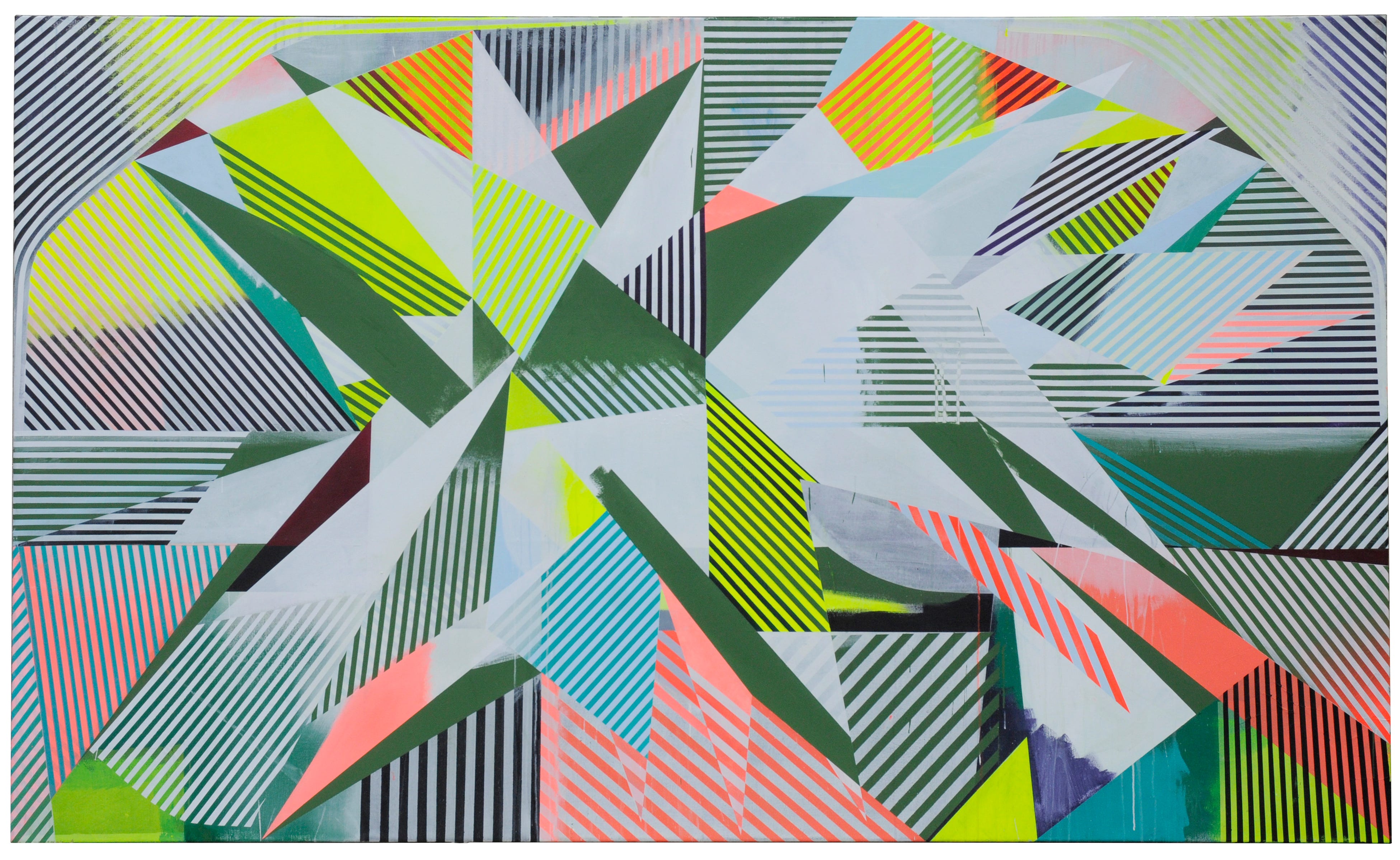
JG: I am making a book that will be launched in September. It will have two sides: one more connected to the urban and to movement, perhaps more rectilinear, and another more botanical, with the lakes, the conuco, the watercolors, etc. Working with editors has been a very stimulating process. It will include an interview with Pablo León de la Barra, a text by Ramón del Castillo, and another by Torrivilla. The editor is Natalia Valencia Arango.
The publication will be released in Madrid with This Side Up. In September, we will have launches in London; in December, in Caracas; and afterwards we will present it in Madrid and Barcelona. Next year, the project will travel to Buenos Aires, Miami, and other cities.
To learn more about Jaime Gili, visit:
En el estudio con: Jaime Gili
Jaime Gili es un artista venezolano radicado en Londres cuya práctica abstracta se nutre de la cultura visual y los paisajes urbanos de Venezuela. A través de la pintura, el arte público y el diseño, su obra explora el color, el movimiento, la arquitectura y la relación entre la abstracción y la vida cotidiana.
En esta entrevista, Gili reflexiona sobre su formación artística en Caracas, Barcelona y Londres, la influencia de la abstracción venezolana, su relación con Caracas y las ideas detrás de proyectos recientes, entre ellos Conuco y su próximo libro.
Nota del editor: Esta conversación tuvo lugar antes de los terremotos que sacudieron Venezuela el 24 de junio de 2026. Tras lo ocurrido, el entrevistado, Jaime, quiso añadir la siguiente nota:
“Realicé esta entrevista pocos días antes de los terremotos, mi tono optimista no sería el mismo si la hubiera hecho ahora, cuando todavía me resulta difícil asimilar la tremenda injusticia y sigue creciendo el dolor por tantas muertes y pérdidas.
Hoy pienso que esta terrible desgracia es la peor dentro de una seguidilla de ciclos de esperanza y unión, seguidos de machetazos de desesperanza y soledad, que vivimos en Venezuela desde hace varias décadas. Ciclos que se encadenan por el empecinamiento natural de mis compatriotas en seguir adelante con buena cara, con fe y optimismo, siempre y a pesar de todo.”
Desde muy pequeño dibujabas constantemente. ¿Cómo recuerdas esos primeros vínculos con el arte?
JG: Sin duda, desde muy pequeño, hacer arte era lo que más me gustaba y, por suerte, mi familia siempre me apoyó. Mi papá, diseñador industrial, tenía una mesa de dibujo en la casa y una linda biblioteca de arte y filosofía; y mi madre, que es costurera y siempre tuvo su taller muy activo en las casas donde vivimos, todavía hoy, con más de ochenta años, sigue cosiendo. Entonces crecí entre esas dos cosas: líneas rectas y dibujo técnico y, por otro lado, las curvas suaves de los papeles de patronaje y los colores de las telas. Crecí dibujando y viendo dibujar y crear.
En Caracas empezaste estudiando diseño y finalmente te moviste hacia la pintura. ¿Cómo fue ese recorrido, especialmente en un contexto donde no había una escuela formal de pintura?
JG: Fue un poco circunstancial. En Caracas no había una escuela formal de pintura con un nivel universitario, pero había una gran escuela de diseño: el Instituto de Diseño Fundación Neumann, una especie de Bauhaus tropical con un ambiente increíble, donde arquitectos, historiadores y artistas daban clases. Se suponía que era una escuela de diseño, pero, en realidad, nos estaban formando para un país que todavía no existía: un país que algún día iba a producir muebles, textiles, objetos, cultura visual. Esa idea de prepararse para algo que todavía no existe creo que sigue muy presente en Venezuela.
Después fui a Barcelona. Allí la educación era solamente el taller. No había mucho contacto con el exterior ni esperanzas de cambiar nada, pero eso me dio una disciplina muy seria. Ahí entendí que lo mío no era el diseño, porque en diseño generalmente te ponen las reglas y tú tienes que resolver el problema de la manera más interesante posible. Yo quería ponerme mis propias reglas para luego romperlas; quizá por eso me acerqué paulatinamente a la pintura.
Al llegar a Londres fue todo lo contrario: no era el taller cerrado, sino cómo vas a presentar el trabajo hacia afuera, cómo haces una exposición, cómo explicas lo que haces al mundo. Al final, creo que todo se balanceó muy bien: por un lado, la ilusión y el sueño en Venezuela; por otro, el trabajo constante en Barcelona, sin esperar recompensa externa; y, finalmente, Londres, ubicándonos y presentándonos en relación con el mundo.
“Yo quería ponerme mis propias reglas para luego romperlas; quizá por eso me acerqué paulatinamente a la pintura.”
Tu trabajo siempre ha estado vinculado a la abstracción. ¿De dónde viene esa relación?
JG: Creo que la influencia viene mucho de mi padre y su empecinada modernidad; luego, del IDD en Caracas, de los profesores allí, muy conectados con esa tradición abstracta venezolana de la segunda mitad del siglo XX: Alejandro Otero, Gego, Gerd Leufert, Nedo, Soto, Cruz-Diez, Juvenal Ravelo y muchos otros artistas que siempre cultivaron una relación con el diseño, la arquitectura y el espacio público.
Pero mi obra contiene una tensión. Por un lado, esa época estaba experimentando el discurso oficial, que favorecía mucho a los artistas cinéticos para grandes encargos públicos. Por otro lado, había una rama más punk, más vinculada a la calle, menos interesada en el acabado fino y brillante. A mí siempre me interesó la mezcla de esas dos cosas. Siempre he dicho que en las pinturas semianónimas de los autobuses de Caracas se juntan esas tradiciones: la geometría, la calle, el color, lo popular, y que de ahí es que me nutro: no de un extremo ni del otro, sino del lugar donde se encuentran.
¿Qué recuerdos visuales de Caracas siguen apareciendo en tu obra?
JG: La calle es muy importante. Creo que hay una manera nuestra de ser Caribe que es distinta a la del Caribe de costa.
Eso produce algo particular: un Caribe urbano dentro de una metrópoli como Caracas. Es una cuestión intuitiva; creo que hay una manera de ser Caribe en lo urbano.
“Creo que hay una manera de ser Caribe en lo urbano.”
En tus trabajos recientes aparece una relación muy clara con la utilidad. ¿Cómo estás pensando esa conexión?
JG: Con esa herencia de la Bauhaus tropical de la que hablaba, me interesa mucho que el arte pueda tener una función más allá de la estética: una utilidad. Mi último proyecto ha sido una persiana serigrafiada para The Showroom. Me di cuenta de que, con los veranos cada vez más calurosos en Londres, iban a necesitar tapar la entrada de sol en sus espacios de oficina, que tienen un techo de vidrio enorme, y les propuse la persiana. Para el título de la obra, conecté la idea con la obra de Alexander Calder en la Universidad Central de Venezuela, conocida como las Nubes de Calder, que tiene una función acústica dentro de la sala.
La pieza se llama Nubes for The Showroom. Me interesa mantener un hilo con esa historia de integración entre arte, arquitectura y uso práctico. Las formas que aparecen ahí vienen de una serie que hice en 2010 sobre los lagos artificiales del Parque del Este, en Caracas, diseñado por un equipo liderado por Roberto Burle Marx. Es un parque que disfruté mucho de niño y sigo disfrutando de adulto. Tiene unos lagos con formas muy ameboidales y de ahí salió quizá la parte más curva de mi trabajo, que convive con la parte geométrica y rectilínea.
“Me interesa mucho que el arte pueda tener una función más allá de la estética: una utilidad…mantener un hilo con esa historia de integración entre arte, arquitectura y uso práctico.”
Tu exposición reciente, “Conuco”, en Somers Gallery, también abre una relación entre abstracción y literatura. ¿Cómo empezó esa serie?
JG: En Conuco aparece una referencia más literaria. Una de las series viene de La vorágine, de José Eustasio Rivera. Es un libro con una prosa muy recargada, muy barroca, pero, cuando describe la selva, sientes que esa es la prosa perfecta para hablar de un paisaje agresivo, excesivo, que te obliga a mirar de cerca, sin distancia. Todo son detalles complejos y cercanos; mueves un poco la mirada y aparece otro universo igual de complejo e igual de cercano, al acecho. Yo quería hacer una pintura que se pareciera a esa prosa. Luego también está el tema del conuco y cierta investigación formal sobre la manera como crecen las cosas en el trópico.
Esa exposición, de hecho, empezó a partir de un viaje a Caracas, visitando el huerto —conuco— de un amigo. No era solo la idea de plantar y ser autosuficiente, aunque eso también tiene que ver con la necesidad y con recuperar prácticas ancestrales. Lo que más me interesaba era cómo crece todo en el trópico, esa fertilidad excesiva, esa abundancia, en un espacio como el de mi amigo, con una orografía muy especial. Pero, aunque empezara ahí, el tema es global: la gente que siembra lo que come, trabajando la tierra que tiene cerca. Todo el mundo tiene que tener alguna relación con la tierra.
¿Hay alguna exposición que consideres especialmente importante en tu trayectoria?
JG: Creo que una exposición importante para mí, aunque poco conocida, fue Loop, en Cecilia Brunson Projects, en Londres. No diría que fue un cierre, pero sí un momento en el que pude darme cuenta de esa herencia y del hilo que la generación de mi padre construyó y tejió. A nosotros nos intentaron cortar ese hilo, y varias personas valiosísimas e instituciones privadas en Venezuela han seguido, casi a escondidas, tratando de que no se rompiera.
Esa exposición tenía que ver con el año 1967, que para mí fue como un pico de nuestra modernidad, y el año en que mi padre llegó a Venezuela. Quizás, a partir de ahí, empezó el problema, por el exceso de optimismo y por la entrada de dólares sin demasiado control. Venezuela siempre ha tenido ese sueño: que el petróleo no sea lo necesario para sobrevivir, sino algo extra, algo que dé un plus después de que una sociedad ya funciona bien, como en Noruega. Pero, bueno, eso es un sueño.
Has desarrollado una práctica abstracta desde un contexto latinoamericano, pero viviendo en Londres. ¿Cómo piensas esa posición?
JG: Cuando estudiaba en el Royal College, éramos muy pocos, 3 de 20, los pintores abstractos en un grupo donde predominaba una figuración más tradicional, muy inglesa, ligada al paisaje y al retrato. En ese momento fue importante darme cuenta de dónde venía y continuarlo.
Muchas veces se habla de la nostalgia desde un lugar triste, como si implicara querer estar en otro sitio y no poder hacerlo. Pero yo le he dado muchas vueltas a esa idea y creo que en Londres hemos construido una comunidad latinoamericana importante. Nos une el idioma, pero también la posibilidad de intercambiar referencias, lecturas, literatura, artes visuales. Aunque estemos fuera, seguimos aprendiendo unos de otros.
Dicho eso, creo que es muy importante seguir volviendo y seguir trabajando en nuestros países. Si no lo hacemos, nada tiene sentido. En Venezuela, todos los que hemos mantenido ese hilo tenemos la obligación, más que nunca, de seguir volviendo y hacer cosas allá junto con la gente que se quedó, que aguantó todos estos años y siguió tejiendo.
“Muchas veces se habla de la nostalgia desde un lugar triste, como si implicara querer estar en otro sitio y no poder hacerlo. Pero yo le he dado muchas vueltas a esa idea y creo que en Londres hemos construido una comunidad latinoamericana importante…Aunque estemos fuera, seguimos aprendiendo unos de otros. Dicho eso, creo que es muy importante seguir volviendo y seguir trabajando en nuestros países. Si no lo hacemos, nada tiene sentido.”
¿Qué ha permanecido constante en tu trabajo y qué ha ido cambiando?
JG: El interés por el color ha sido constante, aunque la paleta se va moviendo. A lo mejor, alguien que estudie mi trabajo podría decir que siempre uso una paleta de siete u ocho colores, pero se verá que no son siempre los mismos.
Sigue habiendo una parte intuitiva muy fuerte, pero, después de treinta años de trabajo, algo se acumula. ¡Algún beneficio tiene que traer la experiencia! La intuición empieza a ir por un camino y llegas más rápido a las soluciones. Confías en que te va a llevar a un buen lugar. Al mismo tiempo, eso te obliga a estar alerta y evitar fórmulas. Lo más difícil es romper cada vez que aparece algo nuevo, no repetirse.
“Lo más difícil es romper cada vez que aparece algo nuevo, no repetirse.”
¿Qué te gustaría que las nuevas generaciones entendieran sobre la tradición artística venezolana?
JG: ¡Con que la conozcan tengo suficiente! Ahora, todos están siendo alimentados por información inmediata y de corta duración, no por lo que pasó décadas atrás. Para muchos hijos de latinos que viven afuera, un conocimiento más extenso ayudaría a entender que lo contemporáneo también tiene raíces, así en el arte como en la historia misma.
Para cerrar, estás trabajando en un nuevo libro. ¿Qué puedes contar sobre ese proyecto?
JG: Estoy preparando un libro que se lanzará en septiembre. Tendrá dos caras: una más vinculada a lo urbano y al movimiento, quizá más rectilínea, y otra más botánica, con los lagos, el conuco, las acuarelas, etc. Trabajar con los editores ha sido un proceso muy estimulante. Incluirá una entrevista con Pablo León de la Barra, un texto de Ramón del Castillo y otro de Torrivilla. La editora es Natalia Valencia Arango.
La publicación se lanzará en Madrid con This Side Up. En septiembre tendremos presentaciones en Londres; en diciembre, en Caracas; y posteriormente lo presentaremos en Madrid y Barcelona. El próximo año, el proyecto viajará a Buenos Aires, Miami y otras ciudades.
Para saber más sobre Jaime Gili, visita:
Qué importante es mostrar el arte venezolano contemporáneo, sin dejar de perder de vista las raíces que lo conforman, tal como lo dice Jaime. Venezuela es un país cuyas instituciones culturales se han desvanecido con el paso del tiempo, y sus artistas se ven profundamente afectados por la falta de apoyo institucional.
Qué bueno que a pesar de estas dificultades, la carrera de Jaime esté hoy más vigente que nunca. Un saludo.
Nice piece..