


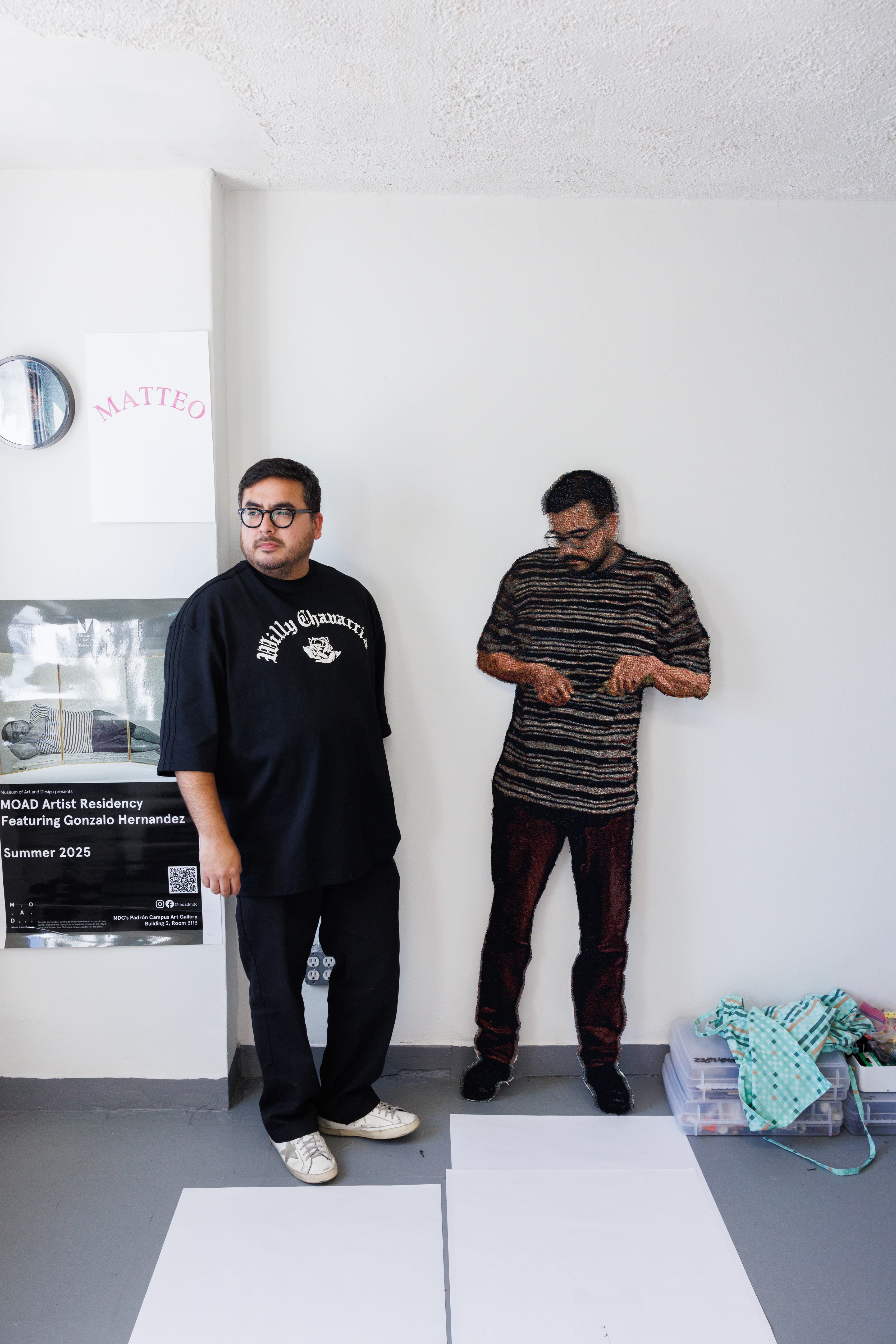
Gonzalo Hernández is a Peruvian artist whose work moves between textile, image-based work, and research-based processes. His practice is informed by an ongoing interest in the structures of the art world and how artists navigate them.
In this conversation, we speak about his early formation and interest in conceptual art, the role of self-portraiture and autobiography in his work, and his engagement with the market. Finally, we reflect on Félix, his recent work acquired by the PAMM (Pérez Art Museum Miami), a piece inspired by Félix González-Torres.
How did your path as an artist begin to take shape, and which moments do you feel were decisive in that process?
GH: I began without knowing clearly that I wanted to be an artist. It was in my fourth year of secondary school when a teacher showed the class a urinal by Duchamp and spoke about conceptual art. That moment was a turning point for me; I found it fascinating to think that art could be that: a production of ideas.
I studied art in Peru, where I had a fairly academic training, but little by little I began moving toward other languages. Later on, I had the opportunity to go study at Parsons in Paris, where I had my first direct contact with artists I had only seen in books, as well as with the international circuit.
Seeing works in person, going to institutions such as the Pompidou or the Palais de Tokyo, and meeting artists there completely changed my perspective. I remember having seen a retrospective of Richter that impacted me greatly, and when the time came to return to Lima, I came back with a very strong feeling that things were happening there that were not happening in Peru. It was at that moment that I began to think more about the art system and how I could incorporate it into my practice.
“It was in my fourth year of secondary school when a teacher showed the class a urinal by Duchamp and spoke about conceptual art…I found it fascinating to think that art could be that: a production of ideas.”
At that moment, how do those experiences translate into your work?
GH: Upon returning to Lima, I developed two projects that I now see as fundamental. One was called Te invito a un café, where for two months I met with artists and agents from the circuit in Lima and asked them: what is success?
It was a way of generating conversations, but also of inserting myself into the system. I did not know many of those people, and that project was an excuse to get closer to them.
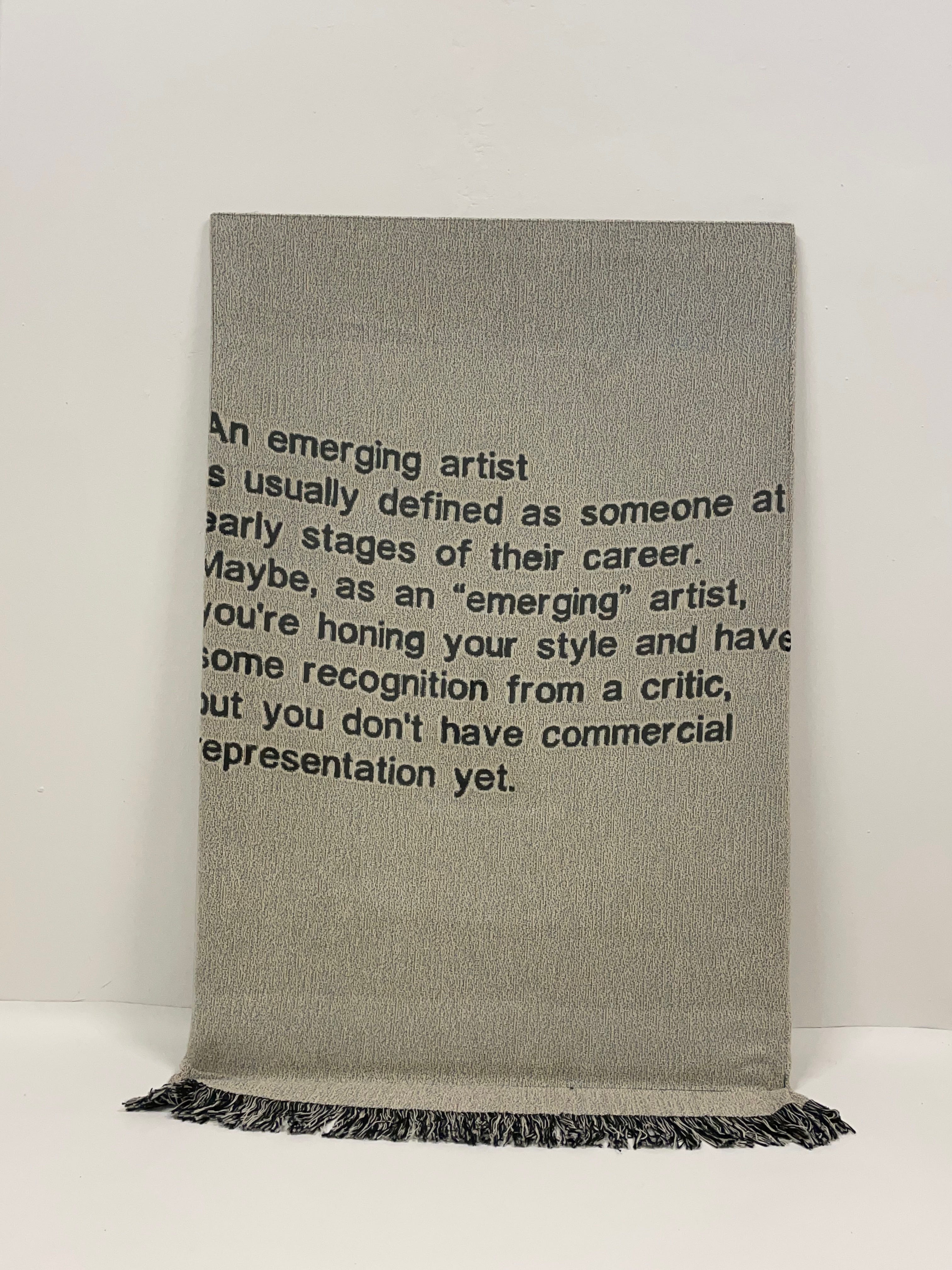
In parallel, I did another project where I brought together emerging artists with more established artists in a chifa—a Chinese-Peruvian fusion restaurant—generating a kind of shared table. Looking at it now, there was clearly an intention to understand how those relationships functioned, how certain moments of visibility or “success” came about. I have always been interested in the art system: not only the works, but how they circulate and how they are positioned.
There is something that has remained from your early works until today: the use of self-portraiture and the autobiographical. How has that axis transformed within your practice?
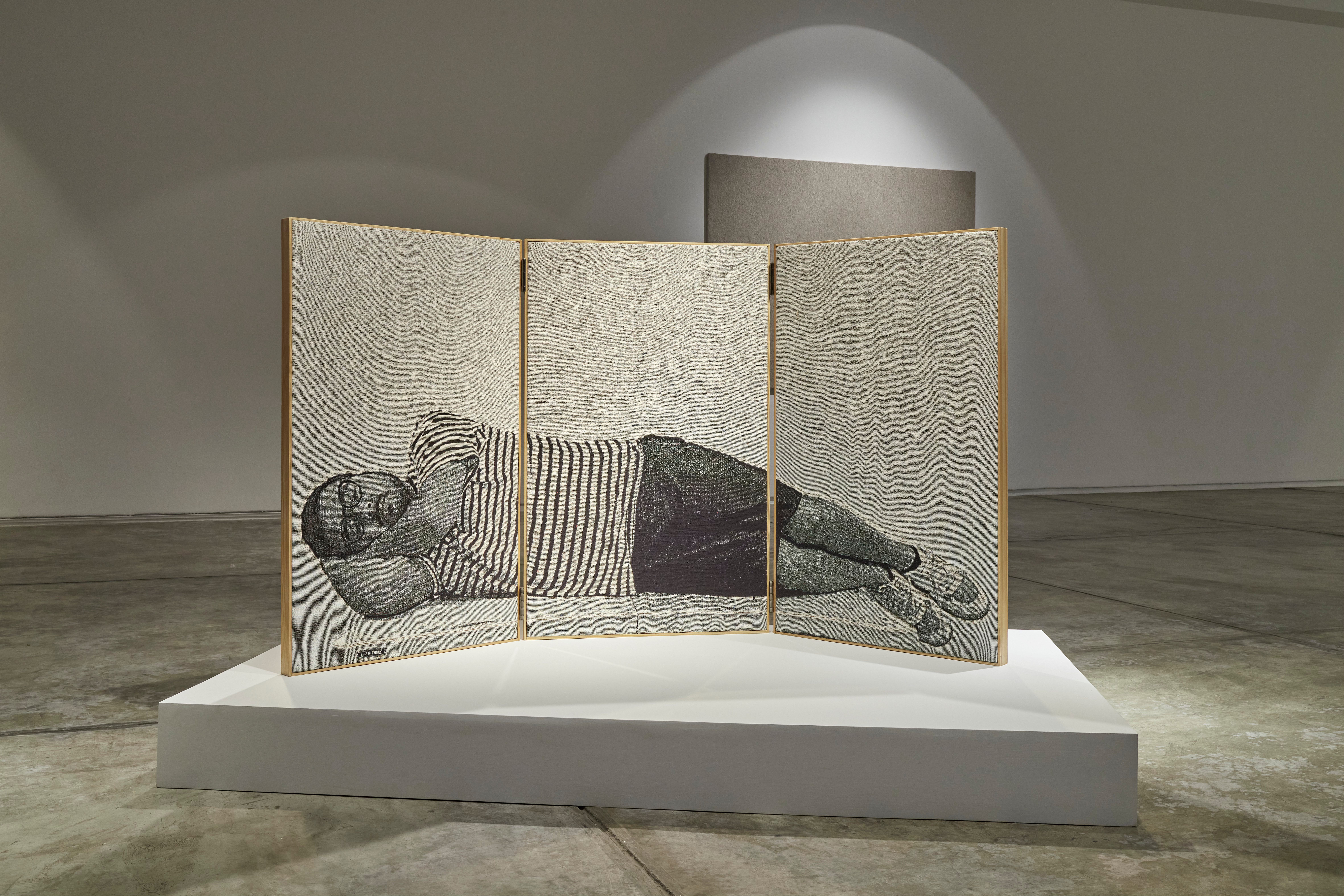
GH: Self-portraiture has been a constant. From the beginning I was interested in working with my close environment: family, my own image. Also with Peruvian artists such as Natalia Iguiñiz or Miguel Aguirre, where there was a strong autobiographical dimension.
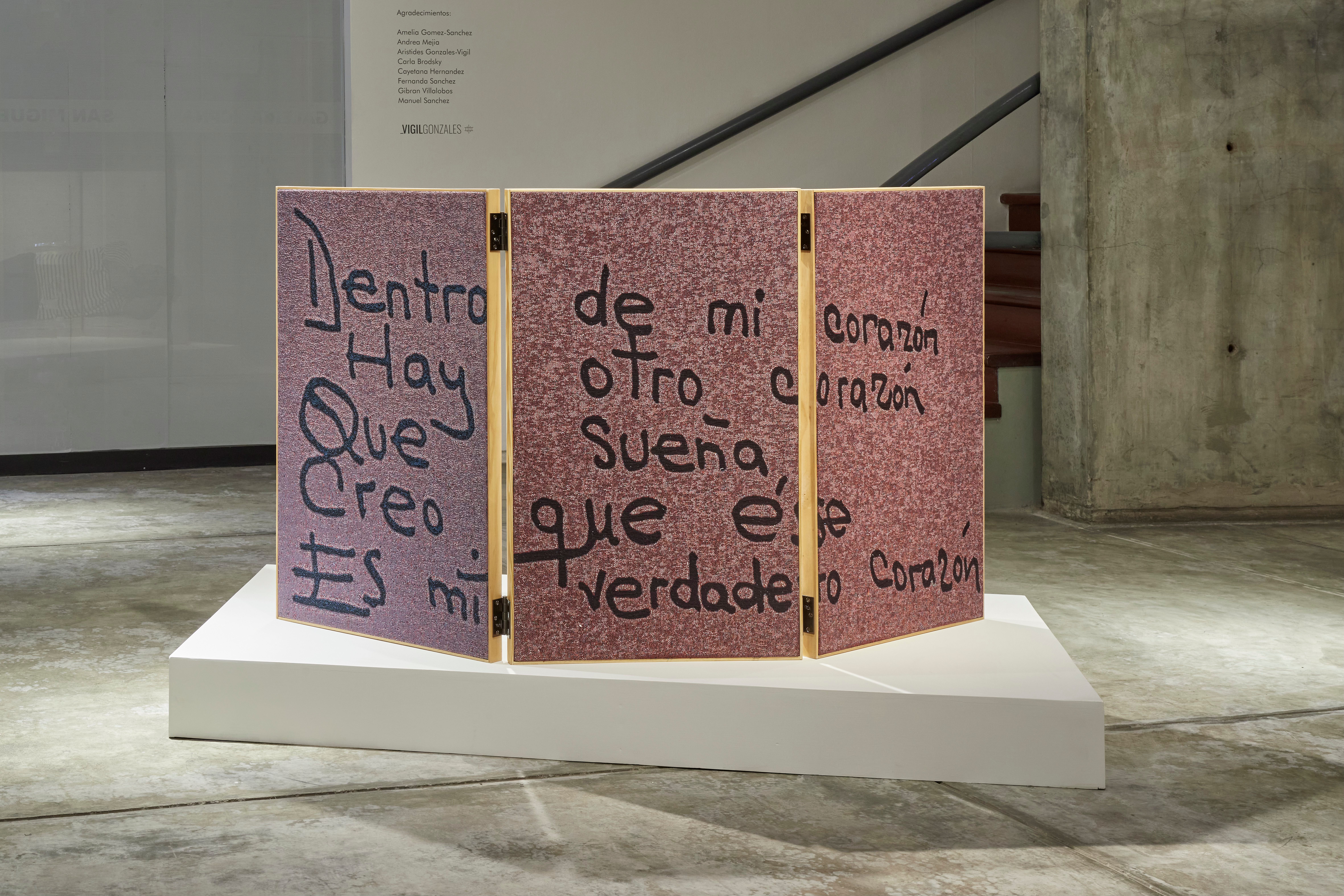
But, beyond self-portraiture itself, I think my practice has always been tied to a larger question: what does it mean to be an artist today? That is the question that structures my entire work, and self-portraiture is one of the ways in which I explore that. From there, others unfold: the artist within the system, within the market; the artist as a figure; success; failure.
“I think my practice has always been tied to a larger question: what does it mean to be an artist today? That is the question that structures my entire work… From there, others unfold: the artist within the system, within the market; the artist as a figure; success; failure.”
How would you answer that question to yourself: what does it mean to be an artist today?
GH: I think that today being an artist implies responding to two things: to your own personal experience and to what is happening outside, in the system and in the world.
I also think it is important to understand that there are many ways of being an artist. In my case, I have chosen a practice that dialogues with the market and institutions, but without depending completely on that.
From a very young age I understood that I did not want the market to dictate what I did. If I want to do something completely outside of that, I can do it. For me, this is a long-term career. I am interested in the work reaching important collections, institutions, but without losing freedom in the process.
“I also think it is important to understand that there are many ways of being an artist.”
You currently develop your practice from Miami. How has that displacement influenced your work and your way of understanding the circuit?
GH: Miami has been very important for me. I have been living here for almost six years and it already feels like a permanent place in my life.
The city has been very generous in terms of opportunities: exhibitions, fairs, connections. I have been able to move within that system of galleries and market in a fairly fluid way. But it is also a complex scene; most artists in Miami are not represented by galleries nor do they participate in fairs. They operate from other models: grants, public projects, etc.
That generates a kind of disconnection. On the one hand you have a very active circuit, with fairs, collectors, galleries; and on the other, a large number of artists who do not necessarily participate in that. This year, in my residency with Oolite Arts, I have been focused on analyzing the city in a more critical way: how its structure works, what dynamics run through it, and how relationships between artists, galleries, and institutions are articulated.
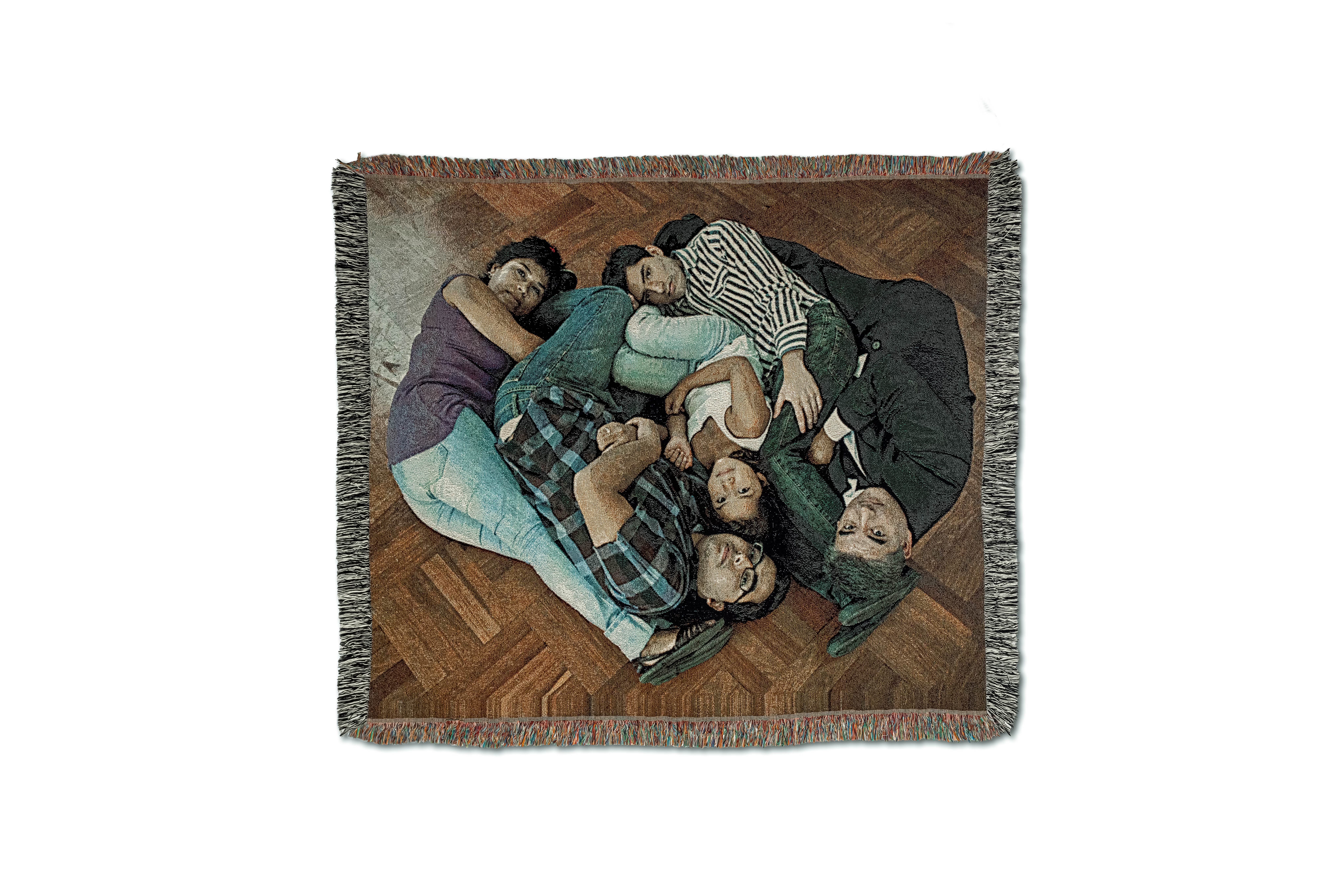
Recently, your work was acquired by the PAMM (Pérez Art Museum Miami). Can you tell us about that piece and what that moment entailed?
GH: The work is called Félix and shows Félix González-Torres in the process of installing one of his works, arranging candies on the floor.
I was interested in capturing him in an everyday moment, carrying out a fairly simple act. I always try to demystify the figure of the artist, to take them out of that almost mystical place and show them as someone who must also work and execute.
His practice has always captivated me, especially because of the emotional dimension of his work and its relationship with the conceptual. I had the opportunity to work with the Félix Gonzalez-Torres Family Archive, and I found that photograph that I felt responded directly to the ideas I had been developing in my practice.
At its core, this piece responds directly to my question about what it means to be an artist. And, of course, the acquisition by the museum is important, but I understand it as part of a longer process.
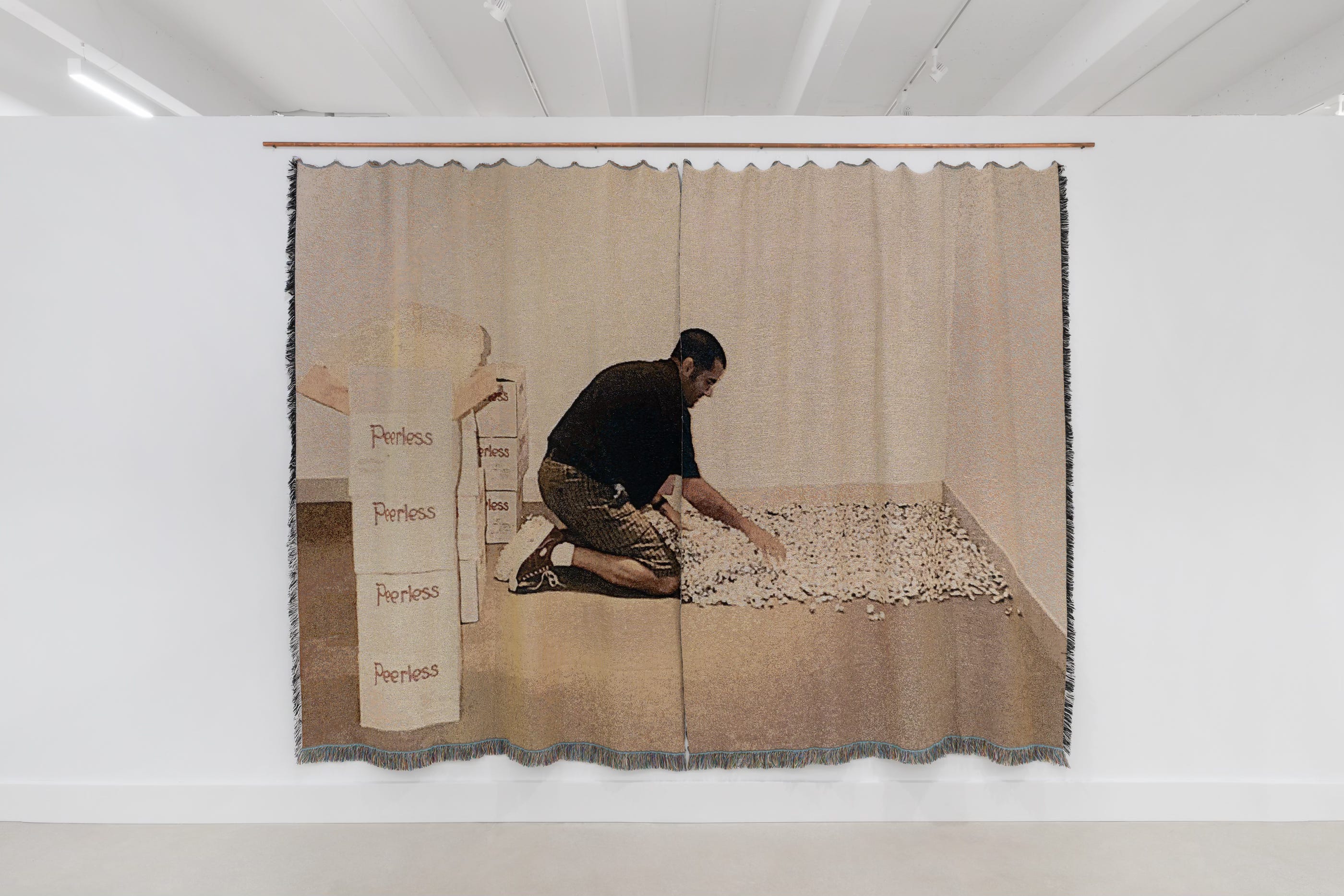
“I always try to demystify the figure of the artist, to take them out of that almost mystical place and show them as someone who must also work and execute.”
To learn more about Gonzalo Hernández, visit:
En el estudio con: Gonzalo Hernández
Gonzalo Hernández es un artista peruano cuya obra se mueve entre el textil, la imagen y procesos de investigación. Su práctica está marcada por un interés constante en las estructuras del mundo del arte y en cómo los artistas se desenvuelven dentro de ellas.
En esta conversación, hablamos sobre su formación temprana y su interés por el arte conceptual, el papel del autorretrato y lo autobiográfico en su trabajo, y su relación con el mercado. Finalmente, reflexionamos sobre Félix, su obra reciente adquirida por el PAMM (Pérez Art Museum Miami), una pieza inspirada en Félix González-Torres.
¿Cómo se fue formando tu camino como artista y qué momentos sientes que fueron decisivos en ese proceso?
GH: Empecé sin tener en claro que quería ser artista. Fue en cuarto de secundaria cuando una profesora mostró a la clase un urinario de Duchamp y habló sobre arte conceptual. Ese momento fue un punto de quiebre para mí; me pareció fascinante pensar que el arte podía ser eso: una producción de ideas.
Estudié arte en Perú, donde tuve una formación bastante académica, pero poco a poco fui moviéndome hacia otros lenguajes. Más adelante, tuve la oportunidad de ir a estudiar a Parsons en París, donde tuve mi primer contacto directo con artistas que solo había visto en libros y el circuito internacional.
Ver obras en persona, ir a instituciones como el Pompidou o el Palais de Tokyo, y conocer artistas allá cambió totalmente mi perspectiva. Recuerdo haber visto una retrospectiva de Richter que me impactó mucho, y cuando llegó el momento de volver a Lima, regresé con una sensación muy fuerte de que allá estaban pasando cosas que en Perú no. Fue en ese momento donde empecé a pensar más sobre el sistema del arte y cómo podía incorporarlo dentro de mi práctica.
“Fue en cuarto de secundaria cuando una profesora mostró a la clase un urinario de Duchamp y habló sobre arte conceptual…Me pareció fascinante pensar que el arte podía ser eso: una producción de ideas.”
En ese momento, ¿cómo se traducen esas experiencias en tu obra?
GH: Al regresar a Lima, desarrollé dos proyectos que ahora veo como fundamentales. Uno se llamaba Te invito a un café, donde durante dos meses me reuní con artistas y agentes del circuito en Lima y les preguntaba: ¿qué es el éxito?
Era una forma de generar conversaciones, pero también de insertarme en el sistema. No conocía a muchas de esas personas, y ese proyecto era una excusa para acercarme.
En paralelo hice otro proyecto donde reunía artistas emergentes con artistas más establecidos en un chifa —un restaurante de fusión chino-peruana—, generando una especie de mesa compartida. Viéndolo ahora, claramente había una intención de entender cómo funcionaban esas relaciones, cómo se daban ciertos momentos de visibilidad o de “éxito”. Siempre me interesó el sistema del arte: no solo las obras, sino cómo circulan y cómo se posicionan.
Hay algo que se mantiene desde tus primeras obras hasta hoy: el uso del autorretrato y lo autobiográfico. ¿Cómo se ha ido transformando ese eje dentro de tu práctica?
GH: El autorretrato ha sido una constante. Desde el inicio me interesaba trabajar con mi entorno cercano: la familia, mi propia imagen. También con artistas peruanos como Natalia Iguiñiz o Miguel Aguirre, donde había una fuerte dimensión autobiográfica.
Pero, más allá del autorretrato en sí, creo que mi práctica siempre ha estado ligada a una pregunta más grande: ¿qué significa ser artista hoy? Esa es la pregunta que estructura toda mi obra, y el autorretrato es una de las formas en las que exploro eso. De ahí se desprenden otras: el artista dentro del sistema, dentro del mercado; el artista como figura; el éxito; el fracaso.
“Creo que mi práctica siempre ha estado ligada a una pregunta más grande: ¿qué significa ser artista hoy? Esa es la pregunta que estructura toda mi obra…De ahí se desprenden otras: el artista dentro del sistema, dentro del mercado; el artista como figura; el éxito; el fracaso.”
¿Cómo responderías a ti mismo a esa pregunta: qué significa ser artista hoy?
GH: Creo que hoy ser artista implica responder a dos cosas: a tu propia experiencia personal y a lo que está ocurriendo afuera, en el sistema y en el mundo.
También creo que es importante entender que hay muchas formas de ser artista. En mi caso, he optado por una práctica que dialoga con el mercado y las instituciones, pero sin depender completamente de eso.
Desde muy joven entendí que no quería que el mercado dictara lo que hacía. Si quiero hacer algo completamente fuera de eso, puedo hacerlo. Para mí, esto es una carrera de largo plazo. Me interesa que el trabajo llegue a colecciones importantes, a instituciones, pero sin perder libertad en el proceso.
“Creo que es importante entender que hay muchas formas de ser artista.”
Actualmente desarrollas tu práctica desde Miami. ¿Cómo ha influido ese desplazamiento en tu trabajo y en tu manera de entender el circuito?
GH: Miami ha sido muy importante para mí. Llevo casi seis años viviendo aquí y ya se siente como un lugar permanente en mi vida.
La ciudad ha sido muy generosa en términos de oportunidades: exposiciones, ferias, conexiones. He podido moverme dentro de ese sistema de galerías y mercado de una manera bastante fluida. Pero también es una escena compleja; la mayoría de artistas en Miami no están representados por galerías ni participan en ferias. Operan desde otros modelos: becas, proyectos públicos, etc.
Eso genera una especie de desconexión. Por un lado tienes un circuito muy activo, con ferias, coleccionistas, galerías; y por otro, una gran cantidad de artistas que no necesariamente participan de eso. Este año, en mi residencia con Oolite Arts, he estado enfocado en analizar la ciudad de manera más crítica: cómo funciona su estructura, qué dinámicas la atraviesan y cómo se articulan las relaciones entre artistas, galerías e instituciones.
Recientemente, tu obra fue adquirida por el PAMM (Pérez Art Museum Miami). ¿Puedes contarnos sobre esa pieza y lo que implicó ese momento?
GH: La obra se llama Félix y muestra a Félix González-Torres en el proceso de instalar una de sus obras, acomodando caramelos en el piso.
Me interesaba captarlo en un momento cotidiano, realizando un acto bastante simple. Siempre trato de desmitificar la figura del artista, sacarlo de ese lugar casi místico y mostrarlo como alguien que también debe trabajar y ejecutar.
Su práctica siempre me ha cautivado, especialmente por la dimensión emocional de su obra y su relación con lo conceptual. Tuve la oportunidad de trabajar con el Félix Gonzalez-Torres Family Archive, y encontré esa fotografía que sentí que respondía directamente a las ideas que venía desarrollando en mi práctica.
En el fondo, esta pieza responde directamente a mi pregunta sobre qué significa ser artista. Y, claro, la adquisición por parte del museo es importante, pero yo la entiendo como parte de un proceso más largo.
“Siempre trato de desmitificar la figura del artista, sacarlo de ese lugar casi místico y mostrarlo como alguien que también debe trabajar y ejecutar.”
Para saber más sobre Gonzalo Hernández, visita:
TY 🫡✨💜