


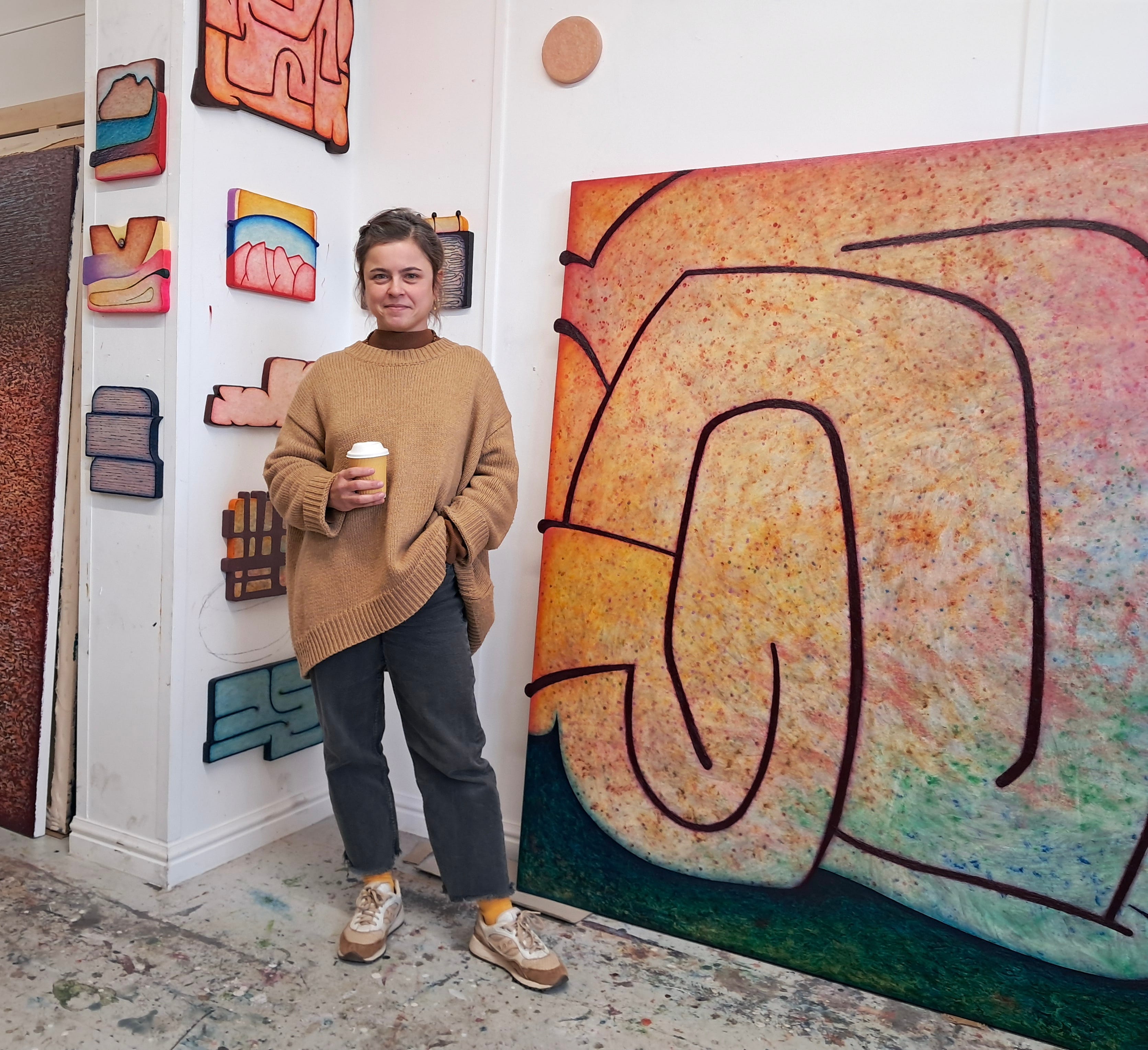
The work of Gabriela Giroletti sits in a world of its own, where forms shift and fold, colour drives the energy, and hand-built surfaces give every painting a physical pulse.
Working fluidly across painting, drawing, and sculpture, she approaches every piece as a living entity, guided by instinct, memory, and a deep curiosity for material. We spoke with her about her path into art, the experience of navigating multiple cultural contexts, and the creative influences that continue to shape her practice.
Q: Gabriela, could you tell us what sparked your interest in art?
Gabriela Giroletti: I was born and raised in Southern Brazil, where I earned a degree in Tourism Management and spent many years working in the industry. After years of feeling unfulfilled, I decided to study fashion design — something that bridged my love for art with a more practical profession. In 2010, life led me to London, an experience that changed my understanding of creative practice and professional possibilities, and made me realise that becoming an artist was, in fact, within reach.
During my bachelor’s degree in Fine Art (2012–2015), I explored a range of disciplines — including printmaking, drawing, sculpture, and textiles — before turning to painting. I went on to complete an MFA at the Slade School of Fine Art (2016–2018), after which I held a position as a research fellow in the Material Research department. I have been dedicated to painting ever since.
Q: You’ve spent time between Brazil and the UK — two very different cultural and visual environments. How has moving between these places shaped your way of seeing or making?
Gabriela Giroletti: Navigating between Brazil and the UK has made me more attentive to contrasts, as each environment brings its own rhythm and way of being. This movement has shaped the emotional tone of my work, often creating a sense of displacement or longing that stems from living between cultures. It has also taught me to weave experience, memory and observation into the work, allowing different influences to coexist and inform one another throughout the making process.
“Navigating between Brazil and the UK has made me more attentive to contrasts, … often creating a sense of displacement or longing that stems from living between cultures.”
Q: You’ve spoken before about navigating a balance between instinct and control in your work. How does that tension manifest in your process?
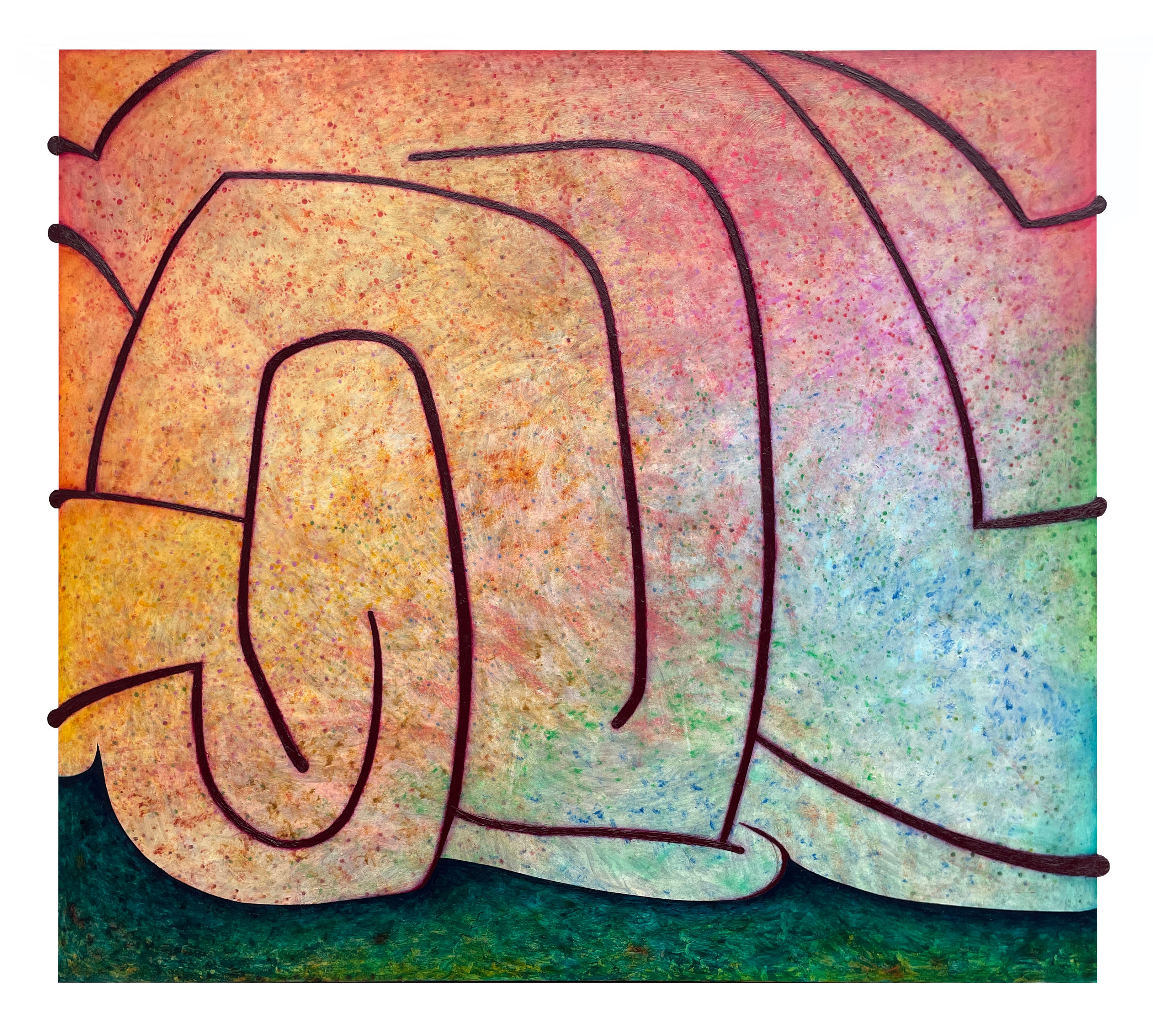
Gabriela Giroletti: When I begin a painting, I might start with a small structural line drawing that evolves as I work, or I might start very intuitively - letting marks, textures, and forms emerge naturally as I deposit paint on the surface. As the work develops, I step back and introduce more deliberate decisions, shaping composition, rhythm, and structure. That push and pull keeps the work alive; instinct brings immediacy and emotional meaning, while control ensures that the painting holds together and communicates something coherent. It’s a constant negotiation, and I find that the most interesting moments in a painting come from where those two energies meet, in conversation with the material itself.
Q: You often construct the very surfaces you paint on — shaping, sanding, assembling. What led you to begin making the structure of your paintings by hand, and how has that changed your relationship to the medium?
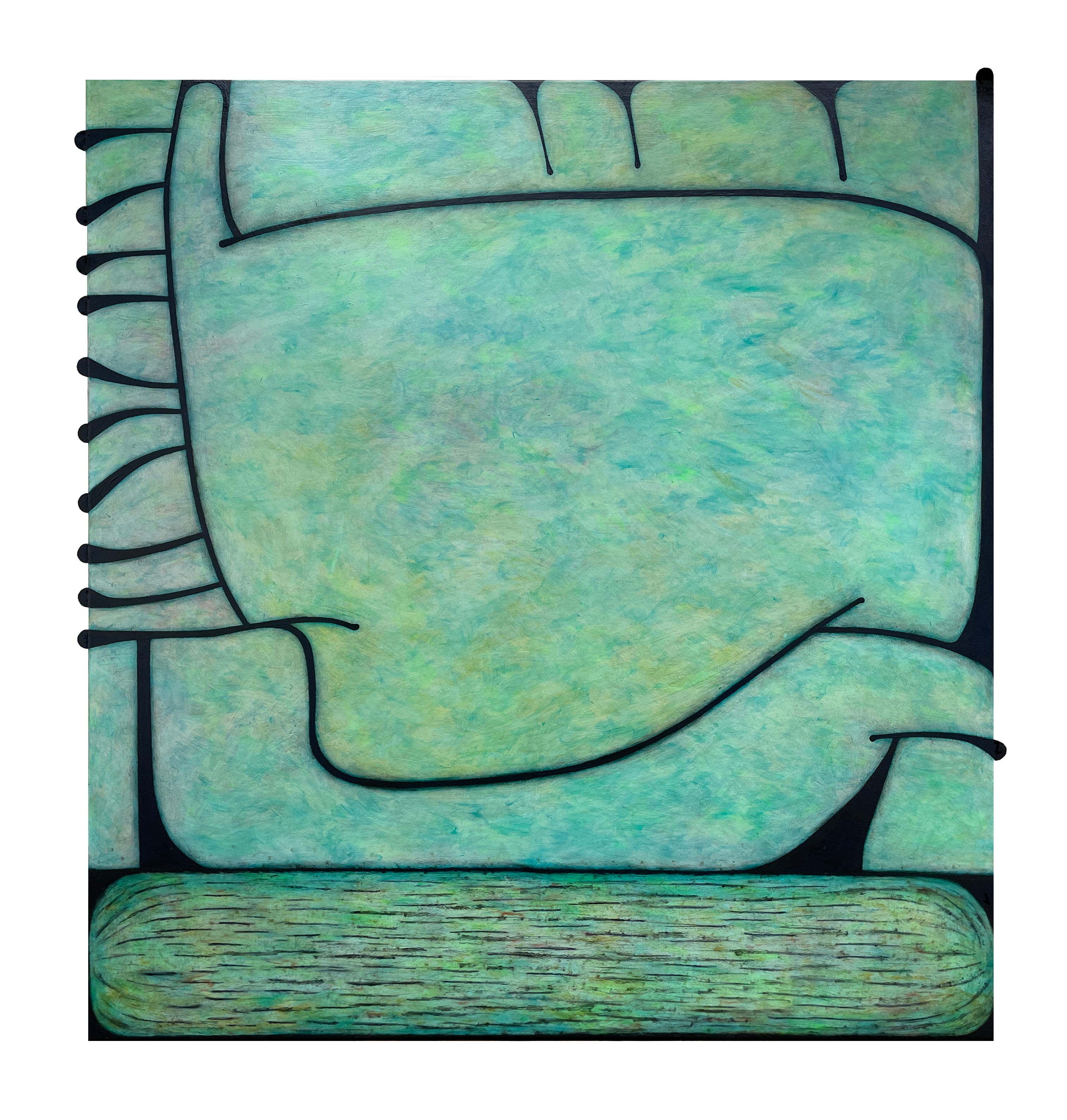
Gabriela Giroletti: I started building the surfaces because I wanted the support to be an integral part of the work. Shaping each structure by hand lets me engage with the material from the very beginning, transforming the painting into something more than an image - it allows the paint to respond to the support rather than just sitting on it. In this way, construction and painting happen together, in an ongoing dialogue, and even the wall becomes an active part of the work.
This way of working unfolded quite organically over time — my work has always expanded in volume across the surface, so allowing it to spill beyond its conventional structure felt like a natural next step to me.
Q: Colour in your work seems almost alive. How do you approach it as a material or emotional element?
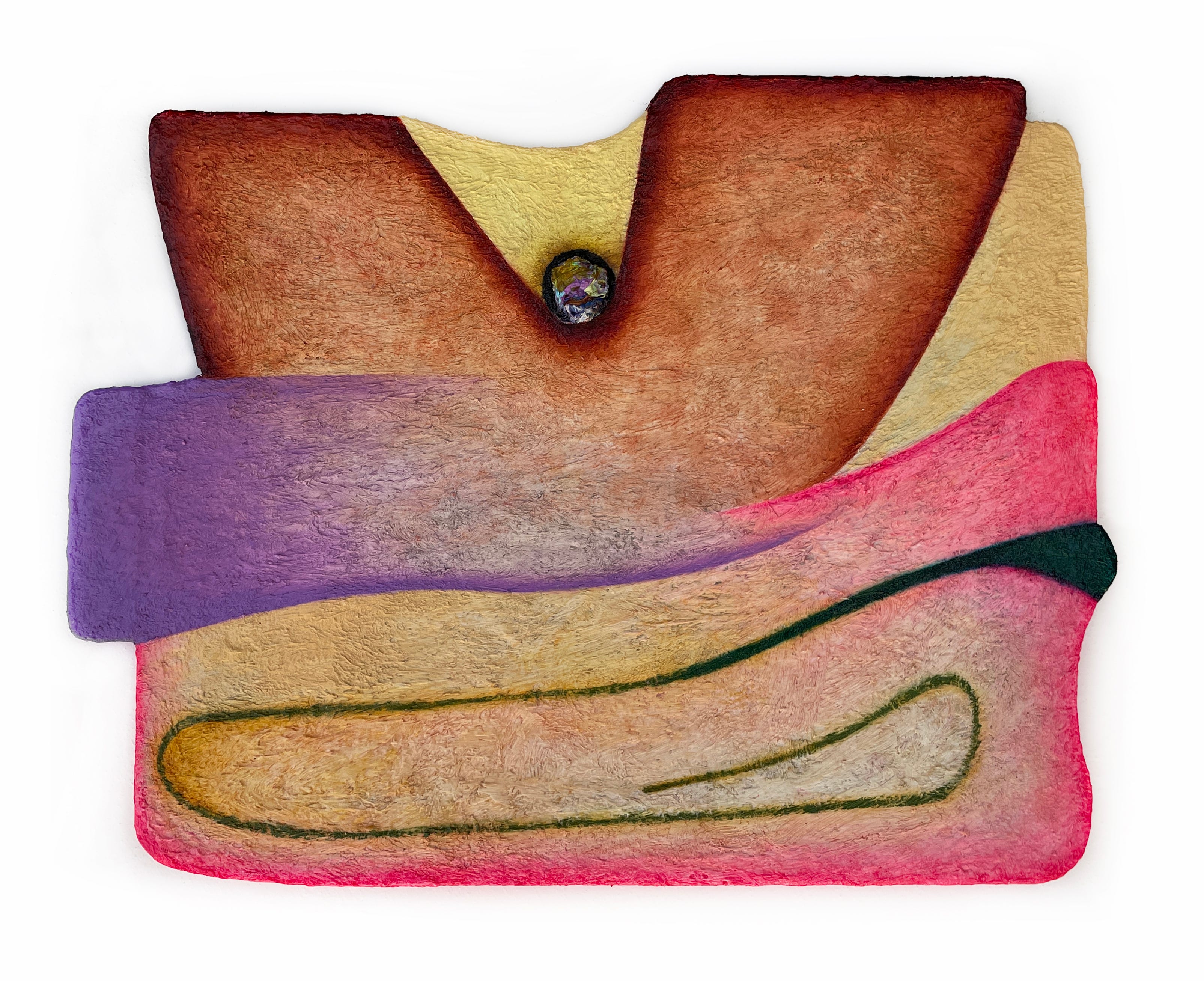
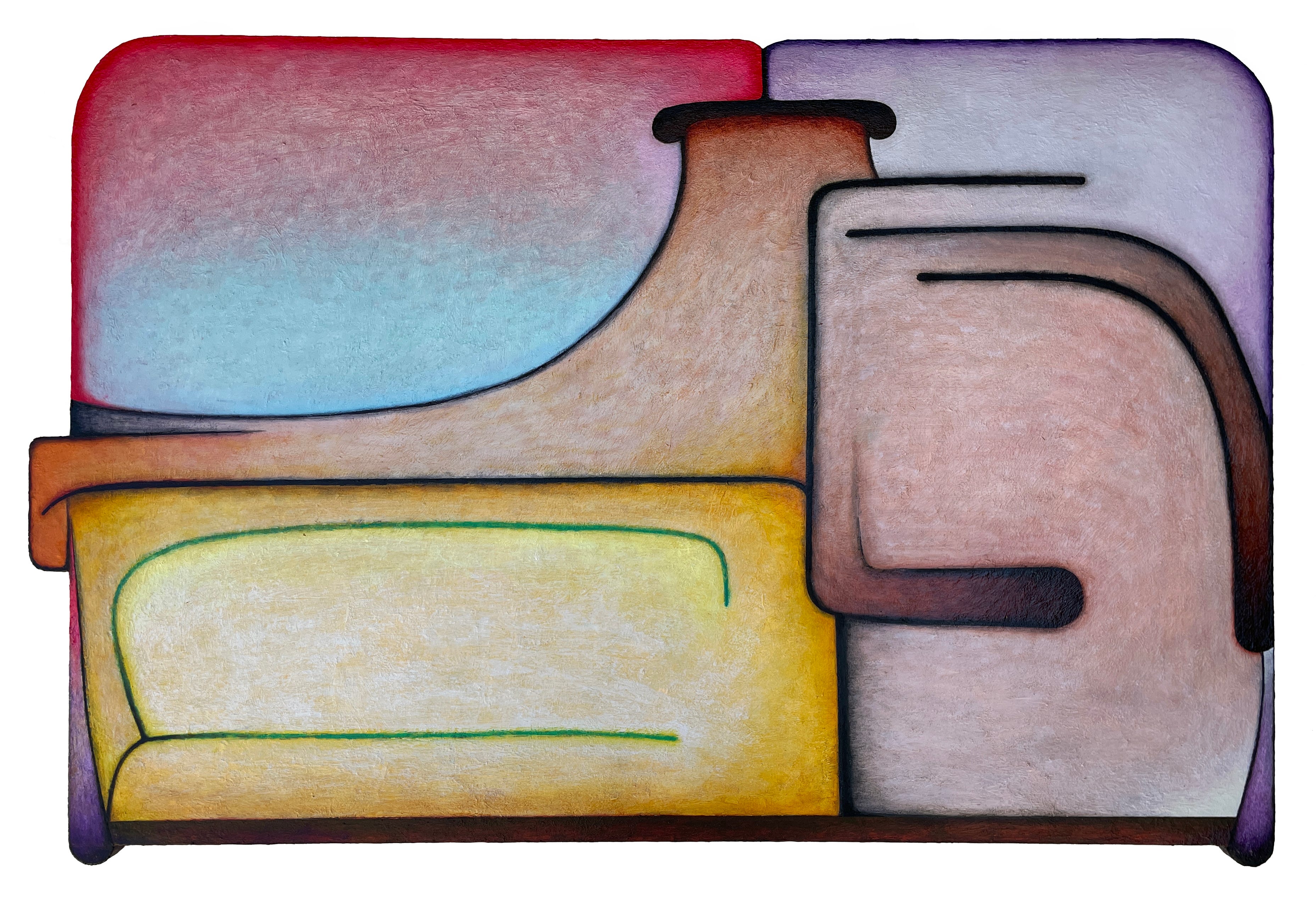
Gabriela Giroletti: Colour has an important place in my work, and it always goes beyond being just a substance— it has its own presence; it’s energetic. I work in layers, applying transparent, unmixed colours, letting them sit side by side or beneath one another. This allows the paint to feel alive and responsive, creating subtle shifts, vibrations, and depth.
In this way, the painting is always evolving — in dialogue with light, space and the viewer — carrying a mood that feels both intimate and active. Colour has its own logic: endlessly relative, each combination creating a world of its own - guiding both my intuition and formal decisions. It is the most rewarding and most demanding aspect of the whole painting process for me.
“Colour has its own logic: endlessly relative, each combination creating a world of its own …”
Q: The forms you create often appear in motion: folding, expanding, or dissolving. What draws you to these transitional, in-between states?
Gabriela Giroletti: I feel attracted to these transitional states because they reflect how we actually experience the world — nothing is ever completely fixed or still. Forms that fold, expand or dissolve capture a sense of change, movement and possibility. Working with these shapes lets me explore the fluidity of perception, suggestion, memory and feeling, creating paintings that feel animated and open rather than fixed or resolved.
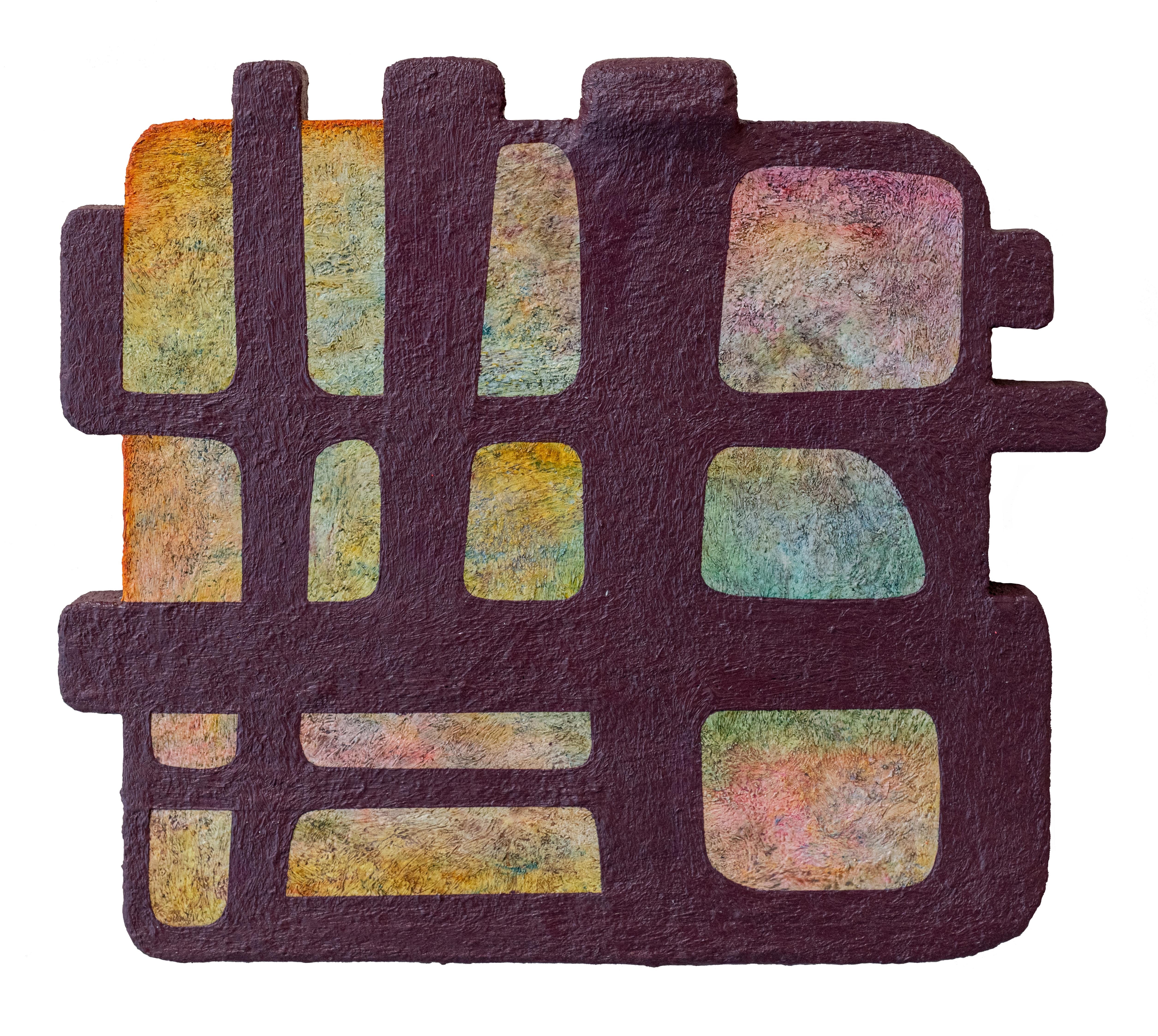
Q: Do you feel that your Brazilian background influences the way you think about light, colour, or material — even when you’re working elsewhere?
Gabriela Giroletti: Absolutely. Growing up in Brazil, I was surrounded by a very particular quality of light and colour — it’s intense and ever-changing. Even when I’m working elsewhere, that experience stays with me. It shapes how I approach colour, the way I layer it, and the way I think about how a painting exists in space. It’s less about recreating a place and more about carrying a way of seeing, a sensitivity to light, texture and atmosphere that I absorbed growing up.
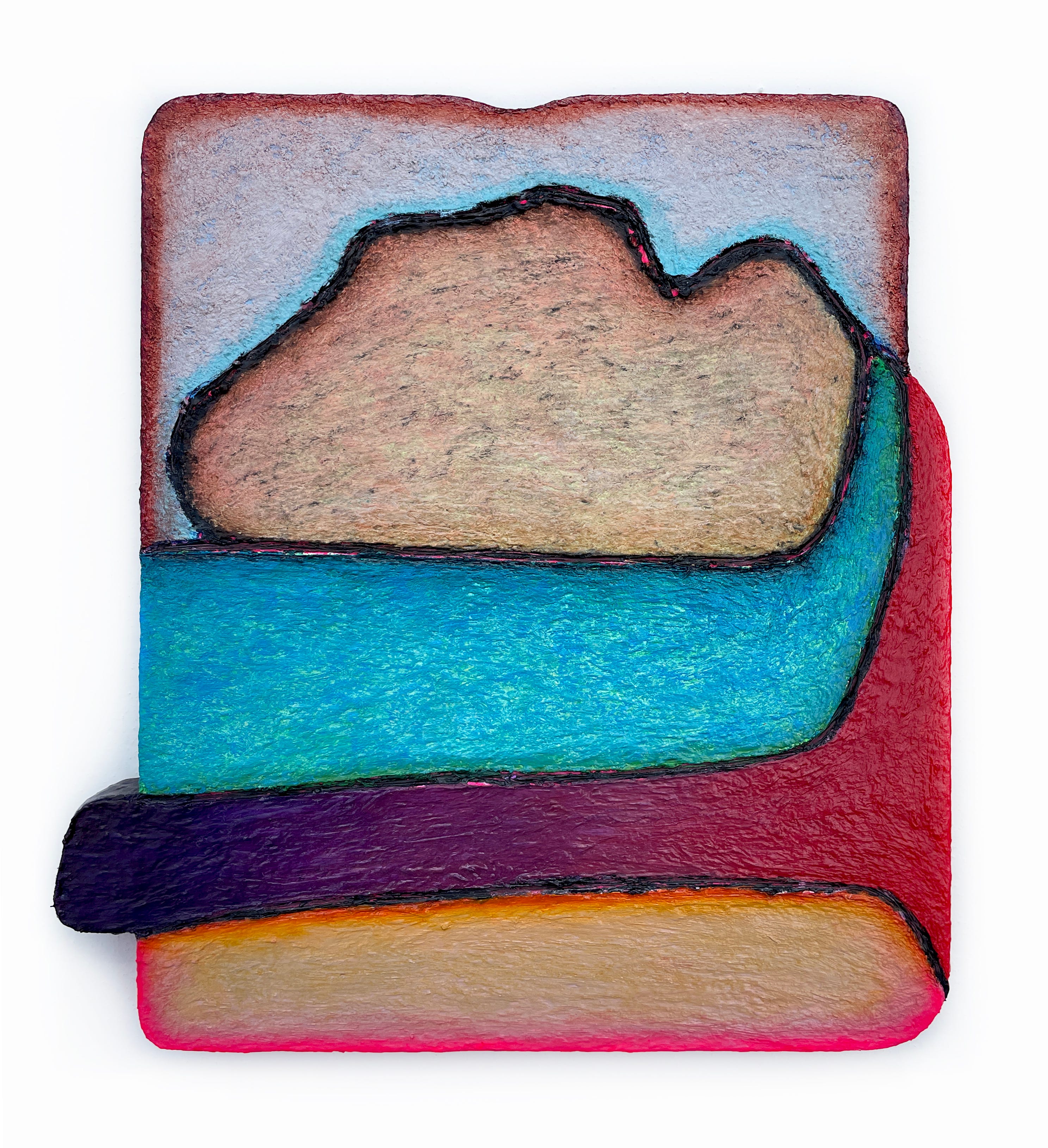
Q: You move fluidly between painting, sculpture, and drawing. Do you see these as distinct practices, or as different registers of the same visual language?
Gabriela Giroletti: I don’t really see them as completely separate — painting, sculpture, and drawing are just different ways of working within the same language. Ideas bounce between them all the time, so the boundaries are fluid. I enjoy subverting their tools: I’ll use paint to draw sharp, seemingly impossible lines, or apply dry pastels to fill in colour, which I then fix with an oil medium, and work with dried-up oil paint to build extreme volume. Everything goes - as long as it’s bonded well and doesn’t fall off the surface.
“… painting, sculpture, and drawing are just different ways of working within the same language.”
Q: Are there particular artists, writers, or thinkers whose work continues to resonate with you or feed your practice in unexpected ways?
Gabriela Giroletti: I’m inspired by artists who explore materiality and the physical presence of their work. I first encountered Prunella Clough’s paintings here in the UK, and I keep returning to them — her forms are very unconventional and her surfaces hypnotizing. The self-taught Portuguese painter and poet Álvaro Lapa is another important influence for me. Seeing his retrospective in Porto in 2018 was transformative — I felt an instant connection, as if his work and I were speaking the same language, an uncanny kinship. I look a great deal at the British artist Richard Smith since I started exploring painting as an object.
I also draw inspiration by Brazilian modernist architecture, with its bold forms, spatial ideas and rhythmic structures that inform the way I think about composition and space in my paintings. In terms of writing I’m interested in poetry and unusual novels, like one of my latest reads: House of Day, House of Night by the polish writer Olga Tokarczuk. Her work evokes a sense of wonder, where small, everyday details resonate with larger truths. I wish my work to operate in the same way.
To learn more about Gabriela Giroletti, visit:
https://www.gabrielagiroletti.com/
La obra de Gabriela Giroletti habita un mundo propio, donde las formas se desplazan y pliegan, el color impulsa la energía y sus superficies construidas a mano aportan a cada pintura un pulso físico.
Moviéndose con fluidez entre la pintura, el dibujo y la escultura, aborda cada pieza como una entidad viva, guiada por el instinto, la memoria y una profunda curiosidad por el material. Conversamos con ella sobre su camino hacia el arte, la experiencia de navegar entre múltiples contextos culturales y las influencias creativas que continúan dando forma a su práctica.
P: Gabriela, ¿podrías contarnos qué despertó tu interés por el arte?
Gabriela Giroletti: Nací y crecí en el sur de Brasil, donde obtuve un título en Gestión del Turismo y pasé muchos años trabajando en la industria. Después de años sintiéndome insatisfecha, decidí estudiar diseño de moda —algo que vinculaba mi amor por el arte con una profesión más práctica. En 2010, la vida me llevó a Londres, una experiencia que cambió mi comprensión de la práctica creativa y las posibilidades profesionales, y me hizo darme cuenta de que convertirme en artista era, de hecho, posible.
Durante mi licenciatura en Bellas Artes (2012–2015), exploré una variedad de disciplinas —incluyendo grabado, dibujo, escultura y textiles— antes de orientarme hacia la pintura. Luego completé un MFA en la Slade School of Fine Art (2016–2018), después de lo cual ocupé un puesto como investigadora en el departamento de estudio de materiales. Me he dedicado a la pintura desde entonces.
P: Has pasado tiempo entre Brasil y el Reino Unido —dos entornos culturales y visuales muy diferentes. ¿Cómo ha influido moverte entre estos lugares en tu forma de ver o hacer?
Gabriela Giroletti: Navegar entre Brasil y el Reino Unido me ha hecho más atenta a los contrastes, ya que cada entorno tiene su propio ritmo y manera de ser. Este movimiento ha moldeado el tono emocional de mi trabajo, a menudo creando una sensación de desplazamiento o anhelo que surge de vivir entre culturas. También me ha enseñado a entrelazar experiencia, memoria y observación en la obra, permitiendo que diferentes influencias coexistan e informen una a la otra a lo largo del proceso de creación.
“Navegar entre Brasil y el Reino Unido me ha hecho más atenta a los contrastes, … a menudo creando una sensación de desplazamiento o anhelo que surge de vivir entre culturas.”
P: Has hablado antes sobre navegar un equilibrio entre instinto y control en tu trabajo. ¿Cómo se manifiesta esa tensión en tu proceso?
Gabriela Giroletti: Cuando comienzo una pintura, puedo empezar con un pequeño dibujo lineal estructural que evoluciona a medida que trabajo, o puedo comenzar de manera muy intuitiva, dejando que los trazos, texturas y formas surjan de manera natural mientras deposito pintura sobre la superficie. A medida que la obra se desarrolla, doy un paso atrás e introduzco decisiones más deliberadas, dando forma a la composición, el ritmo y la estructura. Ese tira y afloja mantiene la obra viva; el instinto aporta inmediatez y significado emocional, mientras que el control asegura que la pintura se mantenga cohesionada y comunique algo coherente. Es una negociación constante, y encuentro que los momentos más interesantes en una pintura surgen donde esas dos energías se encuentran, en conversación con el propio material.
P: A menudo construyes las superficies mismas sobre las que pintas —dando forma, lijando, ensamblando. ¿Qué te llevó a empezar a hacer la estructura de tus pinturas a mano, y cómo ha cambiado eso tu relación con el medio?
Gabriela Giroletti: Comencé a construir las superficies porque quería que el soporte fuera una parte integral de la obra. Dar forma a cada estructura a mano me permite relacionarme con el material desde el principio, transformando la pintura en algo más que una imagen —permite que la pintura responda al soporte en lugar de simplemente reposar sobre él. De esta manera, la construcción y la pintura ocurren juntas, en un diálogo continuo, e incluso la pared se convierte en una parte activa de la obra.
Esta forma de trabajar se desarrolló de manera bastante orgánica con el tiempo —mi trabajo siempre se ha expandido en volumen a través de la superficie, así que permitir que se derrame más allá de su estructura convencional me pareció un paso natural.
P: El color en tu obra parece casi vivo. ¿Cómo lo abordas como material o elemento emocional?
Gabriela Giroletti: El color tiene un lugar importante en mi trabajo, y siempre va más allá de ser solo una sustancia— tiene su propia presencia; es energético. Trabajo en capas, aplicando colores transparentes y sin mezclar, dejándolos situarse uno al lado del otro o uno debajo del otro. Esto permite que la pintura se sienta viva y receptiva, creando matices sutiles, vibraciones y profundidad.
De esta manera, la pintura siempre está evolucionando —en diálogo con la luz, el espacio y el espectador— llevando un estado de ánimo que se siente íntimo y activo. El color tiene su propia lógica: infinitamente relativo, cada combinación creando un mundo propio —guiando tanto mi intuición como mis decisiones formales. Es el aspecto más gratificante y más exigente de todo el proceso de pintura para mí.
“El color tiene su propia lógica: infinitamente relativo, cada combinación creando un mundo propio …”
P: Las formas que creas a menudo parecen en movimiento: plegándose, expandiéndose o disolviéndose. ¿Qué te atrae de estos estados transicionales, intermedios?
Gabriela Giroletti: Me atraen estos estados transicionales porque reflejan cómo experimentamos realmente el mundo —nada está completamente fijo o quieto. Las formas que se pliegan, expanden o disuelven capturan una sensación de cambio, movimiento y posibilidad. Trabajar con estas formas me permite explorar la fluidez de la percepción, la sugerencia, la memoria y el sentimiento, creando pinturas que se sienten animadas y abiertas en lugar de fijas o resueltas.
P: ¿Sientes que tu origen brasileño influye en tu forma de pensar la luz, el color o el material —incluso cuando trabajas en otro lugar?
Gabriela Giroletti: Absolutamente. Crecer en Brasil me rodeó de una cualidad muy particular de luz y color —es intensa y siempre cambiante. Incluso cuando estoy trabajando en otro lugar, esa experiencia permanece conmigo. Da forma a cómo abordo el color, la manera en que lo superpongo y cómo pienso en la manera en que una pintura existe en el espacio. No se trata de recrear un lugar, sino de llevar una forma de ver, una sensibilidad a la luz, la textura y la atmósfera que absorbí al crecer.
P: Te mueves con fluidez entre pintura, escultura y dibujo. ¿Ves estas prácticas como distintas o como diferentes registros del mismo lenguaje visual?
Gabriela Giroletti: No las veo realmente como completamente separadas —la pintura, la escultura y el dibujo son simplemente diferentes maneras de trabajar dentro del mismo lenguaje. Las ideas rebotan entre ellas todo el tiempo, así que los límites son fluidos. Disfruto subvirtiendo sus herramientas: puedo usar pintura para dibujar líneas nítidas y aparentemente imposibles, o aplicar pasteles secos para rellenar color, que luego fijo con un medio al óleo, y trabajar con pintura al óleo seca para construir volumen extremo. Todo vale —mientras esté bien adherido y no se desprenda de la superficie.
“… la pintura, la escultura y el dibujo son simplemente diferentes maneras de trabajar dentro del mismo lenguaje.”
P: ¿Hay artistas, escritores o pensadores cuyo trabajo siga resonando contigo o alimentando tu práctica de maneras inesperadas?
Gabriela Giroletti: Me inspiran artistas que exploran la materialidad y la presencia física de su obra. Me encontré por primera vez con las pinturas de Prunella Clough aquí en el Reino Unido, y sigo volviendo a ellas —sus formas son muy poco convencionales y sus superficies hipnotizantes. El pintor y poeta portugués autodidacta Álvaro Lapa es otra influencia importante para mí. Ver su retrospectiva en Oporto en 2018 fue transformador —sentí una conexión instantánea, como si su obra y yo habláramos el mismo idioma, una afinidad extraña. Miro mucho al artista británico Richard Smith desde que comencé a explorar la pintura como objeto.
También me inspira la arquitectura modernista brasileña, con sus formas audaces, ideas espaciales y estructuras rítmicas que informan cómo pienso la composición y el espacio en mis pinturas. En cuanto a la escritura, me interesan la poesía y las novelas inusuales, como una de mis últimas lecturas: House of Day, House of Night de la escritora polaca Olga Tokarczuk. Su obra evoca un sentido de maravilla, donde los pequeños detalles cotidianos resuenan con verdades más amplias. Deseo que mi trabajo opere de la misma manera.
Para saber más sobre Gabriela Giroletti, visita:
Increíble estilo de arte me transmite mucha tranquilidad,paz y fuerza, definitivamente es una obra genial, felicidades