


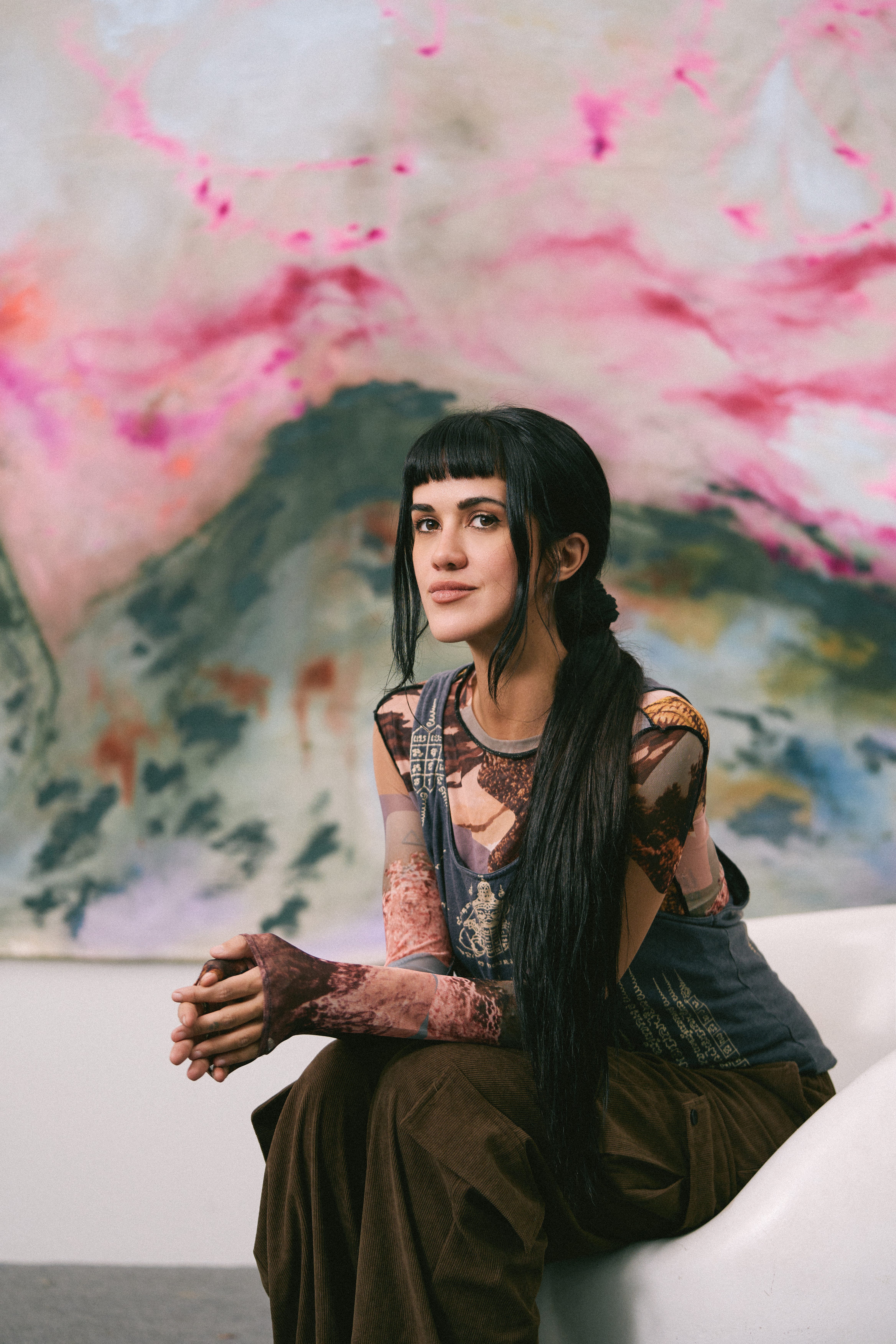
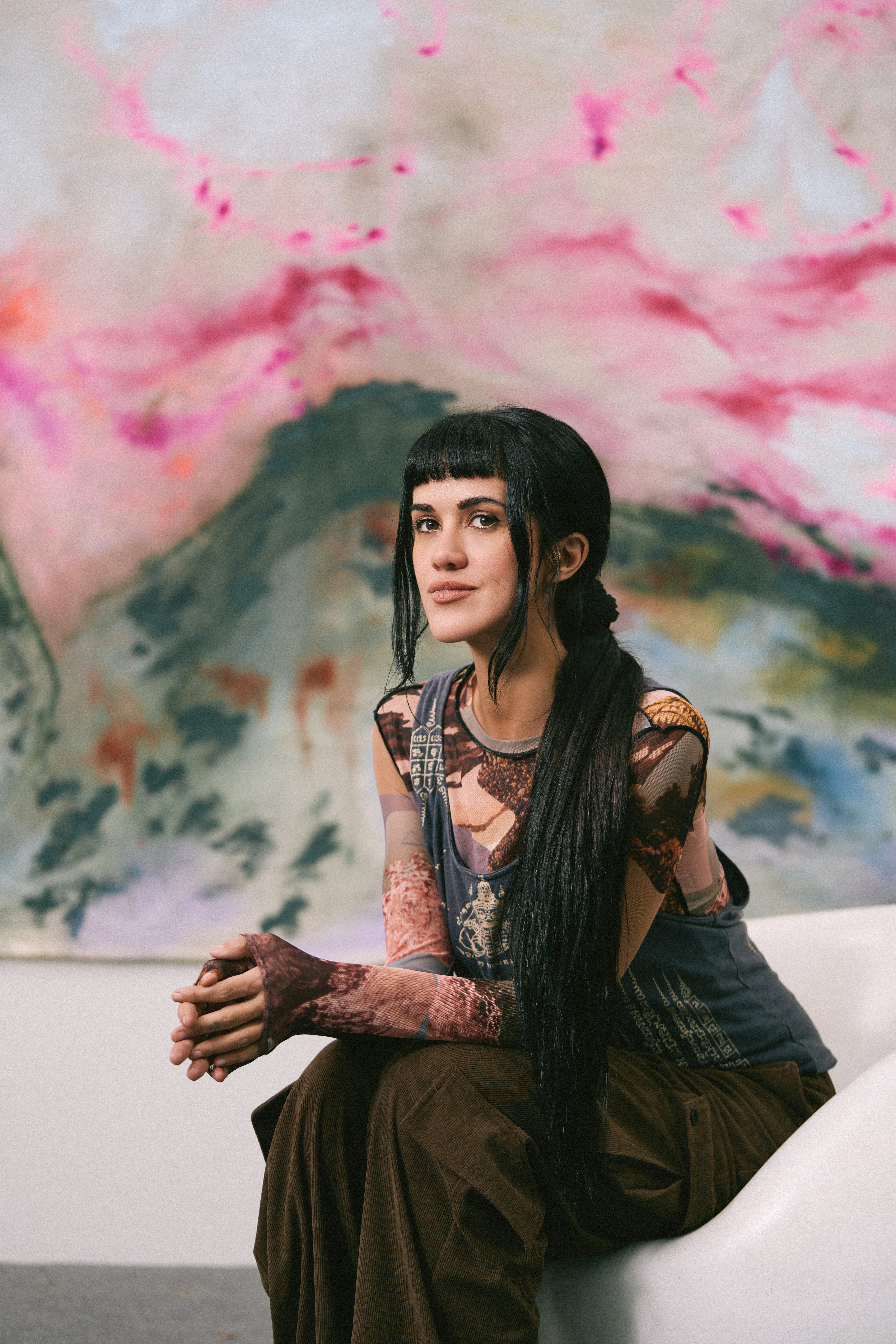
Fernanda Caballero paints from the body. With a background in architecture, her work is guided by an acute sense of space and scale, while movement practices, such as dance and yoga, deepen the attention and intuition behind her process.
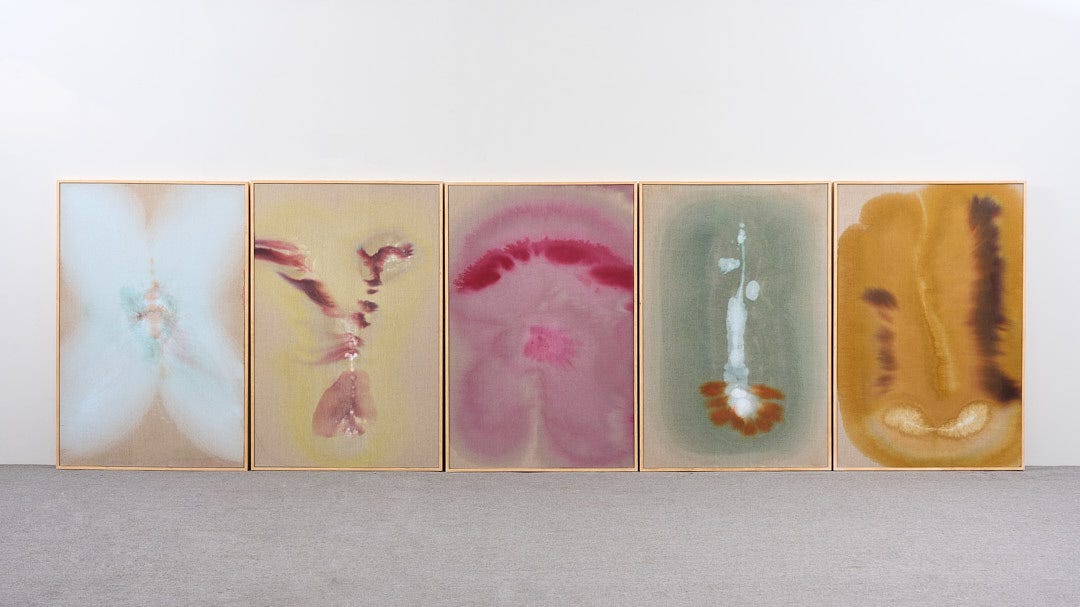
In this interview, Fernanda looks back on the beginnings of her artistic path, speaks about architecture’s lasting influence on her painting, and explains why the body sits at the core of her process. She also shares what textile and ceramics bring to her practice, and how they extend the work beyond the canvas.
How did you begin your artistic trajectory? Was there any moment or experience that marked your decision to devote yourself to art?
FC: Painting, alongside dance, was part of my life from very early on; I think I began to draw and play with color at 4 years old. Since then, there is, out there, a vision that appears from time to time and, at the risk of sounding very ‘new age’, it is as if it were a dream I already lived: where I see my hands already very old and they keep painting. The decision to devote myself to this did not arrive one day; it was rather as if it were something I always knew in the body and, with time, I came to accept, manage, and integrate.
“The decision to devote myself to this [art] did not arrive one day; it was rather as if it were something I always knew in the body and, with time, I came to accept, manage, and integrate.”
You trained as an architect. In what way does that training influence your painting today?
FC: I think that, above all, it gave me an understanding of space, the perception of size, and the psychology of color when inhabiting it; situations that take importance in my work and with which I can allow myself to play. Also, enjoying solving large-format pieces in their execution, projection, and delivery.
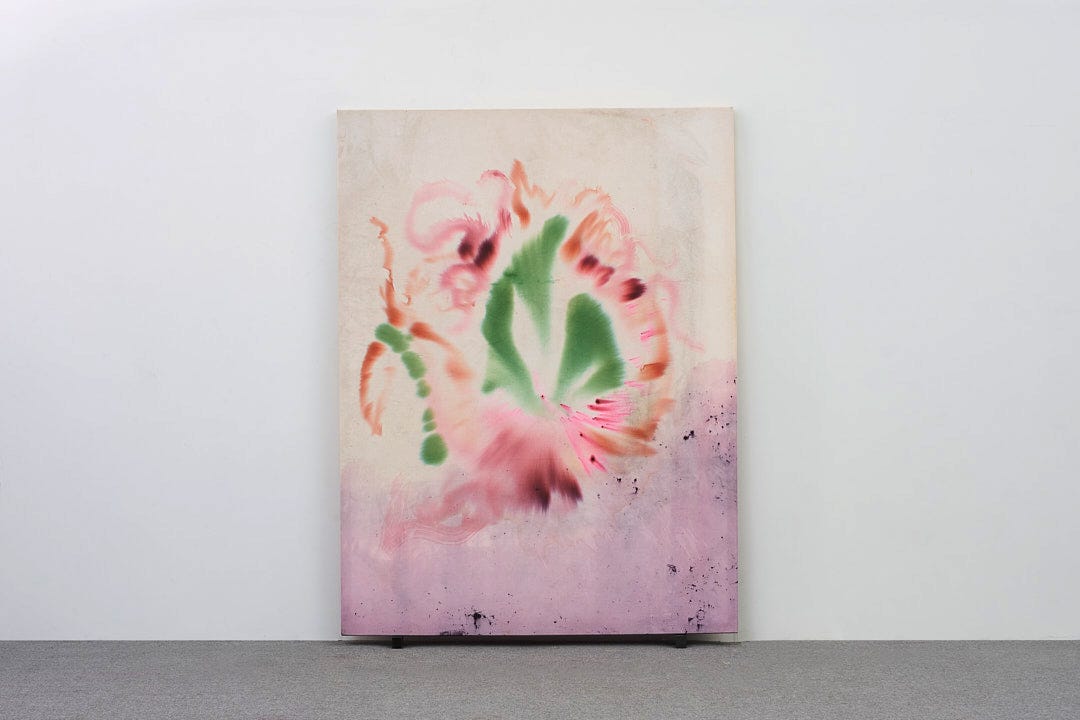
Dance, meditation, qigong, and yoga are part of your life and your practice. How does that translate into your painting process?
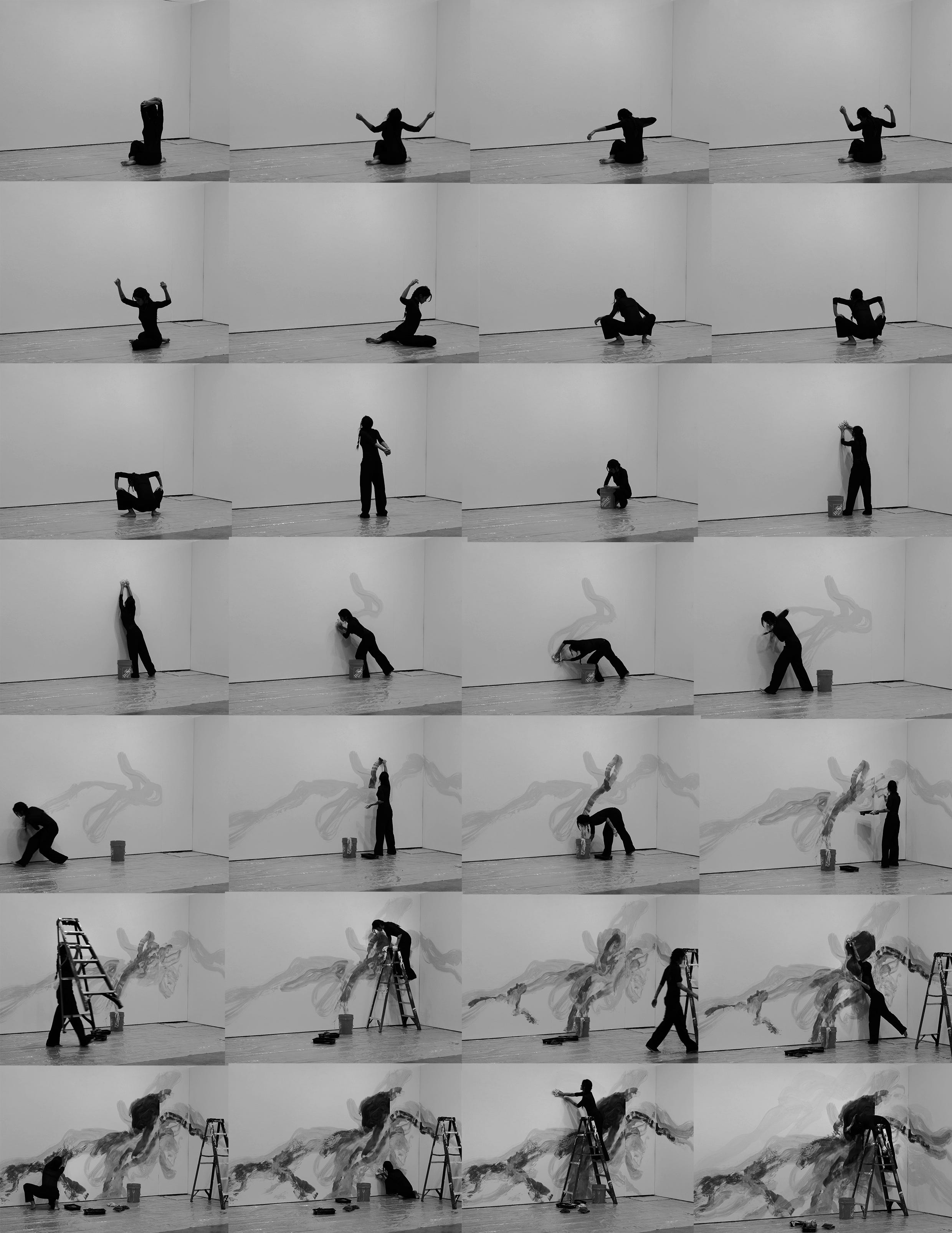
FC: My body is the tool that I know best. On an emotional and physical level, my body translates for me the abstract language of the subconscious. This ‘translation’ is something that I keep studying and understanding in my process, in which all these disciplines converge and result in the body knowing what to do and guiding everything: painting, action, impulse, vision. Pushing, letting go, taking. Actions that are thought of as simple, but, when confronting them in my process with the material, a great deal of information is revealed that, in another way, can go unnoticed, at least for me.
“My body is the tool that I know best. On an emotional and physical level, my body translates for me the abstract language of the subconscious.”
Your work integrates the body as an active part of the act of painting. When did you start working like that and what were you seeking to resolve by doing so?
FC: When I got tired of trying to imitate what we understand as ‘reality’ in my painting and I gave myself permission to intertwine disciplines instead of limiting myself by one or the other. It was very important to let go of control in my expression and in the idea of what I perceived as painting or feeling. I opened myself to working from a more intuitive and visceral place, and that has given me the guideline to go resolving what presents itself. Instead of numbing my process with a single issue to resolve, learning to work with what is presenting itself keeps me in a more dynamic and honest relationship with the outside.
Do you feel comfortable with the label of “abstraction”?
FC: The truth is that I think that any label generates some discomfort for me; that of abstraction, specifically, like any word that is overused, loses some meaning. I suppose it has its own, and there is a certain rest in identifying what you do as something that forms part of another something. But I really like playing with the limits and the ‘not knowing’. There is a certain seduction there.
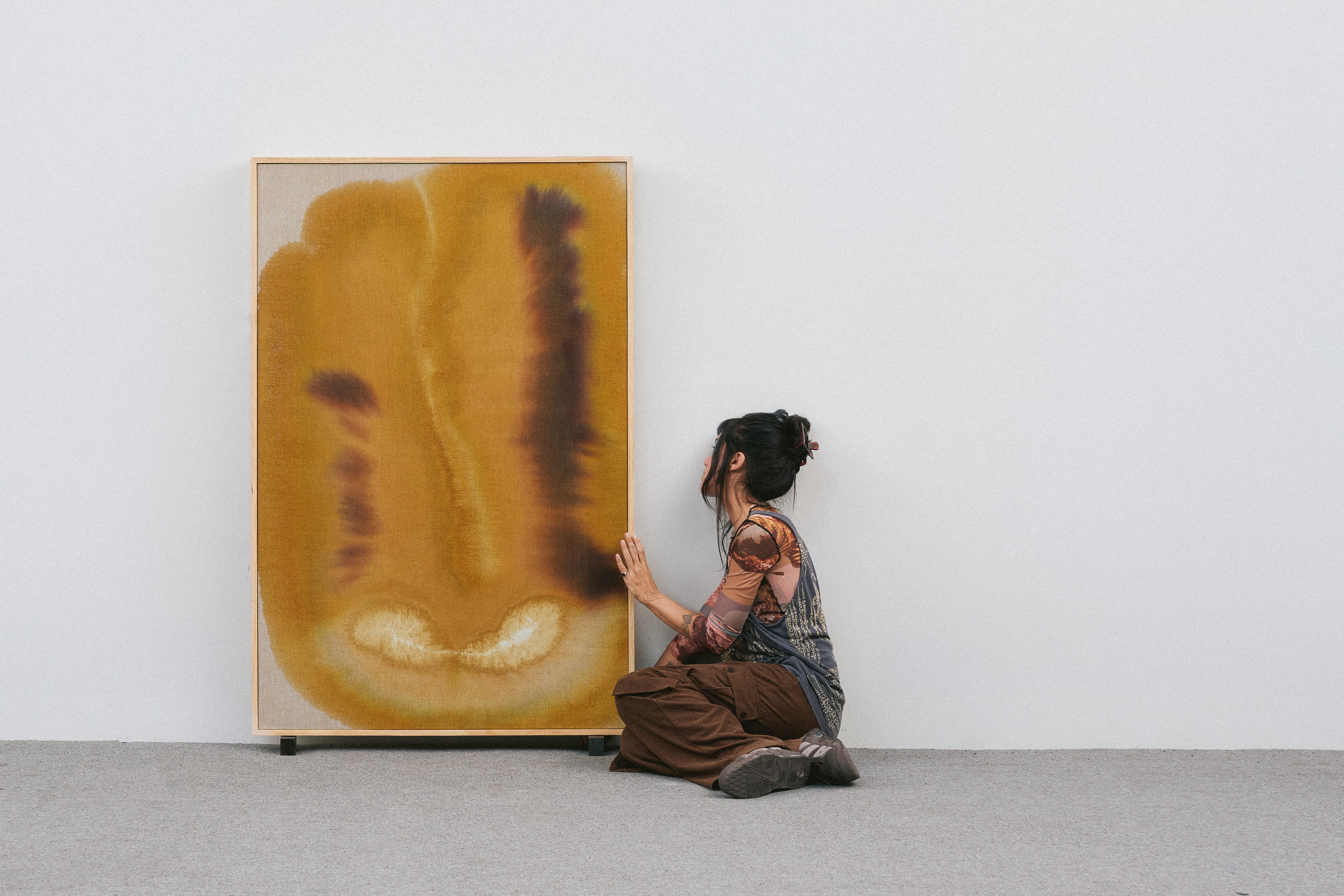
Textile carries a long history of being read through craft and the domestic. How do you position it within your practice? How did you come to work with textile and what does it allow you to do that you could not achieve only with painting?
FC: Fabric reminds me a lot of skin. It is this material of infinite possibilities: expansions, porosities, sizes. Its years show when it has them; its type of use shows. I feel fabric as this physical membrane that delimits us with the outside, that has this ease for telling its history. When I began to experiment with painting on fabric with this idea, I felt that something important awakened in my search. Giving this connotation to my work in any type of textile expanded my understanding of the object as a living being as well. The dialogue there changes; the intention behind the impulse, too. When I paint, I feel that my skin extends and takes a certain body in the stretcher, or the canvases, or the screens that I use. It is as if what I seek to solve by painting took another dimension, where I feel that I fit more.
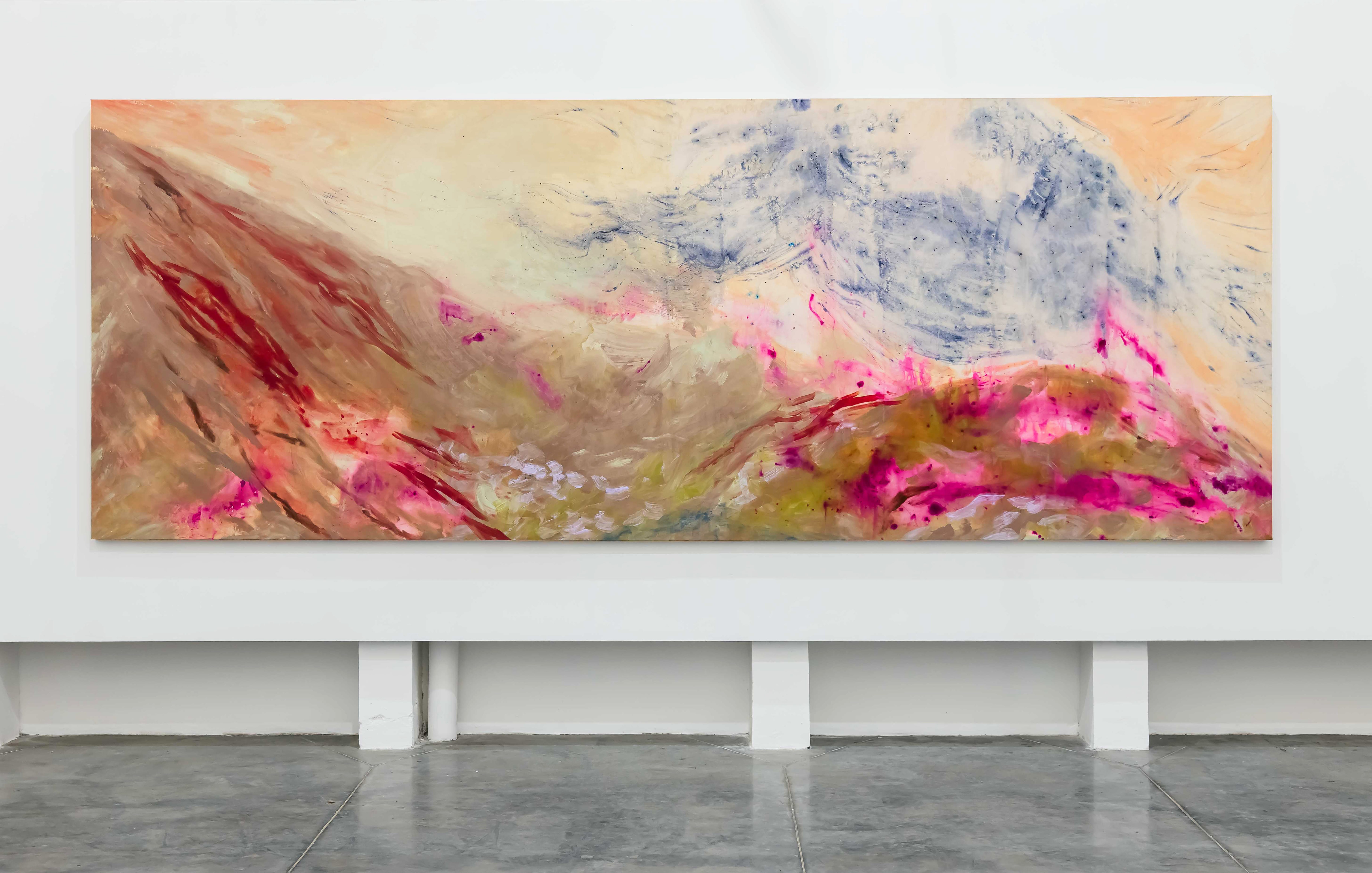
“When I paint, I feel that my skin extends and takes a certain body in the stretcher, or the canvases, or the screens that I use.”
What place does ceramics occupy in your practice? How would you describe your relationship with it?
FC: I feel ceramics as a borrowed language, one that has more to do with the memory of the earth and grasping. I like to feel like a beginner in other disciplines; it nourishes me a lot to learn. Ceramics has been there in pauses in which I need to use my hands more. In 2025 I began a research in ceramics with the need to understand the organ of the belly. I believe there is information that can only arrive using other materials, other ways.
“I believe there is information that can only arrive using other materials, other ways.”
Where would you like your work to evolve in the coming years?
FC: I would very much like my practice to continue taking different forms and skins. Alongside painting and my work with color, I would like to continue exploring performance and the uses of other languages, specifically, wood.
To learn more about Fernanda Caballero, visit:
https://www.fernandacaballero.com/
En el estudio con: Fernanda Caballero
Fernanda Caballero pinta desde el cuerpo. Con formación en arquitectura, su obra está guiada por una aguda sensibilidad del espacio y la escala, mientras que prácticas de movimiento, como la danza y el yoga, profundizan la atención y la intuición que sostienen su proceso.
En esta entrevista, Fernanda vuelve sobre los inicios de su camino artístico, habla de la influencia perdurable de la arquitectura en su pintura y explica por qué el cuerpo ocupa un lugar central en su práctica. También comparte lo que aportan a su obra materiales como el textil y la cerámica, y cómo estos expanden el trabajo más allá del lienzo.
¿Cómo iniciaste tu trayectoria artística? ¿Hubo algún momento o experiencia que marcara tu decisión de dedicarte al arte?
FC: La pintura, a la par de la danza, formó parte de mi vida desde muy temprano; creo que empecé a dibujar y jugar con el color a mis 4 años. Desde entonces, hay por ahí una visión que se aparece de vez en cuando y, a riesgo de sonar muy ‘new age’, es como si fuera un sueño que ya viví: donde veo mis manos ya muy viejas y siguen pintando. La decisión de dedicarme a esto no llegó un día; fue más bien como si fuera algo que siempre supe en el cuerpo y, con el tiempo, fui aceptando, gestionando e integrando.
“La decisión de dedicarme a esto [al arte] no llegó un día; fue más bien como si fuera algo que siempre supe en el cuerpo y, con el tiempo, fui aceptando, gestionando e integrando.”
Te formaste como arquitecta. ¿De qué manera esa formación influye en tu pintura hoy?
FC: Creo que, sobre todo, me dio un entendimiento del espacio, la percepción del tamaño y la psicología del color al habitarlo; situaciones que toman importancia en mi obra y con las que me puedo permitir jugar. También, el disfrutar resolver piezas de gran formato en su ejecución, proyección y entrega.
La danza, la meditación, el qigong y el yoga son parte de tu vida y de tu práctica. ¿Cómo se traduce eso en tu proceso de pintura?
FC: Mi cuerpo es la herramienta que mejor conozco. A nivel emocional y físico, mi cuerpo traduce para mí el lenguaje abstracto del subconsciente. Esta ‘traducción’ es algo que sigo estudiando y entendiendo en mi proceso, en el que todas estas disciplinas convergen y resultan en el cuerpo sabiendo qué hacer y guiándolo todo: la pintura, la acción, el impulso, la visión. El empujar, el soltar, el tomar. Acciones que se piensan sencillas, pero, al confrontarlas en mi proceso con el material, se revela muchísima información que, de otra manera, puede pasar desapercibida, por lo menos para mí.
“Mi cuerpo es la herramienta que mejor conozco. A nivel emocional y físico, mi cuerpo traduce para mí el lenguaje abstracto del subconsciente.”
Tu obra integra el cuerpo como parte activa del acto de pintar. ¿Cuándo empezaste a trabajar así y qué buscabas resolver al hacerlo?
FC: Cuando me cansé de tratar de imitar lo que entendemos como ‘realidad’ en mi pintura y me di permiso de entrelazar disciplinas en lugar de limitarme por una u otra. Fue muy importante soltar el control en mi expresión y en la idea de lo que yo percibía como pintar o sentir. Me abrí a trabajar desde un lugar más intuitivo y visceral, y eso me ha dado la pauta para ir resolviendo lo que se presenta. En lugar de adormecer mi proceso con una sola cuestión por resolver, aprender a trabajar con lo que va presentándose me mantiene en una relación más dinámica y honesta con el afuera.
¿Te sientes cómoda con la etiqueta de “abstracción”?
FC: La verdad es que creo que cualquier etiqueta me genera algo de incomodidad; la de abstracción, en específico, como cualquier palabra que se sobreusa, pierde algo de sentido. Supongo que tiene lo suyo, y hay cierto descanso en identificar lo que haces como algo que forma parte de otro algo. Pero me gusta mucho jugar con los límites y el ‘no saber’. Hay cierta seducción ahí.
Lo textil carga una larga historia de ser leído desde lo artesanal y lo doméstico. ¿Cómo lo sitúas dentro de tu práctica? ¿Cómo llegaste a trabajar con lo textil y qué te permite hacer que no podrías lograr únicamente con la pintura?
FC: La tela me recuerda mucho a la piel. Es este material de infinitas posibilidades: expansiones, porosidades, tamaños. Se le notan sus años cuando los tiene; se le nota su tipo de uso. Siento a la tela como esta membrana física que nos delimita con el afuera, que tiene esta facilidad para contar su historia. Cuando empecé a experimentar con la pintura sobre la tela con esta idea, sentí que algo importante se despertó en mi búsqueda. Darle esta connotación a mi obra en cualquier tipo de textil expandió mi entendimiento del objeto como un ser vivo también. El diálogo ahí cambia; la intención detrás del impulso, también. Cuando pinto, siento que mi piel se extiende y toma cierto cuerpo en el bastidor, o las lonas, o las pantallas que uso. Es como si lo que busco solucionar pintando tomara otra dimensión, en donde siento que quepo más.
“Cuando pinto, siento que mi piel se extiende y toma cierto cuerpo en el bastidor, o las lonas, o las pantallas que uso.”
¿Qué lugar ocupa la cerámica en tu práctica? ¿Como describirás tu relación con ella?
FC: Siento a la cerámica como un idioma prestado, uno que tiene que ver más con la memoria de la tierra y el agarrar. Me gusta sentirme principiante en otras disciplinas; me alimenta mucho aprender. La cerámica ha estado ahí en pausas en las que necesito usar más mis manos. En 2025 empecé una investigación en cerámica con la necesidad de entender el órgano del vientre. Creo que hay información que solo puede llegar usando otros materiales, otras maneras.
“Creo que hay información que solo puede llegar usando otros materiales, otras maneras.”
¿Hacia dónde te gustaría que evolucione tu obra en los próximos años?
FC: Me gustaría mucho que mi práctica siga tomando diferentes formas y pieles. A la par de la pintura y mi trabajo con el color, me gustaría seguir explorando el performance y los usos de otros idiomas, en específico, la madera.
Para saber más sobre Fernanda Caballero, visita:
👽🤍