


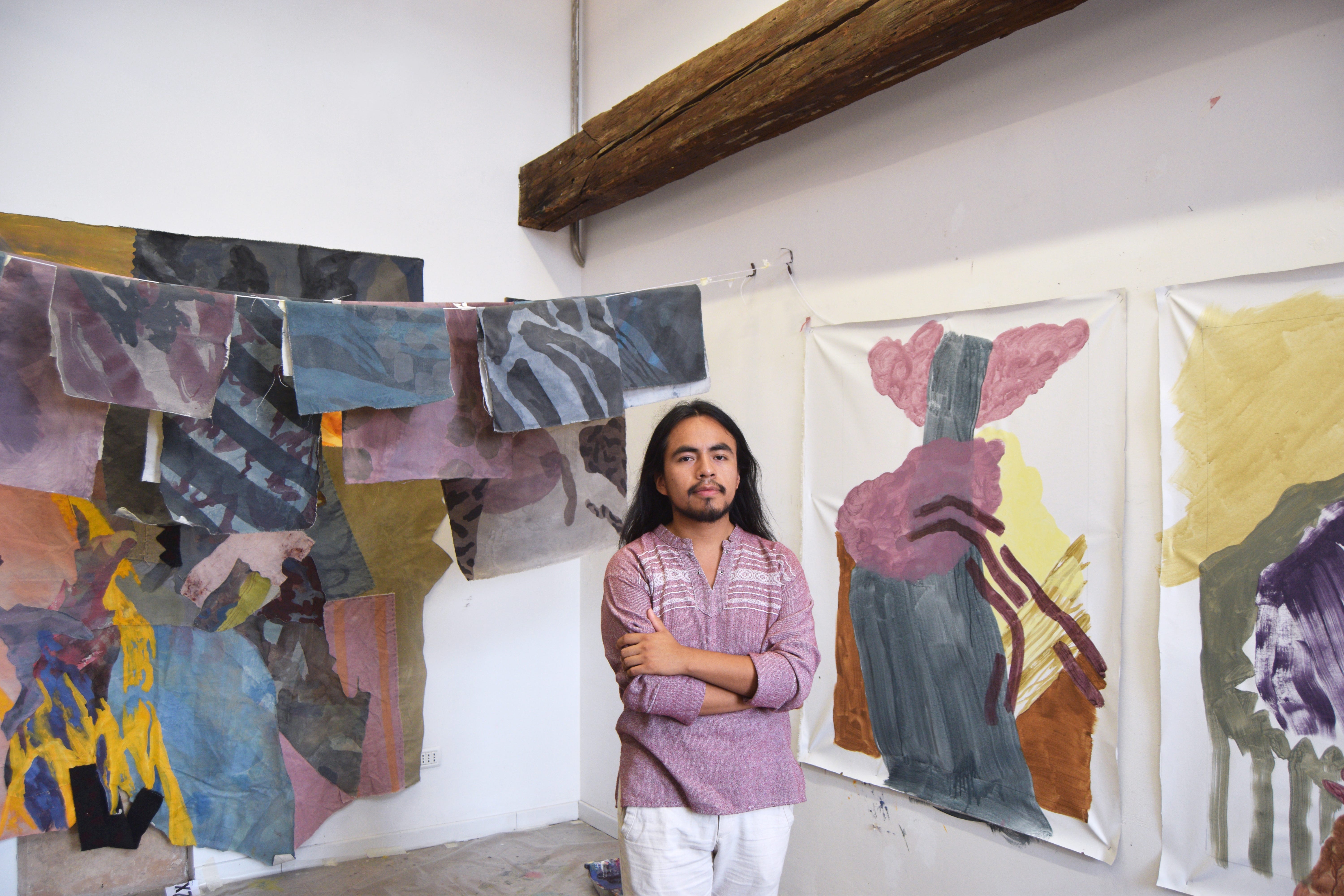
Eliel Martínez is a multidisciplinary artist whose practice is shaped by his experience between Mexico and Italy, weaving together memory and symbolic forms to reflect on migration and cultural belonging.
In this interview, Eliel revisits the beginnings of his relationship with art, the role of painting within his practice, and the ways moving between countries has informed his artistic approach. He also speaks about the recurring presence of elements such as animals and food in his pieces, and about how his happenings extend his interest in conversation and shared experience.
Eliel Martínez is one of four artists participating in our first exhibition in London, WHAT WE TAKE, co-curated by Art in Latin America and CM Art Advisory, at Pipeline. The show remains on view through March 28.
How did your career in art begin and, in particular, how did your interest in painting emerge?
EM: I come from a context where working with your hands was very natural. As a child I made many things with my hands: working with fabric, papier-mâché, objects… I was always making something. And that, even if it doesn’t seem like it, stays with you. Now I see it very clearly because even when I make installations or sculptures, that way of thinking from the material is still there.
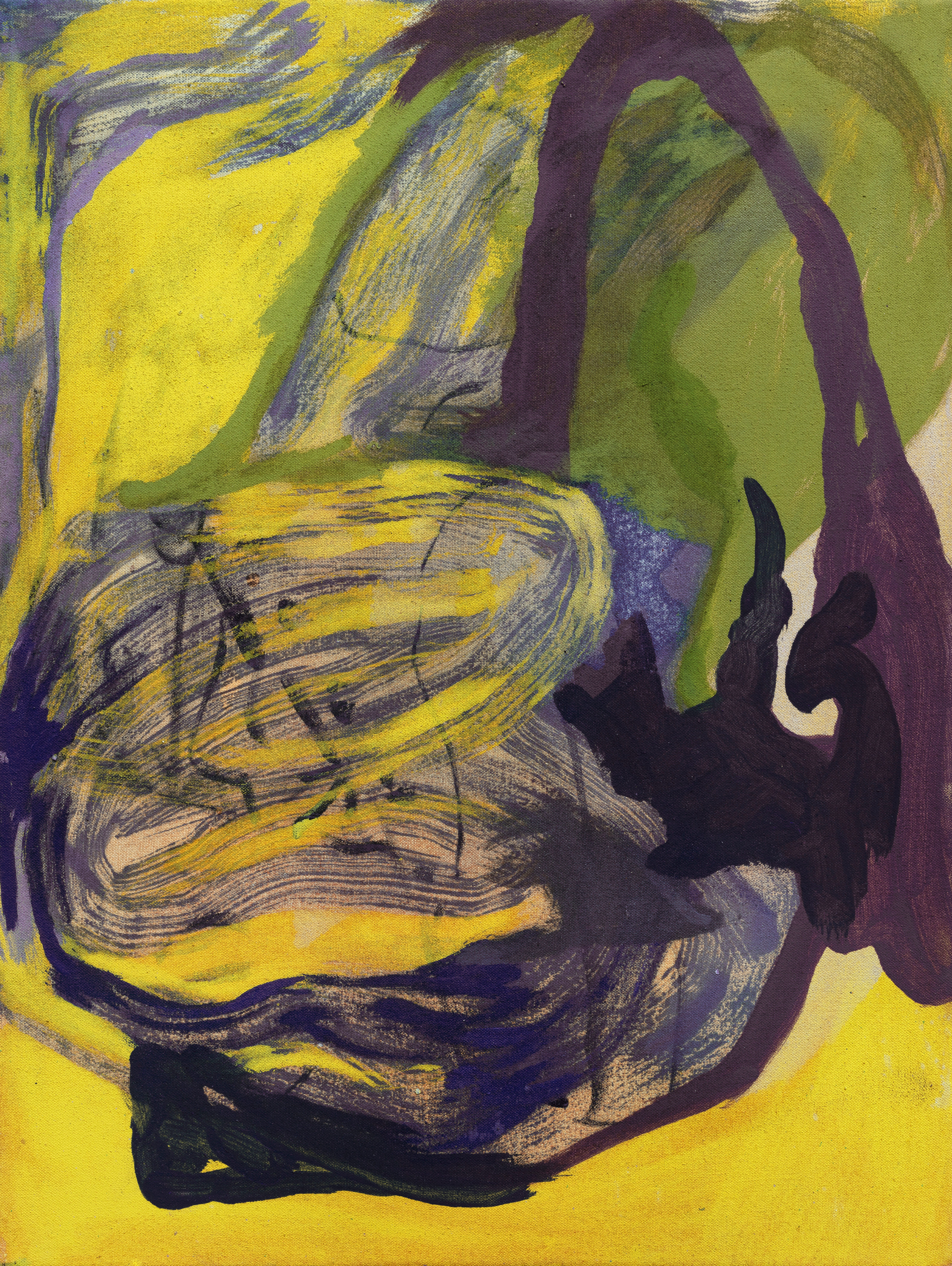
At 13 I arrived in the city of Oaxaca and began taking courses at the Casa de la Cultura. It was important because there I gained access to workshops, teachers, and a rhythm. First I moved toward drawing. It was the most immediate thing, what I could do all the time. Painting came later, insistently, almost like a necessity. There was a moment when drawing was no longer enough for me; I wanted another density, another type of image.
Later on I continued my training while completing an open high school program. And I painted more and more. I painted every day, or as much as I could. For me it was an urgency. Until I made the decision to look for an opportunity to go abroad. I never thought that Italy would be my final destination, but the path opened thanks to a support network: family, friends, small institutions, and people who believed in me. It’s very important for me to say that what I have achieved has been possible because of that support. It was never something I did entirely on my own.
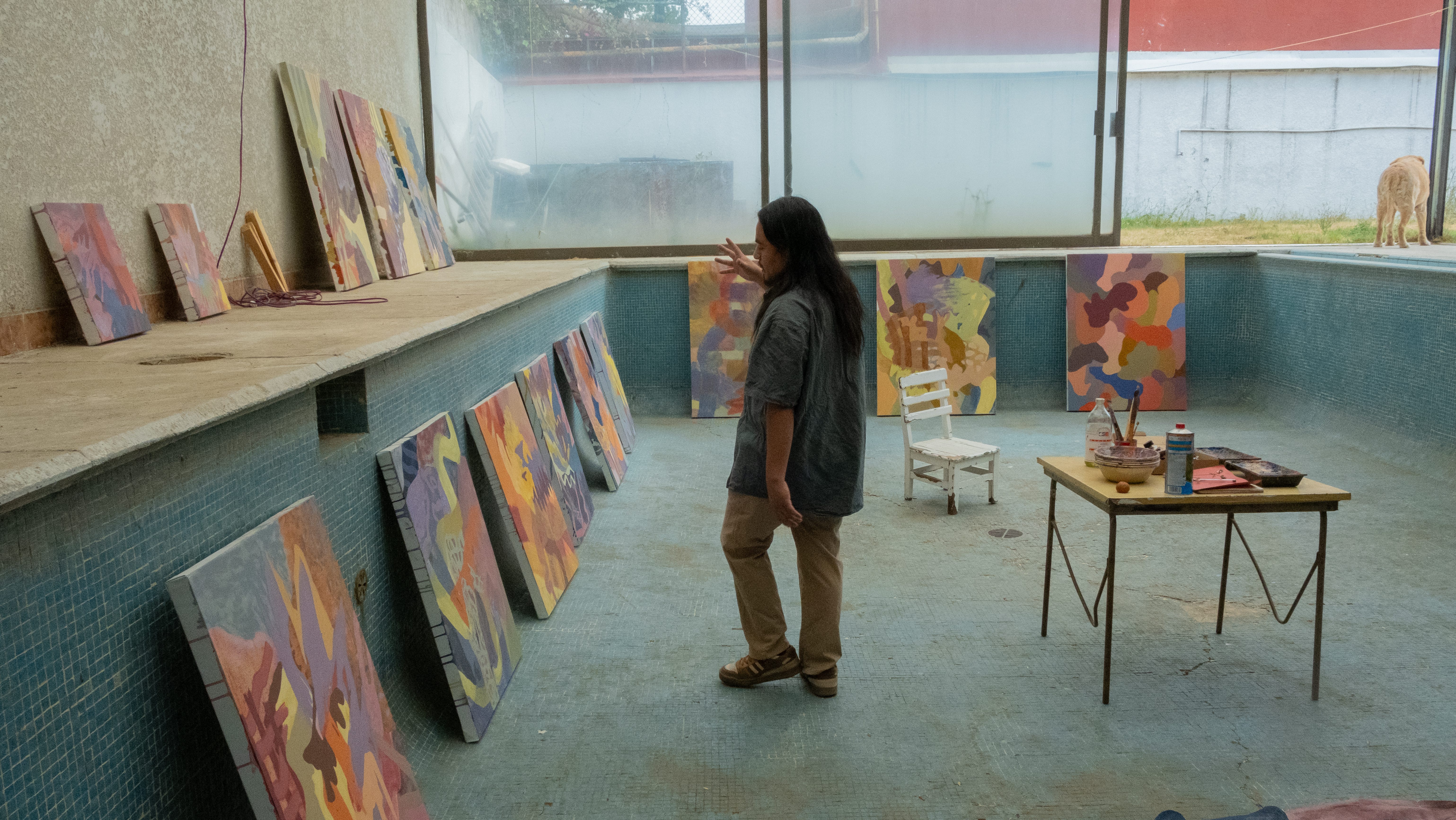
“First I moved toward drawing. It was the most immediate thing, what I could do all the time. Painting came later, insistently, almost like a necessity.”
How was your arrival in Italy and in what way did that experience impact your work and your way of working?
EM: It was an explosion. I arrived without knowing the language, without knowing the system, and under economic pressure. And that forces you to focus and produce; you don’t have time to romanticize things so much.
Venice gave me an intense environment: workshops where painting is lived as a daily discipline. That’s something that marked me, because you learn not only how to paint, but how to build stretchers, canvases, materials, and techniques. You learn to understand the support, to prepare, to test, to make mistakes quickly and do it again. You are surrounded by people who work at an extremely high level and that pushes you; it gives you a reference for rigor.
At the same time, I don’t see myself only as a painter. I consider myself a visual artist. I work with painting, but also with performance, photography, film, relational art. There are many things that interest me. Painting is my center, but it is not a limit. I don’t want it to become like a cage; I like it to connect with other practices.
“Painting is my center, but it is not a limit. I don’t want it to become like a cage; I like it to connect with other practices.”
What elements do you feel you brought with you from Mexico and how are they reflected in your work?
EM: I feel it closer and closer each time. At the beginning it was more conscious, more literal. At one moment it was more evident in the titles: I used direct references to foods or memories. I liked that because it was a way of keeping a sense of belonging alive, like saying: “I come from here.” For example, I made series where color and composition intersected with that culinary memory and the titles were things like “pineapple snow” or “corn empanada with squash blossom and quesillo.” These are things that for me carry an emotional weight: childhood, family, the street, the market.
Over time, that relationship with food became more structural and expanded toward the happenings. In Oaxaca cooking is community, it is ritual, it is conversation, it is a way of being together. The way you cook and share, and how everyone participates, has something very powerful for thinking about identity and connection. That is something I carried with me, and I think I understand it more and more from the outside, from a distance.
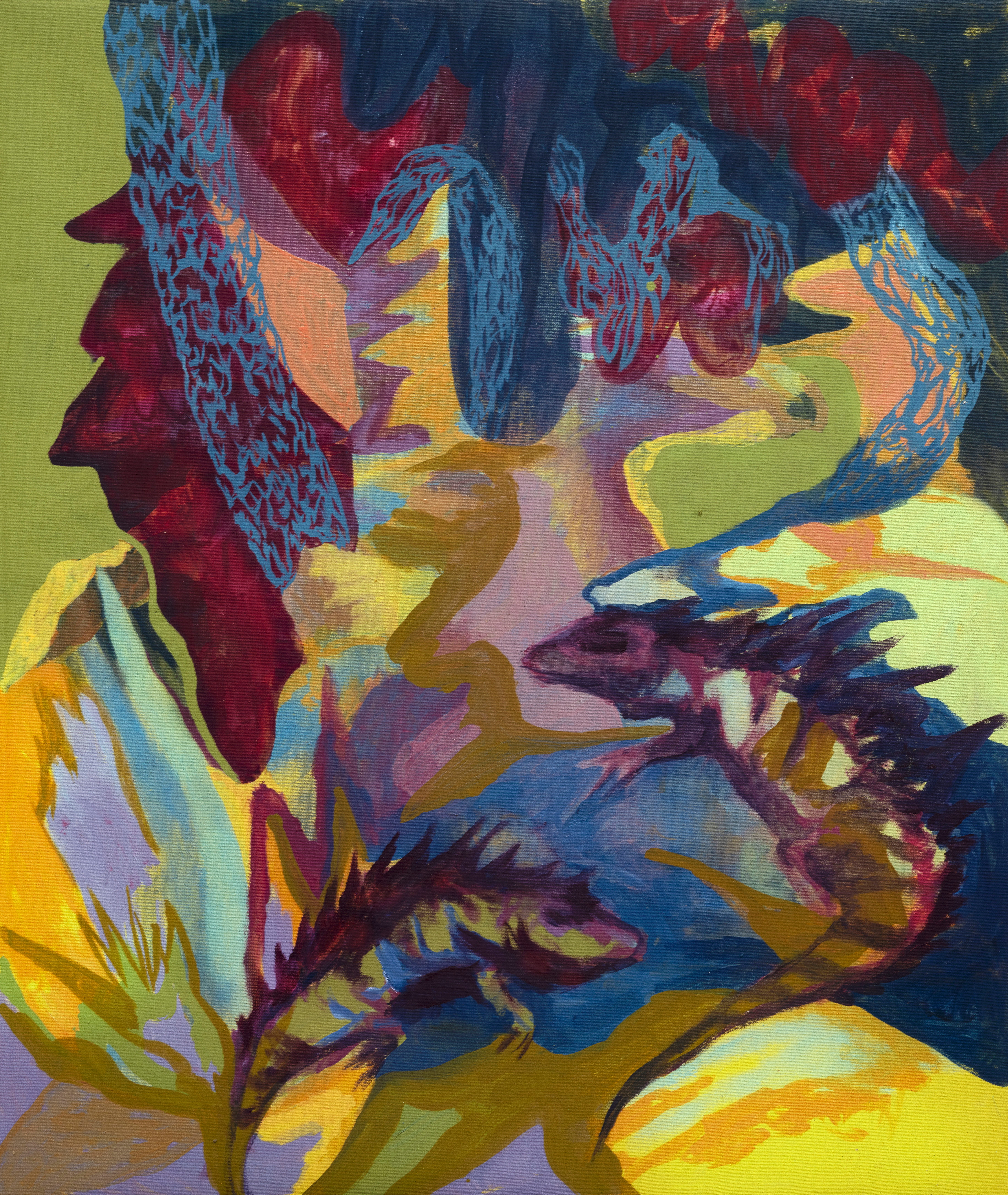
In your recent series Muri e Volpi, different animals appear, such as the coyote and lizards. What do these figures represent for you, and what other symbols are part of your visual universe?
EM: In Latin America, and in Mexico in particular, we use many animals as nicknames to describe social roles. I’m interested in how that remains alive, even after centuries of cultural impositions. It’s a symbolic language that does not disappear.
The coyote has many layers; it is an animal with a strong place in popular cosmology. Things are attributed to it, like that energy of cunning and of moving between worlds. But it is also a very charged contemporary figure: a “coyote” is someone who guides crossings and operates at the borders. For me it is a very powerful concept because it connects with themes of migration and risk.
In my series “Muri e Volpi,” animals appear as a counterpoint, suggesting that nature does not recognize borders the way we do. An animal jumps, digs, crosses, and that helps me speak about migration, about control, about who decides passage and who remains outside. In the end, borders are a human invention, but they have real consequences.
“In my series ‘Muri e Volpi,’ animals appear as a counterpoint, suggesting that nature does not recognize borders the way we do… In the end, borders are a human invention, but they have real consequences.”
Let’s talk about your happenings. Do you understand them as an extension of your painting or as independent projects?
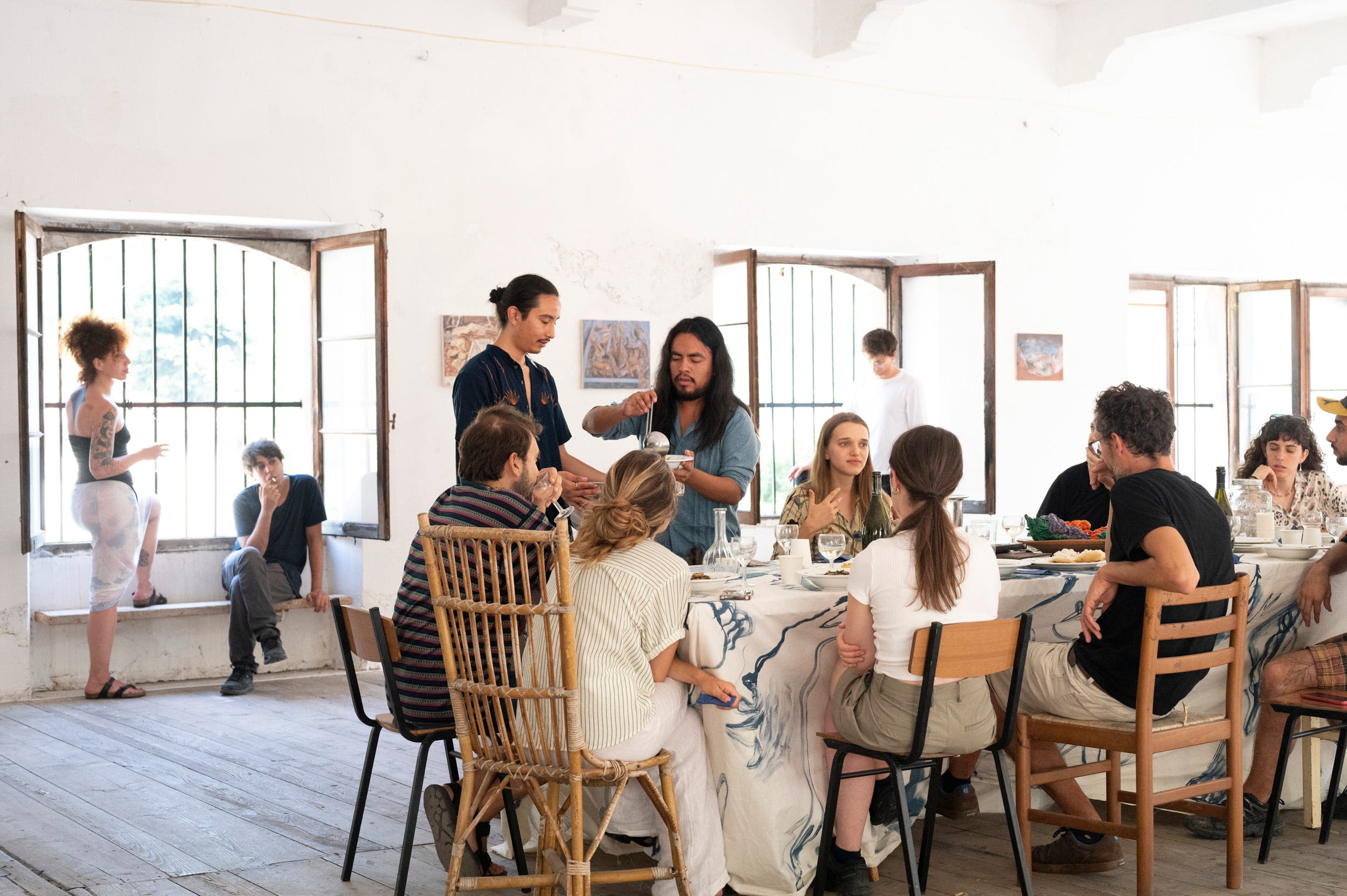
EM: For me they are connected. I did the first happening because a friend told me: “You cook, why don’t you do something with that as an artistic practice?” And it made sense to me. We started by cooking live: I was interested in how food could activate conversation, attention, and memory. It’s very direct: you taste something and you remember something, or you smell something and a story opens up. That interests me a lot.
Then came “Brodo.” In this project I cared about broth as an idea, because of the way it condenses flavors, textures, aromas, and stories. Broths are truly a concentration in every sense. I designed a menu of broths as a journey: one was almost a self-portrait of a stage of my life and the other incorporated ingredients from the Italian context to think about cultural crossing. I was interested in showing that mixture of what happens when you are in another place, what remains and what changes. The important thing was that it was not only about “feeding people,” but about the conversations that began to emerge. Sometimes we recorded them because they are also part of the work; I wanted there to be a record, something that would sustain the continuity of the project.
What references have been key for your work?
EM: Right now I am studying film, and that crosses through my work a lot. Mystery matters to me, and that the viewer imagines and constructs. I like it when a work does not give you everything, but rather forces you to stay there for a while, to look, to doubt, to complete it with your own experience. I’m interested in the moment when the viewer enters. I don’t want my work to be a closure, but an opening. That there is mystery, that there is something you don’t understand at first, because that’s how memory works and that’s how stories work: they are not linear, there are always gaps.
Everyday things also inspire me: cooking, conversation, stories that pass orally. I come from a context where many things were not “written” as an archive, so you learn to remember, to reconstruct, to invent a way of transmitting.
“I’m interested in the moment when the viewer enters. I don’t want my work to be a closure, but an opening.”
What would you like to explore in the coming years?
EM: I want to expand the happenings and move them from one place to another. I’m interested in that itinerant practice because it resonates with my own experience of mobility.
I also want to keep crossing languages such as painting, film, performance, cooking, and conversation, without having to choose only one.
To learn more about Eliel Martínez, visit:
En el estudio con: Eliel Martínez
Eliel Martínez es un artista multidisciplinario cuya práctica está marcada por su experiencia entre México e Italia, entrelazando la memoria y formas simbólicas para reflexionar sobre la migración y el sentido de pertenencia cultural.
En esta entrevista, Eliel revisita los inicios de su relación con el arte, el papel de la pintura dentro de su práctica y las maneras en que el hecho de vivir entre distintos países ha influido en su enfoque artístico. También habla sobre la presencia recurrente de elementos como los animales y la comida en sus obras, y sobre cómo sus happenings amplían su interés por la conversación y la experiencia compartida.
Eliel Martínez es uno de los cuatro artistas que participan en nuestra primera exposición en Londres, WHAT WE TAKE, co-curada por Art in Latin America y CM Art Advisory, en Pipeline. La muestra estará abierta hasta el 28 de marzo.
¿Cómo empezó tu carrera en el arte y, en particular, cómo surgió tu interés por la pintura?
EM: Vengo de un contexto donde lo manual era muy natural. De niño hacía muchas cosas con las manos: trabajar con tela, papel maché, objetos… siempre estaba haciendo algo. Y eso, aunque parezca que no, se queda contigo. Ahora lo veo clarísimo porque incluso cuando hago instalaciones o esculturas, esa forma de pensar desde lo material sigue ahí.
A los 13 años llegué a la ciudad de Oaxaca y empecé a tomar cursos en la Casa de la Cultura. Fue importante porque ahí recibí acceso a talleres, a profesores, y a un ritmo. Primero me fui hacia el dibujo. Era lo más inmediato, lo que podía hacer todo el tiempo. La pintura fue llegando después, con insistencia, casi como necesidad. Hubo un momento en el que el dibujo ya no me alcanzaba, quería otra densidad, otro tipo de imagen.
Más adelante seguí formándome mientras hacía un bachillerato abierto. Y yo pintaba cada vez más. Pintaba todos los días, o lo más que podía. Para mí, era una urgencia. Hasta que tomé la decisión de buscar una oportunidad para salir al extranjero. Nunca pensé que Italia sería mi destino final, pero se abrió el camino gracias a una red de apoyo: familia, amigos, instituciones pequeñas, gente que confió en mí. Es súper importante decirlo porque lo que he logrado ha sido gracias a esa red. No fue algo de “yo solo”, para nada.
“Primero me fui hacia el dibujo. Era lo más inmediato, lo que podía hacer todo el tiempo. La pintura fue llegando después, con insistencia, casi como necesidad.”
¿Cómo fue tu llegada a Italia y de qué manera esa experiencia impactó tu obra y forma de trabajar?
EM: Fue una explosión. Llegué sin saber el idioma, sin conocer el sistema, y con presión económica. Y eso, te obliga a enfocarte y a producir, no tienes tiempo para romantizar tanto las cosas.
Venecia me dio un entorno intenso: talleres donde la pintura se vive como disciplina diaria. Eso es algo que me marcó, porque aprendes no solo a pintar, sino a construir bastidores, telas, materiales y técnicas. Aprendes a entender el soporte, a preparar, a probar, a equivocarte rápido y volverlo a hacer. Estás rodeado de gente que trabaja a un nivel altísimo y eso te empuja, te da una referencia de exigencia.
Al mismo tiempo, yo no me veo solo como pintor. Me considero un artista visual. Trabajo con pintura, pero también con performance, fotografía, cine, arte relacional. Hay muchas cosas que me interesan. La pintura es mi centro, pero no es un límite. No quiero que se vuelva como una jaula, me gusta que se conecte con otras prácticas.
“La pintura es mi centro, pero no es un límite. No quiero que se vuelva como una jaula, me gusta que se conecte con otras prácticas."
¿Qué elementos sientes que trajiste contigo de México y cómo se reflejan en tu obra?
EM: Cada vez lo siento más cerca. Al principio, era más consciente, más literal. En algún momento era más evidente en los títulos: usaba referencias directas a comidas o a recuerdos. Eso me gustaba porque era una forma de mantener viva una pertenencia, como decir: “yo vengo de aquí”. Por ejemplo, hice series donde el color y la composición se cruzaban con esa memoria culinaria y eran títulos como “nieve de piña” o “empanada de maíz con flor de calabaza y quesillo”. Son cosas que para mí tienen una carga emocional, de infancia, de familia, de calle, de mercado.
Con el tiempo, esa relación con la comida se volvió más estructural y se expandió hacia los happenings. En Oaxaca la cocina es comunidad, es ritual, es conversación, es una forma de estar juntos. La manera en que cocinas y compartes, y cómo todos participan, tiene algo muy potente para pensar identidad y vínculo. Eso es algo que me llevé conmigo, y creo que cada vez lo entiendo más desde afuera, desde la distancia.
En tu serie reciente Muri e Volpi aparecen distintos animales, como el coyote y las lagartijas. ¿Qué representan estas figuras para ti y qué otros símbolos forman parte de tu universo visual?
EM: En Latinoamérica, y en México en particular, usamos muchos animales como apodos para describir roles sociales. Me interesa cómo eso sigue vivo, incluso después de siglos de imposiciones culturales. Es un lenguaje simbólico que no desaparece.
El coyote tiene muchas capas, es un animal con un lugar fuerte en la cosmovisión popular, se le atribuyen cosas, como esa energía de astucia y de moverse entre mundos. Pero también es una figura contemporánea muy cargada: un “coyote” es quien guía cruces y opera en los bordes. Para mí, es un concepto muy fuerte porque conecta con temas de migración y riesgo.
En mi serie de “Muri e Volpi”, los animales aparecen como contrapunto, dando a entender que la naturaleza no reconoce fronteras como nosotros. Un animal salta, excava, cruza, y eso me sirve para hablar de migración, de control, de quién decide el paso y quién queda fuera. Al final, las fronteras son una invención humana, pero tienen consecuencias reales.
“En mi serie de “Muri e Volpi”, los animales aparecen como contrapunto, dando a entender que la naturaleza no reconoce fronteras como nosotros … Al final, las fronteras son una invención humana, pero tienen consecuencias reales.”
Hablemos de tus happenings. ¿Los entiendes como una extensión de tu pintura o como proyectos independientes?
EM: Para mí están conectados. El primer happening lo hice porque un amigo me dijo: “tú cocinas, ¿por qué no haces algo con eso como práctica artística?” Y a mí me hizo sentido. Empezamos cocinando en vivo: me interesó cómo la comida podía activar conversación, atención y memoria. Es muy directo, tú pruebas algo y te acuerdas de algo, o hueles algo y se abre una historia. Eso me interesa mucho.
Luego vino “Brodo”. En este proyecto me importaba el caldo como idea, por su forma de condensar sabores, texturas, perfumes, e historias. Los caldos son realmente una concentración en todos los sentidos. Diseñé un menú de caldos como un recorrido: Uno era casi un autorretrato de una etapa de mi vida y el otro incorporaba ingredientes del contexto italiano para pensar el cruce cultural. Me interesaba mostrar esa mezcla de qué pasa cuando estás en otro lugar, qué se queda y qué cambia. Lo importante era que no se tratara solo de “dar de comer”, sino de las conversaciones que iban brotando. A veces las grabábamos porque también son parte de la obra; quería que quedara un registro, algo que sostuviera la continuidad del proyecto.
¿Qué referentes han sido clave para tu obra?
EM: Ahora estoy estudiando cine, y eso me atraviesa mucho. Me importa el misterio y que el espectador imagine y construya. Me gusta cuando una obra no te lo da todo, sino que te obliga a quedarte un rato ahí, a mirar, a dudar, a completar con tu propia experiencia. Me interesa ese momento en el que el espectador entra. No quiero que mi obra sea un cierre, sino una apertura. Que haya misterio, que haya algo que no entiendas a la primera, porque así funciona la memoria y así funcionan las historias: no son lineales, siempre hay huecos.
También me inspiran cosas cotidianas: la cocina, la conversación, las historias que pasan de forma oral. Yo vengo de un contexto donde muchas cosas no estaban “escritas” como archivo, entonces aprendes a recordar, a reconstruir, a inventar una forma de transmitir.
“Me interesa ese momento en el que el espectador entra. No quiero que mi obra sea un cierre, sino una apertura.”
¿Qué te gustaría explorar en los próximos años?
EM: Quiero expandir los happenings y moverlos de un lugar a otro. Me interesa esa práctica itinerante porque conversa con mi propia experiencia de movilidad.
También, quiero seguir cruzando lenguajes como la pintura, el cine, el performance, la cocina, la conversación, sin tener que elegir solo uno.
Para saber más sobre Eliel Martínez, visita: