Edgardo T. Larregui Rodríguez has been active as a Puerto Rican artist and cultural organizer for more than three decades.
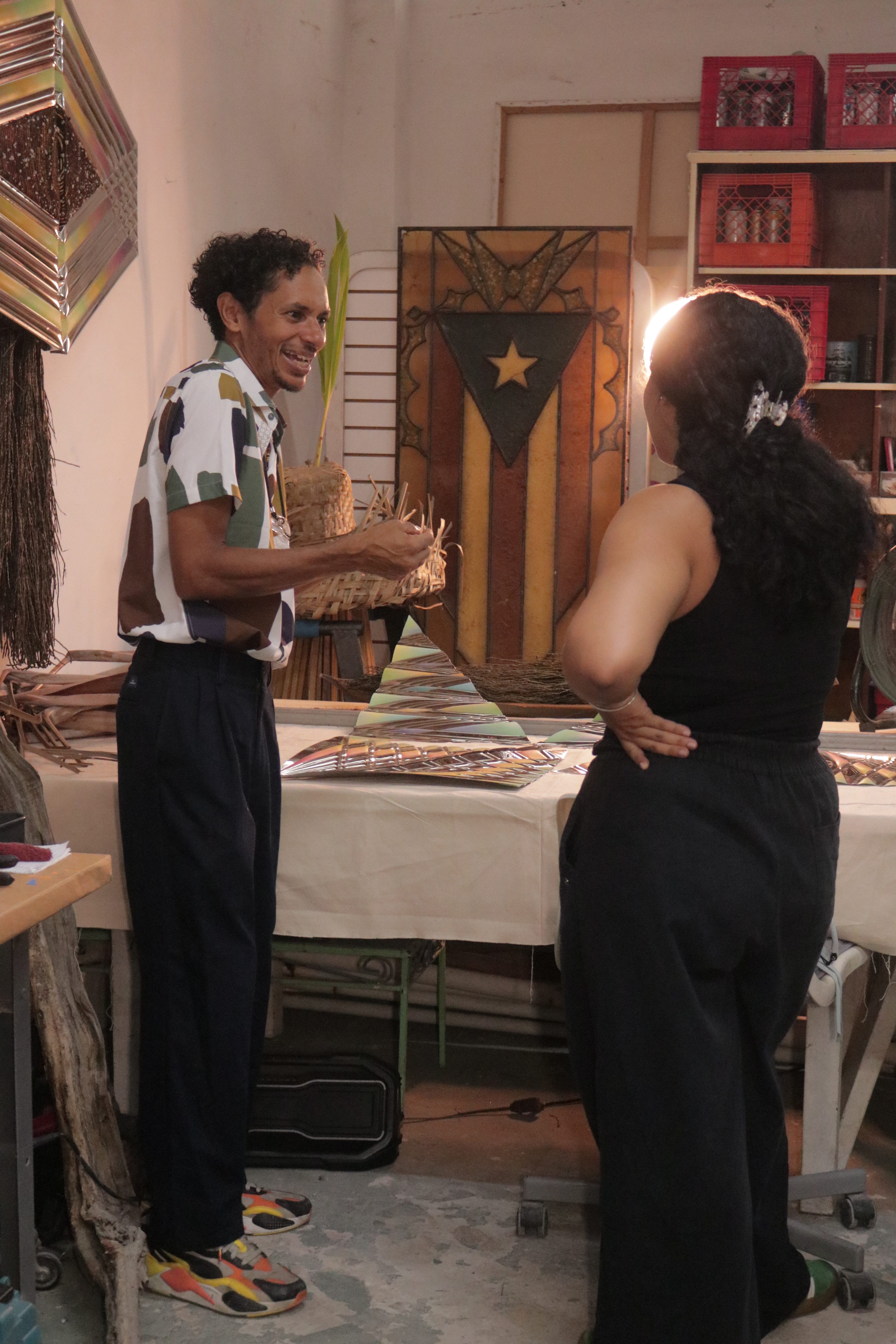
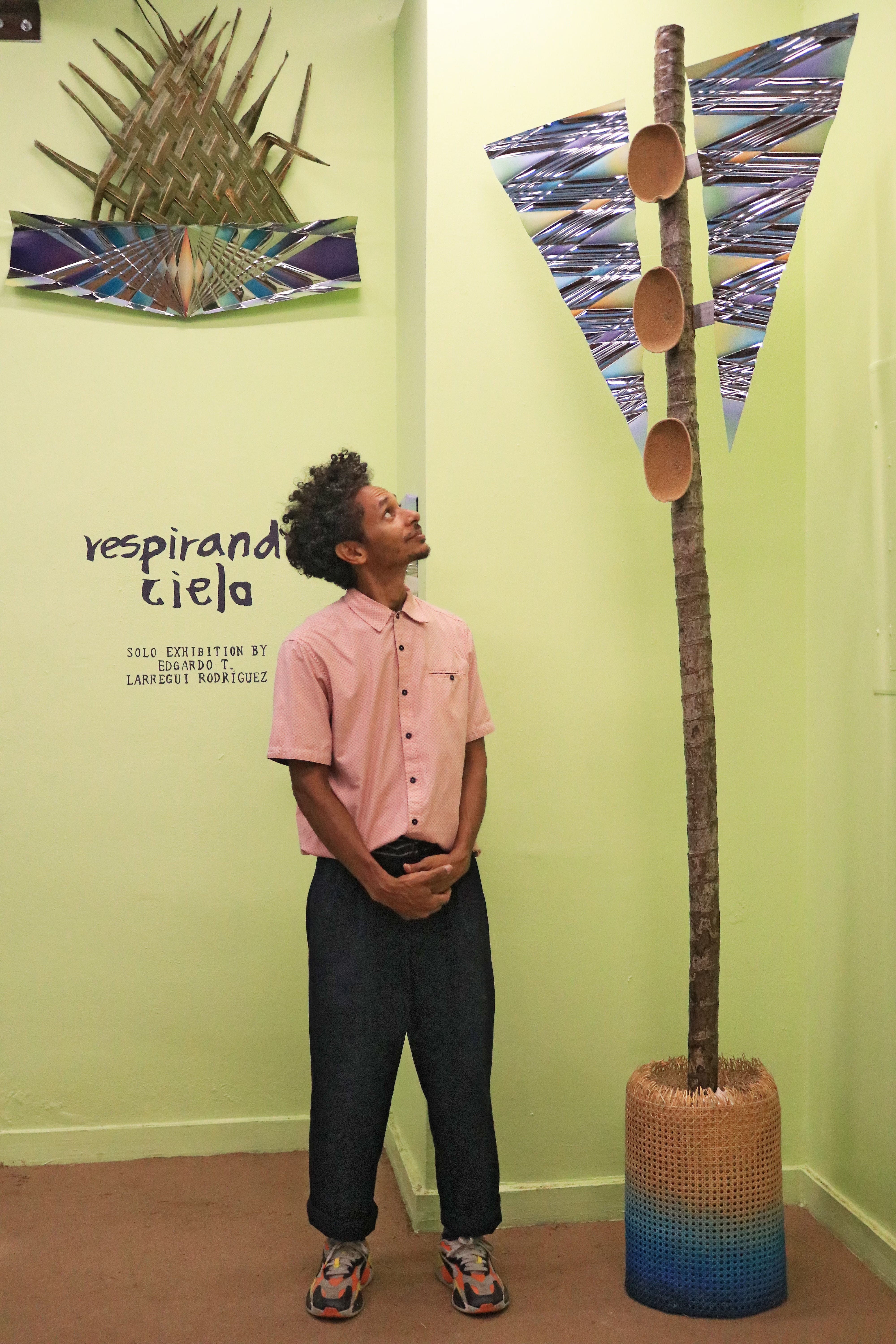
Through artworks, installations, happenings, and community-based projects, he subverts public spaces, traditions, and issues such as geogentrification. His first solo exhibition in 15 years, “Respirando Cielo”, opened at Sabroso! on August 27, 2026, in Santurce, Puerto Rico. We visited his studio before the inauguration to discuss his career and artistic proposals.
Written by: Ana Hilda Figueroa de Jesús (Akron, Ohio, 1999).
Ana Hilda Figueroa is an independent curator, art historian, and critic based in San Lorenzo, Puerto Rico, and New York. Her research focuses on contemporary art, memory, affect, and visual culture, including ecology and sports. She focuses on communities in the Caribbean, Latin America, and the United States. Her criticism has been published in ArtNexus, Revista Plástica, and CENTRO, among others. She has curated exhibitions at Galería La QuNa, The Latinx Project, and Taller Boricua. Her past collaborations include the University of Puerto Rico, the Baker Museum, the Guggenheim Museum, the Smithsonian Institution, and private collections, among others. She earned a master’s degree in Latin American and Caribbean Studies and an advanced certificate in Museum Studies from New York University (2025), as well as a bachelor’s degree in Art History from UPR-RP (2021).
Your studio is filled with sketches and documentation. Could you tell us about some of the works?
EL: Yes! There is an area dedicated to Coco D’ Oro (1998), a nonprofit organization focused on the importance of art in society through workshops and cultural activities. Dr. Recao (2003) was a project involving the collection of recao seeds, a medicinal and culinary plant in Puerto Rico, to send them to New York and plant them in community gardens and cracks in the streets. La Vía Histórica (2024) was a site-specific installation in which I replaced the light bulbs of a building to trace the railway lines. The building is located where the train cleaning and maintenance workshops operated until operations ceased in 1953. Within the context of industrialization, it is also a tribute to artists working with light, such as Félix González-Torres, Frank J. Malina, and Dan Flavin.