


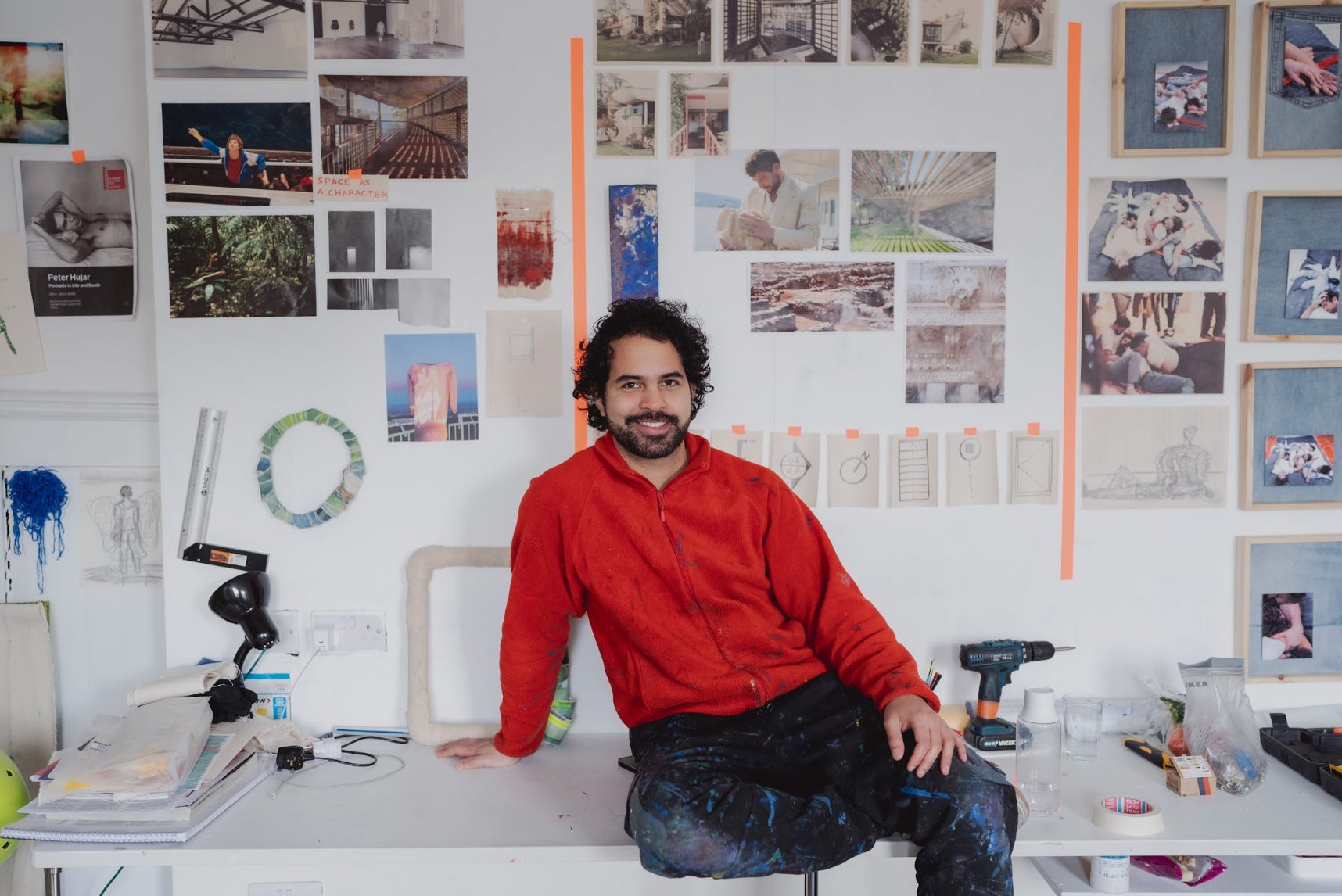
Daniel Rey is a Venezuelan artist whose practice moves across objects, installations, and performance. Trained first as an architect in Caracas, Milan, and London, his work translates questions of space and belonging into intimate investigations of masculinity and collective experience.
In this conversation, Daniel speaks about leaving architecture to pursue art and the personal experiences that led him toward performance. He also reflects on returning to Venezuela after years abroad, the feeling of being between places, and how collaboration has become central to the way he builds his work.
Editor’s note: This conversation took place before the earthquakes that struck Venezuela on 24 June 2026. In the aftermath, the interviewee, Daniel, asked to add the following statement:
“On 24 June 2026, the ground shook violently across Venezuela, a country already facing a severe social and economic crisis. This conversation had taken place only a few days earlier.
The human and material losses are still being assessed. I have been following events from London, over the phone. Seeing the scale of the destruction in La Guaira, a place I often visited as a child, has been heartbreaking. At the same time, this has also been a moment of hope. It has been remarkable to see people across the country come together and find countless ways to help, each contributing however they can.
The emergency is far from over, and rebuilding will take years. Please consider donating. Several verified organisations are working on the ground, including Healing Venezuela, Cáritas Venezuela and World Central Kitchen, among many others.”
You studied architecture in Venezuela before dedicating yourself to the visual arts. What was that transition between both disciplines like?
DR: I studied architecture in Caracas, did a year-long exchange at the Polytechnic University of Milan, and then started working as an architect and designer. I spent five years in Italy, then moved to London and worked in offices such as Foster + Partners and SOM. But I was always making art, even though I had never pursued it full-time.
In 2020, I left my career as an architect, and it wasn’t a comfortable decision. I was on a safe path, in some of the biggest offices in the world, and I left it to start again from zero. I realized I wasn’t pursuing what I felt was my mission: to be an artist. So I went back to study and did a master’s in Fine Art at Central Saint Martins.
But the truth is that I never completely left architecture behind. I changed the object: instead of buildings, I began working with the body, emotions, the space between people. Architecture is still my way of thinking and building, only now I build something else. It gave me a solid foundation to make things happen, and planning before each work has become almost a spiritual practice.
When you started the master’s, what were the questions guiding your practice? How did you move into exploring performance?
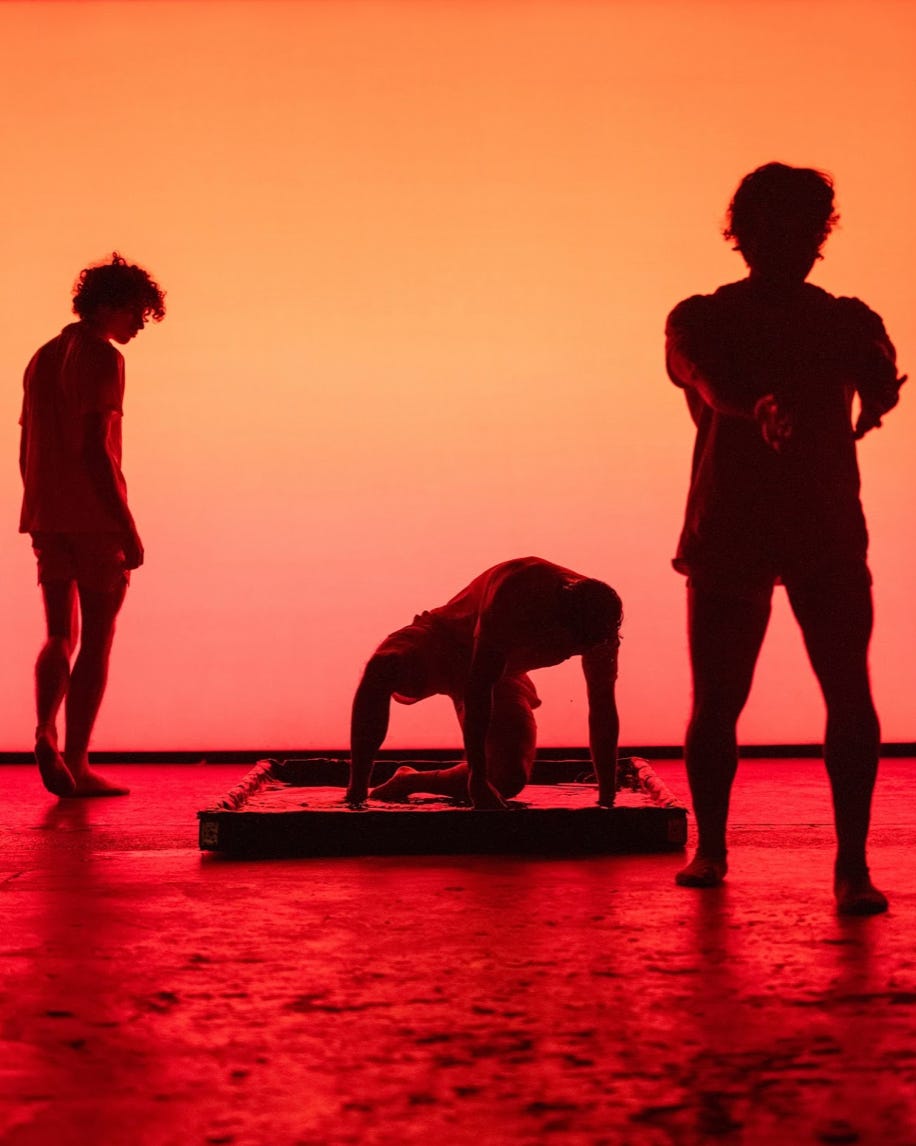
DR: At the beginning, the main thing was my identity as a Venezuelan and as a migrant. It was about understanding what it means to be part of that diaspora, how my family and my friends have left Venezuela, and how that forms part of my story. Also understanding and recovering traditions and things that make me Venezuelan. I started working with the body as the place where all of that is stored: memory, ritual, belonging.
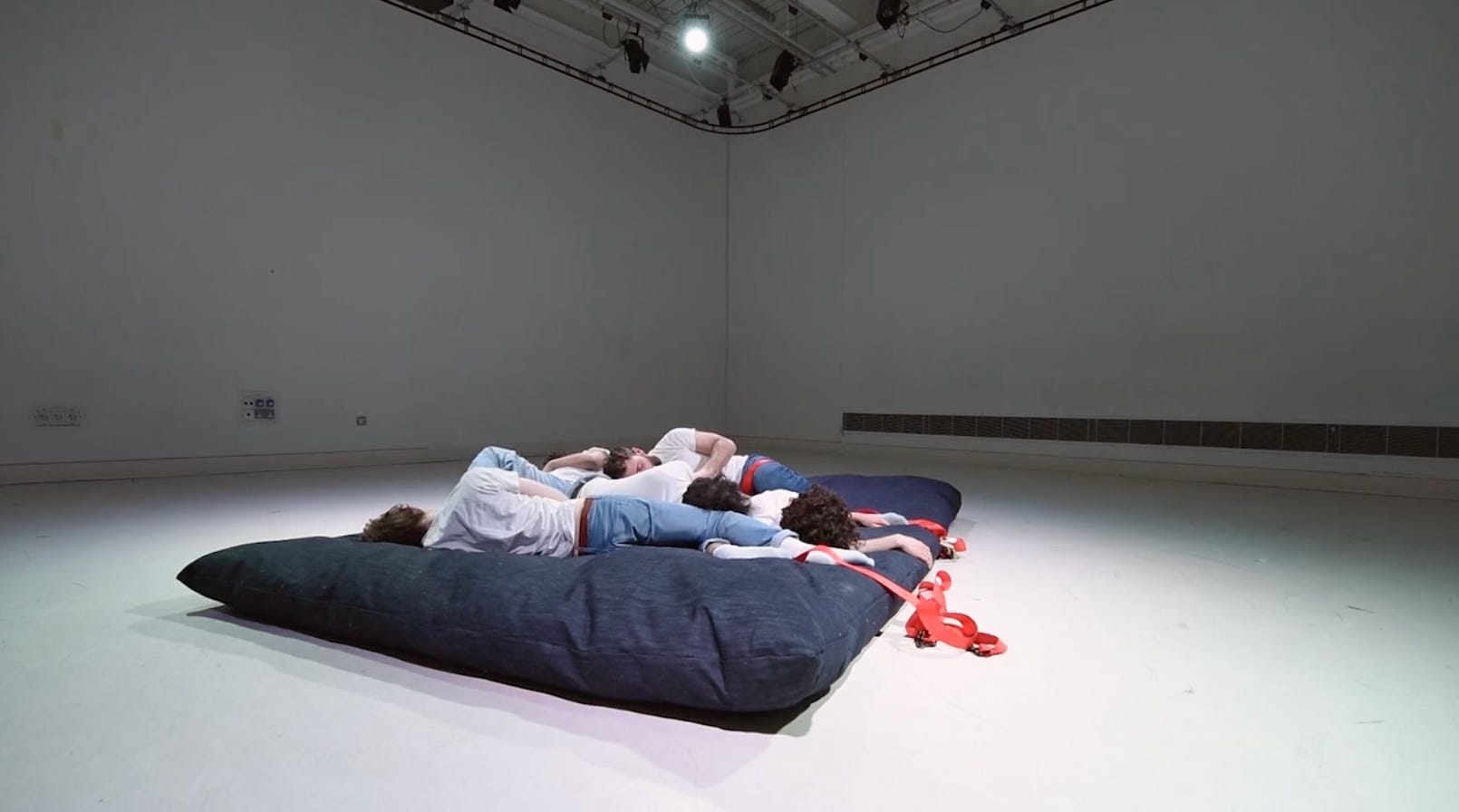
In reality, performance scared me, until I mentioned it to my tutor, Amy Clark, and she told me: if you’re afraid, you have to do it. I wanted to explore the ambivalence between masculinity and vulnerability, something very present in machismo in Venezuela and in Latin America. That’s how Collective Cuddles was born, my first performance. We documented it, I applied with it to New Contemporaries, and it was selected. Afterwards, it was presented at Camden Art Centre, Grundy Art Gallery, and Manchester Art Gallery.
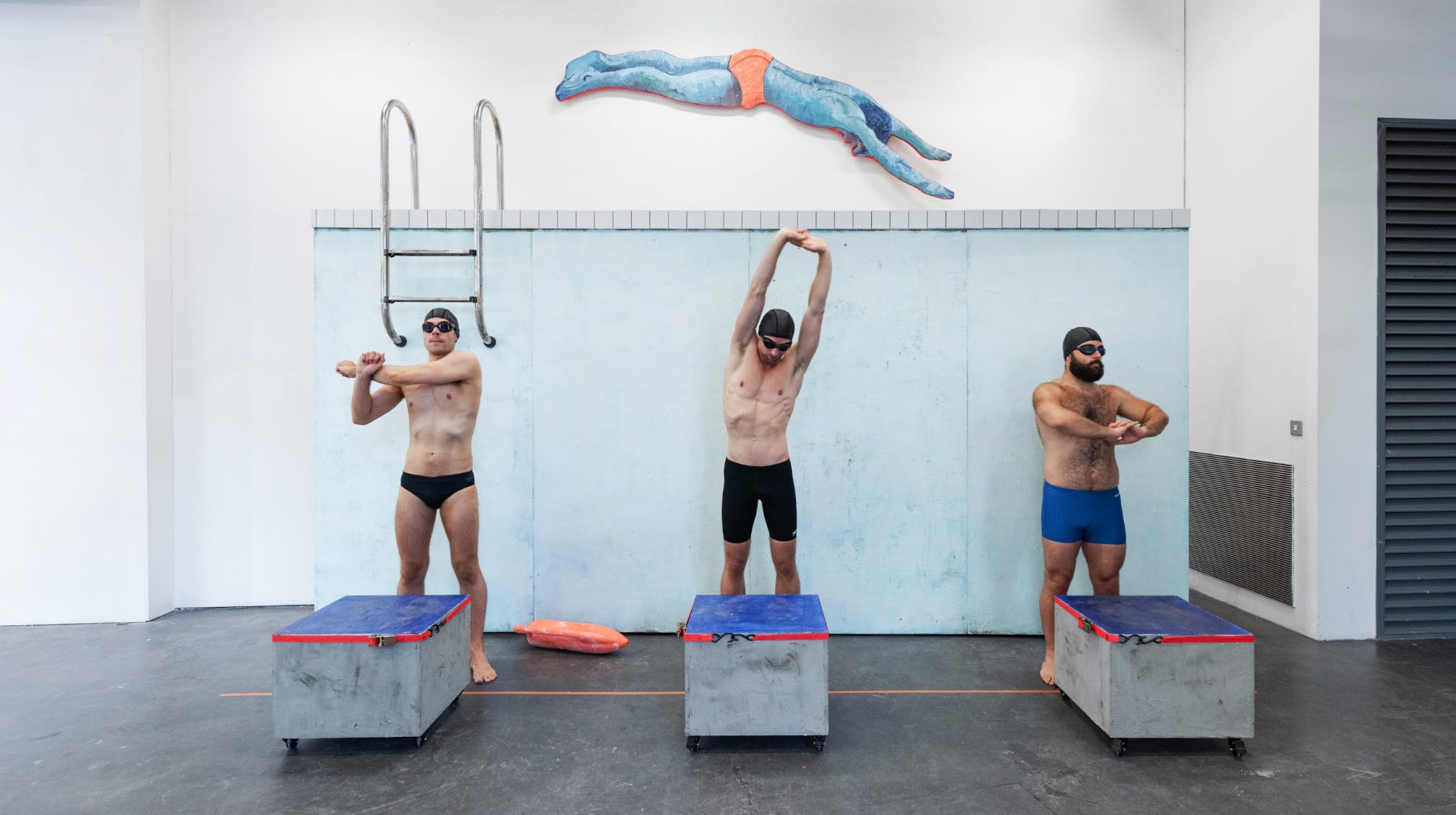
Another performance I made was Why Do Swimmers Suddenly Appear? During school, swimming became a refuge when I was dealing with my identity within a super macho and competitive environment. When I entered the water, I could forget all the noise around me.
In the performance, I wanted to work with that contrast: the swimmers entered with me to very revitalizing music, as if they were going to compete. They climbed onto the podium, I said “on your marks, get set, go,” making the audience understand that they were going to jump. But at that moment the music changes. Instead of diving in, they begin to swim vertically, as if you had the camera underwater, and it ended in an embrace. It is a short performance, but it works with that contrast between competition, masculinity, and vulnerability.
“I wanted to explore the ambivalence between masculinity and vulnerability, something very present in machismo in Venezuela and in Latin America.”
How do you think art can open up broader ways of talking about masculinity in Latin American contexts?
DR: I think one can begin from one’s own experience: how you grew up, what things you had to perform depending on your gender. And that doesn’t only apply to men; it also applies to women, who are expected to behave in a very particular way. One of the things about machismo is that you can’t show vulnerability or weakness; you always have to be strong, not show emotions. So I’m interested in exploring how we connect through touch, how we connect emotionally. What interests me about art is that it can go straight to what makes us uncomfortable and stay there, without necessarily resolving it.
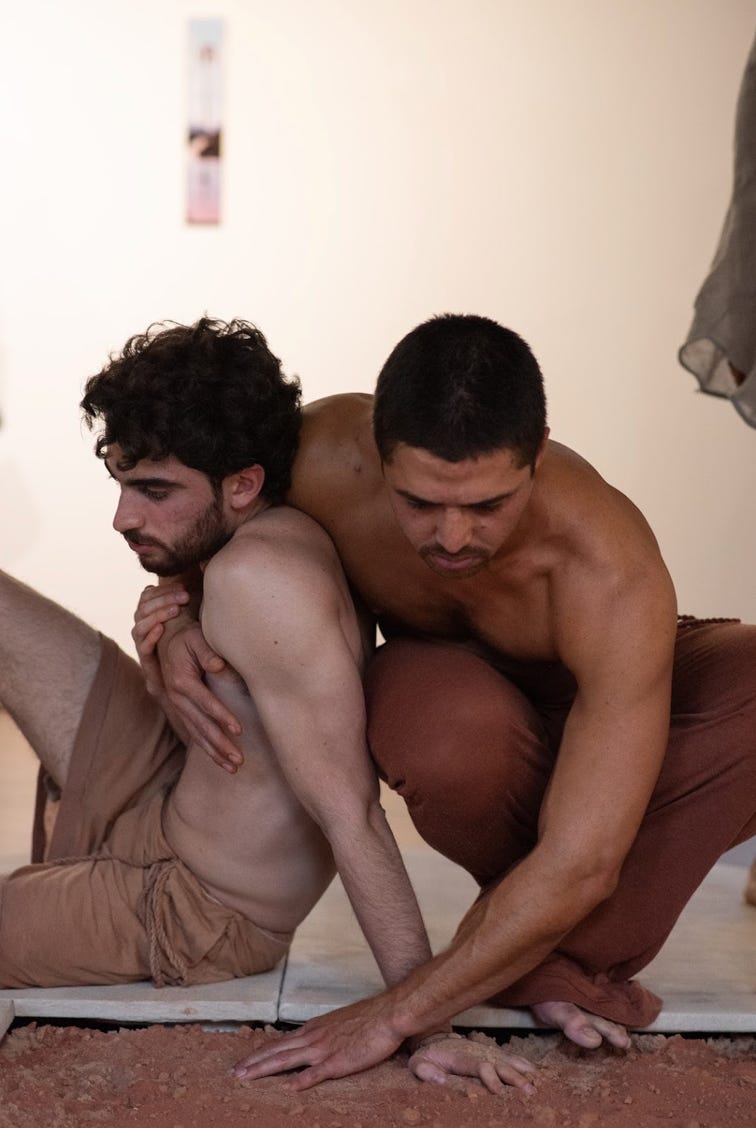
In Collective Cuddles, I don’t want to propose an ideal world. I want to put in front of people exactly what machismo forbids: Latino men touching each other with tenderness, without shame, without asking permission. For many people, that is uncomfortable to see, and that is the point. There is no fixed choreography: they can move, sleep, talk to each other. They are always Latino men, part of my community.
For the viewer, I’m not interested in giving an answer, but rather in posing a question: what could it be if this group of people shows affection to each other in a very tender way? What is the line between sexual tension and something that does not quite cross it? Why would something so intimate have to be hidden if it is not necessarily sexual? I’m interested in that slightly uncomfortable moment, in which you wonder whether you are seeing another possible world.
“I’m interested in exploring how we connect through touch, how we connect emotionally … In Collective Cuddles, I don’t want to propose an ideal world. I want to put in front of people exactly what machismo forbids: Latino men touching each other with tenderness, without shame, without asking permission. For many people, that is uncomfortable to see, and that is the point.”
Many of your works, such as Collective Cuddles or Why Do Swimmers Suddenly Appear?, have a collective dimension. What attracts you to working with other people?
DR: I think that comes a lot from architecture. I’m used to work existing in relation to others. In my performances there are almost always between three and five people, and I also collaborate with friends like René Lazovy, who documents the work, or Charles, who composes music for the Nyiha performances.
I’m interested in it not being only me. The idea carries the force, and then there is a group of people who are very good at what they do. There is great satisfaction in building something with many hands. I enjoy being alone in the studio, but that collective energy makes a lot of sense to me.
How has your move to Europe transformed your relationship with your Venezuelan identity?
DR: I think it’s a process that takes years and that I’m still exploring. In fact, I have a series that deals with that subject. Irredeemably Foreign uses old postcards from Venezuela that I have been collecting for many years. They all come loaded with stories on the back from the people who sent them. That object already had a life, and I am rescuing it. The image can be very beautiful, very local, but the text leaves you thinking: there are sad things, things you can identify with, things that are hard to read.
The postcards are combined with phrases from a book about someone who returns to Lebanon after twenty years in Paris, trying to reconcile himself with the idea that he does not feel at home in either place. That idea resonated with me deeply; I felt that the book helped me express ideas I had, but in a very poetic way.
I returned to Venezuela in 2025 after five years without going. Before, I used to go every year, but by then most of my family had left. When I return, I feel alien, a bit like a foreigner; I feel that Venezuela has changed so much and that I have changed too. But when I’m in London, I feel like the most Venezuelan of all. I don’t completely belong to either side, and before that weighed on me; now it is the material.
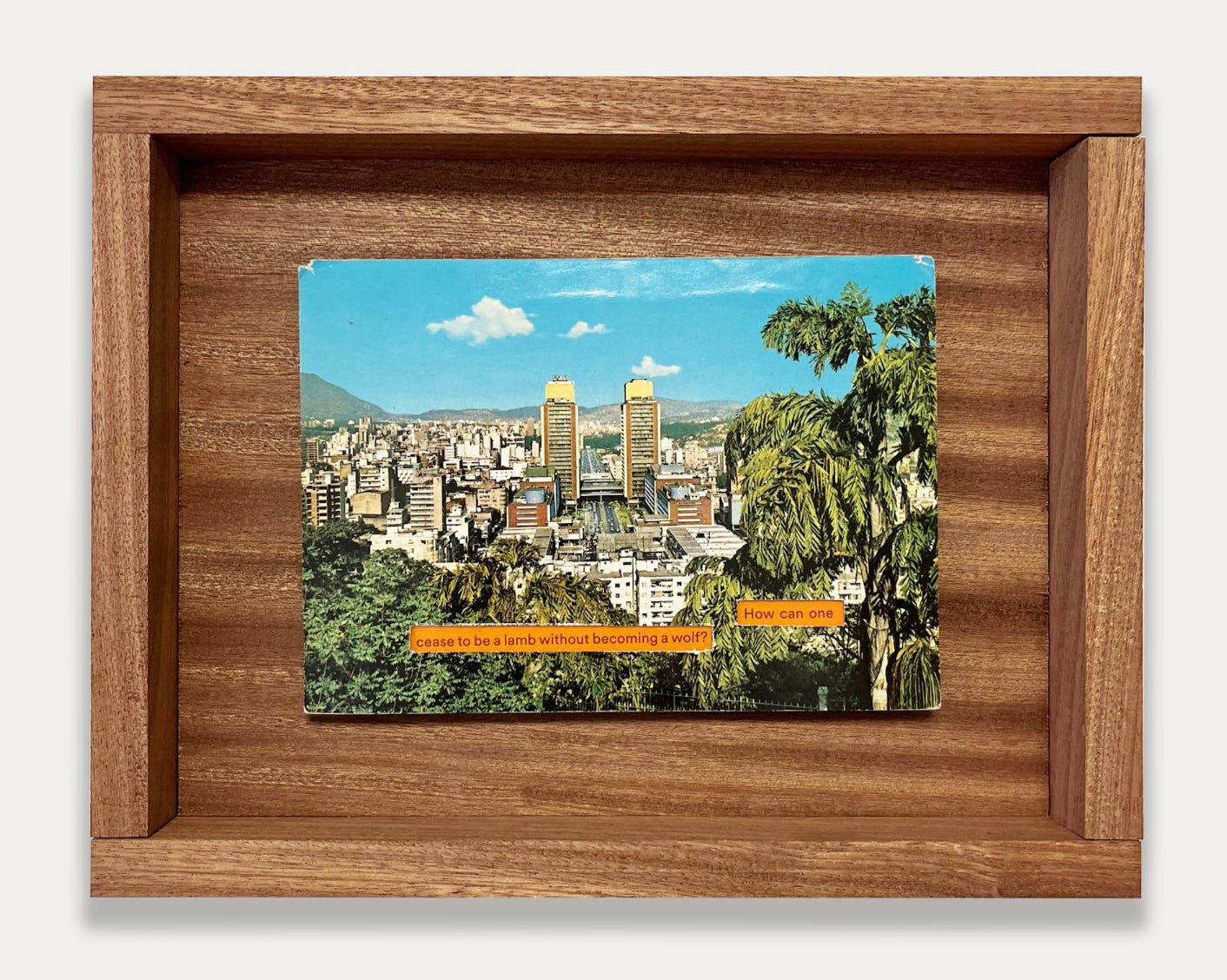
"I feel alien, a bit like a foreigner … Venezuela has changed so much and that I have changed too. But when I’m in London, I feel like the most Venezuelan of all. I don’t completely belong to either side, and before that weighed on me; now it is the material.”
If someone has never seen your work, how would you describe your practice?
DR: I would describe it as a practice that generates objects, installations, and performances centered on the body, specifically on how the body carries, at the same time, the memory of Venezuela and the physical experience of built space. I’m interested in the tension between two ways of inhabiting architecture: one that comes from Venezuela, where the body lives outwardly, permeable, in contact with others, and another that comes from London, more sealed, more individual. From there, the body becomes a vehicle to explore masculinity and vulnerability through the ritual; how men gather, touch each other, and create community.
What conversations would you like your work to generate in the people who encounter it?
DR: I would be interested in people understanding that we are always changing, that there is no specific place we have to reach. We are always collecting experiences, memories, recollections, and it is in that accumulation that we become sensorially richer.
For me, the idea of connecting more with each other is super important. I think we have been losing community. Religion, for example, gave a lot of that idea of community: establishing connections with strangers who were under the same structure. One of my fears is that, through social media and now artificial intelligence, we are becoming more and more isolated. Everyone is inside their own bubble.
In my art, I’m interested in thinking about how we can meet again, how to establish moments of gathering, of exchange. That is why performance is so important to me: there is nothing more valuable than having a person in front of you, giving you their energy, their sweat, their strength. There is something very powerful in that.
“In my art, I’m interested in thinking about how we can meet again, how to establish moments of gathering, of exchange. That is why performance is so important to me: there is nothing more valuable than having a person in front of you, giving you their energy, their sweat, their strength.”
To learn more about Daniel Rey, visit:
En el estudio con: Daniel Rey
Daniel Rey es un artista venezolano cuya práctica se mueve entre objetos, instalaciones y performance. Formado primero como arquitecto en Caracas, Milán y Londres, su trabajo traduce preguntas sobre el espacio y la pertenencia en investigaciones íntimas sobre la masculinidad y la experiencia colectiva.
En esta conversación, Daniel habla sobre dejar la arquitectura para dedicarse al arte y sobre las experiencias personales que lo llevaron hacia la performance. También reflexiona sobre su regreso a Venezuela después de años en el extranjero, la sensación de estar entre lugares y cómo la colaboración se ha vuelto central en la manera en que construye su obra.
Nota del editor: Esta conversación tuvo lugar antes de los terremotos que sacudieron Venezuela el 24 de junio de 2026. Tras lo ocurrido, el entrevistado, Daniel, quiso añadir la siguiente nota:
“El 24 de junio de 2026, la tierra se movió con violencia en Venezuela, un país que ya venía atravesando una grave crisis social y económica. Esta conversación tuvo lugar unos días antes.
Las pérdidas humanas y materiales aún se siguen contabilizando. He seguido la situación desde Londres, por teléfono. Ver el nivel de destrucción en La Guaira, adonde iba de niño, es desgarrador. También ha sido un tiempo de esperanza. Ver a todo un país organizarse para ayudar de mil maneras, cada quien desde donde puede, ha sido impresionante.
Si estás leyendo esto, no olvides que la emergencia continúa y que la reconstrucción tomará años. Por favor, dona. Hay organizaciones verificadas trabajando sobre el terreno, como Healing Venezuela, Cáritas Venezuela y World Central Kitchen, entre muchas otras.”
Estudiaste arquitectura en Venezuela antes de dedicarte a las artes visuales. ¿Cómo fue ese tránsito entre ambas disciplinas?
DR: Yo estudié arquitectura en Caracas, hice un año de intercambio en el Politécnico de Milán, y después empecé a trabajar como arquitecto y diseñador. Estuve cinco años en Italia, luego me mudé a Londres y trabajé en oficinas como Foster + Partners y SOM. Pero siempre estaba haciendo arte, aunque nunca lo había perseguido a tiempo completo.
En 2020, dejé mi carrera como arquitecto, y no fue una decisión cómoda. Estaba en un camino seguro, en algunas de las oficinas más grandes del mundo, y lo dejé para empezar otra vez desde cero. Me di cuenta de que no estaba persiguiendo lo que sentía como mi misión: ser artista. Entonces volví a estudiar e hice una maestría en Fine Art en Central Saint Martins.
Pero la verdad es que nunca dejé la arquitectura del todo. Cambié el objeto: en vez de edificios, empecé a trabajar con el cuerpo, las emociones, el espacio entre las personas. La arquitectura sigue siendo mi manera de pensar y de construir, solo que ahora construyo otra cosa. Me dio una base sólida para hacer que las cosas pasen, y planear antes de cada obra se ha vuelto casi una práctica espiritual.
Cuando empezaste la maestría, ¿cuáles eran las preguntas que guiaban tu práctica? ¿Cómo pasaste a explorar la performance?
DR: Al principio lo principal era mi identidad como venezolano y como migrante. Era entender qué significa ser parte de esa diáspora, cómo mi familia y mis amigos han dejado Venezuela, y cómo eso forma parte de mi historia. También entender y recuperar tradiciones y cosas que me hacen venezolano. Empecé a trabajar con el cuerpo como el lugar donde todo eso se guarda: la memoria, el ritual, la pertenencia.
En realidad, la performance me asustaba, hasta que se lo comenté a mi tutora, Amy Clark, y ella me dijo: si tienes miedo, tienes que hacerlo. Yo quería explorar la ambivalencia entre masculinidad y vulnerabilidad, algo muy presente en el machismo en Venezuela y en Latinoamérica. Así nació Collective Cuddles, mi primera performance. La documentamos, apliqué con ella a New Contemporaries y la seleccionaron. Después se presentó en Camden Art Centre, Grundy Art Gallery y Manchester Art Gallery.
Otra performance que realicé fue Why Do Swimmers Suddenly Appear? Durante la escuela, nadar se convirtió en un refugio cuando estaba lidiando con mi identidad dentro de un ambiente súper machista y competitivo. Cuando entraba al agua podía olvidarme de todo el ruido alrededor.
En la performance quería trabajar ese contraste: los nadadores entraban conmigo con una música muy revitalizante, como si fueran a competir. Se subían al podio, yo decía “en sus marcas, listos, fuera”, dándole a entender a la audiencia que iban a saltar. Pero en ese momento cambia la música. En vez de lanzarse, empiezan a nadar verticalmente, como si tuvieras la cámara debajo del agua, y terminaba en un abrazo. Es una performance corta, pero trabaja ese contraste entre competencia, masculinidad y vulnerabilidad.
“Yo quería explorar la ambivalencia entre masculinidad y vulnerabilidad, algo muy presente en el machismo en Venezuela y en Latinoamérica.”
¿Cómo crees que el arte puede abrir formas más amplias de hablar sobre la masculinidad en contextos latinoamericanos?
DR: Creo que uno puede empezar desde la propia experiencia: cómo creciste, qué cosas tuviste que performar dependiendo de tu género. Y eso no aplica solo a los hombres; también aplica a las mujeres, a quienes se les exige comportarse de una forma muy particular. Una de las cosas del machismo es que no puedes mostrar vulnerabilidad ni debilidad; siempre tienes que ser fuerte, no mostrar emociones. Entonces me interesa explorar cómo conectamos con el tacto, cómo conectamos emocionalmente. Lo que me interesa del arte es que puede ir directo a lo que nos incomoda y quedarse ahí, sin resolverlo necesariamente.
En Collective Cuddles, no quiero proponer un mundo ideal. Quiero poner enfrente de la gente exactamente lo que el machismo prohíbe: hombres latinos tocándose con ternura, sin vergüenza, sin pedir permiso. Para mucha gente eso es incómodo de ver, y ese es el punto. No hay una coreografía fija: se pueden mover, dormir, hablar entre ellos. Siempre son hombres latinos, parte de mi comunidad.
Para el espectador, no me interesa dar una respuesta, sino plantear una pregunta: ¿qué podría ser si este grupo de personas se hace cariño de una manera muy tierna? ¿Cuál es la línea entre la tensión sexual y algo que no llega a cruzarla? ¿Por qué algo tan íntimo tendría que esconderse si no necesariamente es sexual? Me interesa ese momento un poco incómodo, en el que te preguntas si estás viendo otro mundo posible.
"Me interesa explorar cómo conectamos con el tacto, cómo conectamos emocionalmente … En Collective Cuddles, no quiero proponer un mundo ideal. Quiero poner enfrente de la gente exactamente lo que el machismo prohíbe: hombres latinos tocándose con ternura, sin vergüenza, sin pedir permiso. Para mucha gente eso es incómodo de ver, y ese es el punto.”
Muchas de tus obras, como Collective Cuddles o Why Do Swimmers Suddenly Appear?, tienen una dimensión colectiva. ¿Qué te atrae de trabajar con otras personas?
DR: Creo que eso viene mucho de la arquitectura. Estoy acostumbrado a que el trabajo exista en relación con otros. En mis performances casi siempre hay entre tres y cinco personas, y también colaboro con amigos como René Lazovy, que documenta el trabajo, o Charles, que compone música para las performances Nyiha.
Me interesa que no sea solamente yo. La idea lleva la fuerza y después hay un grupo de personas que hacen muy bien lo que hacen. Hay una satisfacción muy grande en construir algo entre muchas manos. Disfruto estar solo en el estudio, pero esa energía colectiva tiene mucho sentido para mí.
¿Cómo ha transformado tu mudanza a Europa tu relación con tu identidad venezolana?
DR: Creo que es un proceso que lleva años y que sigo explorando. De hecho, tengo una serie que trata ese tema. Irredeemably Foreign usa postales antiguas de Venezuela que colecciono desde hace muchos años. Todas vienen cargadas de historias en la parte posterior de quienes las enviaron. Ese objeto ya tenía una vida y yo lo estoy rescatando. La imagen puede ser muy bella, muy local, pero el texto te deja pensando: hay cosas tristes, cosas con las que te puedes identificar, cosas fuertes de leer.
Las postales se combinan con frases de un libro sobre alguien que regresa al Líbano después de veinte años en París, tratando de reconciliarse con la idea de que no se siente en casa en ninguno de los dos lugares. Esa idea resonó muchísimo conmigo, sentí que el libro me ayudaba a expresar ideas que yo tenía, pero de una manera muy poética.
Yo regresé a Venezuela en 2025 después de cinco años sin ir. Antes iba todos los años, pero ya la mayor parte de mi familia se fue. Cuando regreso me siento ajeno, un poco como un extranjero; siento que Venezuela cambió muchísimo y que yo también cambié. Pero cuando estoy en Londres me siento el más venezolano de todos. No pertenezco completamente a ninguno de los dos lados, y eso antes me pesaba, ahora es el material.
“Me siento ajeno, un poco como un extranjero; siento que Venezuela cambió muchísimo y que yo también cambié. Pero cuando estoy en Londres me siento el más venezolano de todos. No pertenezco completamente a ninguno de los dos lados, y eso antes me pesaba, ahora es el material.”
Para quienes nunca han visto tu obra, ¿cómo describirías tu práctica?
DR: Yo la describiría como una práctica que genera objetos, instalaciones y performances centradas en el cuerpo, específicamente en cómo el cuerpo carga al mismo tiempo la memoria de Venezuela y la experiencia física del espacio construido. Me interesa la tensión entre dos formas de habitar la arquitectura: una que viene de Venezuela, donde el cuerpo vive hacia afuera, permeable, en contacto con los otros, y otra que viene de Londres, más sellada, más individual. Desde ahí el cuerpo se convierte en un vehículo para explorar la masculinidad y la vulnerabilidad a través de lo ritual; cómo los hombres se reúnen, se tocan, y hacen comunidad.
¿Qué conversaciones te gustaría que tu obra generara en las personas que la encuentran?
DR: Me interesaría que se entienda que siempre estamos cambiando, que no hay un sitio específico al que tenemos que llegar. Siempre estamos recolectando experiencias, memorias, recuerdos, y es en esa acumulación donde nos volvemos más ricos sensorialmente.
Para mí, la idea de conectar más entre nosotros es súper importante. Creo que hemos ido perdiendo comunidad. La religión, por ejemplo, daba mucho esa idea de comunidad: establecer conexiones con extraños que estaban bajo una misma estructura. Uno de mis miedos es que, a través de las redes sociales y ahora de la inteligencia artificial, nos estamos volviendo cada vez más aislados. Cada quien está dentro de su propia burbuja.
En mi arte me interesa pensar cómo podemos volver a encontrarnos, cómo establecer momentos de reunión, de intercambio. Por eso la performance es tan importante para mí: no hay nada más valioso que tener a una persona enfrente de ti, dándote su energía, su sudor, su fuerza. Hay algo muy poderoso en eso.
“En mi arte me interesa pensar cómo podemos volver a encontrarnos, cómo establecer momentos de reunión, de intercambio. Por eso la performance es tan importante para mí: no hay nada más valioso que tener a una persona enfrente de ti, dándote su energía, su sudor, su fuerza."
Para saber más sobre Daniel Rey, visita:
Hola , Interesante Entrevista. Un Saludo.
Bello Daniel, un abrazo !!