


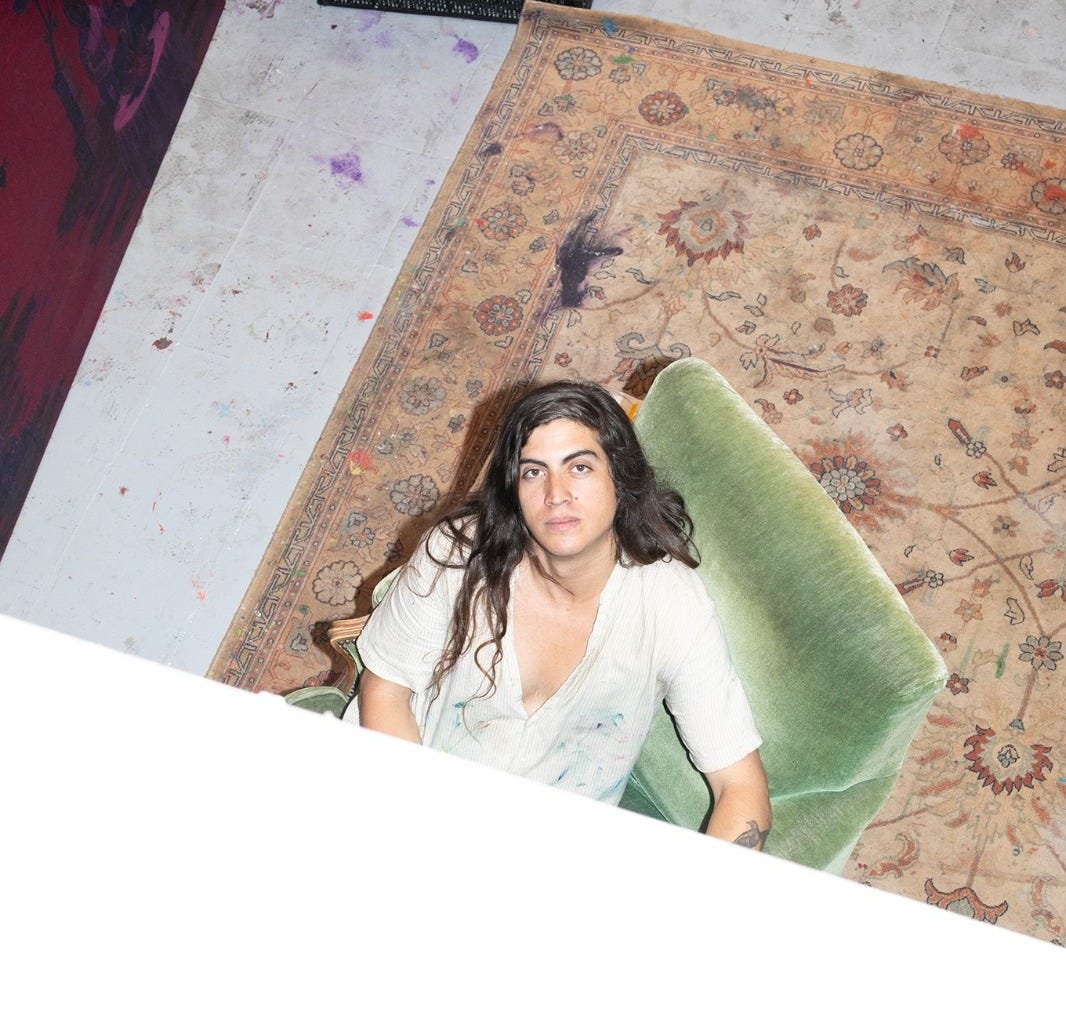
Daniel de la Barra’s work is grounded in painting as a form of historical and political reflection. Shaped outside academic institutions, his trajectory began as a copyist and has evolved into a practice informed by research and fieldwork, focused on landscape and its historical tensions.
In this conversation, Daniel reflects on his early years with painting, his interest in what he calls “wounded geographies,” and the projects shaping his present, including his participation in the Malta Biennale and his recent move to Paris.
Q: Could you tell us about yourself and your early years with painting?
I was lucky to start painting in oil at the age of six. My brother used to take me to a used book fair in downtown Lima, where we bought reproductions of Baroque paintings that I tried to replicate at home.
When I finished school, I moved to Spain with the intention of studying art, but it was a period of crisis and I had to work a lot in order to support myself there. I couldn’t attend university, but I found another school as a copyist at the Prado Museum. I spent practically all my free time in front of Velázquez, Sorolla, or Titian, learning from them directly.
Years later I discovered the contemporary art circuit and was accepted into a residency in Barcelona. There I learned a great deal by observing colleagues with more academic training and began to receive grants and awards that allowed me to link painting with a contemporary narrative.
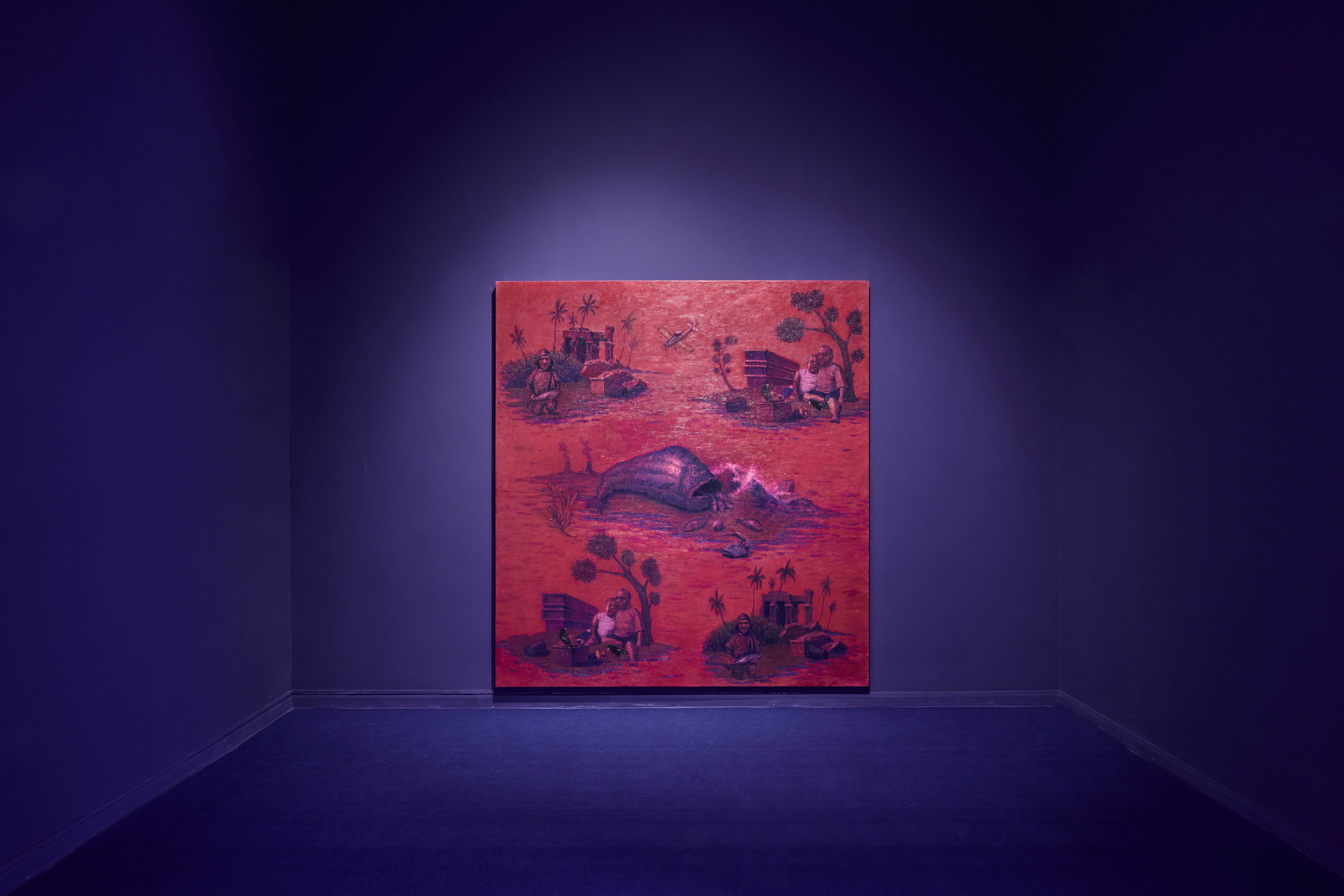
Q: In several projects you work with wounded geographies: from monoculture to colonial myths or the illusion of progress. What motivates your interest in addressing these realities through your practice?
My first years with painting were linked to going out on routes and painting nature without pretensions. Years later, already dedicated to art, I began to ask myself why those same landscapes that were a refuge in my childhood in Peru are territories subjected to brutal exploitation, with deep social and environmental consequences. They are spaces that are read solely through their productive utility.
Since then, I became interested in understanding what role images play in that operation, because they have always been at the service of political and economic power. The idea of landscape is born from data, measurements, and an extractive gaze founded alongside the colonies.
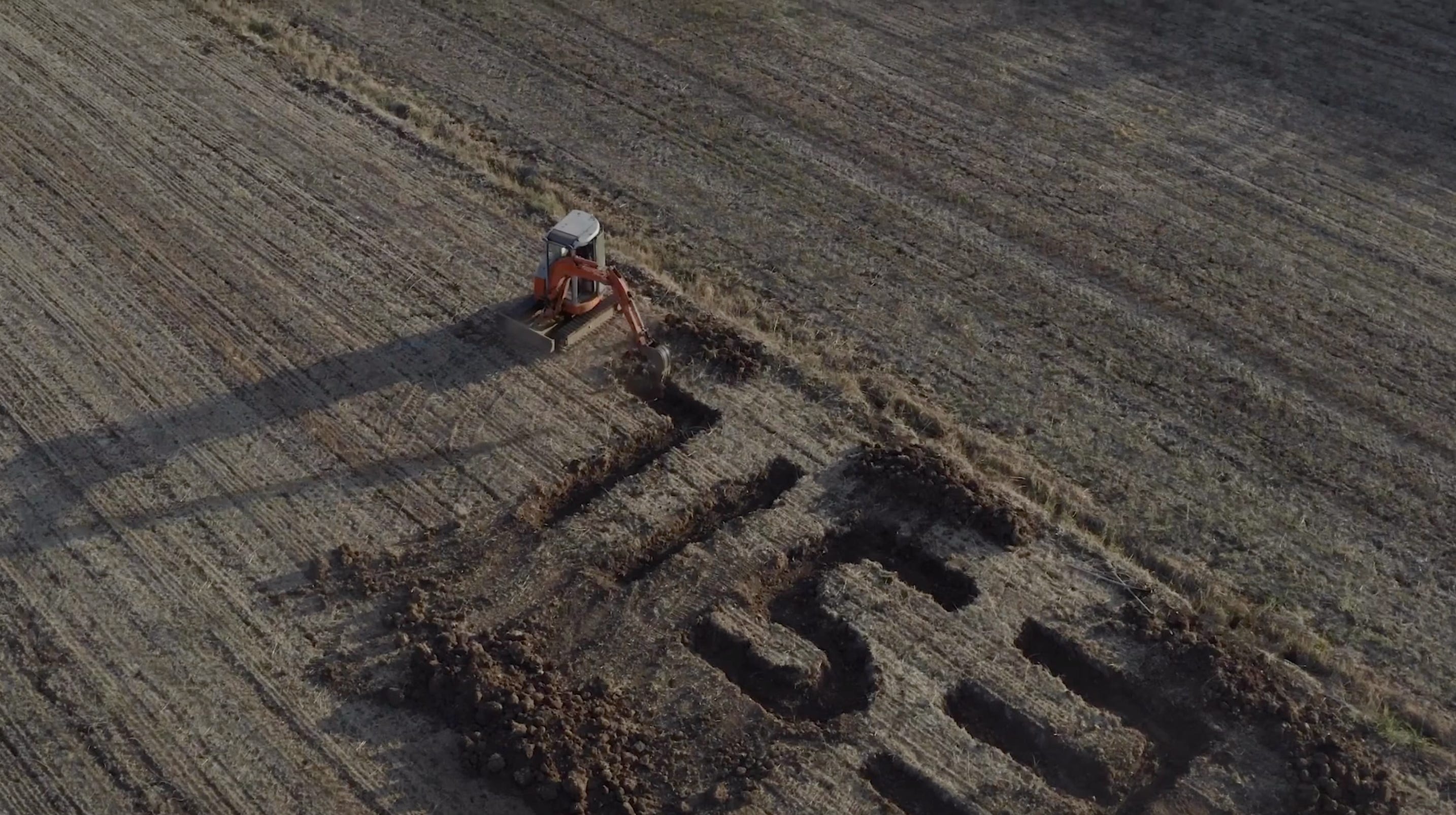
That is why I develop projects that begin with intense fieldwork in wounded territories. I seek to surround myself with many people and stories in order to give image to struggles, desires, and forms of resistance that are woven silently.
Q: Your work articulates a very clear political dimension and, at the same time, you have stated that the greatest power of art lies in its ability to imagine reality historically and politically. What place does the political occupy in your creative process, and when did you discover that imagination could become a central tool of your practice?
A few years ago, during a visit to my parents’ house in Peru, I found a sketchbook that I had completely forgotten. It was probably the oldest one I still have, dated 1997. What caught my attention was that it only had two themes: portraits of my dog sleeping and caricatures of politicians.
As a child, I was obsessed with watching the news and drawing those characters who irritated my father.
I feel that my work hasn’t changed that much since then. It stems from that deep need to understand how the same power that subjugates us and undermines us just keeps changing its mask. Over time, when I began moving within the contemporary art world, I understood that I could work with images loaded with symbols, tensions, and fables that questioned those hegemonic narratives. The fable, far from evading reality, allows for the opening of critical spaces from which to rewrite history, reveal what is hidden, and propose possible futures.
I am interested in the relationship between aesthetics and power, a relationship that has run through humanity since the Middle Ages. I study how images and their formal codes have functioned as devices of legitimation, and how those echoes still structure our present. I work as if history were a palimpsest in which multiple layers overlap, revealing the hierarchies and forces that organize the political, the economic, and the symbolic.
“I work as if history were a palimpsest in which multiple layers overlap, revealing the hierarchies and forces that organize the political, the economic, and the symbolic.”
Q: Next year you will participate in the Malta Biennale. What will you present there?
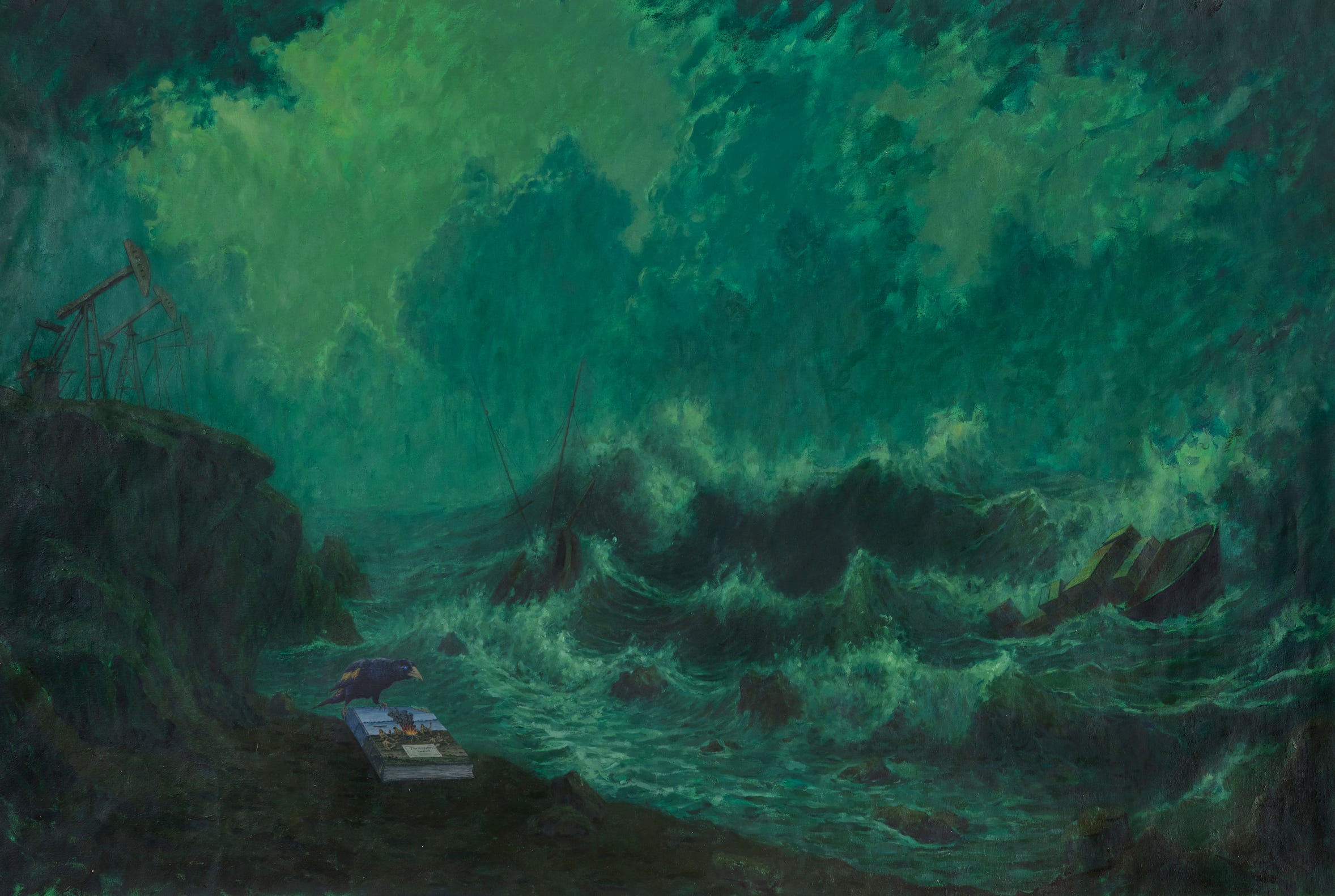
The project is titled They Don’t Know the Way and consists of an installation of large-scale paintings that ironize the codes of Romantic painting of sublime seas.
I am interested in how that exalted aesthetic concealed violences linked to trade, colonization, and war. The work addresses the idea of maritime blindness, a cultural and political device that reduces the sea to a romantic backdrop or an operational void. That gaze benefits states and corporations by sustaining the rhetoric of the free market, rendering invisible the layers of human and environmental exploitation that run through its waters.
The paintings function as an inversion of Dante’s inferno: a Mediterranean illuminated by propaganda, by surveillance, by the global economy.
It no longer appears as an idyllic landscape but as a space of historical frictions and resistances. Beneath the storm emerges the paradox of the sea as a completely illuminated hell.
Q: Between the Malta Biennale and your recent move to Paris, where do you feel your work is heading?
My work is shifting toward the exploration of myth, fiction, and imagination as spaces of resistance and as tools to rethink narratives.
Within the storm, art can be that small umbrella that allows us to look at the horizon clearly, from an intimate and sensitive place.
“Within the storm, art can be that small umbrella that allows us to look at the horizon clearly, from an intimate and sensitive place.”
Q: In an art world so marked by the market, what change would you like to see in the way works are created and circulated today?
I believe it is vital to distinguish between art and the market, between culture and spectacle. We have to learn to move through those worlds without compromising our principles or our honesty.
The role of those of us who create images and narratives is fundamental.
We have the responsibility to imagine more habitable and less hierarchical ways of life. I defend the importance of art charged with symbolic and political meaning, capable of opening alternative narratives that remind us that another world is possible.
To learn more about Daniel de la Barra, visit:
En el estudio con: Daniel de la Barra
La obra de Daniel de la Barra se sostiene en la pintura como una forma de reflexión histórica y política. Formado fuera de las instituciones académicas, su trayectoria comenzó como copista y ha derivado en una práctica atravesada por la investigación y el trabajo de campo, centrada en el paisaje y sus tensiones históricas.
En esta conversación, Daniel recorre sus primeros años con la pintura, su interés por lo que denomina “geografías heridas” y los proyectos que marcan su presente, como su participación en la Bienal de Malta y su reciente traslado a París.
Q: ¿Podrías contarnos sobre ti y tus primeros años con la pintura?
Tuve la suerte de empezar a pintar al óleo a los seis años. Mi hermano solía llevarme a una feria de libros usados en el centro de Lima, donde comprábamos láminas de pintura barroca que yo intentaba reproducir en casa. Cuando terminé el colegio me mudé a España con la intención de estudiar arte, pero era un periodo de crisis y tuve que trabajar mucho para poder sostenerme allí. No pude ir a la universidad, pero encontré otra escuela como copista del Museo del Prado. Pasaba prácticamente todo mi tiempo libre frente a Velázquez, Sorolla o Tiziano, aprendiendo de ellos de manera directa.
Años después descubrí el circuito del arte contemporáneo y fui aceptado en una residencia en Barcelona. Allí aprendí muchísimo observando a colegas con formaciones más académicas y empecé a obtener becas y premios que me permitieron vincular la pintura con una narrativa contemporánea.
Q: En varios proyectos trabajas sobre geografías heridas: del monocultivo a los mitos coloniales o la ilusión del progreso. ¿Qué motiva tu interés en abordar estas realidades desde tu práctica?
Mis primeros años con la pintura estaban ligados a salir a hacer rutas y pintar la naturaleza sin pretensiones. Años después, ya dedicado al arte, empecé a preguntarme por qué esos mismos paisajes que fueron un refugio en mi infancia en Perú son territorios sometidos a una explotación brutal, con profundas consecuencias sociales y ambientales. Son espacios que se leen únicamente desde su utilidad productiva.
Me interesé desde entonces en entender qué papel cumplen las imágenes en esa operación, porque siempre han estado al servicio del poder político y económico. La idea de paisaje nace de los datos, mediciones y de una mirada extractiva fundada con las colonias.
Por eso desarrollo proyectos que parten de un trabajo de campo intenso en territorios heridos. Busco acompañarme de muchas personas e historias para dar imagen a luchas, deseos y formas de resistencia que se tejen silenciosamente.
P: Tu obra articula una dimensión política muy clara y, al mismo tiempo, has afirmado que el mayor poder del arte reside en su capacidad de imaginar histórica y políticamente la realidad. ¿Qué lugar ocupa lo político en tu proceso creativo y cuándo descubriste que la imaginación podía convertirse en una herramienta central de tu práctica?
Hace unos años, durante una visita a la casa de mis padres en Perú, encontré un cuaderno de dibujo que había olvidado por completo. Era probablemente el más antiguo que conservo, fechado en 1997. Me llamó la atención que solo había dos temas: retratos de mi perro dormido y caricaturas de políticos. De niño me obsesionaba ver las noticias y dibujar a esos personajes que irritaban a mi padre.
Siento que mi trabajo no cambió tanto desde entonces. Parte de esa necesidad profunda de comprender cómo el mismo poder que nos somete y oprime solo va cambiando de máscara. Con el tiempo, cuando comencé a moverme en el arte contemporáneo, entendí que podía trabajar con imágenes cargadas de símbolos, tensiones y fábulas que cuestionaran esas narrativas hegemónicas. La fábula, lejos de evadir la realidad, permite abrir espacios críticos desde donde reescribir la historia, revelar lo oculto y plantear futuros posibles.
Me interesa la relación entre estética y poder, una relación que atraviesa la humanidad desde el medioevo. Estudio cómo las imágenes y sus códigos formales han funcionado como dispositivos de legitimación, y cómo esos ecos estructuran todavía nuestro presente. Trabajo como si la historia fuera un palimpsesto donde múltiples capas se superponen, revelando las jerarquías y fuerzas que organizan lo político, lo económico y lo simbólico.
“Trabajo como si la historia fuera un palimpsesto donde múltiples capas se superponen, revelando las jerarquías y fuerzas que organizan lo político, lo económico y lo simbólico.”
P: El próximo año participarás en la Bienal de Malta. ¿Qué presentarás allí?
El proyecto se titula They Don’t Know the Way y consiste en una instalación de pinturas de gran formato que ironizan los códigos de la pintura romántica de mares sublimes. Me interesa cómo esa estética exaltada ocultaba violencias vinculadas al comercio, la colonización y la guerra.
La obra aborda la idea de la ceguera marítima, un dispositivo cultural y político que reduce el mar a un decorado romántico o vacío operacional. Esa mirada beneficia a estados y corporaciones al sostener la retórica del libre mercado, invisibilizando las capas de explotación humana y ambiental que atraviesan sus aguas.
Las pinturas funcionan como una inversión del infierno dantesco: un Mediterráneo iluminado por la propaganda, por la vigilancia, por la economía global. Ya no aparece como un paisaje idílico sino como un espacio de fricciones históricas y resistencias. Bajo la tormenta aparece la paradoja del mar como un infierno completamente iluminado.
P: Entre la Bienal de Malta y tu reciente mudanza a París, ¿hacia dónde sientes que se está moviendo tu obra?
Mi trabajo se está desplazando hacia la exploración del mito, la ficción y la imaginación como espacios de resistencia y como herramientas para repensar narrativas. Dentro de la tormenta, el arte puede ser ese pequeño paraguas que nos permite mirar el horizonte con claridad, desde un lugar íntimo y sensible.
“Dentro de la tormenta, el arte puede ser ese pequeño paraguas que nos permite mirar el horizonte con claridad, desde un lugar íntimo y sensible.”
P: En un mundo del arte tan marcado por el mercado, ¿qué cambio te gustaría ver en la forma en que se crean y circulan las obras hoy?
Creo que es vital distinguir entre arte y mercado, entre cultura y espectáculo. Tenemos que aprender a transitar esos mundos sin comprometer nuestros principios ni nuestra honestidad.
El rol de quienes creamos imágenes y narrativas es fundamental. Tenemos la responsabilidad de imaginar formas de vida más habitables y menos jerárquicas. Defiendo la importancia del arte cargado de significado simbólico y político, capaz de abrir relatos alternativos que nos recuerdan que otro mundo es posible.
Para saber más sobre Daniel de la Barra, visita:
Estoy fascinada x su obra Daniel!
Thanks for introducing me to Daniel de la Barra. The two “cacique” works shown in the article are impressive