


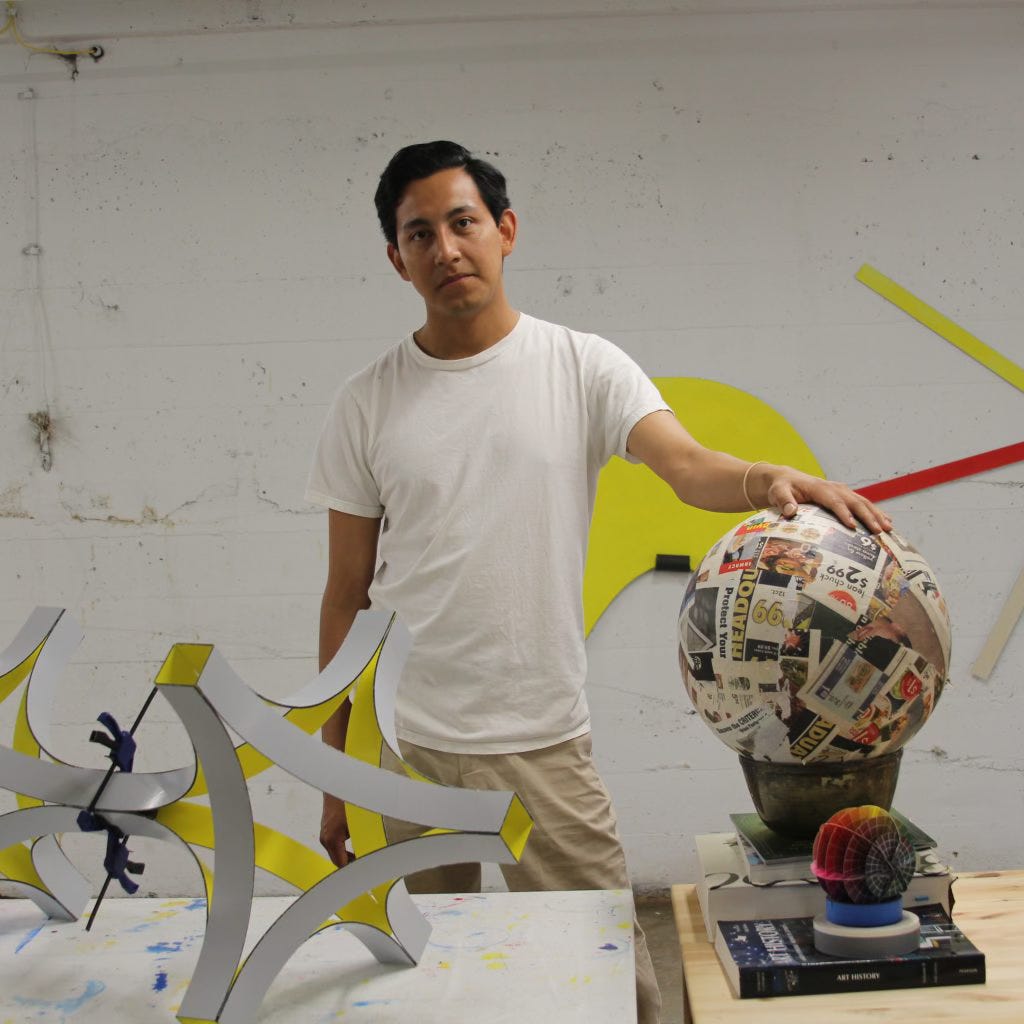
César López is a Guatemalan artist whose practice explores geography, migration, and identity through sculptures made from industrial materials. His experience as an immigrant in the United States has shaped his work and his interest in displacement and distance.
In this conversation with Art in Latin America, López discusses how his personal history informs his practice, his interest in the Kaqchikel language and Maya culture, and the importance of making art accessible to audiences beyond institutional spaces.
Support Art in Latin America. Unlock exclusive benefits.
Geography appears constantly in your work: through maps, globes, flags, and, more recently, sculptures. Where does this interest come from?
CL: It comes from my own experience. For me, geography has never been simply something I study through my work; it touches practically every aspect of my life. I come from Guatemala, but my mother, my sister, and I immigrated to the United States in 2001. I didn’t have official documents until 2012.
When you’re Latino in the United States, one of the questions you constantly hear is, “Where are you from?” Everything is determined, in one way or another, by where you were born, where you are, and what papers you have.
When I started making art, it was natural for all of that to enter my practice. There are many artists, both in Latin America and across its diasporas, who explore geography from different perspectives. In my case, it has to do with having crossed a border and understanding that this experience affects every aspect of your life. It’s something you can’t ignore.
“For me, geography has never been simply something I study through my work; it touches practically every aspect of my life.”
In recent years, you’ve increasingly worked with materials such as aluminum and various types of hardware. How did you come to work with these materials?
CL: Again, it has to do with my own experience. My use of these materials comes from thinking about the industrial spaces where people like me have been able to find work. When you don’t have papers in the United States, you often end up working under another name, with a kind of second identity. Much of the work available to people who arrive under those circumstances is in industrial settings.
I worked in places like meat-processing plants, cutting chicken. These are places where everything is made of metal; it feels like you’re inside a giant refrigerator. That was entirely my world at the time, and it’s still the reality for so many people today.
Of course, in the United States, there’s an entire history of Minimalism and industrial sculpture, particularly in New York. But you can also think, for example, of a Latin American artist like Edgar Negret. These kinds of structures and materials appear in different art histories and in different places.
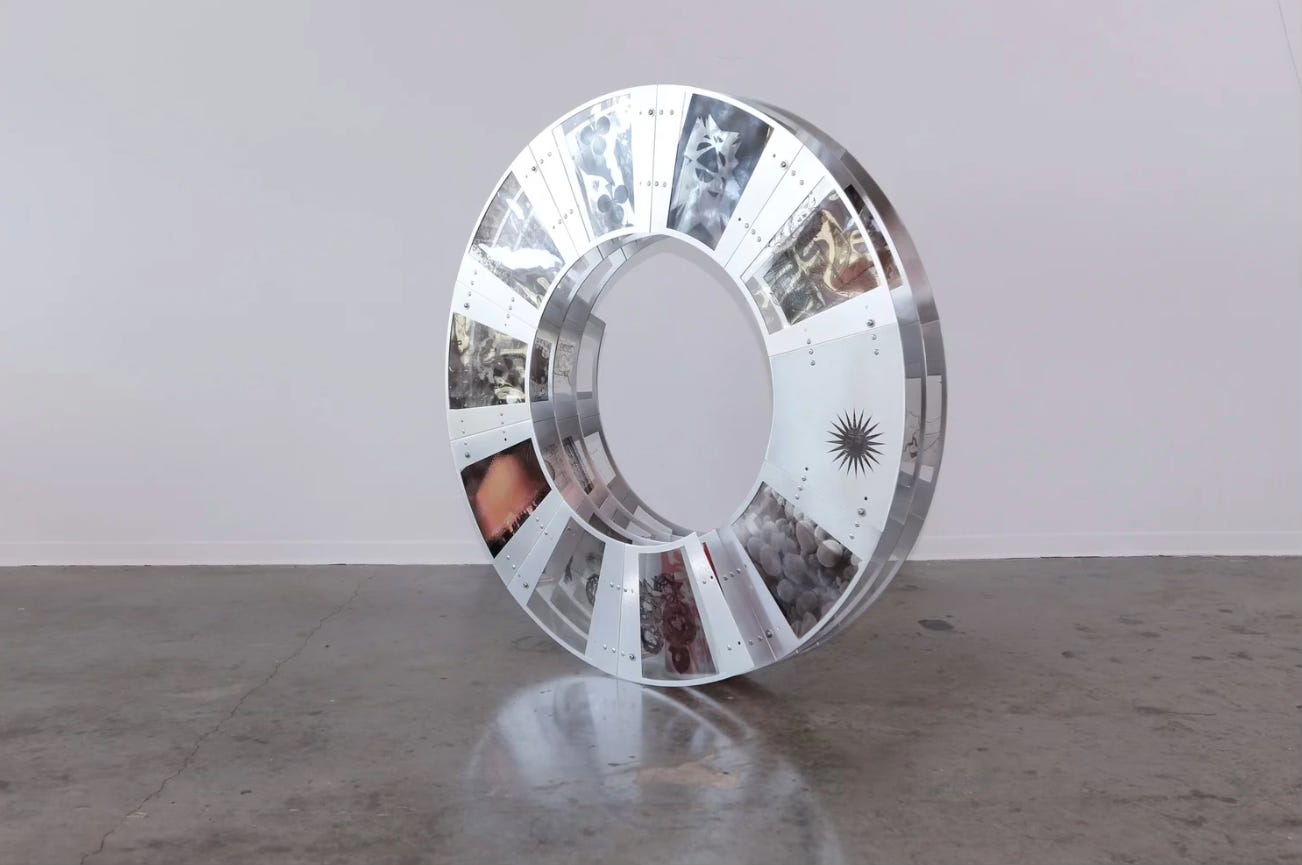
“My use of these materials comes from thinking about the industrial spaces where people like me have been able to find work. When you don’t have papers in the United States, you often end up working under another name, with a kind of second identity. Much of the work available to people who arrive under those circumstances is in industrial settings. I worked in places like meat-processing plants, cutting chicken. These are places where everything is made of metal; it feels like you’re inside a giant refrigerator. That was entirely my world at the time, and it’s still the reality for so many people today.”
Your sculptures often repeat certain forms. What role does repetition play in your work?
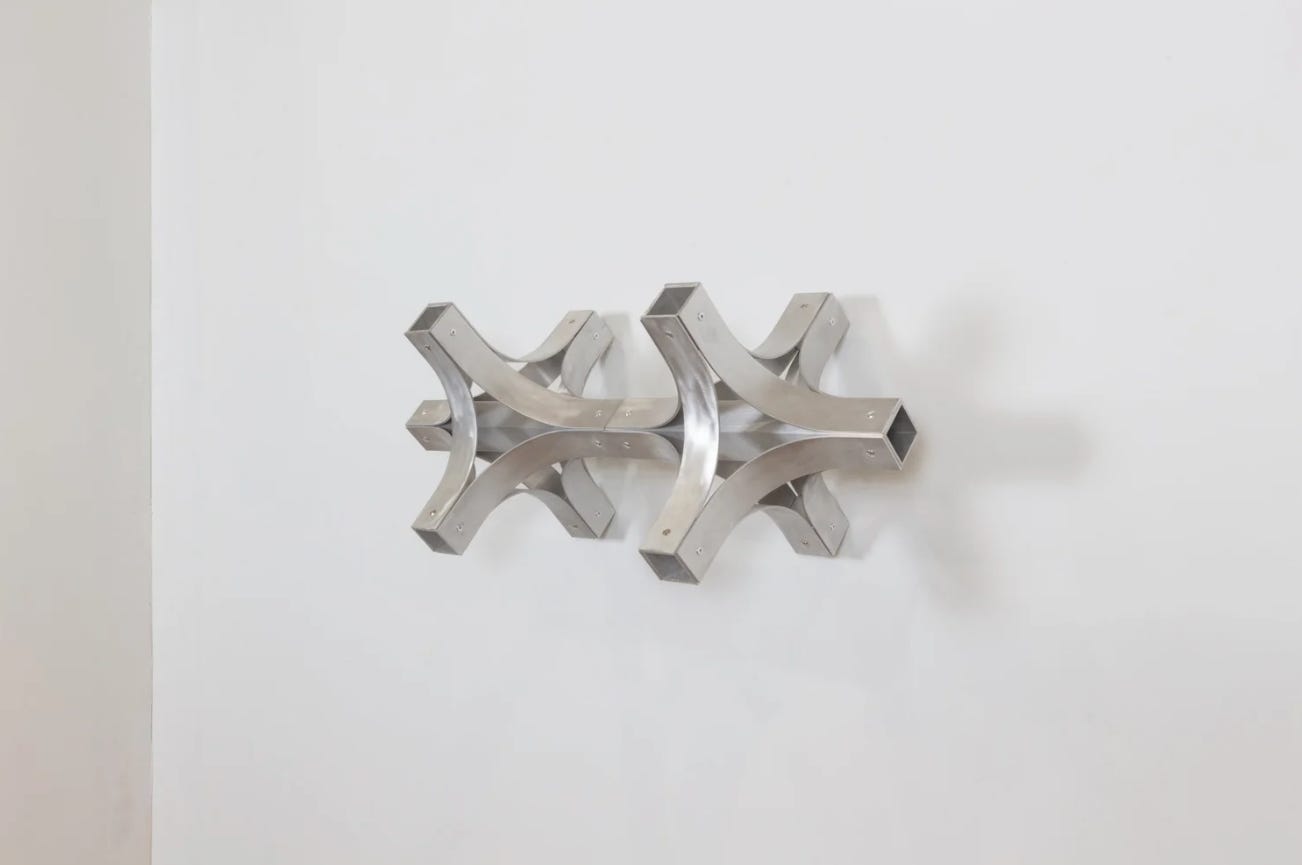
CL: My earlier sculptures stem from my interest in the curvature of the planet. I think of a form in terms of a point A and a point B. We come back again to that question: Where are you from, and where are you now? Someone might say, “I’m from there, but I’m here,” or “I’m going there from here.”
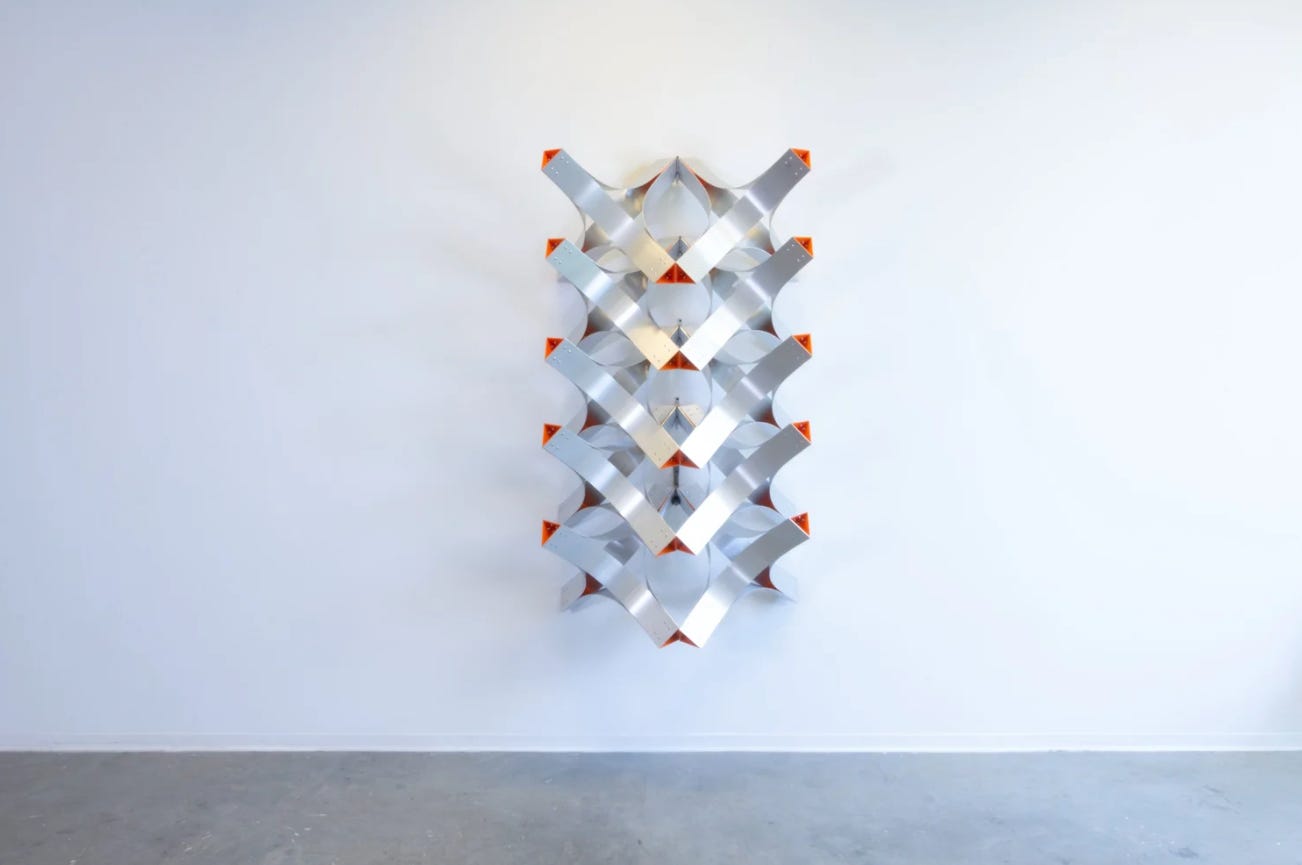
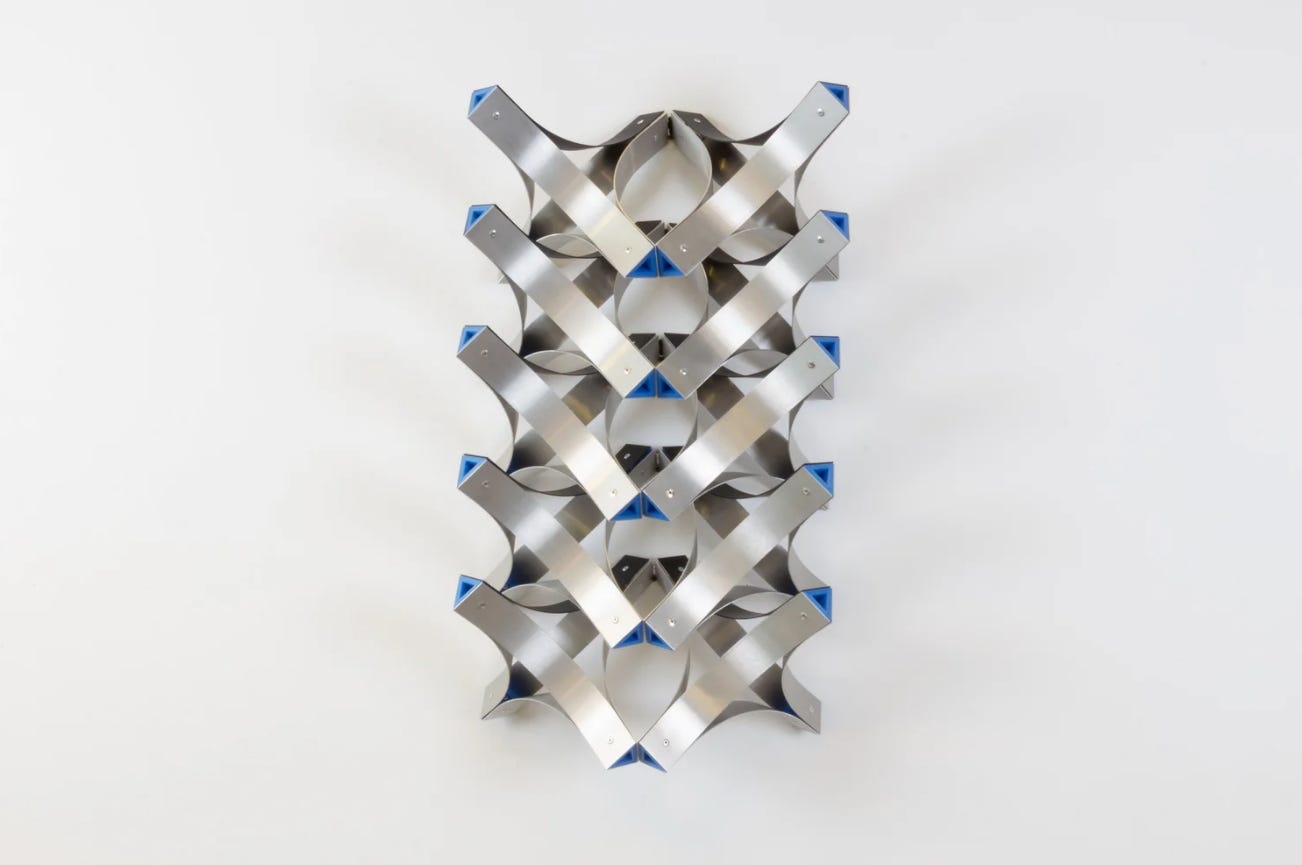
What I’m trying to articulate through repetition is an accumulation of distances. Each segment of these works measures one foot [approximately 30 centimeters]. So, as I produce more sculptures, those measurements begin to accumulate into a real distance.
From the outside, you might simply see a repeated form, but for me, there’s an internal record of distance. I’m interested in the idea that a structure can contain twenty linear feet, then a hundred, then a hundred and fifty. It’s a way of materializing the journey
“My earlier sculptures stem from my interest in the curvature of the planet. I think of a form in terms of a point A and a point B…From the outside, you might simply see a repeated form, but for me, there’s an internal record of distance.”
Would you eventually like to mark a milestone when that accumulated distance reaches a specific measurement?
CL: Yes. I’m working on larger pieces, and I’m waiting for the right opportunity to articulate that idea more explicitly. I’d like to reach a certain point, perhaps a hundred and fifty feet or some other distance, and be able to mark it.
I don’t know if I’ll ever reach a mile. Maybe it’ll take me ten years. But I’m interested in there being a moment when I can say: We’ve reached a mile, or a kilometer.
Beyond these ideas of distance and displacement, what is informing your work at the moment?
CL: An important part of it has to do with Guatemala. Because of my immigration status in the United States, I haven’t been able to leave the country for a very long time. Sometimes I think about the idea of “the golden cage,” as in the song by Los Tigres del Norte: being here but not being able to return.
That’s why I’ve started studying more about the Maya in Guatemala. Before coming to the United States, we lived in a village outside a city. The way my grandparents and the people in those communities live is completely different from the way I live now.
I’m trying to educate myself about Kaqchikel, the language my grandmother speaks, but also about the stories that exist within that language. My mother and her sister speak it with each other, and they recognize that there are stories that only exist or are passed down in particular ways within that language. For me, studying it is a way of accessing another world.
“Sometimes I think about the idea of “the golden cage,” as in the song by Los Tigres del Norte: being here but not being able to return.”
Your work has entered new institutional contexts, through exhibitions and museum acquisitions. Has this changed the way you think about your practice?
CL: Yes, although I think change is normal. If you look at my work from a few years ago, there were more globes, paintings, and flags; then came the sculptures. Directions change.
Entering the museum circuit also means that people start to recognize you for certain types of work. That’s part of becoming a professional artist. Sometimes people approach you because of something specific they already know about your practice.
But I’d like to have more opportunities to speak with artists, gallerists, and curators who have strong connections to Guatemala. I’m in a situation where I can’t travel to the country, so I want to get closer to it, but my access is still limited.
For several years, you also organized projects aimed at increasing the visibility of Latin American artists, particularly through La Onda. How did that project come about?
CL: There’s a significant Latino community in Kansas City, but the institutions, galleries, and discourse surrounding Latino art often don’t reach a very specific level. Everything ends up being too general.
A colleague, Kiki, and I started by asking ourselves how we could create more opportunities for exhibitions featuring artists from Latin America. One of the problems was precisely that generalization: “Here are the Latino artists,” and then everything was reduced to certain moments or images, such as Día de Muertos. It never went any deeper.
We decided to organize exhibitions featuring ten different artists each time. We ended up putting together around ten or twelve shows over three years, one every two or three months. For now, there are no plans to continue the project, but the desire is still there.
Looking ahead, what new questions are you beginning to explore?
CL: I’m interested in better understanding objects from Guatemala and the Maya world, but also how they function when they enter a museum. I’ve been thinking a lot about education: who is responsible for producing knowledge about an object, how that information is used, and who it’s intended for.
Sometimes I read an essay by an art historian and find it incredible, but I also think: How can we communicate these ideas in a way that isn’t intended exclusively for people who already belong to the art world? How can we create an educational program for a different audience? Because the people working in those industrial plants, the people cutting chicken, probably aren’t reading the essay written by a particular curator. I’m interested in thinking about how art and education can reach them, too.
“I’ve been thinking a lot about education: who is responsible for producing knowledge about an object, how that information is used, and who it’s intended for…Because the people working in those industrial plants, the people cutting chicken, probably aren’t reading the essay written by a particular curator. I’m interested in thinking about how art and education can reach them, too.”
To learn more about César López, visit:
In the Studio with: César López
César López es un artista guatemalteco cuya práctica explora la geografía, la migración y la identidad a través de esculturas realizadas con materiales industriales. Su experiencia migratoria en Estados Unidos ha marcado su trabajo y su interés por el desplazamiento y la distancia.
En esta conversación con Art in Latin America, López habla sobre la influencia de su historia personal en su obra, su interés por la lengua kaqchikel y la cultura maya, y la importancia de acercar el arte a públicos fuera de los espacios institucionales.
Apoya a Art in Latin America. Accede a beneficios exclusivos.
La geografía aparece constantemente en tu trabajo: a través de mapas, globos, banderas y, más recientemente, esculturas. ¿De dónde viene ese interés?
CL: Viene de mi propia experiencia. La geografía, para mí, nunca ha sido solamente algo que estudio a través de mis obras, sino que toca prácticamente todos los aspectos de mi vida. Yo vengo de Guatemala, pero mi mamá, mi hermana y yo emigramos a Estados Unidos en 2001. No tuve documentos oficiales hasta el 2012.
Cuando eres latino en Estados Unidos, una de las preguntas que escuchas constantemente es: “¿De dónde eres?”. Todo está determinado de alguna manera por dónde naciste, dónde estás y qué papeles tienes.
Cuando empecé a hacer arte, fue natural que todo eso entrara en mi práctica. Hay muchos artistas, tanto en América Latina como en sus diásporas, que investigan la geografía desde lugares distintos. En mi caso, tiene que ver con haber cruzado una frontera y con entender que esa experiencia afecta todos los sectores de tu vida. Es algo que no puedes ignorar.
“La geografía, para mí, nunca ha sido solamente algo que estudio a través de mis obras, sino que toca prácticamente todos los aspectos de mi vida.”
En los últimos años has trabajado cada vez más con materiales como el aluminio y distintos elementos de hardware. ¿Cómo llegaste a esos materiales?
CL: Tiene que ver otra vez con mi experiencia. Mi uso de estos materiales viene de pensar en los espacios industriales donde personas como yo hemos tenido acceso al trabajo. Cuando no tienes papeles en Estados Unidos, muchas veces terminas trabajando con otro nombre, bajo una especie de segunda identidad. Buena parte del trabajo disponible para las personas que llegan en esas condiciones se encuentra en espacios industriales.
Yo trabajé en lugares como fábricas de procesamiento de carne, cortando pollo. Son lugares donde todo está hecho de metal; parece que estás dentro de un refrigerador gigante. Ese era completamente mi mundo en ese momento, y sigue siendo la realidad de muchísima gente hoy en día.
Claro que en Estados Unidos existe toda una historia del minimalismo y de la escultura industrial, particularmente en Nueva York. Pero también puedes pensar, por ejemplo, en un artista latinoamericano como Edgar Negret. Este tipo de estructuras y materiales aparecen en distintas historias del arte y en diferentes lugares.
“Mi uso de estos materiales viene de pensar en los espacios industriales donde personas como yo hemos tenido acceso al trabajo. Cuando no tienes papeles en Estados Unidos, muchas veces terminas trabajando con otro nombre, bajo una especie de segunda identidad. Buena parte del trabajo disponible para las personas que llegan en esas condiciones se encuentra en espacios industriales. Yo trabajé en lugares como fábricas de procesamiento de carne, cortando pollo. Son lugares donde todo está hecho de metal; parece que estás dentro de un refrigerador gigante. Ese era completamente mi mundo en ese momento, y sigue siendo la realidad de muchísima gente hoy en día.”
Tus esculturas suelen repetir determinadas formas. ¿Qué papel juega esa repetición?
CL: Las esculturas más antiguas parten de mi interés por la curvatura del planeta. Pienso una forma como un punto A y un punto B.
Volvemos otra vez a esa pregunta: ¿de dónde eres y dónde estás? Alguien puede decir: “Soy de allá, pero estoy acá”, o “voy para allá desde aquí”.
Lo que intento articular mediante la repetición es una acumulación de distancias. Cada uno de los segmentos de estas obras mide un pie [aproximadamente 30 centímetros]. Entonces, a medida que produzco más esculturas, esas medidas empiezan a acumular una distancia real.
Desde afuera quizá simplemente se ve una forma repetida, pero para mí internamente existe ese registro de distancia. Me interesa pensar que una estructura pueda contener veinte pies lineales, luego cien, luego ciento cincuenta. Es una forma de materializar el recorrido.
“Las esculturas más antiguas parten de mi interés por la curvatura del planeta. Pienso una forma como un punto A y un punto B…Desde afuera quizá simplemente se ve una forma repetida, pero para mí internamente existe ese registro de distancia.”
¿Te gustaría eventualmente marcar algún hito cuando esa distancia acumulada alcance una medida concreta?
CL: Sí. Estoy trabajando en piezas más grandes y estoy esperando la oportunidad correcta para poder articular esa idea de manera más explícita. Me gustaría llegar a un punto, quizá ciento cincuenta pies o alguna otra distancia, para poder señalarlo.
No sé si alguna vez llegaré a una milla. Tal vez me tome diez años. Pero sí me interesa que exista un momento en que pueda decir: llegamos a una milla, o a un kilómetro.
Además de estas ideas sobre distancia y desplazamiento, ¿qué está informando tu trabajo actualmente?
CL: Una parte importante tiene que ver con Guatemala. Por mi situación migratoria en Estados Unidos, durante mucho tiempo no he podido salir del país. A veces pienso en esa idea de “la jaula de oro”, como en la canción de Los Tigres del Norte: estar aquí, pero no poder regresar.
Por eso he empezado a estudiar más sobre los mayas en Guatemala. Antes de venir a Estados Unidos vivíamos en una aldea, fuera de una ciudad. La manera de vivir de mis abuelos y de la gente de esas comunidades es completamente diferente de mi manera de vivir actualmente.
Estoy intentando educarme en kaqchikel, que es la lengua que habla mi abuela, pero también en las historias que existen dentro de esa lengua. Mi mamá y su hermana hablan entre ellas y reconocen que hay historias que solamente existen o se transmiten de determinadas maneras dentro de ese idioma. Para mí, estudiarlo es una forma de acceder a otro mundo.
“A veces pienso en esa idea de “la jaula de oro”, como en la canción de Los Tigres del Norte: estar aquí, pero no poder regresar.”
Tu obra ha entrado en nuevos contextos institucionales, con exposiciones y adquisiciones de museos. ¿Eso ha cambiado la forma en que piensas tu práctica?
CL: Sí, aunque creo que los cambios son normales. Si miras mi trabajo de hace algunos años, había más globos, pinturas o banderas; después llegaron las esculturas. Las direcciones cambian.
Entrar en el circuito de los museos también significa que la gente empieza a reconocerte por ciertos tipos de obra. Eso forma parte de convertirse en un artista profesional. A veces te buscan por algo específico que ya conocen de tu trabajo.
Pero me gustaría tener más oportunidades de conversar con artistas, galeristas y curadores que estén realmente relacionados con Guatemala. Estoy en una situación en la que no puedo ir al país, así que deseo acercarme más, pero mi acceso todavía es limitado.
Durante varios años también organizaste proyectos para aumentar la visibilidad de artistas latinoamericanos, particularmente a través de La Onda. ¿Cómo surgió ese proyecto?
CL: En Kansas City hay una comunidad latina importante, pero las instituciones, las galerías y el discurso alrededor del arte latino muchas veces no llegan a un nivel muy específico. Todo termina siendo demasiado general.
Una colega, Kiki, y yo empezamos preguntándonos cómo podíamos conseguir que hubiera más exposiciones de artistas de América Latina. Uno de los problemas era precisamente esa generalización: “Aquí están los artistas latinos”, y luego todo se reducía a determinados momentos o imágenes, por ejemplo el Día de Muertos. Nunca se llegaba a algo más profundo.
Decidimos hacer exposiciones con diez artistas diferentes cada vez. Terminamos organizando alrededor de diez o doce muestras durante tres años, una cada dos o tres meses. Por ahora no hay planes para continuar el proyecto, pero sí hay ganas.
Mirando hacia adelante, ¿qué nuevas preguntas estás empezando a explorar?
CL: Me interesa entender mejor los objetos de Guatemala y del mundo maya, pero también cómo funcionan cuando entran en un museo. Estoy pensando mucho en la educación: quién es responsable de producir el conocimiento alrededor de un objeto, cómo se utiliza esa información y para quién está hecha.
A veces leo un ensayo de un historiador del arte y me parece increíble, pero también pienso: ¿Cómo podemos comunicar estas ideas de una manera que no esté hecha solamente para personas que ya pertenecen al mundo del arte? ¿Cómo podemos crear un programa educativo para una audiencia distinta? Porque la gente que está trabajando en esas fábricas industriales, la gente que está cortando pollo, probablemente no está leyendo el ensayo que escribió determinado curador. Me interesa pensar cómo el arte y la educación pueden llegar también a ellos.
“Estoy pensando mucho en la educación: quién es responsable de producir el conocimiento alrededor de un objeto, cómo se utiliza esa información y para quién está hecha…Porque la gente que está trabajando en esas fábricas industriales, la gente que está cortando pollo, probablemente no está leyendo el ensayo que escribió determinado curador. Me interesa pensar cómo el arte y la educación pueden llegar también a ellos.”
Para saber más sobre César López, visita: