


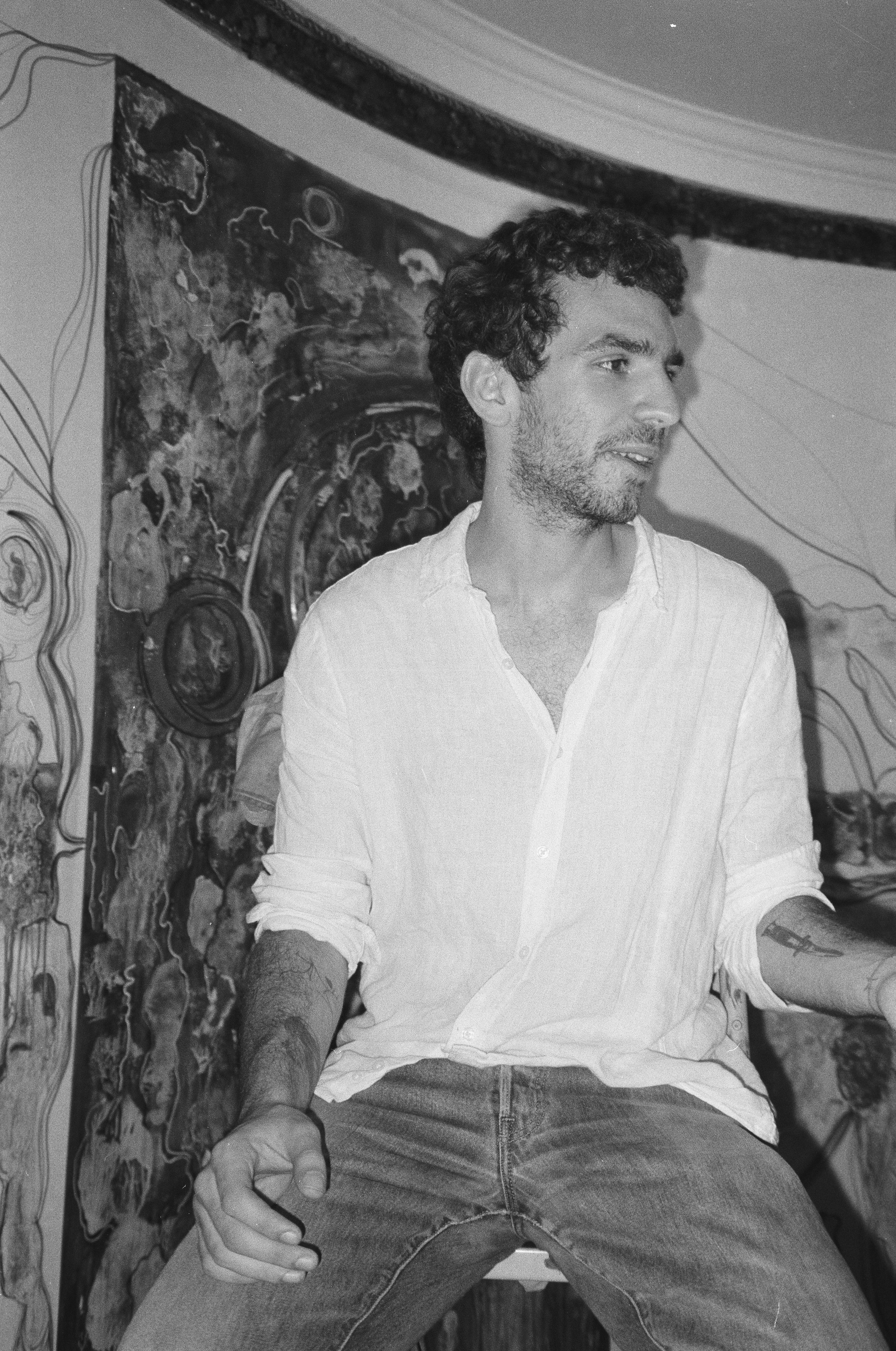
Benito Ekmekdjian is an Argentine artist currently based in the United Kingdom. While his practice is grounded in painting, it also expands through text, installation, and printmaking, often returning to questions of intimacy. Across his work, personal experience becomes a point of departure for constructing images that feel at once vulnerable and confrontational, charged with emotional intensity.
In this interview, Benito reflects on his beginnings, his move to London from Buenos Aires, and the shift it provoked in his practice. He speaks about the evolving relationship he maintains with painting and the role of other mediums in his work.
Benito Ekmekdjian is one of four artists participating in our first exhibition in London, WHAT WE TAKE, co-curated by Art in Latin America and CM Art Advisory, at Pipeline. The show remains on view through March 28.
How did your relationship with art begin, and at what moment did you understand that it could become a central practice in your life?
BE: At five years old, my parents asked me what I wanted to do for a living, and I answered: I want to live from my ideas. Even so, my relationship began with graffiti; I was young, I was nine or ten years old and I was obsessed with street aesthetics, as well as highly motivated to practice by the stories of Spanish-speaking rappers such as Dano, T&K, and Ingrávidos Squad. There was also something about the risk: of being caught painting, of the piece turning out badly, and of technical clumsiness. I stayed with this for practically all of secondary school, but at 17 I had an epiphany in which I understood that my ideas and my inner worlds had an opportunity to materialize, and I began to give them form seriously through painting; and since then I have not stopped, not a single day.
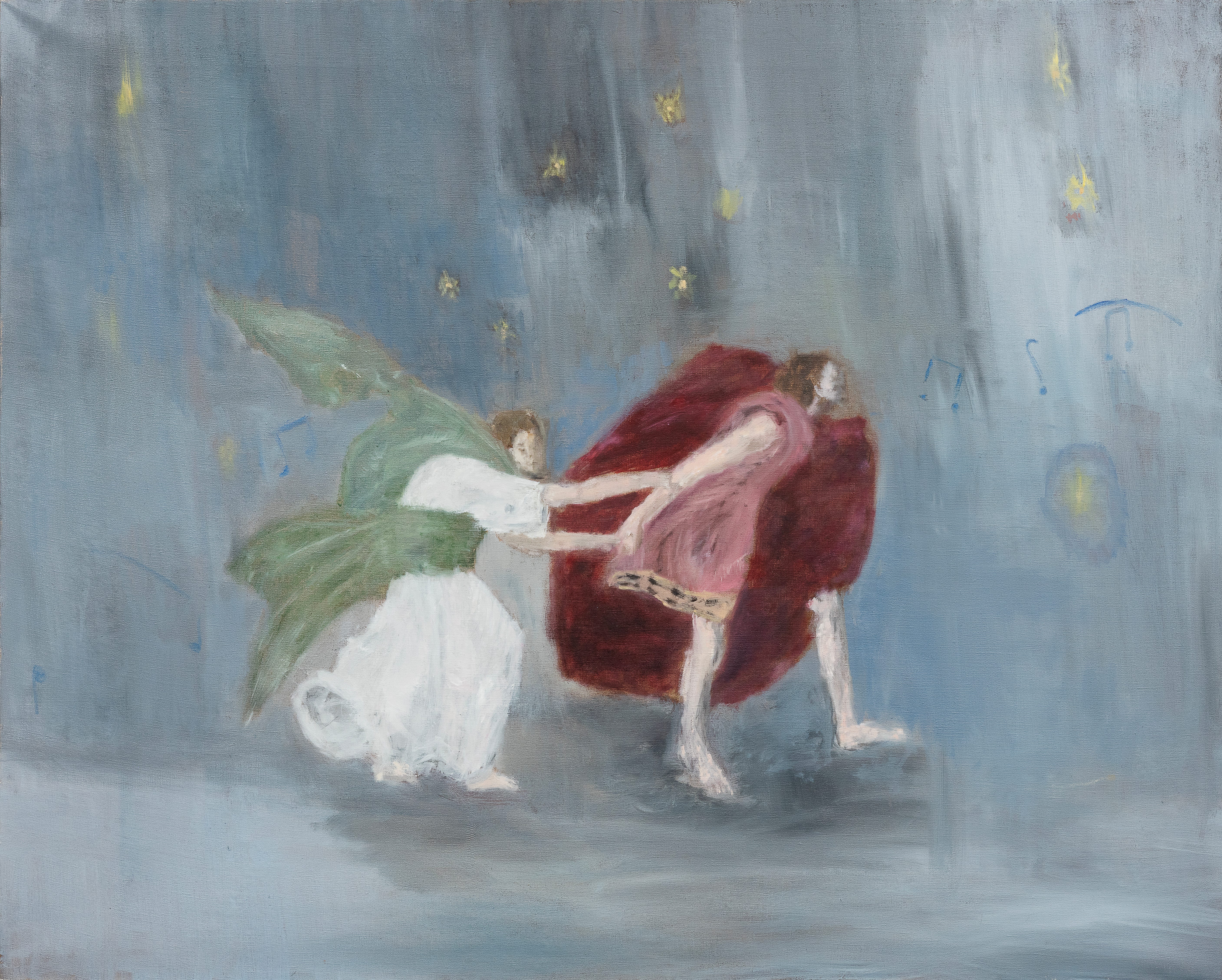
You trained between Argentina and England. How do those two contexts dialogue in your way of thinking and making work?
BE: I don’t think there is an active dialogue between them. The change that moving to England generated in me was violent; in Argentina I was filled with a divine innocence that allowed me to move through this world without much awareness of what I was doing. In London, you either adapt or the city spits you out; I have already lived formative human situations that made me understand that here it is different. Maturity was immediate, both in the body of work and in me as a person.
Even so, both were biomes for my progression. I believe that the naivety I had when I lived in Buenos Aires led me to experiment without any judgment, a much healthier practice. I even exhibited quite a lot, sold work and, when I arrived in England, I assumed that life would be the same. The slap was huge: I understood that in order to be part of a circuit like this I needed to refine my voice, my technical abilities, and my capacity to conceptualize my work. I also understood that no one was going to come looking for me, that it was my responsibility to seek what I wanted and, although the experience has been touching all possible emotions, I am living in the city where my dreams happen, and will happen.
“In London, you either adapt or the city spits you out … although the experience has been touching all possible emotions, I am living in the city where my dreams happen, and will happen.”
In your work, literary fragments, personal experiences, and references to other artists converge. How do you construct that dialogue between different materials within the same painting?
BE: I don’t know if they are necessarily “different materials”; in fact, I believe these same things come from the same origin, I am simply fragmenting what is my language into concrete facets.
The construction of the dialogue happens pre-pictorially or during the making of the painting. Some of the writings within my paintings are thoughts I am having at the moment, or a song that caught my attention. Pictorial construction, for me, is an enigma; linear paintings, which begin at a point and travel in a straight line toward the conclusion of the image, are the weakest in my body of work. Also, many times, painting precedes life; these connections have revealed things to me that only made sense much later. And again, the sense of risk; there is something rich in consummating a desire to connect two things that perhaps are not related, that if they took human form would hate each other. Also, irresponsibly, I try not to understand too much. I really like innocence; sometimes I feel I have none left, the world tends to prove me wrong.
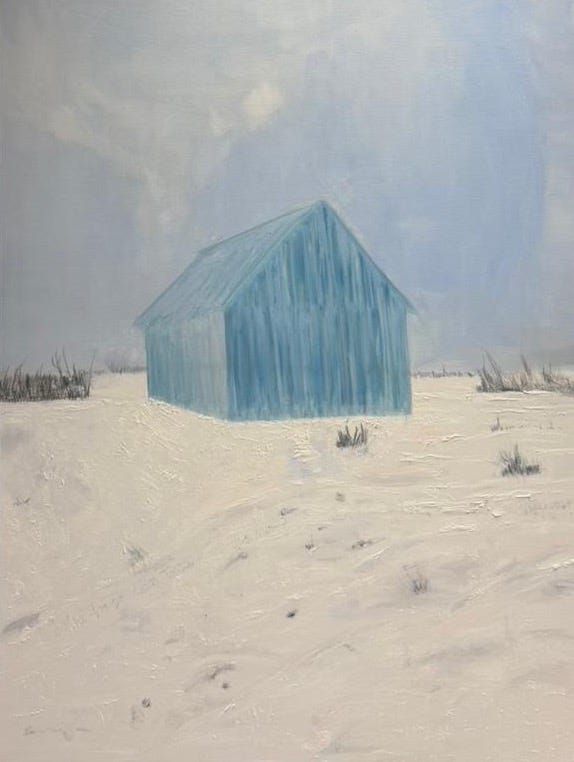
What references feel closest to your practice today?
BE: Lately I have been embracing theatre and cinema a lot; I try to go to the cinema several times a week and I am in the process of going deeper into theatrical practice, mainly directing. Amusingly, it is the path of many contemporary directors, such as Romeo Castelucci. From music I steal many textures, or sensations that I want to evoke: the glamorous sadness of Lou Reed, the dreamlike and “blue” quality of some songs by Gustavo Cerati in his solo work, and the taurine and sexual drive of someone like Prince. I keep my favorite painters increasingly at a distance; I think it is because I saturated them for so long that they have already become friends. I rely on them when I need resolution, but it is time to leave them in peace a bit and expand my inner language. Among them are: Philip Guston, Titian, Auerbach, Bacon, Freud, Guillermo Kuitca, Cy Twombly, among others.
I also think there may have been a kind of death of the idol or demystification. As a teenager I was obsessed; they were superheroes with capes, today they are peers I care about deeply. I am also a fan of my friends and my family: Harold Reed, Francisca Rey, my mother. From every person I interact with, I take something that I later use in my work, from a kiss to a phrase to an image. Francis said it: “Everything I do, goes into painting.”
“I keep my favorite painters increasingly at a distance; I think it is because I saturated them for so long that they have already become friends.”
How does a work usually begin in your studio?
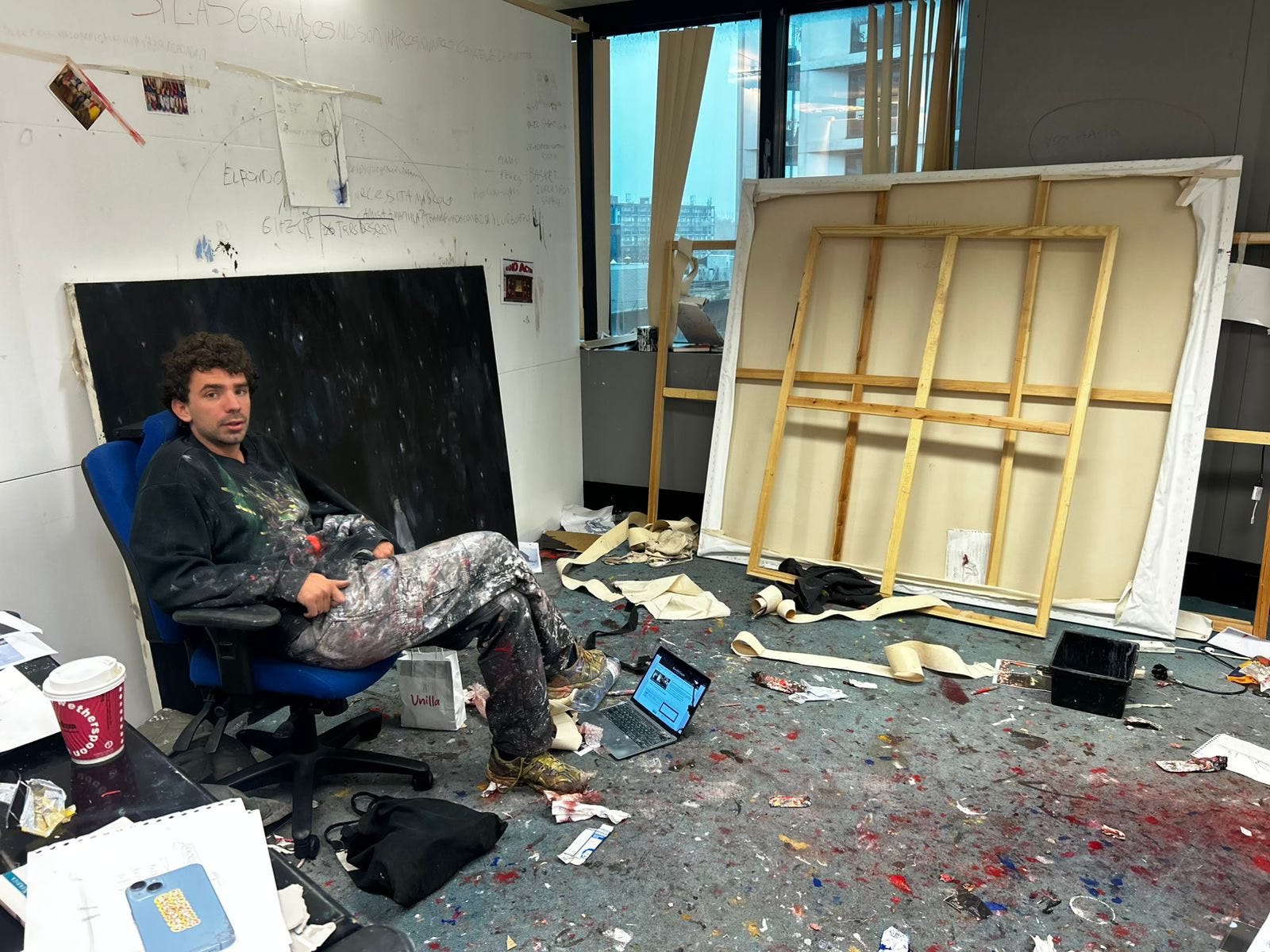
BE: There is always a large, encompassing topic that I start with; the latest were farewells and romantic relationships. Then I begin to collect archival images and to guide my readings in those directions. I think somewhat in series, in how many works I want to dedicate to the topic and in what way I am going to approach them. Then I spread my archive over the piano in my studio (which I don’t know how to use), I put on music in line with the theme and I begin to paint. The reality is that things always get out of control, they escape from the walls I try to put on them and the work imposes itself over the idea all the time. The subsequent work is to analyze and try to understand a bit more what I was really getting at.
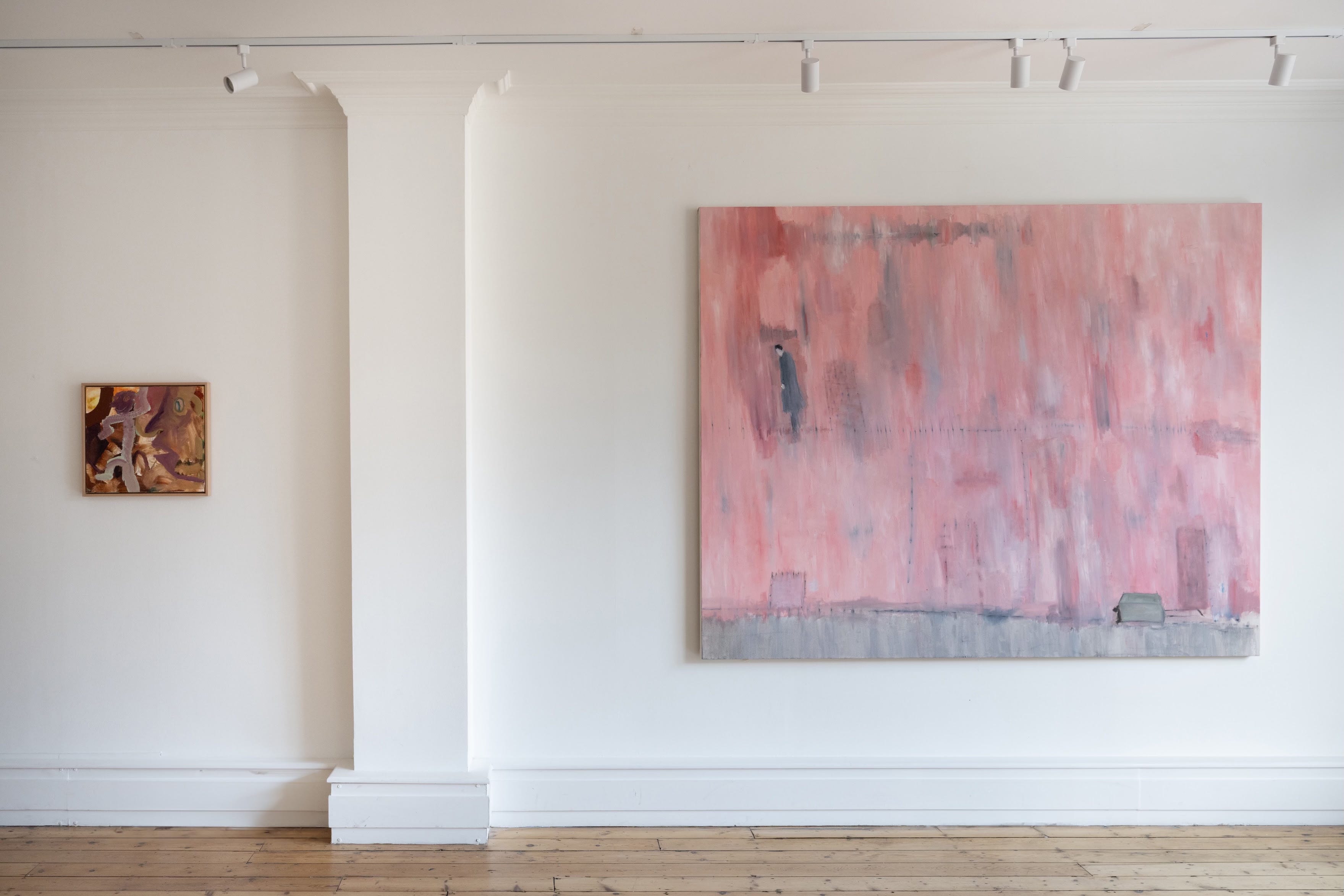
Although painting remains the core of your practice, in recent years you have also worked with installation and screen printing. What led you to open your language to other media?
BE: With painting I have an intense relationship; we love each other, but I see its limits as the worst thing in the world. Painting is hostile, it gives nothing back; in fact, the times when one is lucky and manages to make something worthy, it is because one surrendered completely to it. I’ve thought about leaving it a million times; even right now, that thought is still there, but I can’t, we’re tied to each other. There is something that forces me to try again, to keep trusting that I am capable of making a good painting.
My installation work and my screen printing run in parallel, it is a universal language, they deal with the same themes. I want to open myself to other things out of an obsessive interest, or to make sure that there is something beyond painting, to carry my strengths elsewhere and reach more people. Even so, the works outside the pictorial language were created with that painterly gaze; the moment you start painting, your eye and criteria adapt to your needs, and if you work from honesty, you begin to do everything the way you paint: you love the way you paint, you sleep the way you paint, and more.
“… if you work from honesty, you begin to do everything the way you paint: you love the way you paint, you sleep the way you paint, and more.”
At this moment in your trajectory, what do you feel you are searching for today through your work?
BE: I want to be able to theatricalize and conceptualize personal situations. I want to fully understand how to take something that happened to me and elevate it in a poetic way. I want to reach many people, I want to be able to awaken things in them, I want them to find shelter in my painting, or a push. I want people to feel something, to honestly feel something. I am already leaving my integrity and my health doing this; hopefully I can leave something for the other.
“I want to reach many people, I want to be able to awaken things in them, I want them to find shelter in my painting, or a push.”
What are you currently working on, and where do you feel your practice is moving?
BE: I have a solo exhibition at the end of May titled “Every single person I loved” at General Assembly. I took my most important relationships: romantic, professional, and my relationship with myself, and I singularized aspects of them to generate work. It is a very personal exhibition, it is dragging me across the floor; there are moments where I can disconnect from the theme and just focus on the image, which is like a divine rule of painting, but I think I no longer allow myself that, it is the feeling I am searching for; I want tragedy and embalmed skin together, I want it to be understood what it is to hate oneself at one’s best moment, I want the feeling of euphoria of coming out of sadness to be understood. In this exhibition I talk about obsession, sex, self-improvement, and spirituality, which are somewhat the axes of my life.
My practice is becoming more and more reduced, I already know more and more what I want and with which elements I am going to achieve it. In the future I plan to direct a play, make a film, and dare to make paintings perhaps about darker sides of myself, less conventional and kind, less romantic. I would love for a gallery to give me ten years to make an exhibition, like D’Angelo with Black Messiah. I would love to rid myself of all these needs for external applause and return to being a child who simply enjoys what he does, but even though that is the final objective, today this desire in me reflects weakness, one has to take responsibility for one’s dreams. I do not complain about my current situation, I am working with purpose, for my personal growth and seeking a good in the other. At the end of the day, the only thing that matters is getting up and going to work.
To learn more about Benito Ekmekdjian, visit:
En el estudio con: Benito Ekmekdjian
Benito Ekmekdjian es un artista argentino actualmente radicado en el Reino Unido. Si bien su práctica está anclada en la pintura, también se expande a través del texto, la instalación y la serigrafía, volviendo con frecuencia a cuestiones de intimidad. A lo largo de su obra, la experiencia personal se convierte en un punto de partida para construir imágenes que son a la vez vulnerables y confrontativas, cargadas de intensidad emocional.
En esta entrevista, Benito reflexiona sobre sus comienzos, su mudanza a Londres desde Buenos Aires y el cambio que esto provocó en su práctica. Habla sobre la relación en constante evolución que mantiene con la pintura y el papel de otros medios en su trabajo.
Benito Ekmekdjian es uno de los cuatro artistas que participan en nuestra primera exposición en Londres, WHAT WE TAKE, co-curada por Art in Latin America y CM Art Advisory, en Pipeline. La muestra estará abierta hasta el 28 de marzo.
¿Cómo comenzó tu vínculo con el arte y en qué momento entendiste que podía convertirse en una práctica central en tu vida?
BE: A los cinco años mis padres me preguntaron de qué me gustaría trabajar y yo respondí: de mis ideas. Aun así, mi vínculo comenzó con el graffiti; era pequeño, tenía nueve o diez años y estaba obsesionado con la estética de la calle, además de altamente motivado a la práctica por las historias de raperos hispanohablantes como Dano, T&K e Ingrávidos Squad. Había algo también sobre el riesgo: a que me encuentren pintando, a que la pieza salga mal y a la torpeza técnica. Con esto estuve prácticamente toda la secundaria, pero a los 17 años tuve una epifanía en la que entendí que mis ideas y mis mundos internos tenían una oportunidad para fisicalizarse, y comencé a darles forma seriamente mediante la pintura; y desde ahí no he frenado ni un solo día.
Te formaste entre Argentina e Inglaterra. ¿Cómo dialogan esos dos contextos en tu manera de pensar y hacer obra?
BE: No creo que haya un diálogo activo entre ambos. El cambio que me generó mudarme a Inglaterra fue violento; en Argentina me colmaba una inocencia divina que me permitía nadar por este mundo sin mucha consciencia de lo que estaba haciendo. En Londres o te adaptas o la ciudad te escupe; ya viví situaciones humanas formativas que me hicieron entender que acá es distinto. La madurez fue inmediata, tanto en el cuerpo de obra como en mi persona.
Aun así, ambos fueron biomas para mi progresión. Creo que la ingenuidad que tenía cuando vivía en Buenos Aires me llevó a experimentar sin ningún juicio, una práctica mucho más sana. Incluso expuse bastante, vendí obra y, cuando llegué a Inglaterra, asumí que la vida sería igual. El cachetazo fue gigante: entendí que para ser parte de un circuito como este necesitaba afinar mi voz, mis capacidades técnicas y la capacidad de conceptualizar mi obra. También entendí que nadie me iba a venir a buscar, que era responsabilidad mía buscar lo que quería y, aunque la experiencia viene tocando todas las emociones posibles, estoy habitando en la ciudad donde mis sueños suceden, y van a suceder.
“En Londres o te adaptas o la ciudad te escupe … aunque la experiencia viene tocando todas las emociones posibles, estoy habitando en la ciudad donde mis sueños suceden, y van a suceder.”
En tu obra confluyen fragmentos literarios, experiencias personales y referencias a otros artistas. ¿Cómo construyes ese diálogo entre materiales distintos dentro de una misma pintura?
BE: No sé si necesariamente son “materiales distintos”; justamente, creo que estas mismas cosas vienen del mismo origen, simplemente yo estoy fragmentando lo que es mi lenguaje a aristas concretas.
La construcción del diálogo sucede pre-pictóricamente o durante el hacer de la pintura. Algunos de los escritos dentro de mis cuadros son pensamientos que estoy teniendo en el momento, o una canción que me llamó la atención. La construcción pictórica, para mí, es un enigma; los cuadros lineales, que comienzan en un punto y peregrinan en línea recta hacia la conclusión de la imagen, son los más débiles en mi cuerpo de obra. También, muchas veces, la pintura antecede a la vida; estas conexiones me han revelado cosas que hicieron sentido mucho después. Y, de vuelta, el sentido del riesgo; existe algo rico en consumar un deseo de conectar dos cosas que quizás no están relacionadas, que si tomasen forma humana se odiarían. También, irresponsablemente, intento no entender tanto. Me gusta mucho la inocencia; a veces siento que no me queda nada, el mundo suele demostrarme lo contrario.
¿Qué referencias sientes más cercanas a tu práctica hoy?
BE: Últimamente vengo abrazando mucho el teatro y el cine; intento ir al cine varias veces por semana y estoy en el proceso de adentrarme más en la práctica teatral, principalmente la dirección. Graciosamente, es el camino de muchos directores contemporáneos, como Romeo Castelucci. De la música robo muchas texturas, o sensaciones que quiero evocar: la tristeza glamorosa de Lou Reed, lo onírico y “azul” de algunas canciones de Gustavo Cerati en su obra solista y el empuje taurino y sexual de alguien como Prince. A mis pintores favoritos los tengo cada vez más alejados; creo que se debe a que los saturé por tanto tiempo que ya se volvieron amigos. Me apoyo en ellos cuando necesito resolución, pero es momento de dejarlos en paz un poco y ampliar el lenguaje interior. Dentro de ellos se encuentran: Philip Guston, Tiziano, Auerbach, Bacon, Freud, Guillermo Kuitca, Cy Twombly, entre otros.
Creo también que puede haber existido una suerte de muerte del ídolo o desmitificación. De adolescente estaba obsesionado; eran superhéroes con capa, hoy son pares que quiero mucho. También soy fanático de mis amigos y mi familia: Harold Reed, Francisca Rey, mi madre. A toda persona con la que interacciono, le quito algo que luego uso en mi obra, desde un beso a una frase a una imagen. Lo dijo Francis: “Everything I do, goes into painting.”
“A mis pintores favoritos los tengo cada vez más alejados; creo que se debe a que los saturé por tanto tiempo que ya se volvieron amigos.”
¿Cómo suele comenzar una obra en tu estudio?
BE: Siempre hay un tópico grande y abarcativo con el que empiezo; los últimos fueron despedidas y relaciones amorosas. Luego empiezo a coleccionar imágenes de archivo y a guiar mis lecturas por esos lados. Pienso un poco en serie, en cuántas obras le quiero dedicar al tópico y de qué manera las voy a afrontar. Luego despliego mi archivo sobre el piano de mi estudio (el cual no sé utilizar), pongo una música acorde al tema y comienzo a pintar. La realidad es que las cosas siempre se salen de control, se escapan de las paredes que les trato de poner y la obra se impone ante la idea todo el tiempo. El trabajo posterior es el de analizar e intentar entender un poco más a qué iba en serio.
Aunque la pintura sigue siendo el núcleo de tu práctica, en los últimos años también has trabajado con instalación y serigrafía. ¿Qué te llevó a abrir tu lenguaje hacia otros medios?
BE: Con la pintura tengo una relación bravísima; nos amamos, pero yo veo sus límites como lo peor del mundo. La pintura es hostil, no te devuelve nada; de hecho, las veces que uno tiene suerte y logra hacer algo digno, se debe a que se entregó por completo a ella. Pensé en dejarla un millón de veces, incluso en este mismo instante existe ese pensamiento, pero no puedo, estamos atados. Hay algo que me obliga a volver a intentarlo, en seguir confiando en que soy capaz de hacer una buena pintura.
Mi trabajo instalativo y mi serigrafía corren en línea paralela, es un lenguaje universal, tratan los mismos temas. Quiero abrirme a otras cosas por un interés obsesivo, o para asegurarme de que hay algo más que la pintura, llevar mis virtudes hacia otro lado y llegar a más gente. Aun así, las obras externas al lenguaje pictórico fueron creadas con esa mirada de pintor; en el momento que empezás a pintar, tu ojo y criterio se adaptan a tus necesidades, y si trabajás desde la honestidad, pasás a hacer todo como pintás: amás como pintás, dormís como pintás, y más.
“… si trabajás desde la honestidad, pasás a hacer todo como pintás: amás como pintás, dormís como pintás, y más.”
En este momento de tu trayectoria, ¿qué sientes que estás buscando hoy a través de tu obra?
BE: Quiero poder teatralizar y conceptualizar las situaciones personales. Quiero entender a la perfección cómo tomar algo que me sucedió y elevarlo de manera poética. Quiero llegar a mucha gente, quiero poder despertar cosas en dicha gente, quiero que encuentren un cobijo en mi pintura, o un empuje. Quiero que la gente sienta algo, que honestamente sienta algo. Yo ya estoy dejando mi integridad y mi salud haciendo esto; ojalá poder dejarle algo al otro.
“Quiero llegar a mucha gente, quiero poder despertar cosas en dicha gente, quiero que encuentren un cobijo en mi pintura, o un empuje.”
¿En qué estás trabajando actualmente y hacia dónde sientes que se está desplazando tu práctica?
BE: Tengo una muestra individual a fines de mayo que se titula “Every single person I loved” en General Assembly. Tomé mis relaciones más importantes: amorosas, profesionales y mi relación conmigo mismo, y singularicé aspectos de las mismas para generar obra. Es una muestra muy personal, me está arrastrando por el piso; hay momentos donde me puedo desconectar del tema y solo concentrarme en la imagen, que es como una regla divina de la pintura, pero creo que yo ya no me lo permito, es la sensación que estoy buscando; quiero tragedia y piel embalsamadas juntas, quiero que se entienda lo que es odiarse a uno mismo en su mejor momento, quiero que se entienda la sensación de euforia de salir de la tristeza. En esta muestra hablo de obsesión, sexo, autosuperación y de espiritualidad, que son un poco los ejes de mi vida.
Mi práctica se está reduciendo cada vez más, ya cada vez sé más lo que quiero y con qué elementos lo voy a lograr. A futuro tengo pensado dirigir una obra de teatro, hacer una película y animarme a hacer pinturas, quizás sobre lados míos más oscuros, menos convencionales y amables, menos románticos. Me encantaría que una galería me dé diez años para hacer una muestra, como D’Angelo con Black Messiah. Me encantaría despojarme de todas estas necesidades de aplauso externo y volver a ser un niño que simplemente disfruta lo que hace, pero aunque ese sea el objetivo final, hoy en día este deseo en mí refleja debilidad, hay que hacerse cargo de los sueños. No me quejo de mi situación actual, estoy obrando con propósito, por mi crecimiento personal y buscando un bien en el otro. Al final del día, lo único que importa es levantarse e ir a trabajar.
Para saber más sobre Benito Ekmekdjian, visita:
This was a phenomenal interview! 😍