


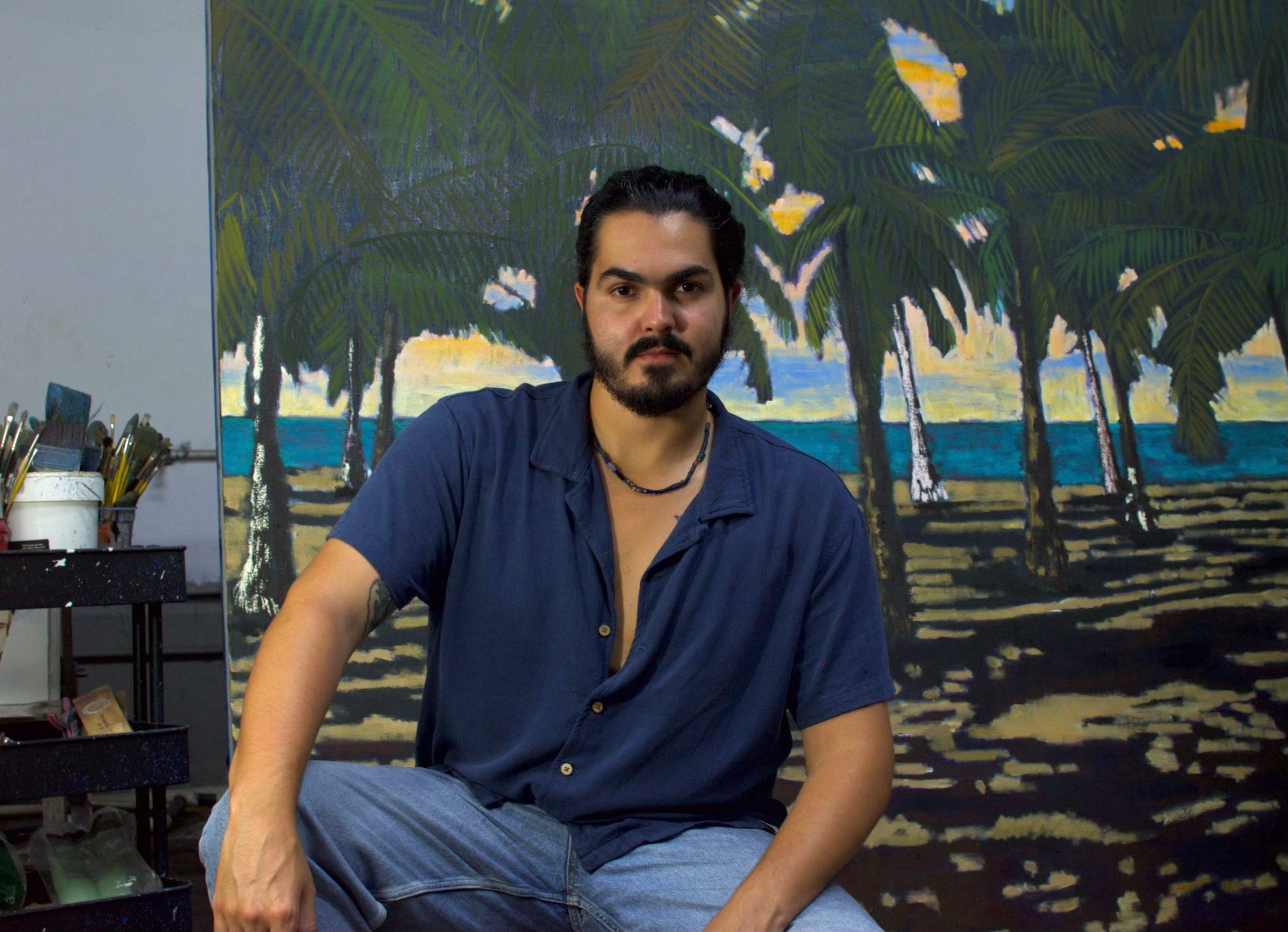
Armig Santos emerges strongly as one of the most important contemporary artists in Puerto Rico.
His work, which intertwines documentation, memory, and a critical gaze at the island, has been shown in New York, Los Angeles, Mexico, and Spain. Now, showing his first exhibition in his native Puerto Rico, he presents a series of ambitious landscapes that dialogue with the island’s recent history. We spoke with him ahead of the opening to learn more about his path, his influences, and the way he understands painting today.
Q: Armig, we’d like to start by asking about your personal and artistic journey. When did you first discover your interest in painting?
Armig Santos: Since I was a child. I drew from a very young age. At nine years old I started doing graffiti and continued into my teenage years. I kept drawing all through school. I went to university to study medicine, but switched to the School of Fine Arts and Design, which is the only art university in Puerto Rico. Before graduating I started curating and doing curatorial projects; I worked on a MoMA PS1 project in Puerto Rico. Later I began showing exhibitions and in 2020 I did a project with my best friend and artist Alejandro “Saki” Sacarello called Amor Fuego. During the pandemic I said, “I’m going to paint more,” and started exhibiting in New York, Los Angeles, Mexico, and Spain. Now I’m opening my first exhibition in Puerto Rico, I’d say it’s my first as a professional artist.
Q: You studied art on the island. How did that period influence your work?
Armig Santos: My central theme since university has always been Puerto Rico. My thesis was on three Puerto Rican painters because I felt that many people were looking more at artists from abroad, and I wanted to look inward, historically. Studying on the island anchored me to that. I’ve always thought I couldn’t imagine working for long outside of Puerto Rico; it feels strange to separate my practice from what’s happening here.
“My central theme since university has always been Puerto Rico … I felt that many people were looking more at artists from abroad, and I wanted to look inward, historically.”
Q: You often turn to archives, blogs, and documentaries as inspiration. How do you find and select that material?
Armig Santos: I like working from documentation and history. I fall into rabbit holes, watching Puerto Rico videos for hours. I go into tourism archives or onto YouTube and search “Puerto Rico videos uploaded this week.” I see what people post — tourists, news outlets — but I also look at archives from ten years ago to see how people thought about Puerto Rico back then.
Q: Water and the sea appear constantly in your paintings. What do these elements mean to you?
Armig Santos: I think most of my paintings include water. Being from an island in the Caribbean, water is everything. It’s something that’s very present. It also visually represents the island.
Q: Which painters, movements, or traditions have influenced you?
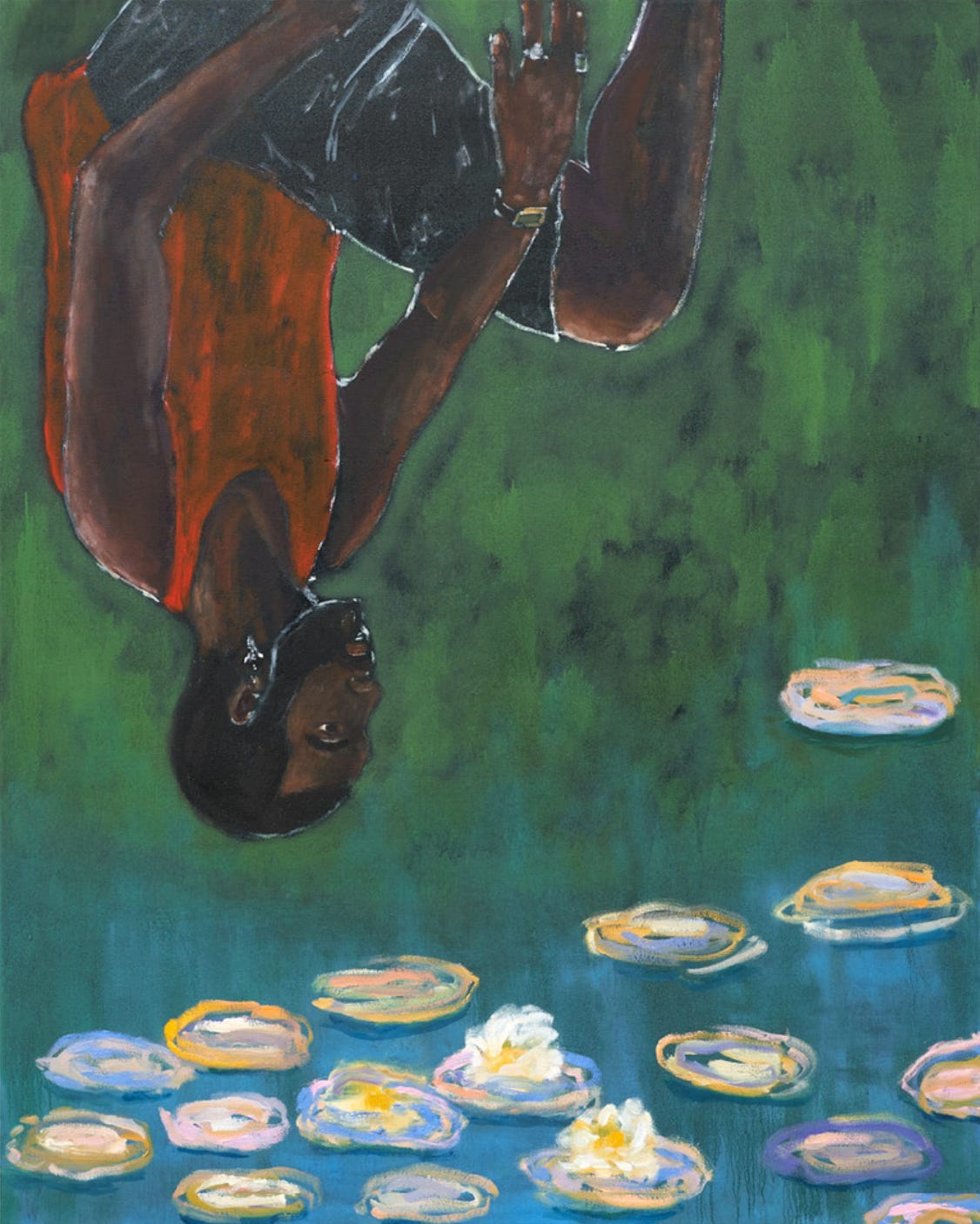
Armig Santos: Right now I’m very into Post-Impressionism. Puerto Rico had a fundamental, though historically underrecognized, Impressionist painter: Francisco Oller. He was in Paris during the Impressionist era and was friends with Monet, Cézanne, and Pissarro. Oller came back to the island to document plantations, using a much duller palette that I’m studying now. In contrast, Paul Gauguin worked with bright, saturated colors. I have a theory that it’s because of Gauguin that we started associating the tropics with such intense colors.
I really like Monet, especially for his use of color and the beauty with which he painted, with a sense of peace and melancholy. I also love Rothko, though he’s not as directly present in my work.
“Oller came back to the island to document plantations, using a much duller palette that I’m studying now. In contrast, Paul Gauguin worked with bright, saturated colors. I have a theory that it’s because of Gauguin that we started associating the tropics with such intense colors.”
Q: You’ve exhibited in New York and Los Angeles, and now you’re opening a show in Puerto Rico at Walter Otero Contemporary Art. Tell us more about this exhibition.
Armig Santos: Amanecer is a project that has been in the works for years. I started thinking about the works in 2023, in response to all the political, social, and historical changes I’ve lived through: from the hurricane, before the hurricane, political and economic shifts, beach conservation, the dilemmas of building on the coast, how the landscape changes for economic rather than public benefit.
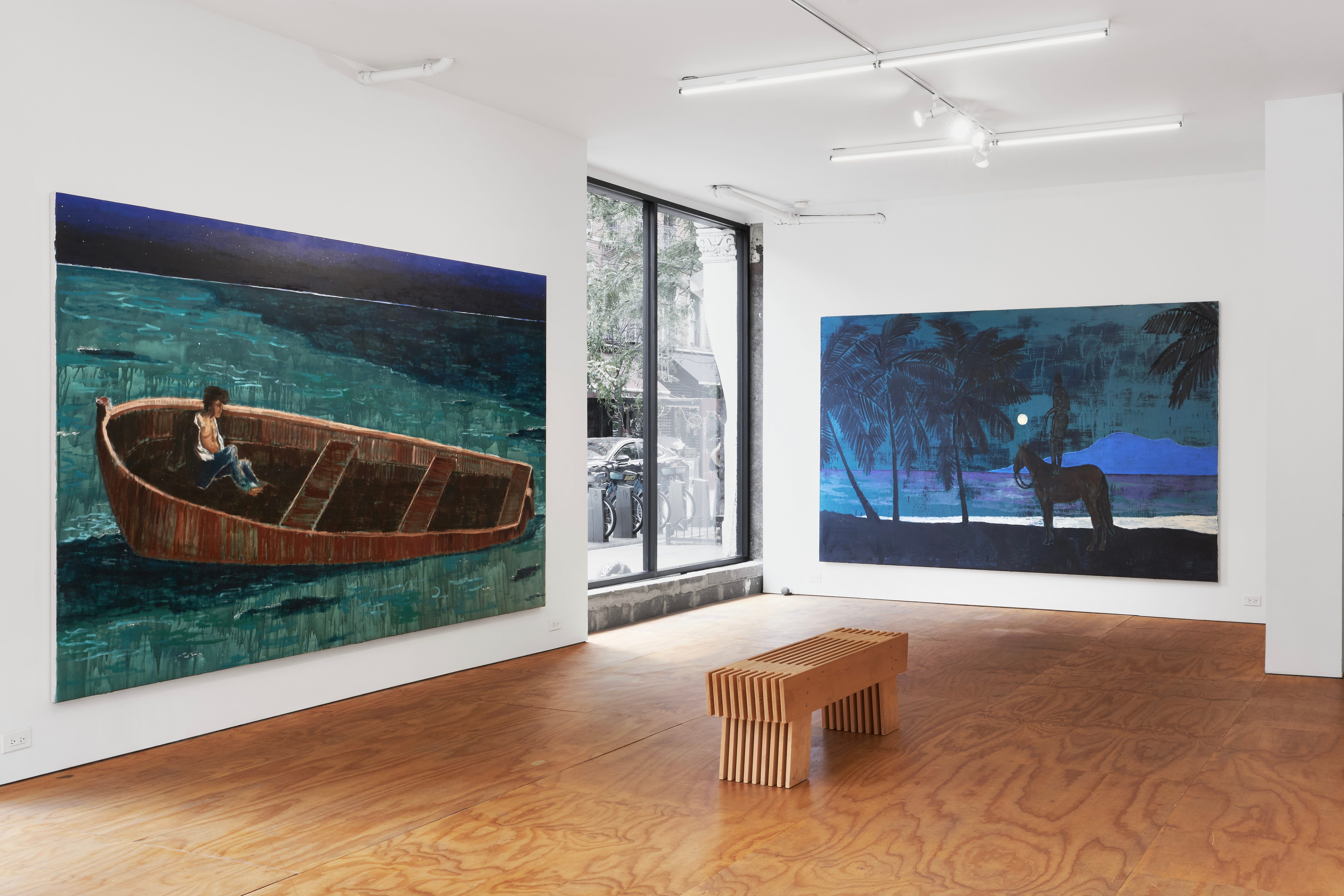
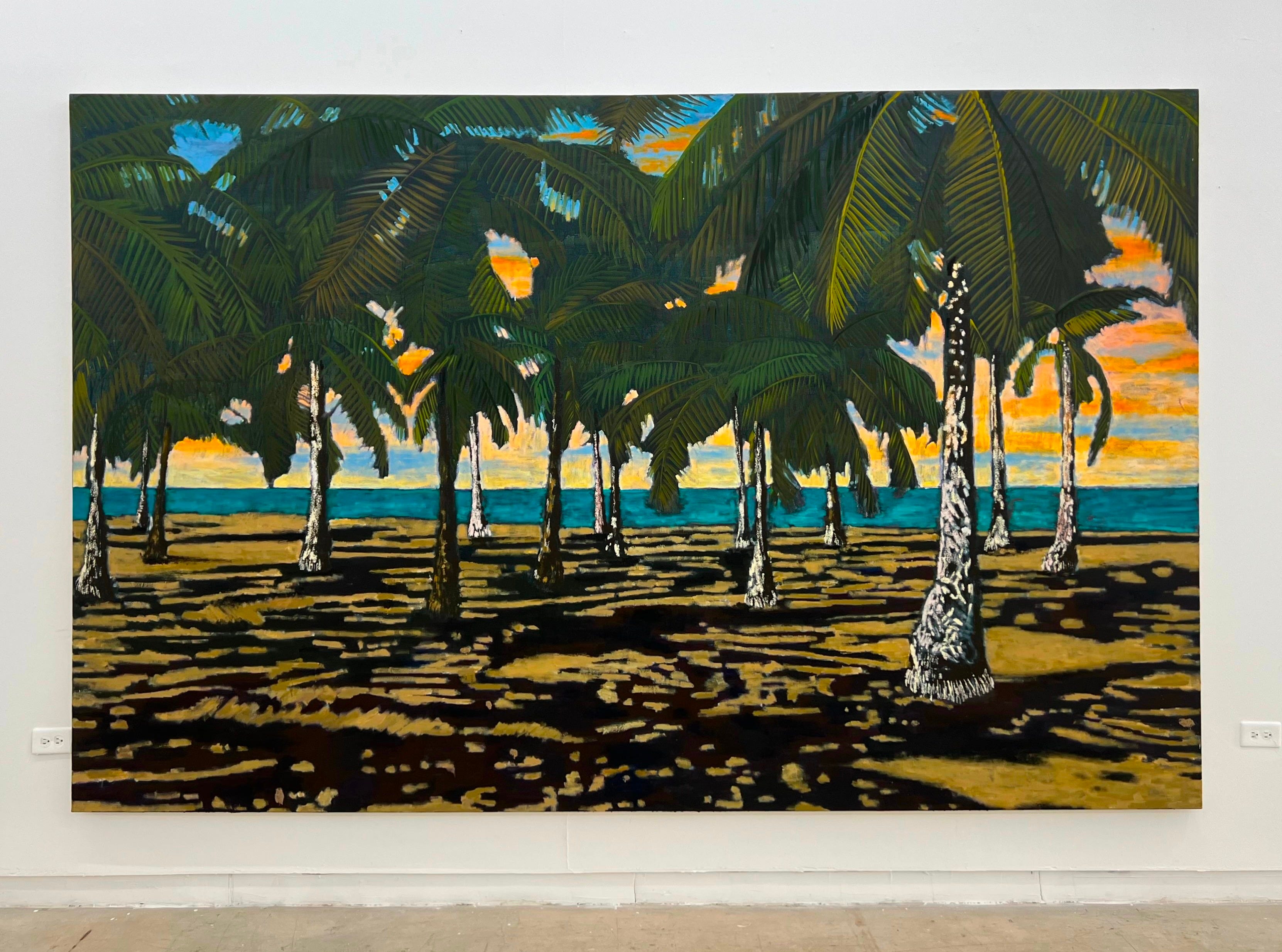
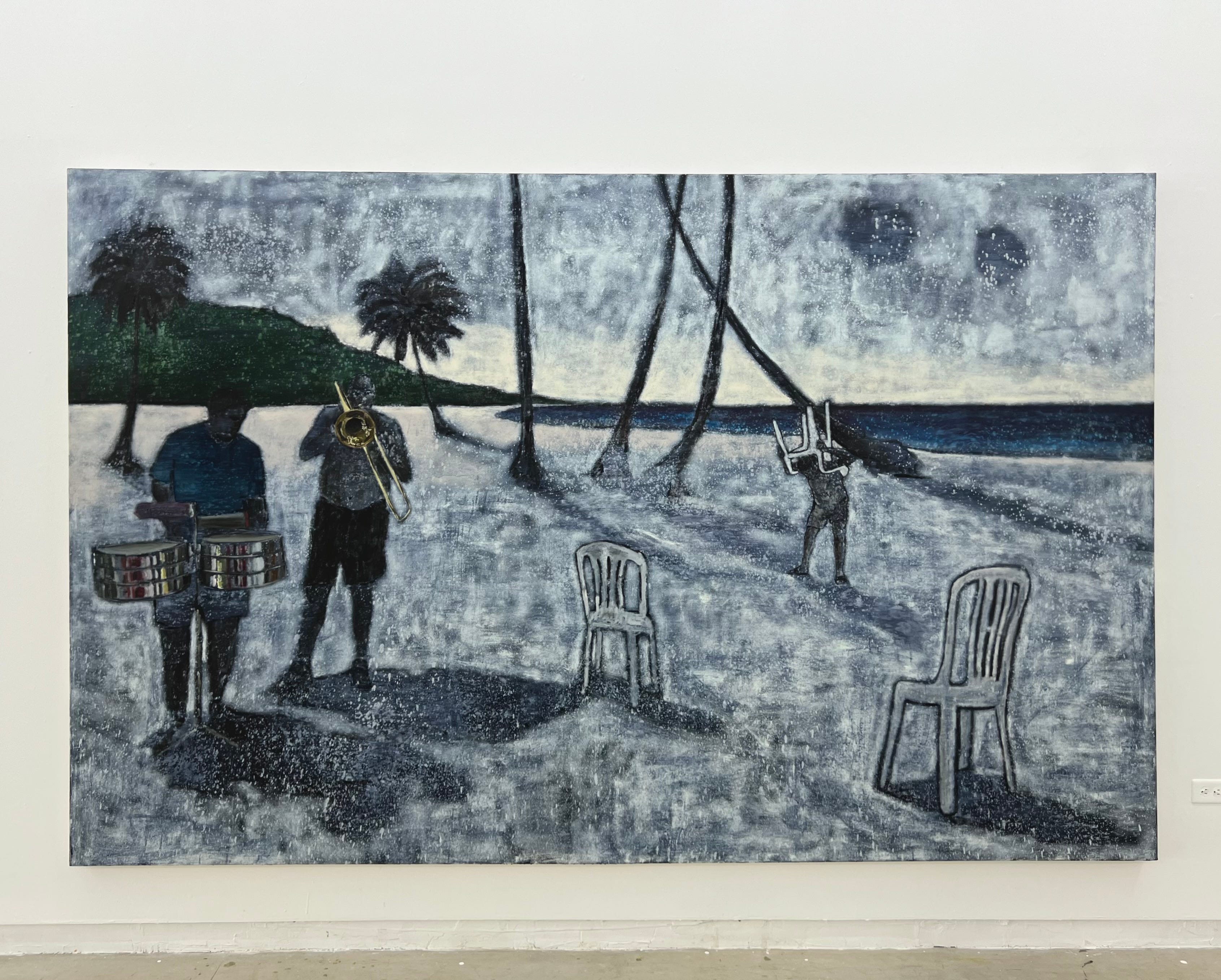
I work on a very large scale, so there are only four works, each around 2.21 × 3.35 meters. They are landscapes conceived specifically for Puerto Rico. One piece imagines a developer or local facing the beach: it could be contemplation or calculation. Another shows musicians with snow falling on the beach, quite playful and chaotic. The third envisions the beach as a temple: palm trees as columns, like a Mozarabic arch. And there’s a smaller piece, 28 × 35 cm, with Gauguin-style palm trees, a hint of what’s to come. It’s the first time I present a series of landscapes at this scale here. I worked a lot on these pieces and now I’m very curious to see the reaction; I like observing how people respond to the works at openings.
Q: What themes or stories would you like to explore in the coming years?
Armig Santos: The popular iconography of Puerto Rico, connected to global history and the history of painting. The paintings I’m working on now are images or situations from the island. The last painting I started this year is another version of a cowboy; it has to do with the paso fino horse in Puerto Rico, its history and beauty. The horse has a particular gait, a very tight step that sounds like rain.
To learn more about Armig Santos, visit:
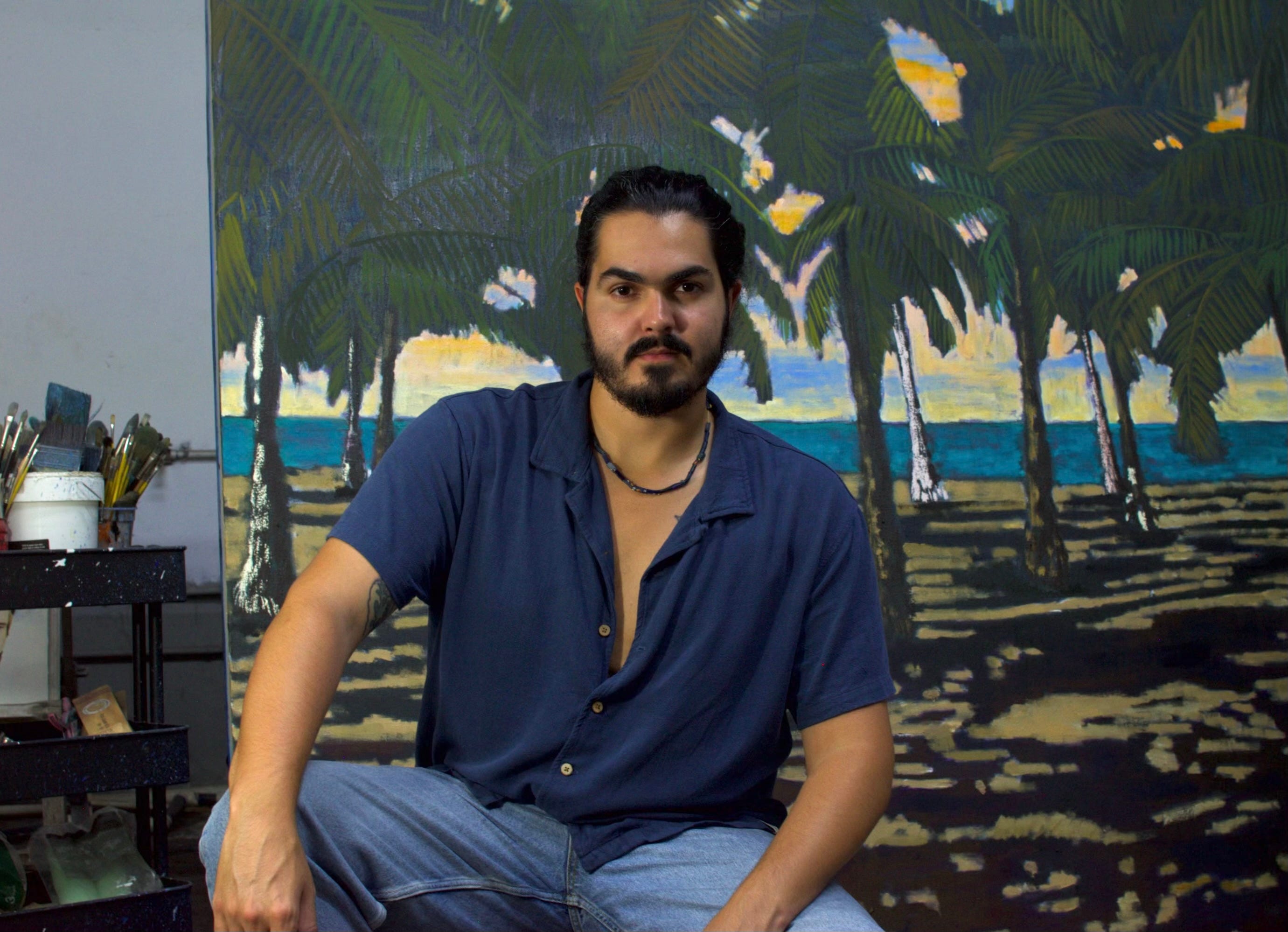
Armig Santos emerge con fuerza como uno de los artistas más importantes del arte contemporáneo en Puerto Rico. Su trabajo, que entrelaza documentación, memoria y una mirada crítica a la isla, ha recorrido escenarios en Nueva York, Los Ángeles, México y España. Ahora, con su primera exhibición en Puerto Rico, presenta una serie de paisajes ambiciosos que dialogan con la historia reciente de la isla. Conversamos con él antes de la inauguración para conocer más sobre su recorrido, sus influencias y la manera en que entiende la pintura hoy.
Q: Armig, nos gustaría empezar preguntándote sobre tu recorrido personal y artístico. ¿Cuándo descubriste tu interés por la pintura?
Armig Santos: Desde pequeño. Desde muy pequeño dibujaba. A los 9 años empecé a hacer graffiti y seguí haciéndolo en mi adolescencia. Me mantuve dibujando durante toda la escuela. Entré a la universidad a estudiar medicina, pero hice un cambio a la Escuela de Artes Plásticas y Diseño, que es la única universidad de arte en Puerto Rico. Antes de graduarme empecé a curar y hacer proyectos curatoriales; trabajé en un proyecto de MoMA PS1 en Puerto Rico. Después empecé a hacer exhibiciones y en 2020 hice un proyecto con mi mejor amigo y artista Alejandro ‘Saki’ Sacarello que se llamó Amor Fuego. Durante la pandemia dije: “voy a pintar más” y empecé a exhibir en Nueva York, Los Ángeles, México y España. Ahora estoy inaugurando mi primera exhibición en Puerto Rico, yo diría que la primera como artista profesional.
Q: Estudiaste arte en la isla. ¿Cómo influyó esa etapa en tu obra?
Armig Santos: Mi tema central desde la universidad siempre fue Puerto Rico. Mi tesis fue sobre tres pintores puertorriqueños porque sentía que mucha gente estaba observando más artistas de afuera, y yo quería mirar hacia adentro, históricamente. Estudiar en la isla me ancló a eso. Siempre he pensado que no me imagino trabajar mucho tiempo fuera de Puerto Rico; es raro para mí separar mi práctica de lo que pasa aquí.
“Mi tema central desde la universidad siempre fue Puerto Rico … sentía que mucha gente estaba observando más artistas de afuera, y yo quería mirar hacia adentro, históricamente.”
Q: Como inspiración recurres a archivos, blogs y documentales. ¿Cómo encuentras y seleccionas ese material?
Armig Santos: Me gusta trabajar desde la documentación y la historia. Entro en unos rabbit holes buscando videos de Puerto Rico por horas. Entro a archivos de turismo o voy a YouTube y busco “Puerto Rico videos subidos esta semana”. Veo lo que sube la gente, turistas, noticieros, pero también busco archivos de hace diez años para ver cómo se pensaba sobre Puerto Rico.
Q: El agua y el mar aparecen constantemente en tus pinturas. ¿Qué significan para ti estos elementos?
Armig Santos: Yo creo que la mayoría de mis pinturas tienen agua. Al ser de una isla, del Caribe, el agua es todo. Es algo que está bien presente. También representa visualmente la isla.
Q: ¿Qué pintores, movimientos o tradiciones te han influido?
Armig Santos: Ahora estoy muy metido en el postimpresionismo. Puerto Rico tuvo un pintor impresionista fundamental, aunque poco reconocido históricamente: Francisco Oller. Él estuvo en París en la época del impresionismo y fue amigo de Monet, Cézanne y Pissarro. Oller vino a la isla a documentar haciendas, con una paleta mucho más opaca, que ahora estoy estudiando. En contraste, Paul Gauguin trabajaba con una paleta de colores brillantes y saturados. Tengo la teoría de que es por Gauguin que empezamos a asociar al trópico con esos colores tan intensos.
Me gusta mucho Monet, especialmente por su uso del color y lo bello que pintaba, con una sensación de paz y melancolía. También me encanta Rothko, aunque no está tan presente de manera específica en mi trabajo.
“Oller vino a la isla a documentar haciendas, con una paleta mucho más opaca, que ahora estoy estudiando. En contraste, Paul Gauguin trabajaba con una paleta de colores brillantes y saturados. Tengo la teoría de que es por Gauguin que empezamos a asociar al trópico con esos colores tan intensos.”
Q: Has expuesto en Nueva York, Los Ángeles y ahora estás abriendo una muestra en Puerto Rico en la galería Walter Otero Contemporary Art. Cuéntanos más sobre esta exhibición.
Armig Santos: Amanecer es un proyecto que se ha estado trabajando por años. Empecé a pensar las obras en 2023, a partir de todos los cambios en el paisaje político, social e histórico que he vivido: desde el huracán, antes del huracán, los cambios políticos y económicos, la conservación de la playa, los dilemas de construir en la costa, cómo el paisaje va cambiando en beneficio económico y no público.
Yo trabajo a una escala muy grande, así que son solo cuatro obras, de aproximadamente 2.21 m × 3.35 m. Son paisajes planificados específicamente para Puerto Rico. Una pieza imagina a un desarrollador o un local frente a la playa: puede ser contemplación o cálculo. Otra muestra músicos con nieve cayendo en la playa, bastante lúdico y caótico. La tercera piensa la playa como un templo: las palmeras como columnas, tipo arco mozárabe. Y hay una más pequeña, de 28 × 35 cm, con palmeras de Gauguin, que es una pista de lo que viene. Es la primera vez que presento una serie de paisajes a esta escala aquí. Trabajé mucho en estas obras y ahora tengo mucha curiosidad por ver la reacción; me gusta mirar cómo responde a las obras la gente en las inauguraciones.
Q: ¿Qué temas o historias te interesa explorar en los próximos años?
Armig Santos: La iconografía popular de Puerto Rico, atada a la historia global y a la historia de la pintura. Las pinturas que estoy trabajando ahora son imágenes o situaciones de la isla. La última pintura que empecé este año es otra versión de un cowboy; tiene que ver con el paso fino en Puerto Rico, su historia y belleza. El caballo tiene un trote particular, un paso bien pegado que suena como lluvia.
Para saber más sobre Armig Santos, visita: