


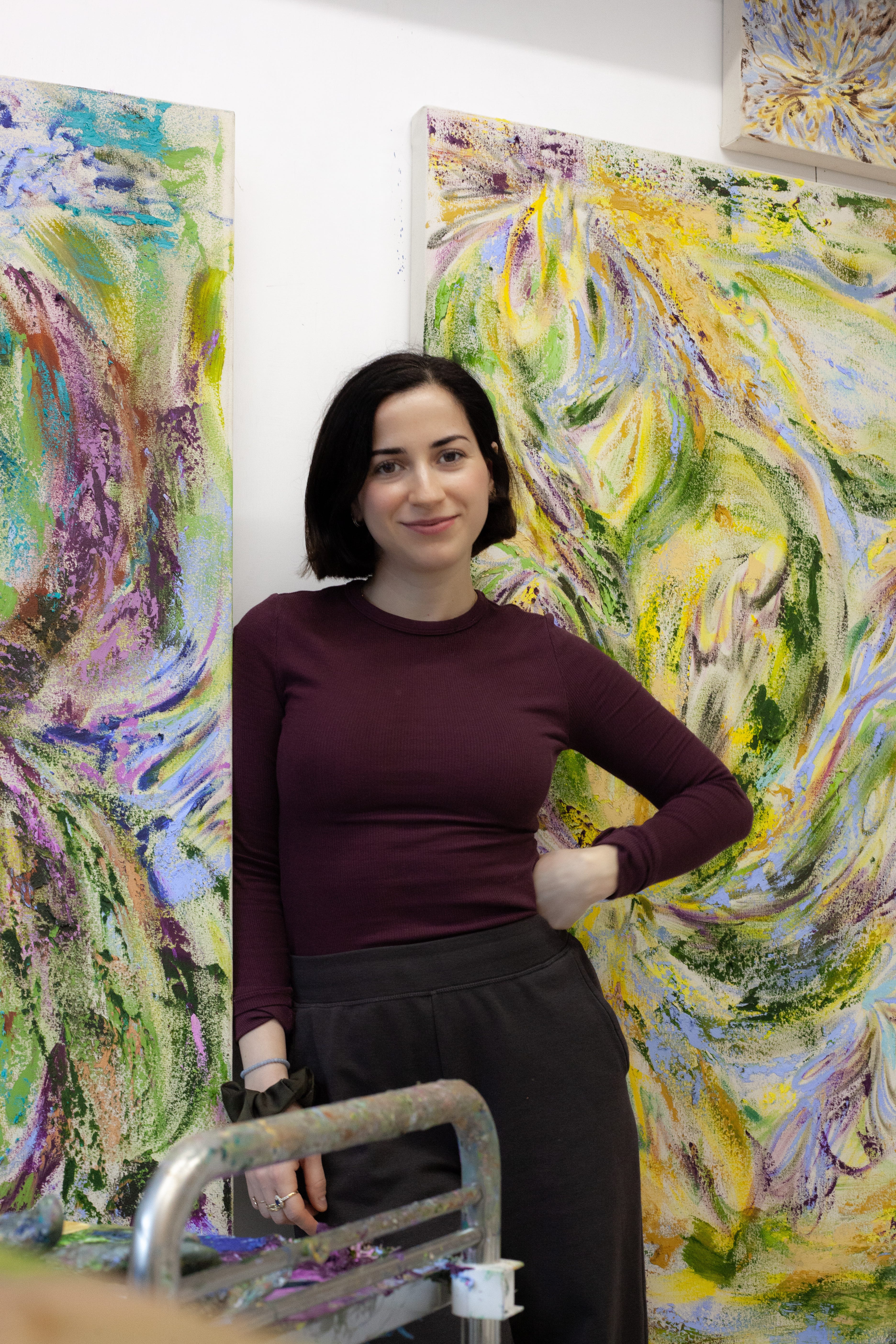
For Mexican artist Ana Benavides, painting offers a way to approach emotions that resist language. Based in London, where she studied at the Royal College of Art, Benavides works with oil, pastel, wax and marble powder to build layered surfaces that retain the traces of their making. Her palette draws on memories of growing up in Monterrey, from the magenta of a bougainvillea to the green of her grandmother’s lime tree.
In this conversation with Art in Latin America, Benavides reflects on her move from Mexico to London, her changing relationship with colour and texture, and learning to leave parts of a painting unexplained.
You studied advertising and marketing before pursuing painting at the Royal College of Art. What led you to make that transition, and what place did painting have in your life before then?
I have been painting since I was seventeen, so it has always been a part of my life, even before I fully understood the place it would eventually occupy in it. When the time came to choose my undergraduate degree, I felt drawn to advertising and marketing. I saw it as an opportunity to develop a different set of tools, to understand how ideas are communicated and how creative practices can exist within the wider world. I wanted to complement my artistic practice and equip myself with the skills to build a sustainable career around it. At the time, I also felt that the options available to me back home didn’t quite resonate with the direction I wanted to explore.
After finishing my degree, I remember telling my parents that I wanted to give myself the opportunity to pursue what I loved most and take my painting as seriously as I possibly could. Although I had continued painting throughout those years, it wasn’t until the pandemic that something shifted. With so much of the outside world coming to a standstill, I found myself turning inward. I began painting more intensely, dedicating time to my practice, experimenting, and allowing myself to create without knowing exactly where it would lead. Gradually, I began to develop a body of work that felt like a reflection of who I was becoming.
Applying to the Royal College of Art felt like a natural next step, but it was also an act of courage. I think there is a difference between loving something and allowing yourself to build your life around it. By then, I felt ready to take that leap of faith and give myself the chance to discover how far I could go with something that had always been a part of me.
Looking back, I don’t see my transition from advertising and marketing to painting as leaving one path behind for another. Each experience has given me different tools, and perhaps both have shaped the way I approach my work today. But painting has always been the place I return to: the space where I can explore what I don’t yet understand, give form to feelings I cannot always articulate, and feel most connected to myself. In many ways, it has become a way of understanding who I am, not by finding all the answers, but by allowing myself to ask questions I might never have known how to put into words.
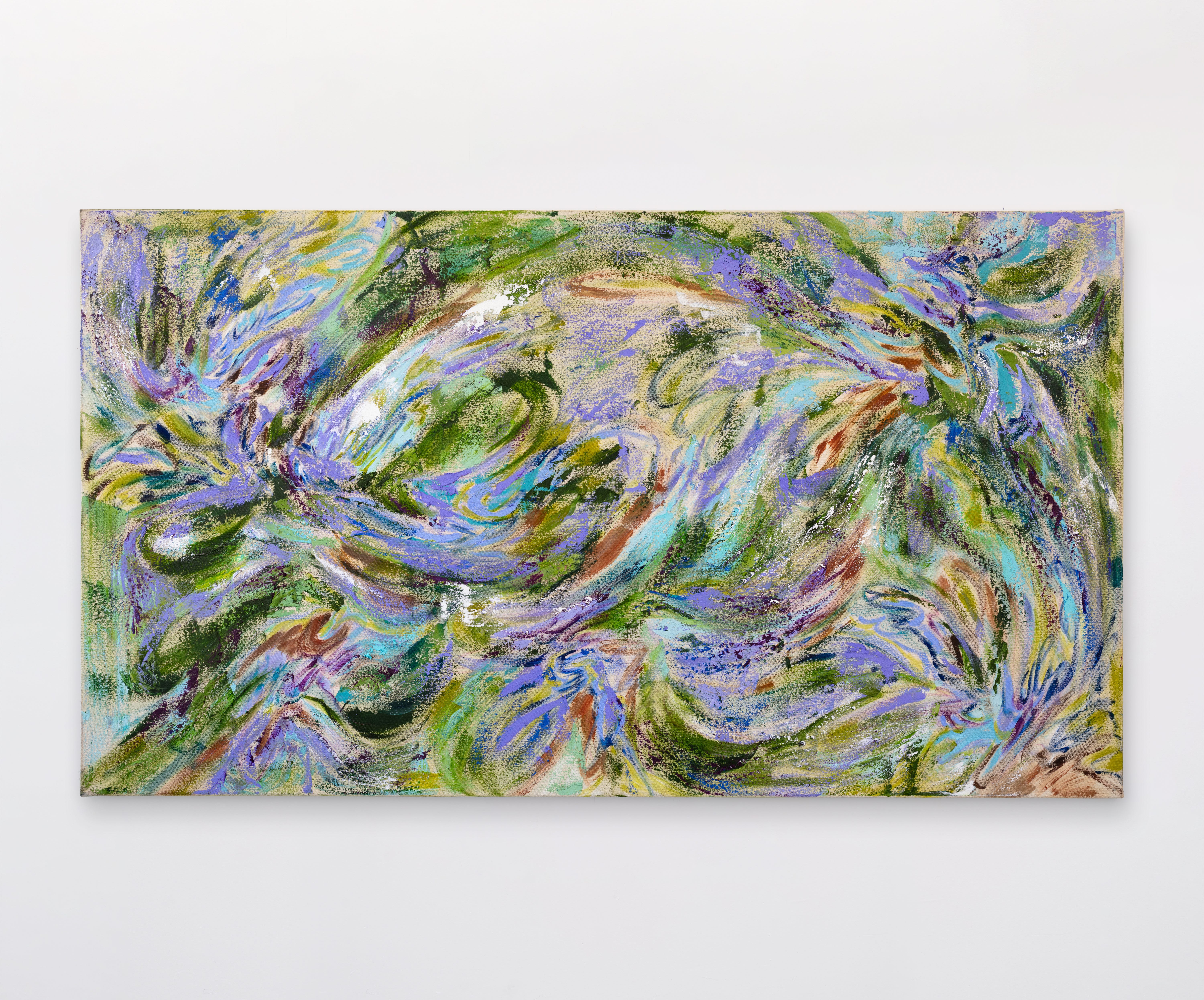
“I don’t see my transition from advertising and marketing to painting as leaving one path behind for another…both have shaped the way I approach my work today. But painting has always been the place I return to: the space where I can explore what I don’t yet understand, give form to feelings I cannot always articulate, and feel most connected to myself.”
You grew up in Monterrey and now live in London. How has that move affected your work, beyond the practical changes of establishing a studio in another city?
Moving to London transformed my life in ways that inevitably found their way into my work. When I first arrived, I was amazed by the abundance of museums, galleries, and the entire artistic ecosystem. There was so much to discover, so many different ways of thinking and making, and so many possibilities I had never imagined.
I also grew up in a quite conservative Catholic environment, so coming to London felt like stepping into a new world. It gave me the freedom to question things, to explore different parts of myself, and to understand who I was beyond the expectations and structures I had grown up with.
In many ways, London gave me the space to find myself and, through that process, to discover my artistic voice. Living between two very different worlds has also made me more aware of the things we carry within us: the landscapes, colours, memories, and ways of seeing that become part of who we are long before we realise it.
Although I have changed cities, I have never left Mexico behind. It lives within me through my family, my friends, my roots, our food, our culture, and the deep love I have for my country. Sometimes, these connections find their way quite visibly into my work; at other times, they exist beneath the surface, in ways that are much harder to articulate.
Perhaps that is what painting allows me to do: to bring together all the different parts of myself, the person I was, the person I have become, and the places that continue to shape me. In a way, my paintings have become a place where I can belong to both worlds at once.
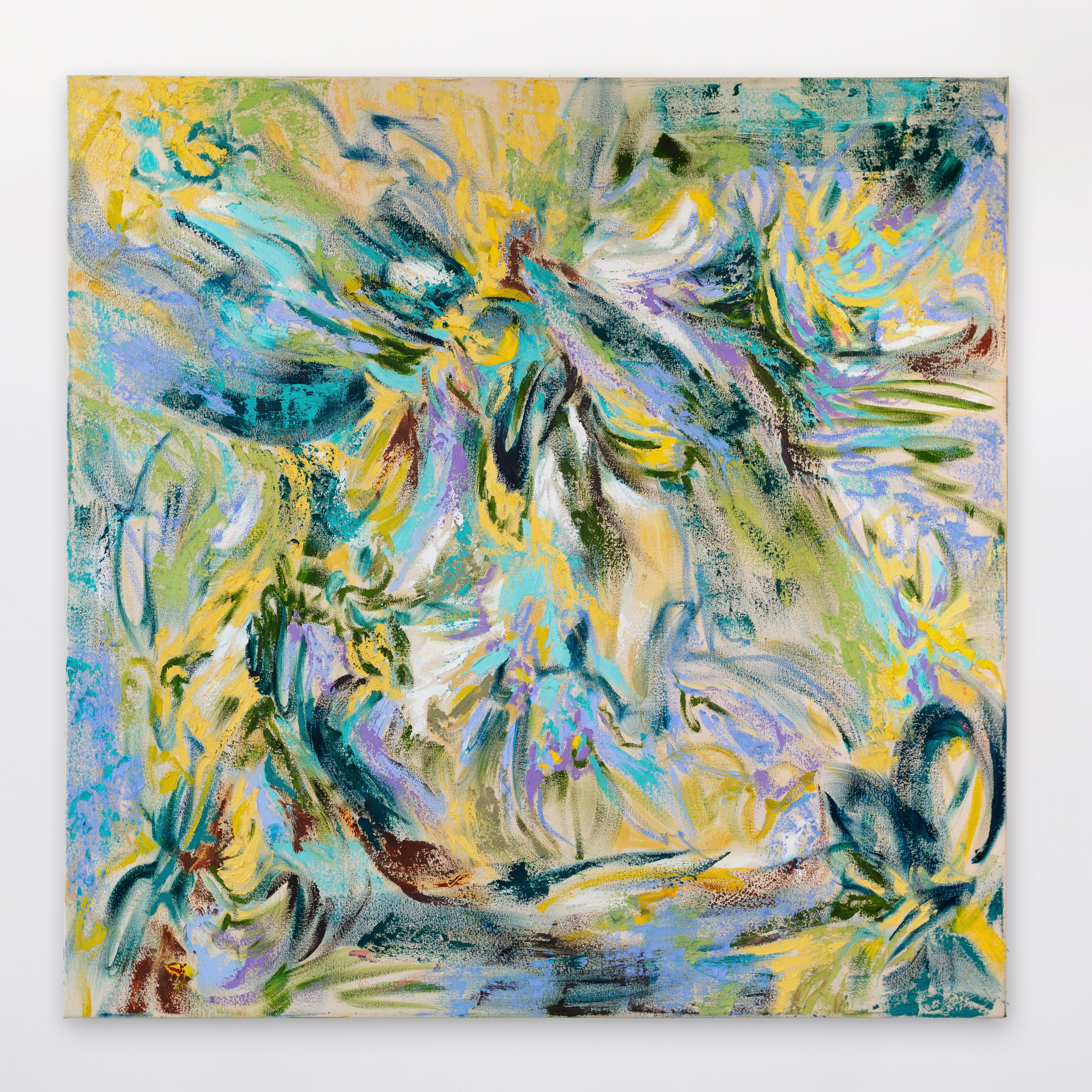
You have spoken about the influence of your childhood in Mexico on your palette. Is there a particular place or memory you find yourself returning to through colour?
One of my earliest memories of colour is a bougainvillea tree in the garden of our family home. Its magenta was so intensely pigmented, almost overwhelming in its richness. I can still remember it vividly. There was something about that colour that felt almost impossible to reproduce, and yet it stayed with me. I think our earliest encounters with colour leave a mark on us long before we understand why.
I also vividly remember my mother painting, surrounded by spray cans in different colours. I remember feeling incredibly drawn to them, fascinated by the pigments and the possibilities they seemed to hold. Looking back, I wonder whether that was one of my first encounters with colour as something I could actively engage with, rather than simply observe.
The Caribbean is another place I continually return to in my memory. The Mayan temples, the cenotes, and the extraordinary history held within these landscapes have always fascinated me. There is something deeply moving about being somewhere that carries so many layers of time and knowledge, where the natural world and human history feel so intimately connected.
I also remember visiting markets with my mother and being captivated by the textiles, the intricate patterns, the colours, and the things people created with their hands. I was drawn to the textures as much as the colours themselves, to the richness of the materials and the stories they seemed to hold.
And then there is Monterrey, the city of mountains. I grew up waking up every day to these enormous mountains surrounding the city, a constant presence in my everyday life. I don’t think I fully appreciated how extraordinary that was until I began to see the world from elsewhere. My grandmother also had a lime tree in her garden, and I remember the richness of its green and the beautiful scent of its leaves.
I think all these memories have become part of my visual language. They return to me not necessarily as literal images, but as sensations: a particular pink, the weight of a landscape, the smell of a tree, the warmth of the earth. Colour is a way of remembering something that the mind might have forgotten, but the body still holds. Sometimes, I think we spend our lives trying to return to feelings we experienced before we had the words to describe them.
“Colour is a way of remembering something that the mind might have forgotten, but the body still holds. Sometimes, I think we spend our lives trying to return to feelings we experienced before we had the words to describe them.”
Your paintings combine oil and pastel with materials such as wax and marble powder. How did you begin working with these materials, and what do they allow you to express?
Texture has become an essential part of my practice, partly because I have always been drawn to the material world around me. I think back to the markets I visited as a child, where I would see the incredible things people created with their hands, particularly textiles with their intricate patterns, colours, and tactile qualities. Those experiences shaped the way I look at materials and the possibilities they hold.
Over time, I became interested in how I could bring that physicality into painting. Materials such as wax and marble powder allow me to build surfaces that hold a history of their own. They can absorb or resist the paint, conceal or reveal what lies beneath. Each layer changes the relationship between the materials, and the surface becomes something that evolves through the process of making.
Texture is also a way of remembering where I come from. Monterrey is a city defined by its mountains and its earth. There is something grounding about bringing those material qualities into my work, almost as though I am trying to reconnect with the physical landscape that shaped me. I feel a connection between the earth beneath our feet and the materials I use to build my paintings.
I think colour can draw you into a painting, but texture invites you to experience it more physically. It gives the work a kind of body. You don’t simply look at it; you become aware of its surface, its weight, and the traces left behind. For me, that physical presence mirrors the way emotions live within us. They are not always visible, but we feel their weight, their movement, and the marks they leave.
I want my paintings to be experienced as much as they are seen, to hold a physical presence that somehow reflects the complexity of our inner worlds.
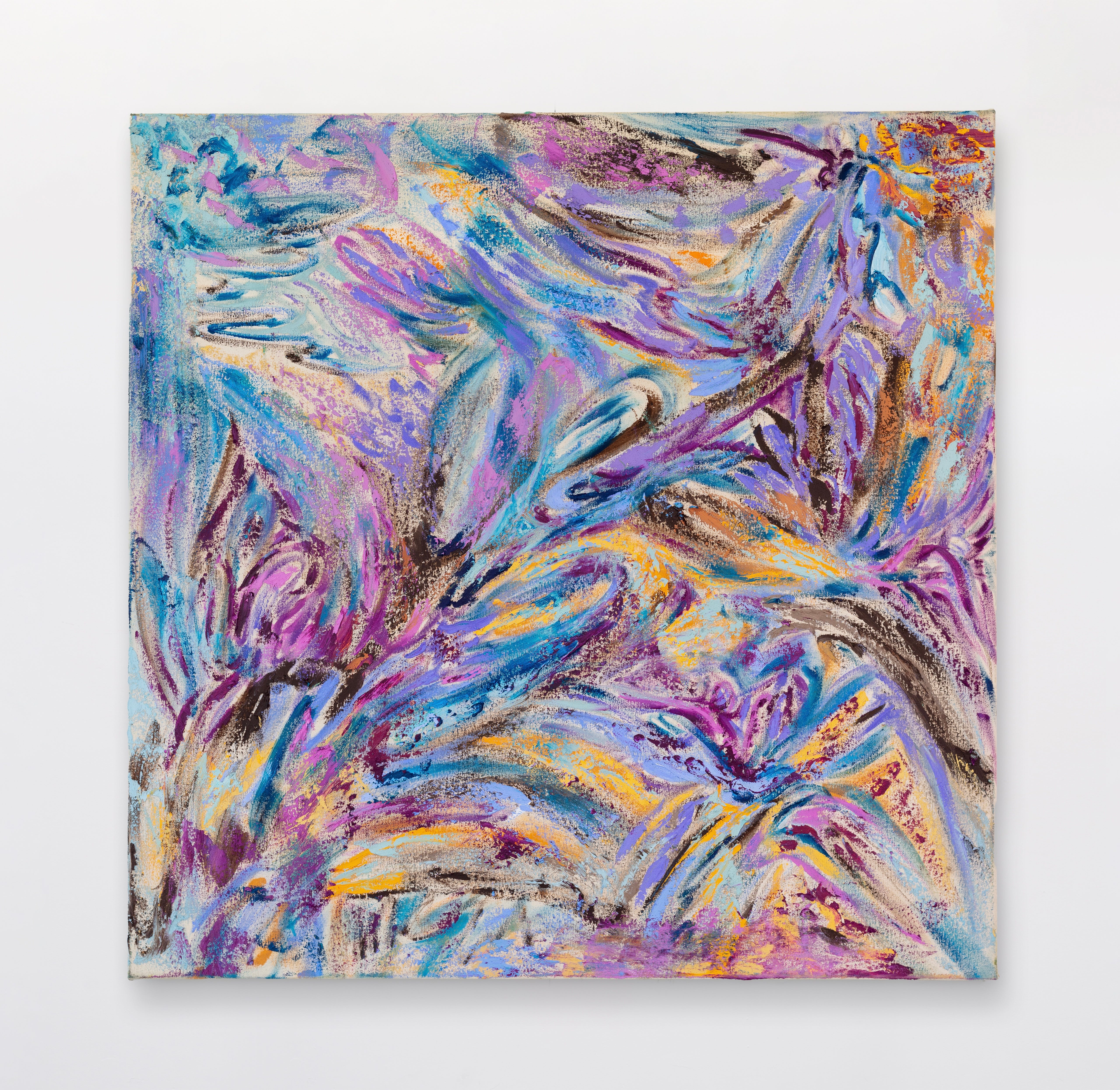
“I want my paintings to be experienced as much as they are seen, to hold a physical presence that somehow reflects the complexity of our inner worlds.”
You leave parts of the canvas exposed between layers of pigment. How do you decide what to cover and what to leave visible?
This is a particularly interesting question because my relationship with the canvas has changed so much over the years. When I first began painting in London, I felt the need to fill almost every part of the surface. I think I believed that the more I put into a painting, the more it could communicate, as though emotion needed to occupy every available space in order to be felt.
Five years later, I find myself approaching painting very differently. I have come to understand that there is an incredible amount you can communicate without filling everything. Sometimes, what you choose not to do becomes just as important as what you do. Leaving space allows the eye to breathe, but it also allows the history of the painting to remain visible. You can trace something of its beginning, see the layers that came before, and recognise the decisions that have been made along the way.
I am also drawn to what an exposed canvas can represent beyond its physical presence. To me, it can suggest something that remains hidden, something untold, or something that isn’t ready to be revealed. Not everything needs to be shown at once. There are parts of ourselves that remain beneath the surface, and yet they are still there, shaping the whole.
I don’t think I decide this entirely consciously. It is often a feeling, a moment when I sense that adding something would take away from what is already there. Learning to stop has become part of learning to trust the painting. And, in a way, learning to trust myself.
I think this change also reflects how I have grown as a person. I am becoming more comfortable with the idea that not everything needs to be filled, explained, or revealed to have meaning. Sometimes, what remains open is precisely what allows something to breathe.
“Not everything needs to be shown at once. There are parts of ourselves that remain beneath the surface, and yet they are still there, shaping the whole.”
You have previously described feeling that you needed to justify your paintings through language. Has becoming more comfortable with leaving things unexplained changed how you present your work to others?
My work explores emotions and internal experiences that can be difficult to put into words, and sometimes even difficult to acknowledge within ourselves. For a long time, I felt that I needed to explain what I was trying to communicate, almost as though I had to provide a key that would allow the viewer to understand the painting in the way I intended.
That changed after a conversation with another artist, who told me that not everything is meant to be explained; some things are meant to be felt. It sounds simple, but it completely shifted my perspective.
I began to question why I felt the need to justify something that was, at its core, an emotional experience. Perhaps it came from a fear of being misunderstood, or from the feeling that I needed to prove the work had meaning. But I realised that the beauty of painting lies partly in the fact that it can reach places language cannot.
We don’t always need to understand an emotion intellectually in order to recognise it within ourselves. Sometimes, a colour, a gesture, or a particular combination of materials can make us feel something before we even know what that feeling is.
I still believe context can be valuable, and I enjoy sharing something about the ideas and experiences behind my work. But I no longer want to dictate what someone should feel when they encounter it. Each person brings their own memories, experiences, and inner world to a painting, and I think there is something beautiful about allowing those interpretations to exist.
Ultimately, I want to leave room for the viewer to meet the work on their own terms. Perhaps the painting begins with something deeply personal to me, but once it enters the world, it can become something else entirely. It can belong to someone else’s experience, too.
I think there is a freedom in accepting that we cannot always control how we are understood, and that perhaps we don’t need to. Sometimes, the most meaningful connections happen precisely when we stop trying to explain everything.
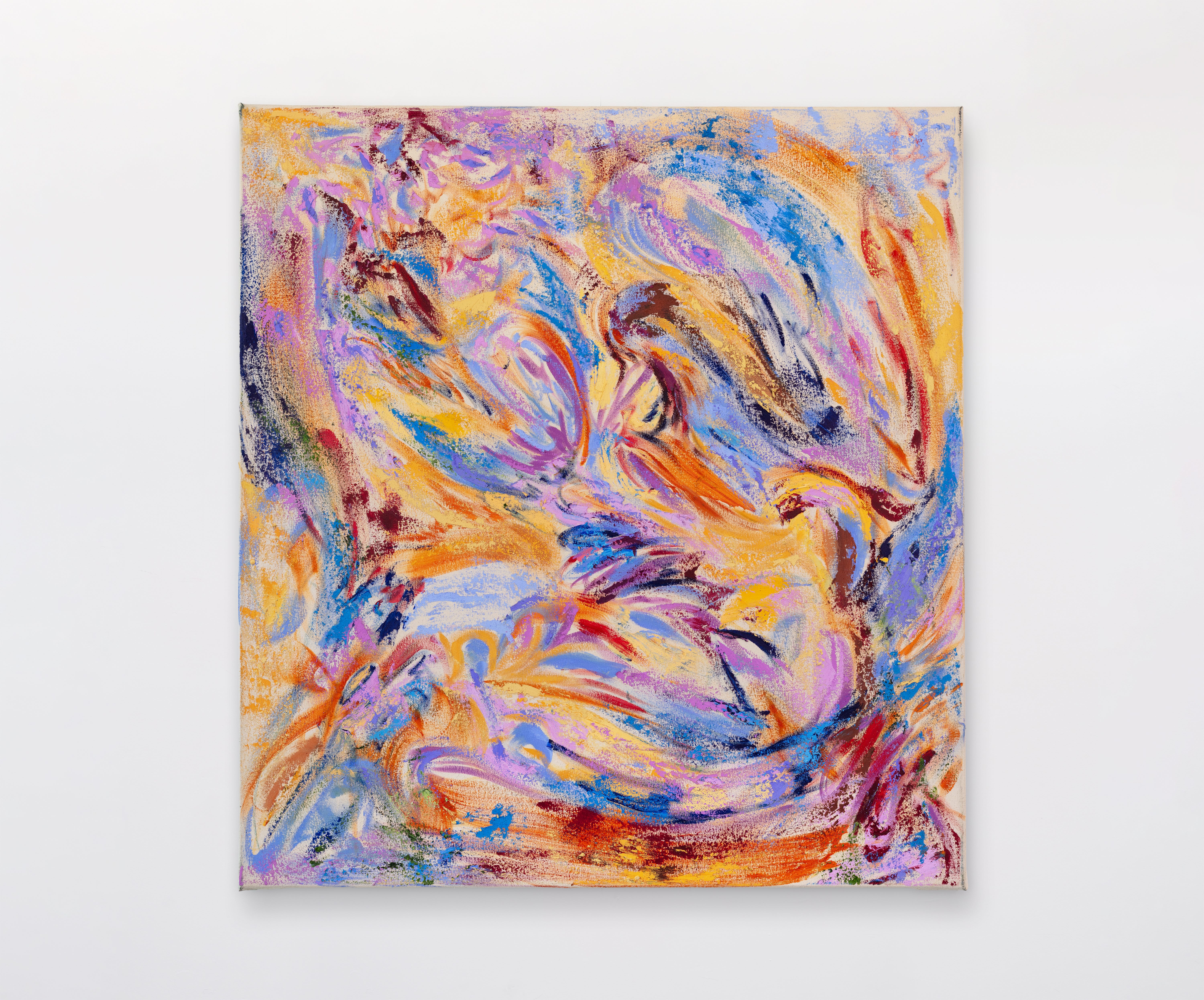
Your solo exhibitions have included Why Are We So Afraid of Feeling?, Breakthrough, and a recent presentation at Paraíso Art Fair. Looking at those bodies of work now, what changed in your approach to painting between them?
The more I paint, the more I feel I am moving deeper into myself. Each body of work brings me closer to feelings, memories, and unspoken parts of my inner world that I may not have fully understood before. Painting has become a process of uncovering, but also of learning to sit with what I find.
Looking back, I can see how much my gesture has changed. Earlier works often carried a more explosive energy, a need to release something onto the canvas. That intensity is still present in my practice, but it has evolved into something more meditative and connected. I feel that I am learning to listen more carefully to the painting, to allow it to unfold rather than trying to push it towards a particular outcome.
My relationship with colour has also developed. I used to feel drawn to using almost every colour, wanting to explore all the possibilities at once. Now, although my palette remains rich and expressive, I am more intentional. Certain tones recur across different paintings, creating connections between works, almost like a visual thread running through them.
I think the greatest change is that I am becoming more comfortable with not needing to say everything at once. There is more trust in the process, more willingness to let a painting reveal itself gradually, and more acceptance of the things that remain unresolved.
In some ways, my practice has become a reflection of my own personal growth. I am learning that depth doesn’t necessarily come from intensity alone, but from the willingness to stay with a feeling long enough to understand its different layers. The paintings are still full of energy, but that energy now has more space to breathe.
Perhaps the evolution isn’t about moving away from who I was, but about understanding her more deeply. Each body of work carries traces of the person I was when I made it, while making room for the person I am still becoming. I think that is one of the most beautiful things about painting: it allows you to see how you have changed, sometimes before you have even realised it yourself.
“I am learning that depth doesn’t necessarily come from intensity alone, but from the willingness to stay with a feeling long enough to understand its different layers.”
What are you working on now?
I feel very excited about what is coming next. At the moment, I am continuing to develop my painting practice, pushing myself to explore new possibilities while remaining connected to the emotional language I have been building over the years.
At the same time, I have been thinking a lot about textiles and sculpture. I feel a growing desire to move beyond the traditional boundaries of the canvas and explore how the ideas that inform my paintings might exist in other forms. I am interested in what happens when colour, texture, and gesture move into three-dimensional space, and how the viewer’s relationship with the work might change when it becomes something they can experience from different angles or encounter more physically.
I am at a point where I feel increasingly curious about the unknown, about allowing my practice to evolve in directions I cannot yet fully predict. There is something exciting about not having all the answers, about following an instinct before knowing exactly where it will lead.
Perhaps that is also what painting has taught me over the years: that sometimes, you have to allow yourself to enter the unknown before you can discover what is waiting for you there.
To learn more about Ana Benavides, visit:
En el estudio con: Ana Benavides
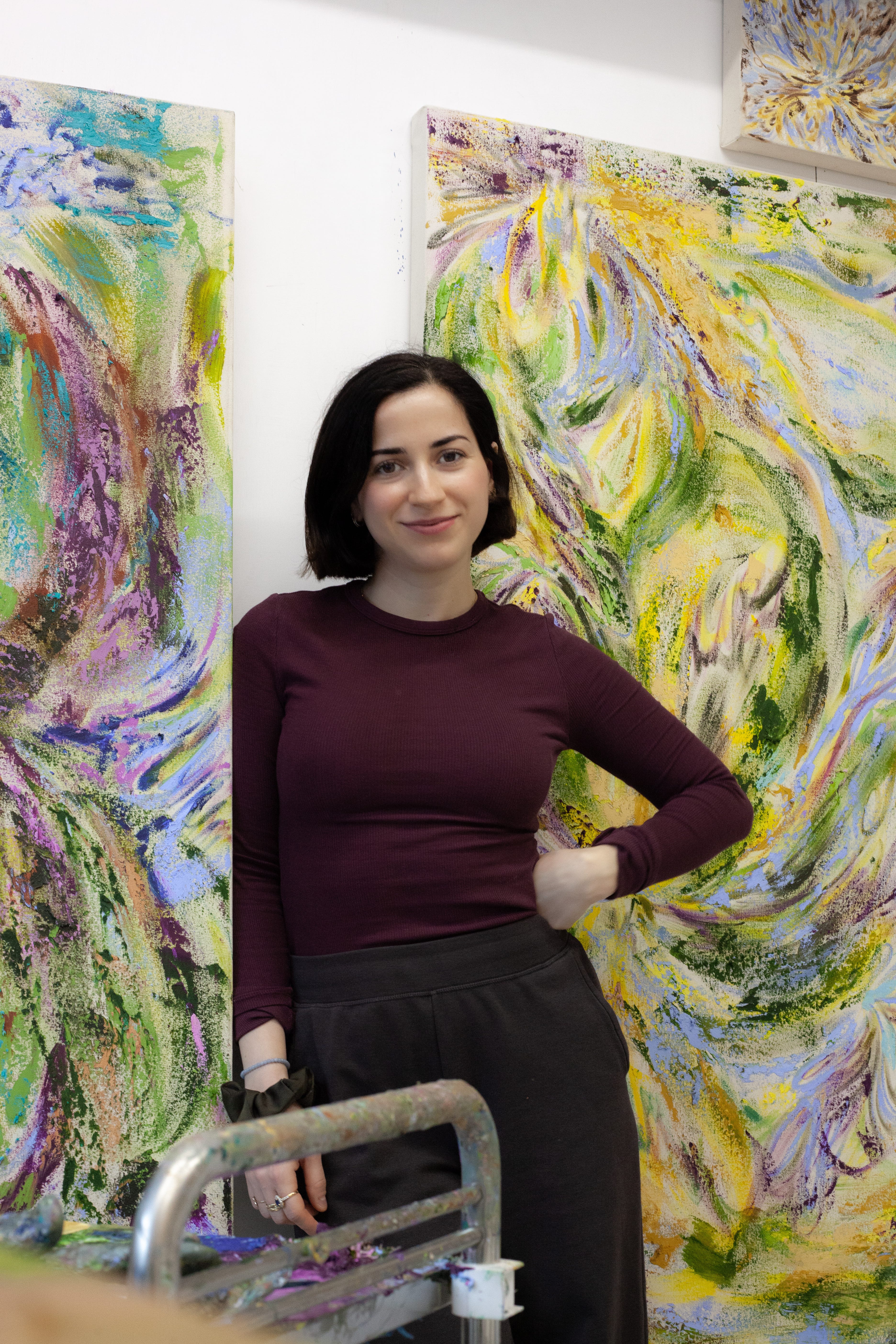
Para la artista mexicana Ana Benavides, la pintura ofrece una manera de acercarse a emociones que se resisten al lenguaje. Radicada en Londres, donde se formó en el Royal College of Art, Benavides trabaja con óleo, pastel, cera y polvo de mármol para construir superficies que conservan las huellas de su elaboración. Su paleta se nutre de recuerdos de su infancia en Monterrey, desde el magenta de una bugambilia hasta el verde del limonero de su abuela.
En esta conversación con Art in Latin America, Benavides reflexiona sobre su traslado de México a Londres, los cambios en su relación con el color y la textura, y el aprendizaje de dejar ciertos aspectos de una pintura sin explicar.
Estudiaste publicidad y marketing antes de formarte en pintura en el Royal College of Art. ¿Qué te llevó a dar ese paso y qué lugar ocupaba la pintura en tu vida hasta entonces?
Pinto desde los diecisiete años, así que siempre ha formado parte de mi vida, incluso antes de comprender del todo el lugar que acabaría ocupando en ella. Cuando llegó el momento de elegir una carrera universitaria, me atrajeron la publicidad y el marketing. Los veía como una oportunidad para desarrollar otras herramientas, para entender cómo se comunican las ideas y cómo las prácticas creativas pueden desenvolverse en un contexto más amplio. Quería complementar mi práctica artística y adquirir las habilidades necesarias para construir una carrera sostenible en torno a ella. En aquel momento, también sentía que las opciones disponibles en México no terminaban de encajar con la dirección que quería explorar.
Después de terminar la carrera, recuerdo haberles dicho a mis padres que quería darme la oportunidad de dedicarme a lo que más amaba y tomarme la pintura con toda la seriedad posible. Aunque había seguido pintando durante esos años, no fue hasta la pandemia cuando algo cambió. Mientras gran parte del mundo exterior se detenía, empecé a mirar hacia dentro. Comencé a pintar con mayor intensidad, a dedicar tiempo a mi práctica, a experimentar y a permitirme crear sin saber exactamente adónde me llevaría. Poco a poco, fui desarrollando un conjunto de obras que sentía como un reflejo de la persona en la que me estaba convirtiendo.
Presentar mi candidatura al Royal College of Art me pareció un paso natural, pero también fue un acto de valentía. Creo que hay una diferencia entre amar algo y permitirte construir tu vida en torno a ello. Para entonces, me sentía preparada para dar ese salto de fe y concederme la oportunidad de descubrir hasta dónde podía llegar con algo que siempre había formado parte de mí.
Al mirar atrás, no veo mi transición de la publicidad y el marketing a la pintura como el abandono de un camino para tomar otro. Cada experiencia me ha dado herramientas distintas y quizá ambas han influido en mi manera de abordar el trabajo hoy. Pero la pintura siempre ha sido el lugar al que regreso: el espacio donde puedo explorar lo que aún no comprendo, dar forma a sentimientos que no siempre consigo expresar y sentirme más conectada conmigo misma. En muchos sentidos, se ha convertido en una manera de entender quién soy, no por encontrar todas las respuestas, sino por permitirme formular preguntas que quizá nunca habría sabido poner en palabras.
“No veo mi transición de la publicidad y el marketing a la pintura como el abandono de un camino para tomar otro… quizá ambas han influido en mi manera de abordar el trabajo hoy. Pero la pintura siempre ha sido el lugar al que regreso: el espacio donde puedo explorar lo que aún no comprendo, dar forma a sentimientos que no siempre consigo expresar y sentirme más conectada conmigo misma.”
Creciste en Monterrey y ahora vives en Londres. Más allá de los cambios prácticos que implica establecer un estudio en otra ciudad, ¿cómo ha influido esa mudanza en tu obra?
Mudarse a Londres transformó mi vida de maneras que inevitablemente se trasladaron a mi obra. Cuando llegué, me asombraron la cantidad de museos y galerías y todo el ecosistema artístico. Había tanto por descubrir, tantas formas distintas de pensar y crear, y tantas posibilidades que nunca había imaginado.
Además, crecí en un entorno católico bastante conservador, así que llegar a Londres fue como entrar en un mundo nuevo. Me dio libertad para cuestionar las cosas, explorar distintas partes de mí y comprender quién era más allá de las expectativas y las estructuras con las que había crecido.
En muchos sentidos, Londres me dio el espacio para encontrarme y, a través de ese proceso, descubrir mi voz artística. Vivir entre dos mundos tan distintos también me ha hecho más consciente de lo que llevamos dentro: los paisajes, los colores, los recuerdos y las maneras de ver que pasan a formar parte de quienes somos mucho antes de que nos demos cuenta.
Aunque he cambiado de ciudad, nunca he dejado atrás a México. Vive en mí a través de mi familia, mis amigos, mis raíces, nuestra comida, nuestra cultura y el profundo amor que siento por mi país. A veces, esos vínculos aparecen de forma muy visible en mi obra; otras veces, permanecen bajo la superficie, de maneras mucho más difíciles de expresar.
Quizá eso es lo que me permite hacer la pintura: reunir todas las partes de mí, la persona que fui, aquella en la que me he convertido y los lugares que siguen dándome forma. De algún modo, mis pinturas se han convertido en un lugar donde puedo pertenecer a ambos mundos a la vez.
Has hablado de la influencia de tu infancia en México en tu paleta. ¿Hay algún lugar o recuerdo en particular al que vuelvas a través del color?
Uno de mis primeros recuerdos del color es una bugambilia en el jardín de nuestra casa familiar. Su magenta era tan intenso, de una riqueza casi abrumadora. Todavía lo recuerdo con mucha claridad. Había algo en ese color que parecía casi imposible de reproducir y, aun así, se quedó conmigo. Creo que nuestros primeros encuentros con el color nos dejan una huella mucho antes de que comprendamos por qué.
También recuerdo con mucha claridad a mi madre pintando, rodeada de latas de pintura en aerosol de distintos colores. Recuerdo la enorme atracción que sentía por ellas, la fascinación por los pigmentos y las posibilidades que parecían contener. Al mirar atrás, me pregunto si aquel fue uno de mis primeros encuentros con el color como algo con lo que podía interactuar, en lugar de limitarme a observarlo.
El Caribe es otro lugar al que vuelvo constantemente en mis recuerdos. Los templos mayas, los cenotes y la extraordinaria historia que albergan esos paisajes siempre me han fascinado. Hay algo profundamente conmovedor en estar en un lugar que reúne tantas capas de tiempo y conocimiento, donde la naturaleza y la historia humana parecen tan íntimamente conectadas.
También recuerdo visitar los mercados con mi madre y quedar cautivada por los textiles, los patrones minuciosos, los colores y las cosas que la gente creaba con sus manos. Me atraían tanto las texturas como los propios colores, la riqueza de los materiales y las historias que parecían guardar.
Y luego está Monterrey, la ciudad de las montañas. Crecí despertándome cada día con esas enormes montañas que rodean la ciudad, una presencia constante en mi vida cotidiana. Creo que no aprecié del todo lo extraordinario que era hasta que empecé a ver el mundo desde otros lugares. Mi abuela también tenía un limonero en su jardín y recuerdo la intensidad de su verde y el hermoso aroma de sus hojas.
Creo que todos esos recuerdos se han convertido en parte de mi lenguaje visual. Regresan a mí no necesariamente como imágenes literales, sino como sensaciones: un rosa particular, el peso de un paisaje, el olor de un árbol, la calidez de la tierra. El color es una manera de recordar algo que la mente quizá ha olvidado, pero que el cuerpo aún conserva. A veces pienso que pasamos la vida intentando volver a sensaciones que experimentamos antes de tener las palabras para describirlas.
“El color es una manera de recordar algo que la mente quizá ha olvidado, pero que el cuerpo aún conserva. A veces pienso que pasamos la vida intentando volver a sensaciones que experimentamos antes de tener las palabras para describirlas.”
Tus pinturas combinan óleo y pastel con materiales como la cera y el polvo de mármol. ¿Cómo empezaste a trabajar con ellos y qué te permiten expresar?
La textura se ha convertido en una parte esencial de mi práctica, en parte porque siempre me ha atraído el mundo material que me rodea. Pienso en los mercados que visitaba de niña, donde veía las cosas increíbles que la gente creaba con sus manos, especialmente los textiles, con sus patrones minuciosos, sus colores y sus cualidades táctiles. Esas experiencias influyeron en mi manera de ver los materiales y las posibilidades que ofrecen.
Con el tiempo, empecé a interesarme por cómo podía incorporar esa dimensión física a la pintura. Materiales como la cera y el polvo de mármol me permiten construir superficies que guardan su propia historia. Pueden absorber la pintura o resistirse a ella, ocultar o revelar lo que hay debajo. Cada capa modifica la relación entre los materiales y la superficie se convierte en algo que evoluciona durante el proceso de creación.
La textura es también una manera de recordar de dónde vengo. Monterrey es una ciudad definida por sus montañas y su tierra. Incorporar esas cualidades materiales a mi obra me da una sensación de arraigo, casi como si intentara reconectar con el paisaje físico que me formó. Siento una conexión entre la tierra que pisamos y los materiales que utilizo para construir mis pinturas.
Creo que el color puede atraerte hacia una pintura, pero la textura te invita a experimentarla de una manera más física. Le da una especie de cuerpo a la obra. No te limitas a mirarla; tomas conciencia de su superficie, de su peso y de las huellas que han quedado en ella. Para mí, esa presencia física refleja la manera en que las emociones habitan en nosotros. No siempre son visibles, pero sentimos su peso, su movimiento y las marcas que dejan.
Quiero que mis pinturas se experimenten tanto como se contemplan, que tengan una presencia física que refleje, de algún modo, la complejidad de nuestros mundos interiores.
“Quiero que mis pinturas se experimenten tanto como se contemplan, que tengan una presencia física que refleje, de algún modo, la complejidad de nuestros mundos interiores.”
Dejas partes del lienzo expuestas entre las capas de pigmento. ¿Cómo decides qué cubrir y qué dejar visible?
Es una pregunta especialmente interesante porque mi relación con el lienzo ha cambiado mucho a lo largo de los años. Cuando empecé a pintar en Londres, sentía la necesidad de llenar casi toda la superficie. Creo que pensaba que cuanto más incorporara a una pintura, más podría comunicar, como si la emoción necesitara ocupar todo el espacio disponible para poder sentirse.
Cinco años después, me acerco a la pintura de una manera muy distinta. He comprendido que se puede comunicar muchísimo sin llenarlo todo. A veces, lo que decides no hacer se vuelve tan importante como lo que haces. Dejar espacio permite que la mirada respire, pero también que la historia de la pintura siga siendo visible. Puedes rastrear algo de su inicio, ver las capas anteriores y reconocer las decisiones que se han tomado durante el proceso.
También me interesa lo que puede representar un lienzo expuesto más allá de su presencia física. Para mí, puede sugerir algo que permanece oculto, algo que no se ha contado o que todavía no está listo para revelarse. No es necesario mostrarlo todo de una vez. Hay partes de nosotros que permanecen bajo la superficie y, aun así, siguen ahí, dando forma al conjunto.
No creo que lo decida de manera totalmente consciente. A menudo es una sensación, un momento en el que percibo que añadir algo le restaría a lo que ya está ahí. Aprender a detenerme se ha convertido en parte de aprender a confiar en la pintura. Y, de alguna manera, de aprender a confiar en mí misma.
Creo que este cambio también refleja mi crecimiento como persona. Cada vez me siento más cómoda con la idea de que no es necesario llenarlo, explicarlo o revelarlo todo para que tenga sentido. A veces, lo que permanece abierto es precisamente lo que permite que algo respire.
“No es necesario mostrarlo todo de una vez. Hay partes de nosotros que permanecen bajo la superficie y, aun así, siguen ahí, dando forma al conjunto.”
Has mencionado que antes sentías la necesidad de justificar tus pinturas a través del lenguaje. Ahora que te sientes más cómoda dejando ciertas cosas sin explicar, ¿ha cambiado tu manera de presentar tu obra a los demás?
Mi obra explora emociones y experiencias interiores que pueden ser difíciles de poner en palabras y, a veces, incluso de reconocer en nosotros mismos. Durante mucho tiempo sentí que necesitaba explicar lo que intentaba comunicar, casi como si tuviera que proporcionar una clave que permitiera al espectador comprender la pintura tal como yo la había concebido.
Eso cambió después de una conversación con otro artista, que me dijo que no todo está hecho para explicarse; algunas cosas están hechas para sentirse. Suena sencillo, pero cambió por completo mi perspectiva.
Empecé a preguntarme por qué sentía la necesidad de justificar algo que, en esencia, era una experiencia emocional. Quizá nacía del miedo a que no me comprendieran o de la sensación de que tenía que demostrar que la obra tenía sentido. Pero me di cuenta de que parte de la belleza de la pintura reside en su capacidad para llegar a lugares a los que el lenguaje no llega.
No siempre necesitamos comprender intelectualmente una emoción para reconocerla en nosotros mismos. A veces, un color, un gesto o una combinación particular de materiales pueden hacernos sentir algo antes incluso de saber qué es lo que sentimos.
Sigo creyendo que el contexto puede ser valioso y disfruto compartiendo algunas de las ideas y experiencias que hay detrás de mi obra. Pero ya no quiero dictar lo que alguien debería sentir al encontrarse con ella. Cada persona aporta sus propios recuerdos, experiencias y mundo interior a una pintura, y creo que hay algo hermoso en permitir que esas interpretaciones existan.
En última instancia, quiero dejar espacio para que el espectador se encuentre con la obra a su manera. Quizá la pintura parte de algo profundamente personal para mí, pero una vez que sale al mundo puede convertirse en algo completamente distinto. También puede formar parte de la experiencia de otra persona.
Creo que hay cierta libertad en aceptar que no siempre podemos controlar cómo nos comprenden y que quizá tampoco necesitamos hacerlo. A veces, las conexiones más significativas surgen precisamente cuando dejamos de intentar explicarlo todo.
Entre tus exposiciones individuales figuran Why Are We So Afraid of Feeling?, Breakthrough y una presentación reciente en Paraíso Art Fair. Al mirar ahora esos conjuntos de obras, ¿qué cambió en tu manera de abordar la pintura entre uno y otro?
Cuanto más pinto, más siento que profundizo en mí misma. Cada conjunto de obras me acerca a sentimientos, recuerdos y partes de mi mundo interior que no había expresado y que quizá antes no comprendía del todo. La pintura se ha convertido en un proceso de descubrimiento, pero también de aprender a convivir con lo que encuentro.
Al mirar atrás, puedo ver cuánto ha cambiado mi gesto. Las primeras obras solían tener una energía más explosiva, una necesidad de liberar algo sobre el lienzo. Esa intensidad sigue presente en mi práctica, pero ha evolucionado hacia algo más meditativo y conectado. Siento que estoy aprendiendo a escuchar la pintura con más atención, a permitir que se desarrolle en lugar de intentar conducirla hacia un resultado concreto.
Mi relación con el color también ha evolucionado. Antes me atraía utilizar casi todos los colores, quería explorar todas las posibilidades a la vez. Ahora, aunque mi paleta sigue siendo rica y expresiva, mis decisiones son más deliberadas. Ciertos tonos reaparecen en distintas pinturas y crean conexiones entre las obras, casi como un hilo visual que las recorre.
Creo que el mayor cambio es que cada vez me siento más cómoda con no tener que decirlo todo de una vez. Hay más confianza en el proceso, más disposición a dejar que una pintura se revele poco a poco y una mayor aceptación de aquello que permanece sin resolver.
En cierto modo, mi práctica se ha convertido en un reflejo de mi crecimiento personal. Estoy aprendiendo que la profundidad no surge necesariamente solo de la intensidad, sino de la disposición a permanecer con un sentimiento el tiempo suficiente para comprender sus distintas capas. Las pinturas siguen llenas de energía, pero ahora esa energía tiene más espacio para respirar.
Quizá esta evolución no consiste en alejarme de quien fui, sino en comprenderla más profundamente. Cada conjunto de obras conserva huellas de la persona que era cuando lo creé, a la vez que deja espacio para la persona en la que sigo convirtiéndome. Creo que esa es una de las cosas más hermosas de la pintura: te permite ver cómo has cambiado, a veces incluso antes de que tú misma te hayas dado cuenta.
“Estoy aprendiendo que la profundidad no surge necesariamente solo de la intensidad, sino de la disposición a permanecer con un sentimiento el tiempo suficiente para comprender sus distintas capas.”
¿En qué estás trabajando ahora?
Me entusiasma mucho lo que viene. En este momento sigo desarrollando mi práctica pictórica, impulsándome a explorar nuevas posibilidades sin perder la conexión con el lenguaje emocional que he ido construyendo a lo largo de los años.
Al mismo tiempo, he estado pensando mucho en los textiles y la escultura. Siento un deseo cada vez mayor de ir más allá de los límites tradicionales del lienzo y explorar cómo las ideas que nutren mis pinturas podrían existir en otras formas. Me interesa lo que ocurre cuando el color, la textura y el gesto pasan al espacio tridimensional, y cómo puede cambiar la relación del espectador con la obra cuando puede experimentarla desde distintos ángulos o encontrarse con ella de una manera más física.
Estoy en un momento en el que siento cada vez más curiosidad por lo desconocido, por permitir que mi práctica evolucione en direcciones que todavía no puedo prever del todo. Hay algo emocionante en no tener todas las respuestas, en seguir una intuición sin saber exactamente adónde te llevará.
Quizá eso es también lo que la pintura me ha enseñado a lo largo de los años: que, a veces, tienes que permitirte entrar en lo desconocido para descubrir lo que te espera allí.
Para saber más sobre Ana Benavides, visita:
💜💫✨Thank you for this lovely feature and for giving me the space to share more about my practice.
Thanks for this interesting interview!