


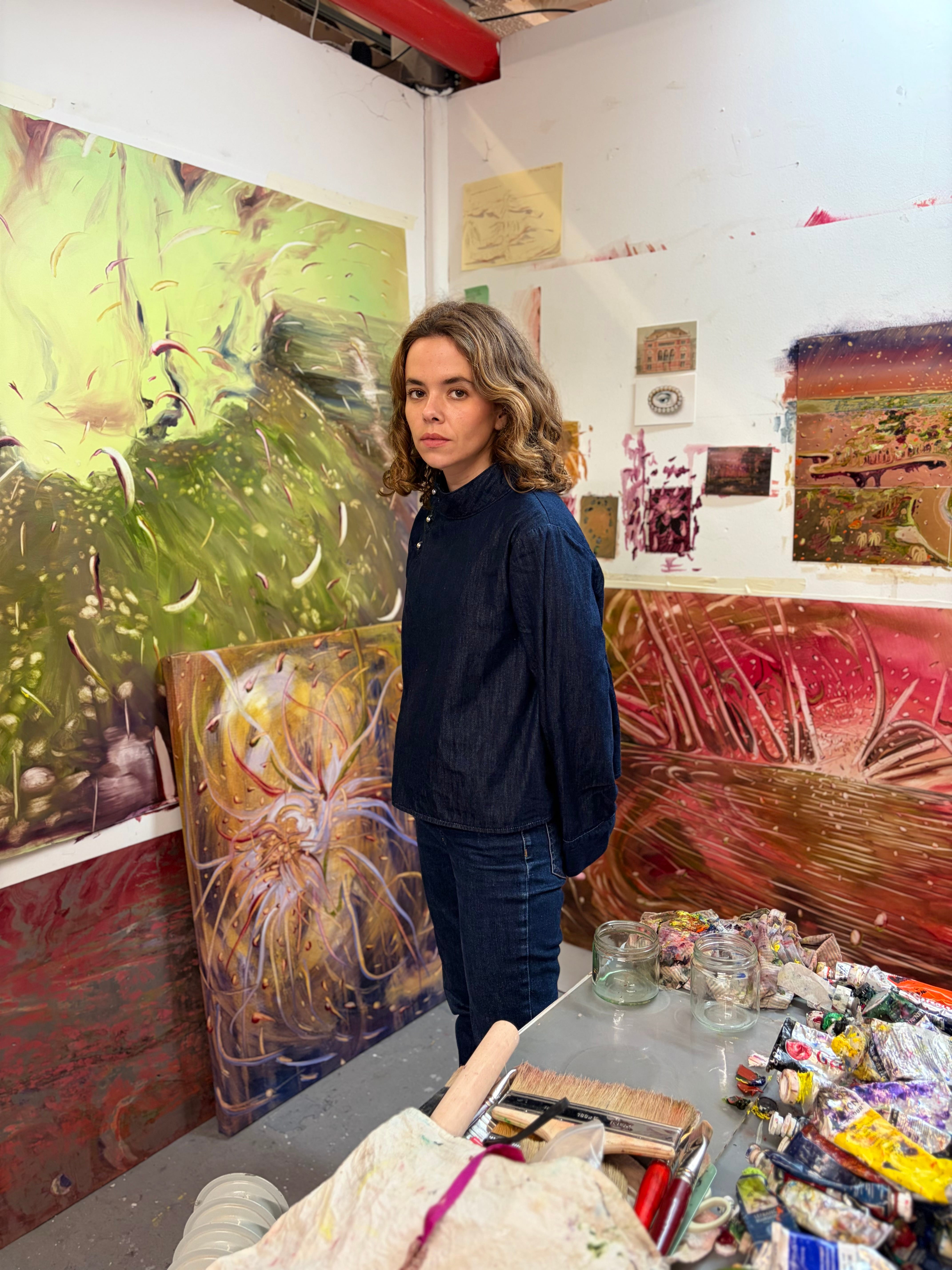
Alessandra Risi is a multidisciplinary artist whose practice moves across painting, research, and installation. Working with photographic archives and research connected to the Peruvian Amazon, alongside historical sources and personal references, she creates intense, atmospheric works in which landscape becomes a space for memory and inquiry.
In this interview, Alessandra looks back on the beginnings of her relationship with art, reflects on the turning points that shaped her studies and early exhibitions, and describes how her paintings come to life through an evolving research process across new materials and forms.
Alessandra Risi is one of four artists participating in our first exhibition in London, WHAT WE TAKE, co-curated by Art in Latin America and CM Art Advisory. Join us for the opening reception next Friday, March 6th, from 6–9pm, at Pipeline.
When did your connection to art begin?
AR: My first encounter with art was when my grandmother would have me paint with tempera paints on the kitchen counter, when I was around 3 years old. Later on, during primary school, it showed up like a lifeline at the moment I had to repeat a year and change schools. With so many psychological evaluations, I was diagnosed with attention deficit and learning difficulties; the spatial part showed up with a high score.
You come from a training journey between Peru, Italy, and the United Kingdom. What did each place contribute to the way you look and to your visual language, and what stayed constant?
AR: Each school gave me different qualities that I now consider fundamental. When I began my studies at Corriente Alterna (Lima, Peru), the focus was conceptual and research-based, without setting aside a strong academic foundation in the plastic/visual side. In those three years I experimented with a lot of freedom: I worked with all kinds of materials and installation. I especially remember an installation of three 17-meter swings in the inner courtyard, where anyone who came in could swing.
Being in Lima also made me practice my career from early on. I started exhibiting in my second year and began working with Tokio Galería. In the summers I taught painting classes at the school, and I even worked for Art Lima as an assistant to international guests.
Later, I moved to NABA (Milan, Italy), where I completed the last two years of my undergraduate degree. I was part of the first cohort doing the program in English, and that opened up a circle of international friendships for me. Through them I could observe other ways of thinking and understand a freedom in art outside the political and feminist themes that had been very present at my previous school. Italy, at that moment, gave me a different kind of visibility into the worlds of art, design, and fashion. In that adaptation process I received a critique about a painting-based work. I used to talk a lot with the Peruvian artist Sylvia Fernández, whom I admire immensely, and she suggested something key: to move away from images and start feeling the city, its light, its rain, and let those sensations transfer into the painting.
Soon after, the pandemic arrived and I had to return to Lima for six months. They were really hard months: a double winter, and the feeling of not knowing how to readapt to the place I had left. And that’s where painting reappeared. I didn’t have canvas or oil paint, so I painted with tempera on paper, on the carpet in my room. Surreal images started coming out; I posted them on Instagram without thinking too much, and that’s when a phenomenal conversation began with curator Max Hernández. His comments helped me a lot.
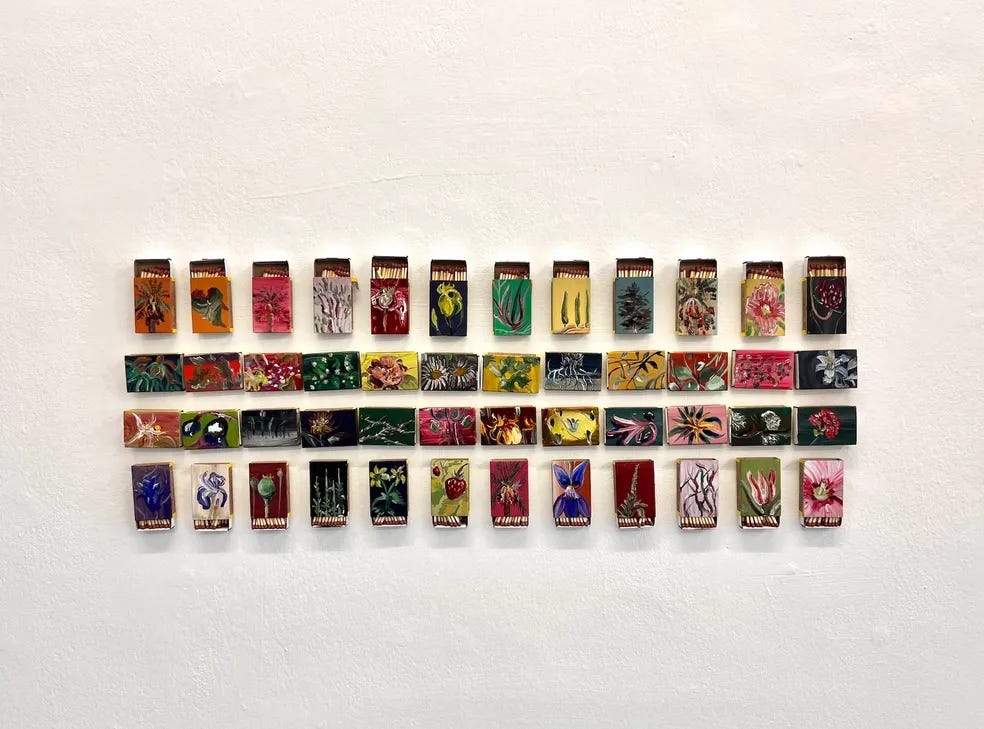
I graduated in September in Italy, returned to Lima, and inaugurated my first solo show, curated by Max, at Revolver Galería. Being able to set up my studio inside the gallery was, in itself, a school: I learned so much about installing and producing exhibitions. Revolver had spaces in Buenos Aires and New York, and during those two years I participated in group shows and incredible fairs that opened up new opportunities for me. Then Feria Material in Mexico came along, where I presented 30 painted matchboxes: they all sold, and one of the collectors—who had an artist residency in Menorca—invited me to take part. That experience marked a decisive turn: my practice became more research-driven, especially around identity through nature.
After Menorca I did a solo show in Vancouver and another in Lima with Ginsberg Galería. At that moment I felt that the market in Lima wasn’t giving me as much anymore, so I decided to apply for a master’s. Painting was still there, latent, especially in difficult moments.
I found the Royal College of Art and got in without really grasping what it was. That’s where I met Pietro Cattai, with whom I started working. And then in London, a first show and new encounters opened doors for me. The master’s program shook up my work and strengthened it. I began a powerful investigation both in the pictorial realm and in the body. I generated new processes in supports like metal and installations. My practice became grounded in research and in how to exhibit it on a bodily and mental level, in the middle of a city like London: with people of all ages, from everywhere, and with the gallery world literally in the eye of the storm.
“The master’s program shook up my work and strengthened it. I began a powerful investigation both in the pictorial realm and in the body.”
What inspires your work today?
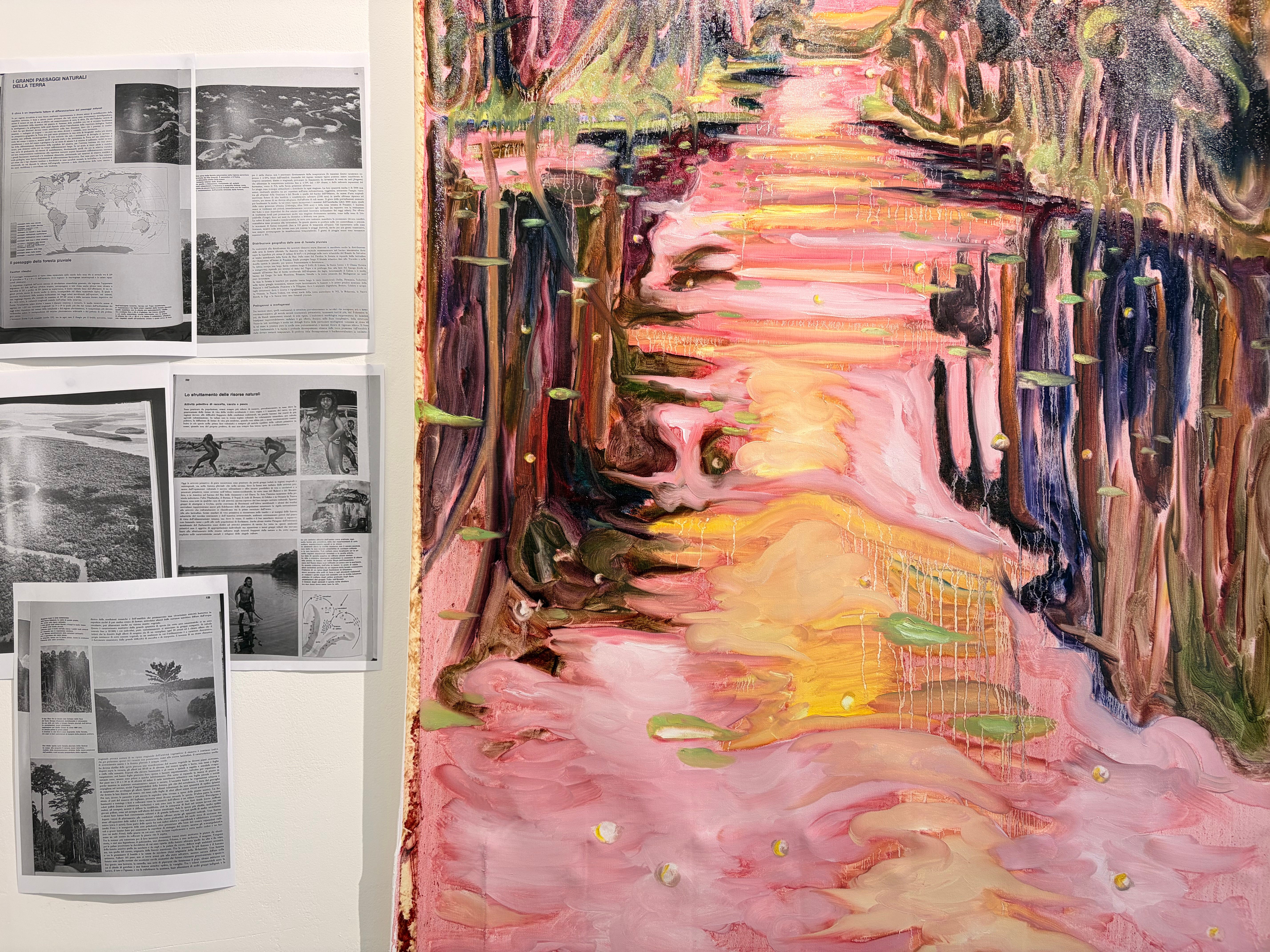
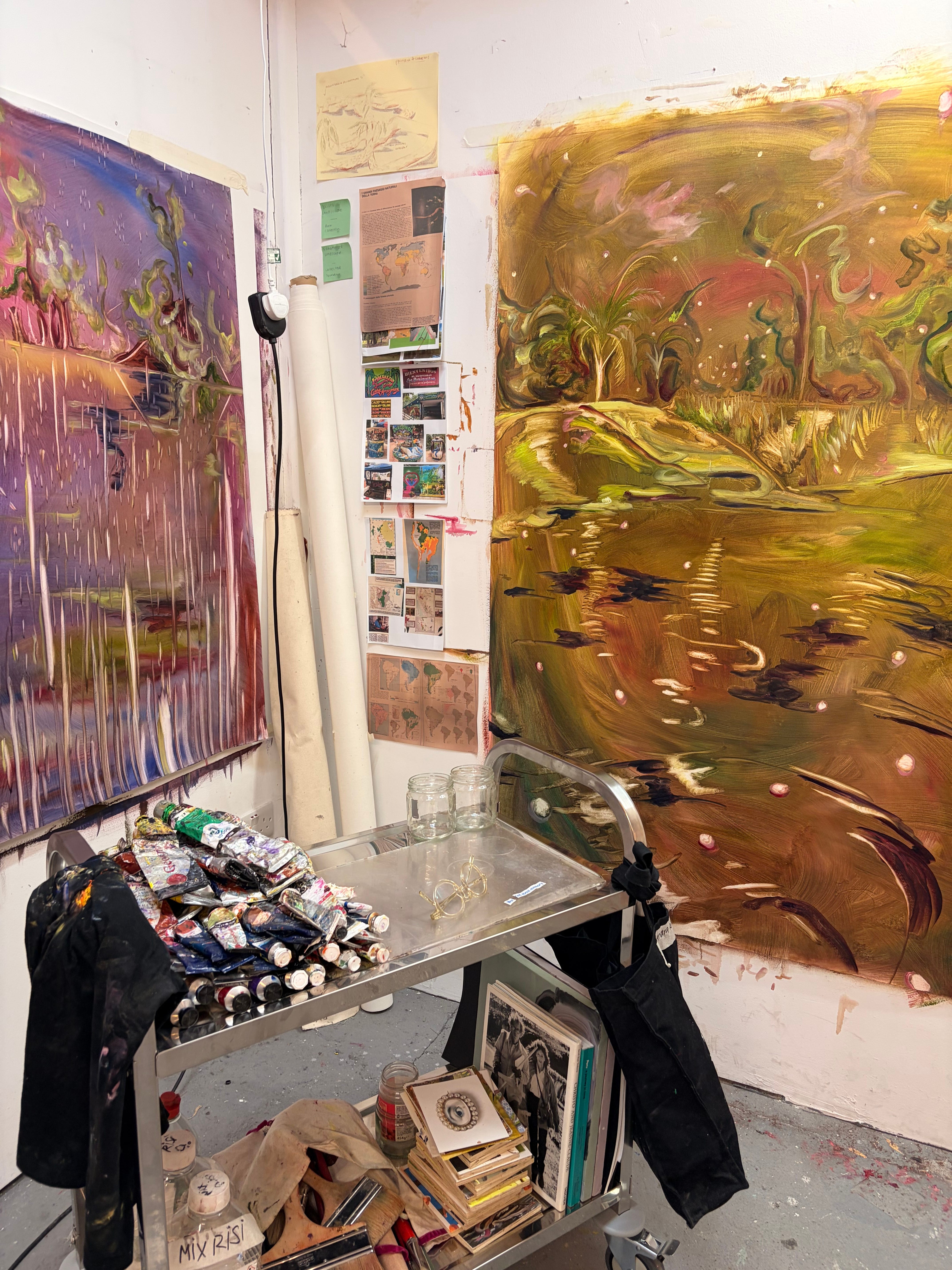
AR: My work is inspired by photographic archives of jungle expeditions, past or present, along with elements like stamps, history books, art references, and personal experiences, which bring a different energy to each painting. I keep this exercise as a mental exercise so I can squeeze it onto the canvas.
How does a piece come to life in your studio: does it come from a defined idea, an image, a sensation, or from experimenting with materials?
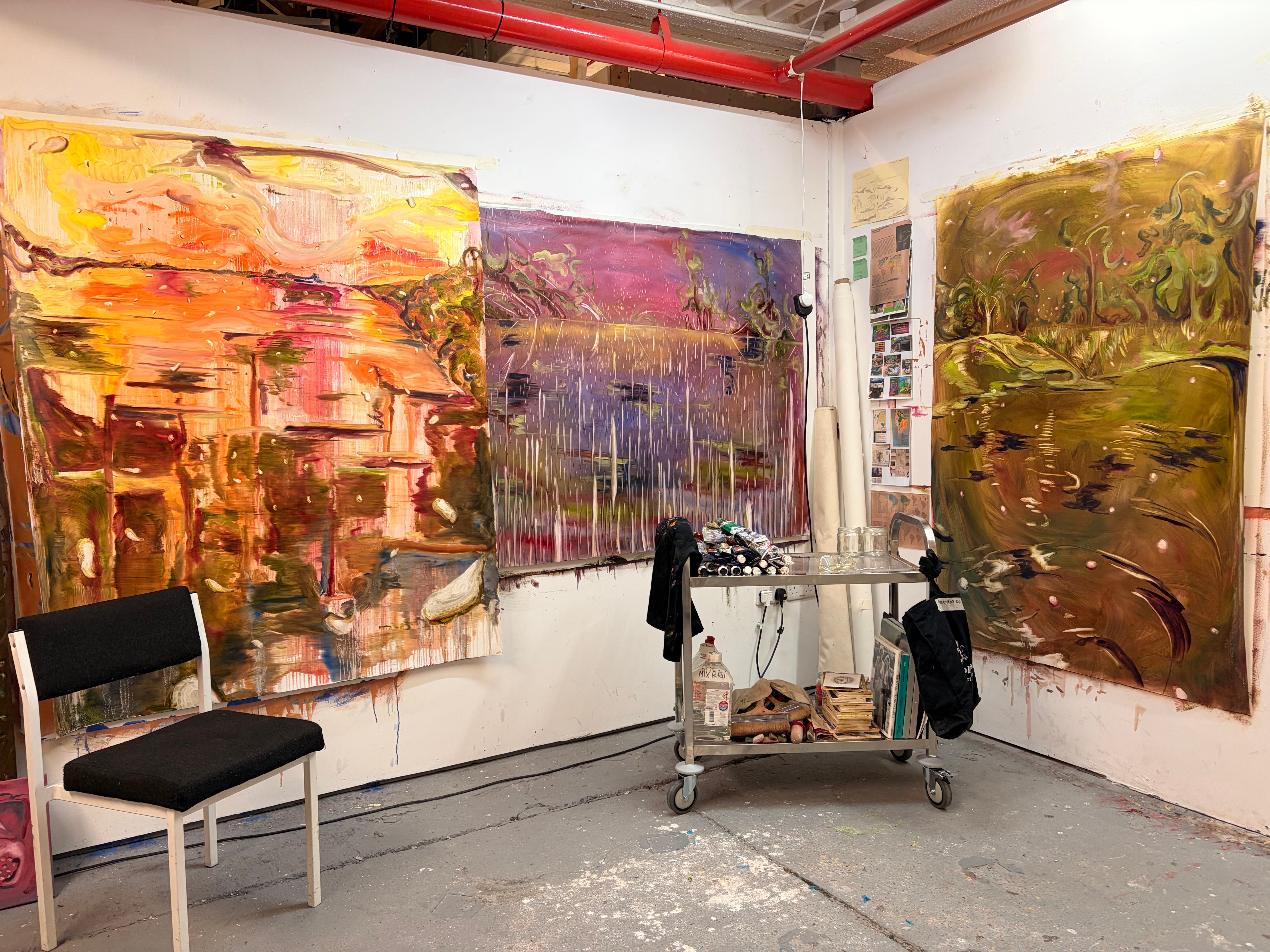
AR: I don’t stop working; my mind is always in constant development of the next painting. Even if I’m on vacation or in the shower, I’m thinking about it. I start with tones and the idea is always clear in my head, and then I go straight to the canvas without drawings or sketches. That said: the energy/desire to paint has to go past 50% for me to really make a painting.
On the other hand there’s the playful material process, which also happens in my head, thinking about the display or the dialogue of the idea with the material.
“I don’t stop working; my mind is always in constant development of the next painting.”
What role does color play in your work?
AR: Color and form are key for me. They translate intensity and contrast. Each painting has its own rhythm; it’s almost like an orchestra.
“Each painting has its own rhythm; it’s almost like an orchestra.”
You were one of the artists selected this year to present your work at Salón ACME in Mexico City. What did it mean for you to show there, and what did you decide to bring into that context?
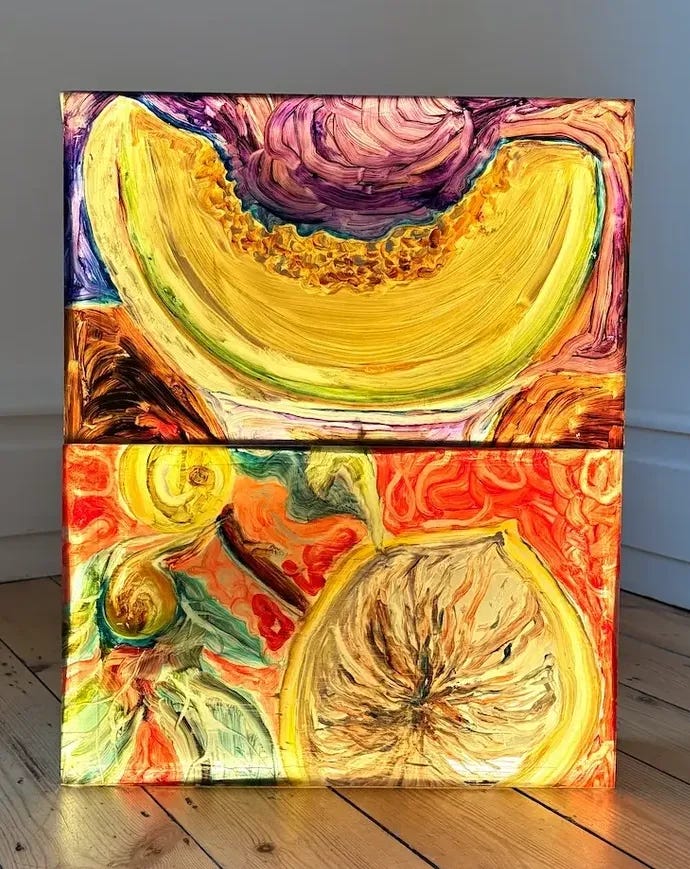
AR: Mexico is always an interesting place, a focal point where people arrive from different parts. Salón ACME selected me precisely for a lightbox, which I will currently present in Venice in the finalists’ exhibition at Berlendis. Since I didn’t have it available, they selected some works I had in my studio. The piece I presented translates the intensity of a lived moment, after making it during a trip to Pucallpa, in the Peruvian jungle, this year.
How do you think about the relationship between your work and the space where it’s shown? Does anything change when it leaves the studio?
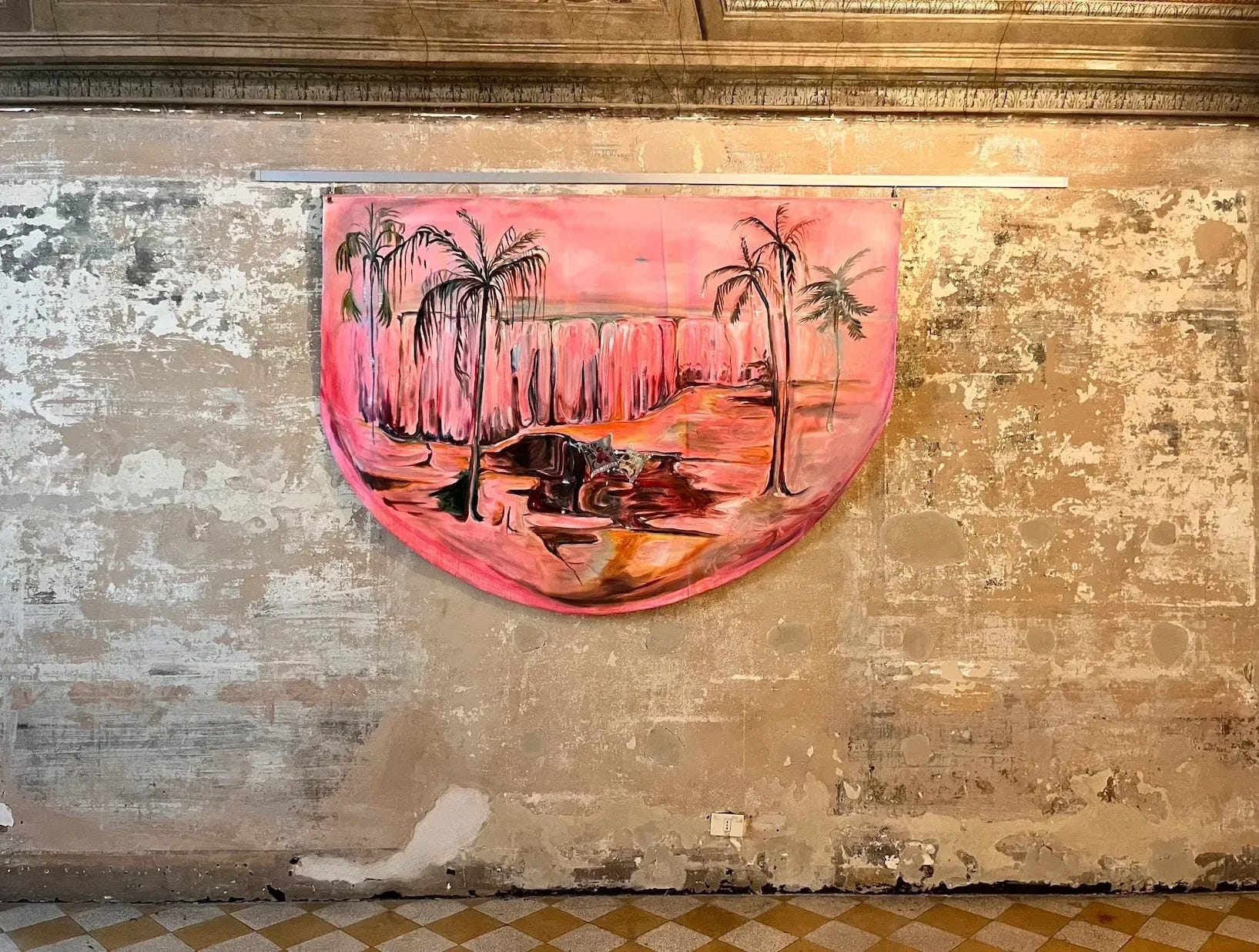
AR: Every time I think about exhibiting, I can’t stop thinking about the space. When you exhibit, a dialogue is formed between the place and the work, and many times it can be political. That’s something I take very much into account: how my dialogue relates (or doesn’t) and what message I’m trying to bring out by making the work in a particular place.
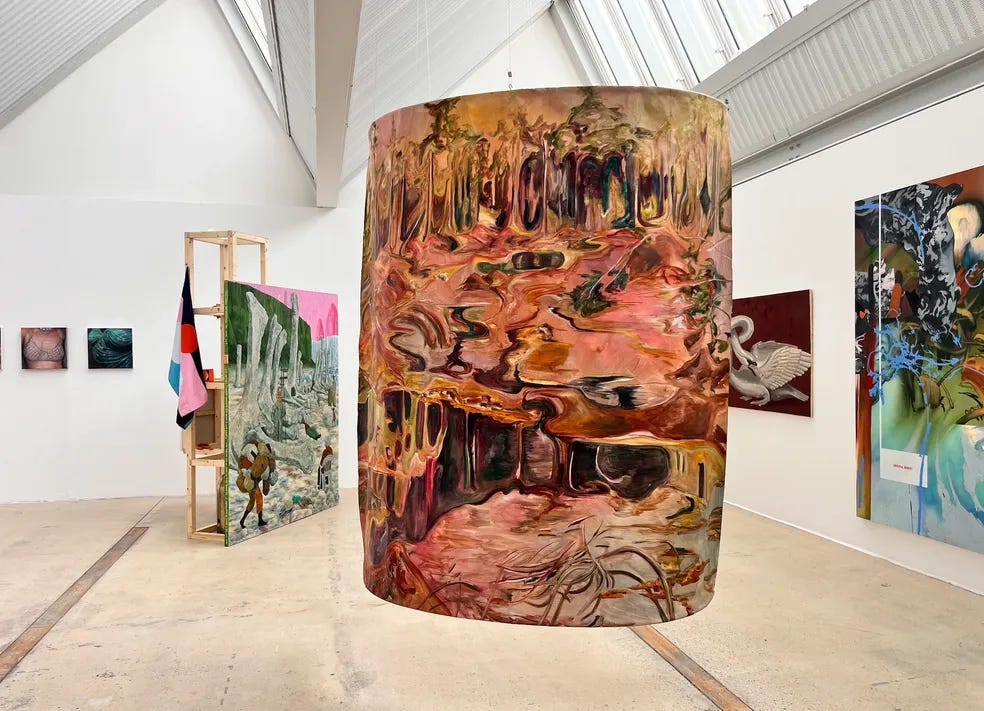
On the other hand, I think about architecture and how the public can move through the work. I consider myself super rebellious for not using stretcher bars and for installing the pieces so that people can move through them.
What conversation would you like to open up around your work?
AR: I like it when the audience creates a dialogue with it, especially through something internal, which is often micro and reflects in the macro. I’m interested in that crossing of identities, Peruvian, and also Italian through my family, which makes the landscape not be identified with a single place, but with several at the same time.
What would you like to develop/experiment with in the coming years?
AR: I don’t know what the future has in store for me. I develop my work one day at a time, and that’s how the ideas and the path of the research project keep flowing forward. But what I do have clear is painting, especially the scales of large and small format.
To learn more about Alessandra Risi, visit:
www.alessandrarisicastoldi.com
En el estudio con: Alessandra Risi
Alessandra Risi es una artista multidisciplinaria cuya práctica se despliega entre la pintura, la investigación y la instalación. Trabajando con archivos fotográficos e investigación vinculada a la Amazonía peruana, junto a fuentes históricas y referencias personales, crea obras intensas y atmosféricas en las que el paisaje se convierte en un espacio de memoria e indagación.
En esta entrevista, Alessandra vuelve a los inicios de su relación con el arte, reflexiona sobre los puntos de giro que marcaron sus estudios y sus primeras exposiciones, y describe cómo sus pinturas cobran vida a través de un proceso de investigación en constante evolución, que se expande hacia nuevos materiales y formas.
Alessandra Risi es una de las cuatro artistas que participan en nuestra primera exposición en Londres, WHAT WE TAKE, co-curado por Art in Latin America y CM Art Advisory. Acompáñanos en la inauguración el próximo viernes 6 de marzo, de 18:00 a 21:00, en Pipeline.
¿En qué momento nació tu vínculo con el arte?
AR: Mi primer acercamiento al arte fue cuando mi abuela me hacía pintar con témperas en la mesada de la cocina, alrededor de los 3 años. Más adelante, cursando primaria, apareció como un salvavidas en el momento de repetir y cambiarme de escuela. Con tantas evaluaciones psicológicas me diagnostican déficit de atención con problemas de aprendizaje; aparecía la parte espacial con un alto puntaje.
Vienes de un recorrido de formación entre Perú, Italia y el Reino Unido. ¿Qué te aportó cada lugar a tu manera de mirar y a tu lenguaje visual, y qué se mantuvo constante?
AR: Cada escuela me aportó cualidades distintas que hoy considero fundamentales. Cuando comencé mis estudios en Corriente Alterna (Lima, Perú), el enfoque era conceptual e investigativo, sin dejar de lado una base académica fuerte de lo plástico. En esos tres años experimenté con muchísima libertad: trabajé con todo tipo de material e instalación. Recuerdo especialmente una instalación de tres columpios de 17 metros en el patio interno, donde cualquiera que entraba podía columpiarse.
Estar en Lima también me hizo ejercer mi carrera desde temprano. Empecé a exponer en el segundo año y comencé a trabajar con Tokio Galería. En los veranos dictaba clases de pintura en la escuela, y llegué a trabajar para Art Lima como asistente de invitados internacionales.
Luego, me trasladé a NABA (Milán, Italia), donde cursé los últimos dos años del bachillerato. Fui parte de la primera promoción llevando el programa en inglés, y eso me abrió un círculo de amistades internacionales. A través de ellos pude observar otras formas de pensar y entender una libertad del arte fuera de los temas políticos y feministas que habían estado muy presentes en mi escuela anterior. Italia, en ese momento, me dio otra visibilidad del mundo del arte, el diseño y la moda. En ese proceso de adaptación recibí una crítica sobre un trabajo pictórico. Yo conversaba mucho con la artista peruana Sylvia Fernández, a quien admiro muchísimo, y ella me sugirió algo clave: alejarme de las imágenes y empezar a sentir la ciudad, su luz, su lluvia, y dejar que esas sensaciones se transfirieran a la pintura.
Poco después llegó la pandemia y tuve que volver a Lima por seis meses. Fueron meses durísimos: un doble invierno, y la sensación de no saber cómo re-adaptarme al lugar del que me había ido. Y ahí reapareció la pintura. No tenía lienzo ni óleo, así que pintaba con témpera sobre papel, en la alfombra de mi cuarto. Empezaron a salir imágenes surreales; las subía a Instagram sin pensar demasiado, y en ese momento comenzó una conversación fenomenal con el curador Max Hernández. Sus comentarios me ayudaron muchísimo.
Me gradué en septiembre en Italia, volví a Lima e inauguré mi primera individual, curada por Max, en Revolver Galería. Poder instalar mi taller dentro de la galería fue, en sí mismo, una escuela: aprendí muchísimo sobre el montaje y la producción de exposiciones. Revolver tenía sedes en Buenos Aires y Nueva York, y durante esos dos años participé en colectivas y ferias increíbles que me abrieron nuevas oportunidades. Luego llegó Feria Material en México, donde presenté 30 cajas de fósforos pintadas: se vendieron todas, y una de las coleccionistas, que tenía una residencia artística en Menorca, me invitó a participar. Esa experiencia marcó un giro decisivo: mi práctica se volvió más investigativa, especialmente en torno a la identidad a través de la naturaleza.
Después de Menorca hice una individual en Vancouver y otra en Lima con Ginsberg Galería. En ese momento sentí que el mercado en Lima ya no me aportaba tanto, así que decidí postular a una maestría. La pintura seguía ahí, latente, especialmente en los momentos difíciles.
Encontré el Royal College of Art y entré casi sin dimensionar lo que era. Ahí conocí a Pietro Cattai, con quien empecé a trabajar. Ya en Londres, una primera muestra y nuevos encuentros me abrieron puertas. La maestría revolcó mi trabajo y lo fortaleció. Empecé una investigación potente tanto en lo pictórico como en el cuerpo. Generé procesos nuevos en soportes como metal e instalaciones. Mi práctica se estableció desde la investigación y desde cómo exponerla a nivel corporal y mental, en medio de una ciudad como Londres: con gente de todas las edades, de todas partes, y con el mundo de las galerías literalmente en el ojo del huracán.
“La maestría revolcó mi trabajo y lo fortaleció. Empecé una investigación potente tanto en lo pictórico como en el cuerpo.”
¿Qué inspira tu obra hoy?
AR: Mi trabajo se inspira en archivos fotográficos de expediciones a la selva, pasadas o presentes, junto con elementos como sellos, libros de historia, referencias artísticas y experiencias personales, que aportan una energía distinta a cada pintura. Este ejercicio lo reservo como ejercicio mental para poder exprimirlo en el lienzo.
¿Cómo nace una pieza en tu estudio: nace de una idea definida, de una imagen, de una sensación o de la experimentación con materiales?
AR: No paro de trabajar; la mente siempre está en constante desarrollo de la siguiente pintura. Así esté de vacaciones o en la ducha, estaré pensando en ella. Parto por tonos y la idea siempre está clara en la cabeza, y luego voy directo al lienzo sin dibujos o bocetos. Eso sí: la energía/ganas de pintar tiene que pasar el 50% para realmente realizar una pintura.
Por otro lado está el proceso lúdico material, donde también sucede en la cabeza, pensando en el display o diálogo de idea con la materia.
“No paro de trabajar; la mente siempre está en constante desarrollo de la siguiente pintura.”
¿Qué papel juega el color en tu obra?
AR: El color y la forma son clave para mí: traducen la intensidad y el contraste. Cada pintura tiene su propio ritmo; es casi como una orquesta.
“Cada pintura tiene su propio ritmo; es casi como una orquesta.”
Fuiste una de las elegidas este año para presentar tu obra en Salón ACME en Ciudad de México. ¿Qué significó para ti mostrar ahí y qué decidiste llevar a ese contexto?
AR: México siempre es un lugar interesante, punto foco donde llegan personas de distintas partes. Salón ACME me seleccionó precisamente por una caja de luz, que actualmente presentaré en Venecia en la muestra de finalistas del espacio Berlendis. Al no tenerla disponible, seleccionaron algunas obras que tenía en mi taller. La pieza presentada traduce la intensidad vivida de un momento, después de realizarla en un viaje a Pucallpa, en la selva del Perú, este año.
¿Cómo piensas la relación entre tu obra y el espacio donde se muestra? ¿Cambia algo cuando sale del estudio?
AR: Cada vez que pienso en exponer no dejo de pensar en el espacio. Al exponer se arma un diálogo del lugar con la obra y muchas veces puede ser político. Eso es algo que tengo mucho en cuenta: cómo mi diálogo se relaciona o no, y qué mensaje trato de exponer haciendo la obra en tal lugar.
Por otro lado, pienso en la arquitectura y cómo el público puede recorrer la obra. Me considero súper rebelde al no utilizar bastidor e instalar las piezas para que las personas la transiten.
¿Qué conversación te gustaría que se abriera alrededor de tu obra?
AR: Me gusta que el público genere un diálogo con ella, en especial con lo interior, que muchas veces es micro y se refleja en lo macro. Me interesa ese cruce de identidades: peruana, y también italiana por mi familia, que hace que el paisaje no se identifique con un solo lugar, sino con varios a la vez.
¿Qué te gustaría desarrollar/experimentar en los próximos años?
AR: No sé qué me depare el futuro. Voy desarrollando mi trabajo un día a la vez, y así es como las ideas y el camino del proyecto de investigación va fluyendo para continuar adelante. Pero sí tengo claro que es la pintura, en especial las escalas de gran y pequeño formato.
Para saber más sobre Alessandra Risi, visita: