


In 2021, when I settled in Paris after completing my Curatorial Studies at the University of Navarra in Pamplona, the Latin American art scene appeared to me as an isolated and dispersed landscape. It attracted a certain number of researchers and doctoral students, as well as people with varied cultural interests in Latin America — whether musical, visual, or literary — but without reaching any real systematization of the presence of cultural agents.
It is true that artistic production has taken shape in a different way, given that the relationship between Latin American cultural migrations and Paris has a long history: that of artists who moved to the city through residencies and study grants and who later helped trace part of local art history. However, the relationship between Paris and Latin American curating — or curators explicitly focused on the region and based in the city — is much more recent.
As a Cuban curator in the midst of discovering the inner workings of the system, finding a Latin American colleague in 2021 meant, for me, encountering a professional reference point and opening myself up to the notion of a possible professional “community” — if such a thing existed — something that had been so scarce since my arrival. My first point of reference, and someone who continues to be one to this day, was the Uruguayan curator Noelia Portela.
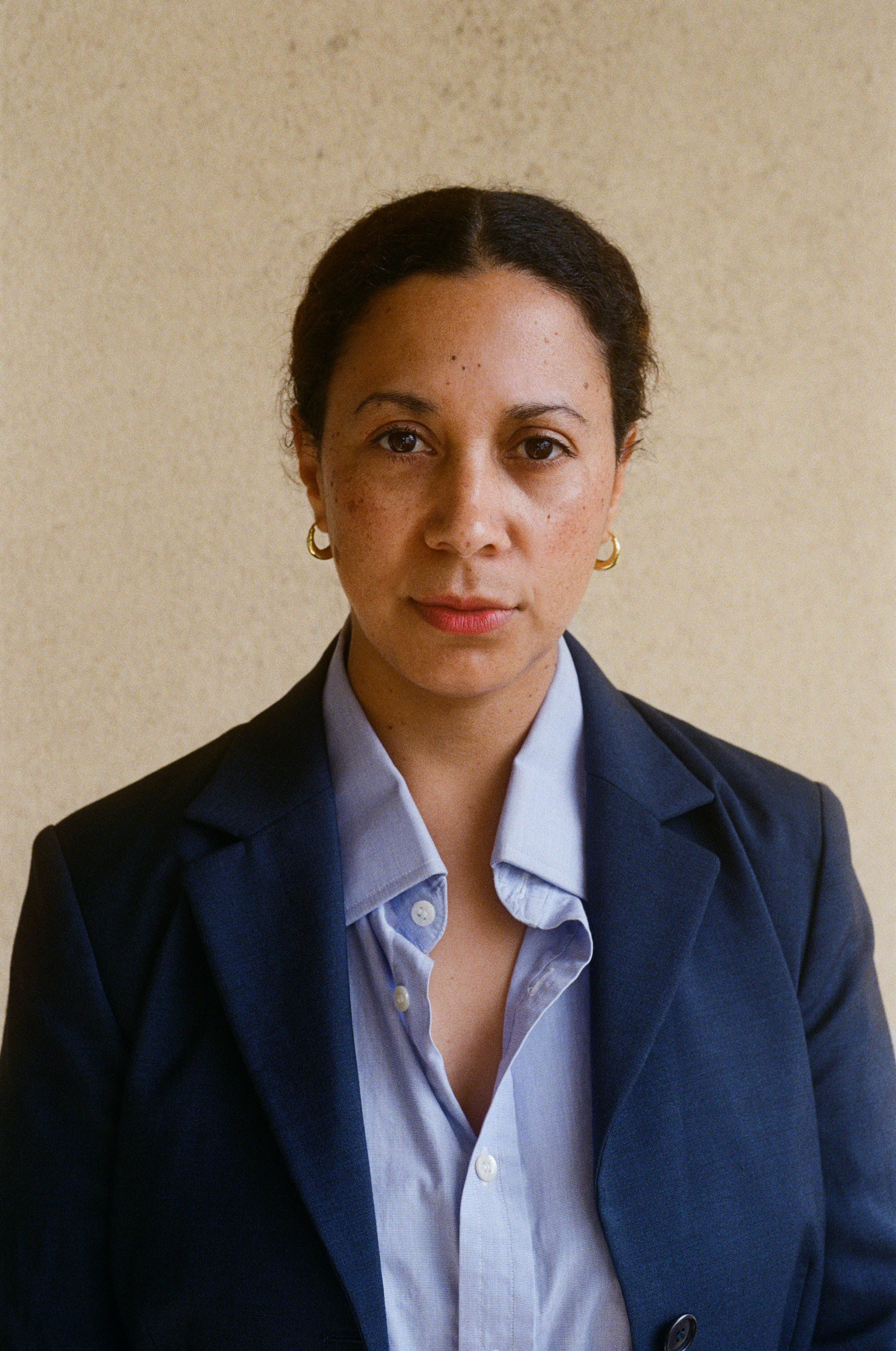
Based in Paris for the past decade, following work experiences in New Zealand, London, Venice, and New York, Noelia Portela synthesizes and asserts through her practice one of the conditions that defines both myself and many young art professionals in our community: that of being an independent curator, with an established and consistent practice — and therefore one considered her main source of income — while also being a migrant.
I sit down with Noelia to discuss the challenges that define Latin American curating in the city, the professional paths available to a curator who constructs herself from displacement and the margins, and, more specifically, Persona Curada, the platform through which she has spent nearly a decade making visible and promoting the work of Latin American artists in the diaspora, against the financial instability this may entail.
DB: Noelia, before settling in Paris, your practice intersected with other fields, such as work in art spaces, galleries, and commercial fairs — including Peter McLeavey Gallery in New Zealand; your collaboration with Galería AFA in Chile for the Ch.ACO fair; Venice Design; and, more recently, 1-54 Contemporary African Art Fair and Mira Art Fair. Was curating something that came to you later, in a more spontaneous way, or was it always the central axis of your work?
NP: I could say that it has always been the central axis of my practice, or at least the direction toward which everything tended, although my entry into curating was not direct. I began by studying set design, and it was through an art history class that something shifted. In that context, I began to be less interested in how exhibitions looked and more in what they said, in the discourses they constructed and the relationships they activated. That opened up a field of reflection that marked the beginning of my interest in curating.
From then on, I knew I wanted to be a curator, in the sense that there was a clear professional horizon. However, over time I came to understand that “being a curator” is not learned solely through the formal frameworks that proliferate today — programs, master’s degrees, or specialized training — but is, above all, a practice built through doing. It is a process woven through networks, community, shared experiences, and sustained work over time. The figure of the independent curator, as we understand it today, is relatively recent and continues to transform.
At the same time, this practice is deeply shaped by a material reality that is not neutral. Not everyone has the same conditions to access or sustain an independent curatorial career. The structural precarity of the sector, the lack of fair remuneration, and the dependence on informal networks mean that this practice remains, in many cases, a space of privilege. Recognizing this is fundamental: being able to work as an independent curator and, even more so, being able to live from it, implies occupying a position that is not equally available to everyone.
This is also why sustaining a curatorial practice means actively participating in different levels of the art ecosystem — production, coordination, writing, mediation, teaching — not only as an economic necessity, but as a way of critically inhabiting that system. It is precisely within this multiplicity of experiences that the relationships that later sustain projects are developed. Because, ultimately, curatorial work is not limited to the conception of exhibitions, but is grounded in the ability to generate bonds, activate contexts, and collectively build spaces for thought and encounter.
“… Curatorial work is not limited to the conception of exhibitions, but is grounded in the ability to generate bonds, activate contexts, and collectively build spaces for thought and encounter.”
DB: Upon your arrival in Paris in 2019, did you feel the support or, at least, the existence of a Latin American migrant community that, to some extent, contributed to your insertion into the city? In that sense, how did your affections and personal needs for integration coexist with your professional practice as a curator?
NP: I settled in Paris in 2019, although between 2017 and 2018 I was already traveling frequently to the city, alongside various freelance jobs. At that moment, Paris seemed to me a particularly stimulating context: a more concentrated scene and, in some respects, a more accessible one than cities such as Berlin or London, where I had previously lived and worked.
To answer your question directly, my arrival was not accompanied by a migrant community that facilitated my professional insertion. I did not have a pre-existing network to help me navigate the local ecosystem. In addition, shortly after I settled there, the pandemic arrived, which made everything even more chaotic and, in many ways, deeply lonely. The possibilities for encounter, circulation, and insertion were abruptly limited.
In that context, the process was necessarily self-directed. What truly opened up a space of possibility was Persona Curada. The project functioned not only as a curatorial platform, but as a tool to build the conditions I did not find already in place. Through Persona Curada, I began weaving a community that, at least from my experience, did not visibly exist at that time: a network of artists, art workers, friends, and collaborators inhabiting the local scene, who made the development of the projects possible. The artists who agreed to collaborate were fundamental, as were the spaces and institutions that trusted the project and opened their doors to me. It was within that web of relationships that my practice — and, progressively, my place within the French scene — began to take shape.
More than a linear insertion, it has been a process of collective construction, where community was not a starting point, but something that had to be imagined, activated, and accompanied in its development.
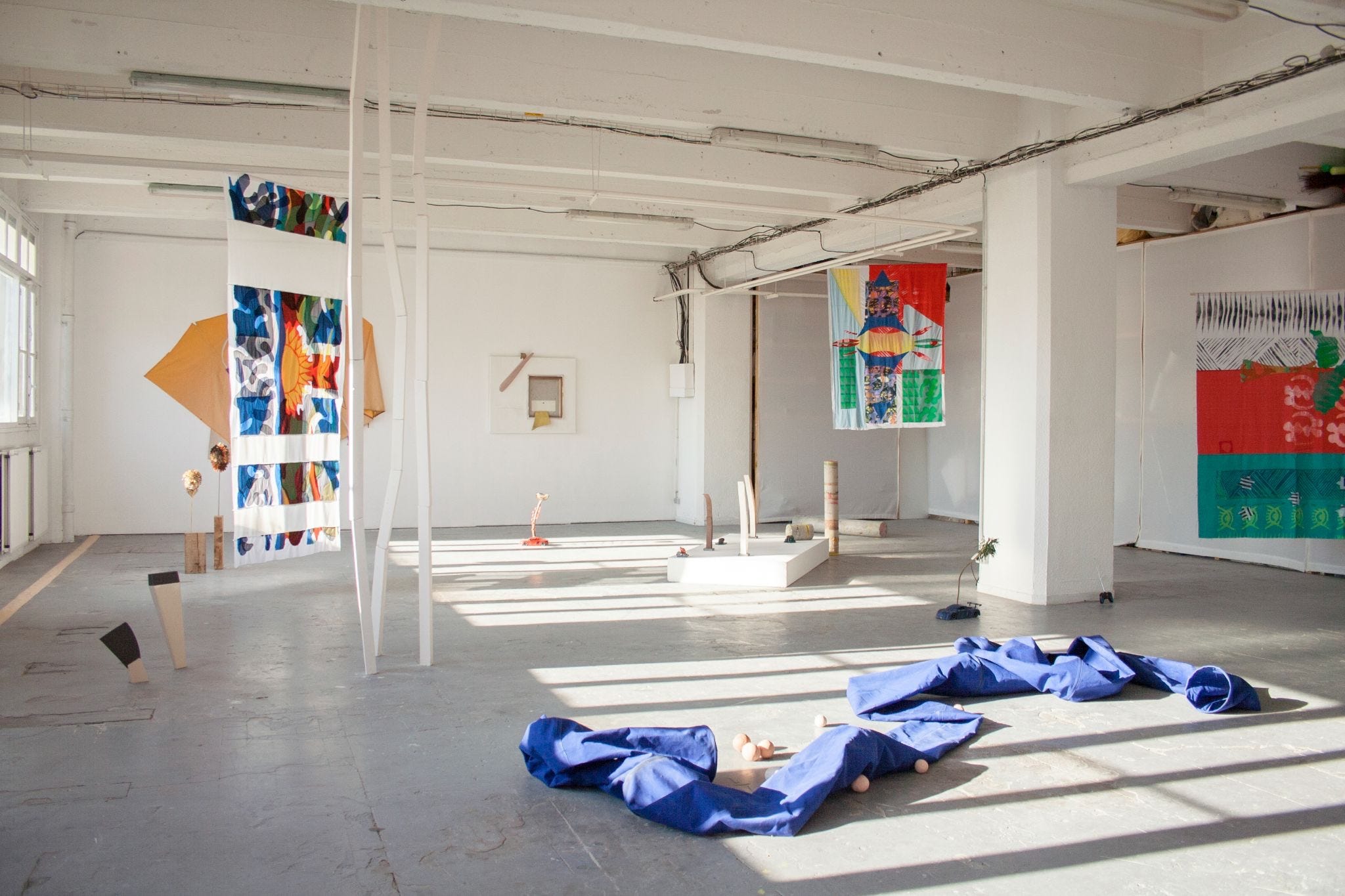
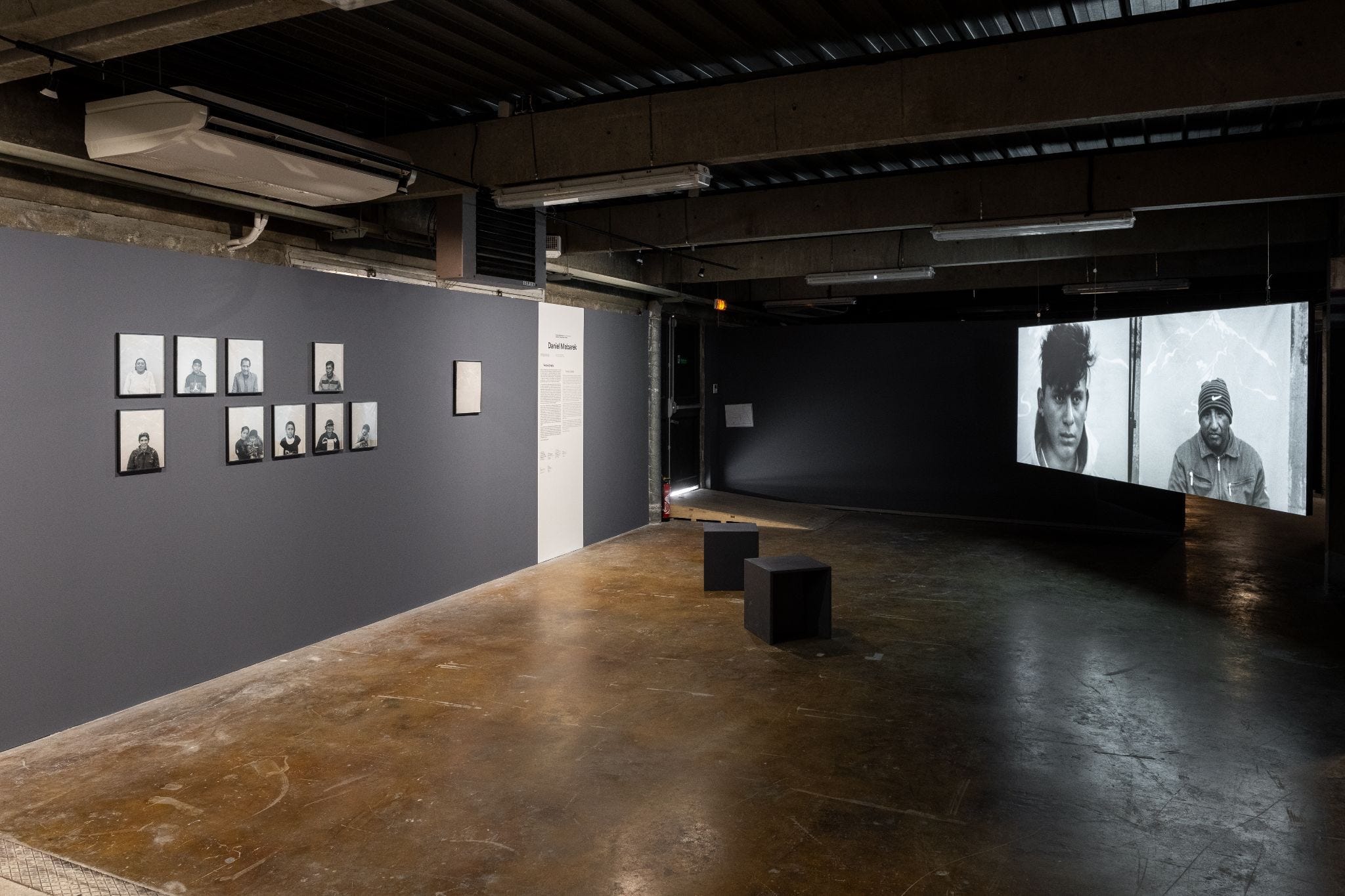
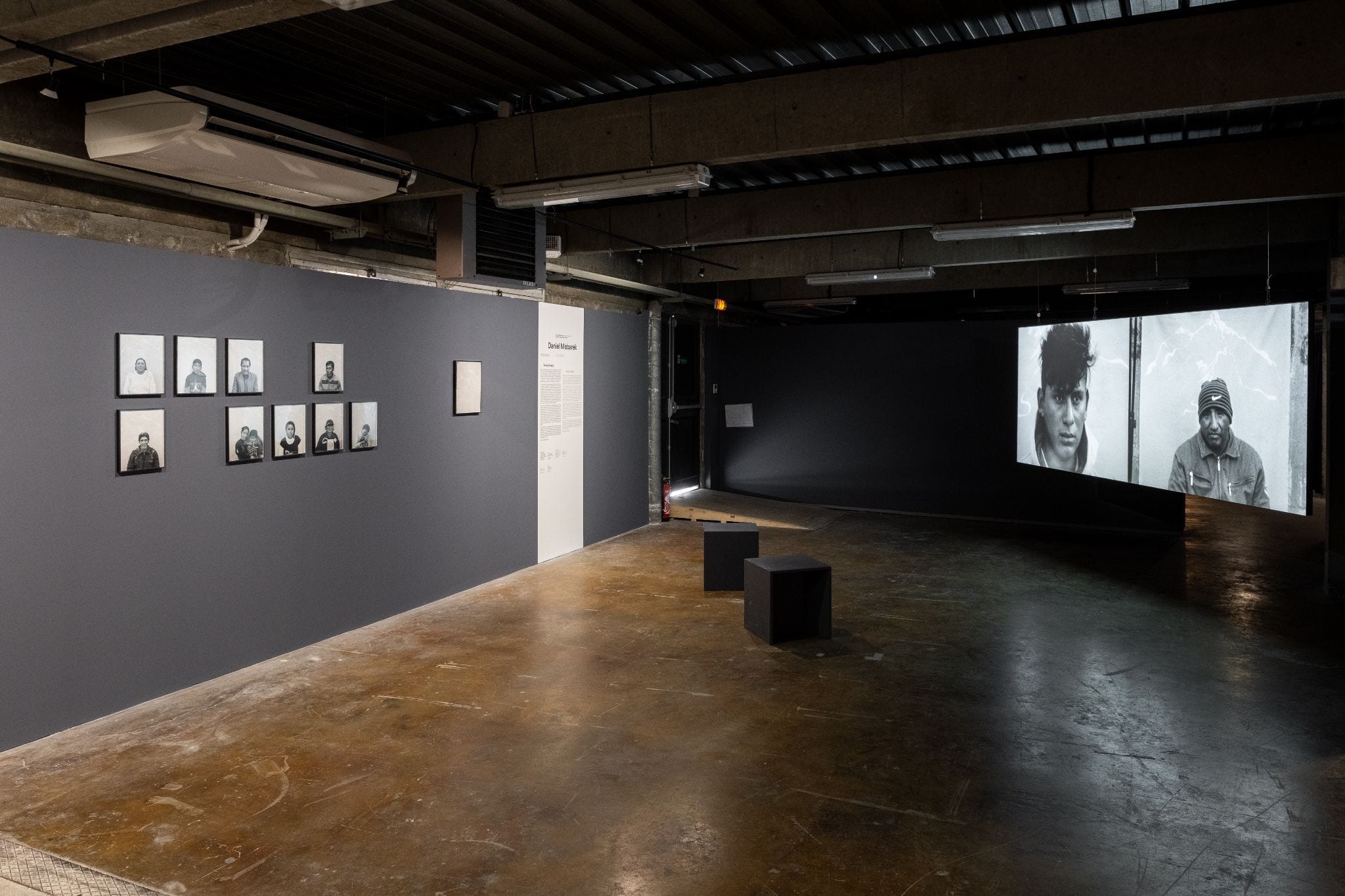
DB: In 2017, almost a decade ago now, you created Persona Curada, your professional “child” and the project that has most consolidated your curatorial identity. Persona Curada has functioned as a nonprofit platform, unprecedented in its style for being a pioneer in Paris in the representation of artists from the Latin American diaspora. Its functions are divided between the production of exhibitions and the accompaniment of artists, whether through grants, residencies, or applications, as was the case with its recent participation in Les Rencontres d’Arles 2025, with the work of Daniel Mebarek. Today, we could almost say, it has become an institution within the Paris art scene. Tell me about the main challenges of creating a project of this scale and, even more importantly, of sustaining it over time.
NP: For those who do not know Persona Curada, your introduction is very accurate, although I am interested in situating the project within the context in which it operates: a scene like Paris, which remains, in many ways, opaque and difficult to penetrate.
Persona Curada did not emerge as a representational gesture around a fixed identity — such as the Latin American diaspora — but as a situated response to concrete experiences. It is built from the people who activate it: artists and collaborators who inhabit and work within the local French scene. That is where the project is articulated from. Not as an “outside” seeking to enter, but as a practice that is already implicated in that fabric. This position has been key, because it shifts the idea of representation toward a logic of relation, insertion, and friction.
In that sense, the real challenge for Persona Curada is not so much to emerge, but, as you say, to sustain itself. To maintain a relevance that does not depend solely on the urgency of the moment, but on consistency over time. And that consistency is not programmatic; it is ethical. The question of coherence — between what is said and what is done — is central. But so is the way in which relationships are built. When we speak of radical care, feminisms, or intersectionality, it is not a matter of language or discursive positioning, but of concrete practices. Of how one works, how one cares, how one sustains those who are part of the process.
There is no possibility of building lasting structures without that dimension. There is no community without an ethics that sustains it. Persona Curada was born from that place: not as a platform of representation, but as a space to rehearse other ways of making institution. Or, perhaps, to imagine others that do not yet exist.
“There is no community without an ethics that sustains it. Persona Curada was born from that place: not as a platform of representation, but as a space to rehearse other ways of making institution. Or, perhaps, to imagine others that do not yet exist.”
DB: Your work extends far beyond Persona Curada, something we have seen especially in recent years through your role as head of public programming for an art fair during its first two editions. You are also a teacher and have been invited to serve on juries for artist prizes, such as the Prix AWARE in 2024, awarded to Laura Huertas Millán following your nomination. In 2025, you received a grant from Fluxus Art Projects to travel to London, and this year you have been invited as a jury member at Beaux-Arts de Paris, at L’École nationale supérieure d’arts de Paris-Cergy, and as a specialist for one of the few existing institutional residencies in Île-de-France, with La Galerie, Centre d’Art Contemporain de Noisy-le-Sec. We are speaking here of true spaces of legitimation for curating and artistic management more broadly. Looking back at your trajectory, how has it been for Noelia Portela to make her way in a city that tends to privilege professional individualism and where curatorial practice is threatened by legal and salary precarity? What place do you give to the notion of community?
NP: In my personal experience, founding Persona Curada has been key to the development of my career in parallel. Thanks to the networks and collaborations that have been built over time, I have been able to integrate into and become an active part of the local French scene, which is, in reality, a profoundly international scene in its dynamics and actors.
From the beginning, the platform has been conceived as an open space, capable of welcoming and accompanying other practices. My working methodology has consisted of generating the conditions for other people to develop their own projects within this structure — whether through ongoing accompaniment or through specific participations, as you mention in the case of Daniel Mebarek at the Arles Festival. Accompanying artistic processes or building projects from A to Z produces forms of relationship that are both professional and affective, and that ultimately define a way of inhabiting the field.
At the same time, this experience has allowed me to closely observe the conditions under which curatorial work is carried out today. Faced with contexts that are often precarious, curators increasingly tend to organize themselves, affiliate, and generate networks that allow them not only to sustain their practices, but also to make visible those aspects of the work that often remain hidden.
Because, indeed, behind the glamorous and more visible dimension of the art world, problematic dynamics persist: poorly managed projects, lack of clarity around responsibilities, disproportionate promises in relation to the real conditions of collaboration, symbolic or even nonexistent remuneration. Naming these conditions is not anecdotal. It forms part of a broader need to reconfigure the field, to make it more transparent, fairer, and, ultimately, more viable for those who inhabit it.
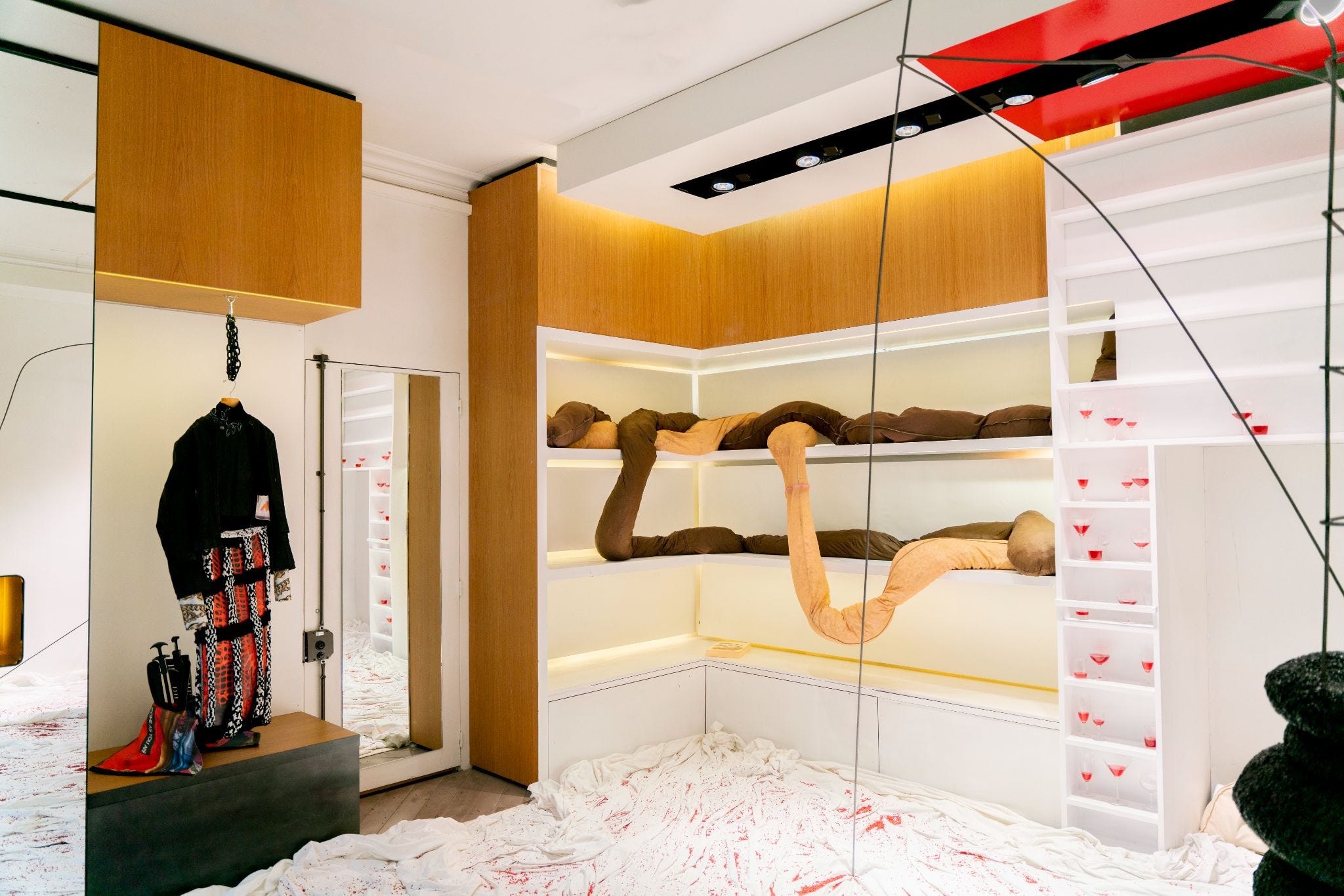
DB: What themes and artistic sensibilities do you tend to prioritize in your work when selecting the artists you collaborate with?
NP: That is difficult to answer, because I do not start from a theme or a pre-existing concept when choosing whom to work with.
First there is a more intuitive and visual gesture: something in the form, in the presence of a work, that arrests the gaze. And then comes the second level, more discursive, which has to do with narrative and with the human; with how that work situates itself and what relationships it proposes, what position it assumes, what relationship it establishes with the world.
For me, it is in that crossing between the aesthetic and the human that a collaboration is defined.
DB: Noelia, in light of the recent emergence of Latin American artistic initiatives in Paris — the creation of platforms, blogs, and the appearance of new curators, content creators, and even pseudo-collectors — which have begun to insert Latin American art into a kind of boom of “now everyone wants to be Latino,” to use Bad Bunny’s phrase, what future do you foresee for the representation of Latin art in Paris?
NP: It gives me a lot of hope that initiatives are multiplying, but I also think it is fundamental that these projects manage to articulate themselves, generate alliances with existing projects, and, to some extent, institutionalize themselves in order to have a real impact.
It is crucial to problematize the very notion of “Latino identity,” which is not a neutral or homogeneous category, but rather a construction shaped by different colonial histories, racial hierarchies, and power relations that continue to operate today in extremely violent contemporary contexts. To think of Latino identity as a heteroclite block implies erasing fundamental differences of class, race, territory, and language, and in many cases reproduces a simplified gaze that responds more to an external logic than to the situated realities of Latin America.
From a decolonial perspective, the challenge is precisely to dismantle that category as a fixed label and to question from where it is enunciated and who represents it. This is especially relevant in Europe, where many of these discussions have still not been fully incorporated at all, while in Latin America they form part of more advanced critical and academic debates. Therefore, the projects that emerge in Europe are called not to replicate, but to profoundly rethink their frames of reference. Many times, they find themselves conditioned — even unconsciously — to reproduce white and Western positions within the scene.
For this reason, the challenge is not only to create spaces of “visibility,” but to build platforms capable of interrogating their own conditions of existence, avoiding the reproduction of inherited structures and opening, instead, other forms of thought and practice.
To learn more about Noelia Portela and Persona Curada, visit:
En conversación con: Noelia Portela
En el año 2021, cuando me asenté en París después de mis estudios de Curaduría en la Universidad de Navarra (Pamplona), el escenario artístico latinoamericano se mostraba como un panorama aislado y disperso, atrayente para un cierto número de investigadores y doctorandos, así como para algunos con intereses culturales de diversa índole en América Latina, ya fuesen musicales, plásticos o literarios, sin ir más allá de una verdadera sistematización de la presencia de agentes culturales. Cierto es que la producción artística se ha configurado de otra manera, dado que la relación de las migraciones culturales latinoamericanas en París es una historia antigua: la de artistas que emigraron a la ciudad con residencias y becas de estudio y que, posteriormente, trazaron parte de la historia del arte local. Sin embargo, la relación entre París y la curaduría latinoamericana -o de curadores explícitamente enfocados en la región y asentados en la ciudad- es mucho más reciente.
Como curadora cubana en pleno descubrimiento de los entresijos del sistema, encontrar en 2021 a una colega latinoamericana significó para mí dar con un referente profesional y abrirme a la noción de una posible “comunidad” profesional -si es que existía-, algo que tanto escaseaba desde mi llegada. Mi primer referente, y alguien que continúa siéndolo hasta hoy, fue la curadora uruguaya Noelia Portela.
Radicada en París desde una década tras sus experiencias de trabajo en Nueva Zelanda, Londres, Venecia, y Nueva York, Noelia Portela sintetiza y reivindica con su práctica una de las condiciones que me atraviesan a mí y a buena parte de los jóvenes profesionales del arte de nuestra comunidad: la de ser curadora independiente, con una práctica establecida y constante -y, por tanto, considerada su principal fuente de ingresos-, y ser, al mismo tiempo, migrante.
Con Noelia me siento a conversar sobre los retos que definen la curaduría latinoamericana en la ciudad, las salidas profesionales para un curador que se construye desde el desplazamiento y el margen y, más puntualmente, sobre Persona Curada, su plataforma con la que lleva casi una década visibilizando y promoviendo el trabajo de artistas latinoamericanos en la diáspora, a contracorriente de la inestabilidad financiera que esto puede implicar.
DB: Noelia, antes de establecerte en París, tu práctica rozó otros ámbitos, como el trabajo en espacios de arte, galerías y ferias comerciales -como Peter McLeavy Gallery en Nueva Zelanda, colaboraste con la galería AFA en Chile para la feria Ch.ACO, Venice Design y, en años más recientementes, con 1-54 Contemporary African Art Fair y Mira Art fair-. ¿Fue la curaduría para ti una elección que llegó posteriormente, de un modo más espontáneo, o siempre fue el eje central de tu trabajo?
NP: Podría decir que siempre ha sido el eje central de mi práctica, o al menos la dirección hacia la que todo tendía, aunque mi entrada a la curaduría no fue directa. Comencé estudiando diseño de escenografías y fue a partir de una clase de historia del arte que algo se desplazó. En ese contexto empecé a interesarme menos por cómo se veían las exposiciones y más por lo que decían, por los discursos que construían y las relaciones que activaban. Ahí se abrió un campo de reflexión que marcó el inicio de mi interés por la curaduría.
Desde entonces, supe que quería ser curadora, en el sentido de que existía un horizonte profesional claro. Sin embargo, con el tiempo entendí que el “ser curadora o curador” no se aprende únicamente a través de los marcos formales que hoy proliferan (programas, másteres o formaciones especializadas) sino que es, sobre todo, una práctica que se construye en el hacer. Es un proceso que se teje a partir de redes, de comunidad, de experiencias compartidas y de trabajo sostenido en el tiempo. La figura del curador independiente, tal como la entendemos hoy, es relativamente reciente y continúa en transformación.
Al mismo tiempo, esta práctica está profundamente atravesada por una realidad material que no es neutral. No todas las personas tienen las mismas condiciones para acceder o sostener una carrera curatorial independiente. La precariedad estructural del sector, la falta de remuneraciones justas y la dependencia de redes informales hacen que esta práctica siga siendo, en muchos casos, un espacio de privilegio. Reconocer esto es fundamental: poder trabajar como curadora independiente y, aún más, poder vivir de ello, implica una posición que no está igualmente disponible para todxs.
También por eso, sostener una práctica curatorial implica participar activamente en distintos niveles del ecosistema del arte —producción, coordinación, escritura, mediación, docencia— no solo como una necesidad económica, sino como una forma de habitar críticamente ese sistema. Es precisamente en esa multiplicidad de experiencias donde se desarrollan las relaciones que luego sostienen los proyectos. Porque, en última instancia, el trabajo curatorial no se limita a la concepción de exposiciones, sino que se funda en la capacidad de generar vínculos, de activar contextos y de construir, colectivamente, espacios de pensamiento y de encuentro.
“… el trabajo curatorial no se limita a la concepción de exposiciones, sino que se funda en la capacidad de generar vínculos, de activar contextos y de construir, colectivamente, espacios de pensamiento y de encuentro.”
DB: A tu llegada a París en el 2019, ¿sentiste el apoyo o, al menos, la existencia de una comunidad migratoria latinoamericana que, en cierta medida, contribuyera a tu inserción en la ciudad? En ese sentido, ¿cómo convivieron tus afectos y tus necesidades personales de integración con tu práctica profesional como curadora?
NP: Me instalé en París en 2019, aunque entre 2017 y 2018 ya viajaba con frecuencia a la ciudad, en paralelo a distintos trabajos freelance. En ese momento, París me parecía un contexto particularmente estimulante: una escena más concentrada y, en ciertos aspectos, más accesible que ciudades como Berlín o Londres, donde había vivido y trabajado anteriormente.
Para contestar directamente a tu pregunta, mi llegada no estuvo acompañada por una comunidad migrante que facilitara mi inserción profesional. No contaba con una red previa que me ayudara a navegar el ecosistema local. Además, poco tiempo después de instalarme, llegó la pandemia, lo que volvió todo aún más caótico y, en muchos sentidos, profundamente solitario. Las posibilidades de encuentro, de circulación y de inserción se vieron abruptamente limitadas.
En ese contexto, el proceso fue necesariamente autodirigido. Lo que realmente abrió un espacio de posibilidad fue Persona Curada. El proyecto funcionó no solo como una plataforma curatorial, sino como una herramienta para construir las condiciones que no encontraba dadas. A través de Persona Curada, fui tejiendo una comunidad que, al menos desde mi experiencia, no existía de manera visible en ese momento: una red de artistas, trabajadores del arte, amigxs y colaboradores que habitan la escena local y que hicieron posible el desarrollo de los proyectos. Fueron fundamentales lxs artistas que aceptaron colaborar, así como los espacios e instituciones que confiaron en el proyecto y me abrieron sus puertas. Es en ese entramado de relaciones se fue configurando mi práctica y, progresivamente, mi lugar dentro de la escena francesa.
Más que una inserción lineal, ha sido un proceso de construcción colectiva, donde la comunidad no era un punto de partida, sino algo que hubo que imaginar, activar y acompañar en su desarrollo.
DB: En 2017, hace ya casi una década, creas Persona Curada, tu “hijo” profesional y el proyecto que más ha consolidado tu marca curatorial. Persona Curada ha funcionado como una plataforma non profit, inédita en su estilo por ser pionera en París en la representación de artistas de la diáspora latinoamericana. Divide sus funciones entre la producción de exposiciones y el acompañamiento de artistas, ya sea en becas, residencias o candidaturas, como fue el caso de su reciente participación en Les Rencontres d’Arles 2025, con la obra de Daniel Mebarek. Hoy, convertida casi en una institución dentro del arte en París, podríamos decir. Cuéntame sobre los principales retos de crear un proyecto de esta envergadura y, más importante aún, de sostenerlo en el tiempo.
NP: Para quienes no conocen Persona Curada, tu introducción es muy acertada, aunque me interesa situar el proyecto dentro del contexto en el que opera: una escena como la parisina, que sigue siendo, en muchos sentidos, opaca y difícil de penetrar.
Persona Curada no surge como un gesto representacional en torno a una identidad fija —como podría ser la diáspora latinoamericana— sino como una respuesta situada a experiencias concretas. Se construye desde las personas que la activan: artistas y colaboradores que habitan y trabajan dentro de la escena local francesa. Es desde ahí que el proyecto se articula. No como un “afuera” que busca entrar, sino como una práctica que ya está implicada en ese tejido. Esa posición ha sido clave. Porque desplaza la idea de representación hacia una lógica de relación, de inserción y de fricción.
En ese sentido, el verdadero reto para Persona Curada no es tanto emerger, sino como dices, sostenerse. Mantener una relevancia que no dependa únicamente de la urgencia del momento, sino de una consistencia en el tiempo. Y esa consistencia no es programática, es ética. La cuestión de la coherencia —entre lo que se dice y lo que se hace— es central. Pero también lo es la manera en que se construyen los vínculos. Cuando hablamos de radical care, de feminismos o de interseccionalidad, no se trata de un lenguaje ni de una posición discursiva, sino de prácticas concretas. De cómo se trabaja, de cómo se cuida, de cómo se sostiene a quienes forman parte del proceso.
No hay posibilidad de construir estructuras duraderas sin esa dimensión. No hay comunidad sin una ética que la sostenga. Persona Curada nace desde ese lugar: no como una plataforma de representación, sino como un espacio para ensayar otras formas de hacer institución. O, quizás, para imaginar otras que aún no existen.
“No hay comunidad sin una ética que la sostenga. Persona Curada nace desde ese lugar: no como una plataforma de representación, sino como un espacio para ensayar otras formas de hacer institución. O, quizás, para imaginar otras que aún no existen.”
DB: Tu trabajo se extiende mucho más allá de Persona Curada, algo que hemos visto especialmente en los últimos años con tu participación como responsable de la programación pública de una feria de arte, durante sus dos primeras ediciones. Eres además docente, y has sido invitada a formar parte de jurados de premios para artistas, como el Prix AWARE en el 2024, otorgado a Laura Huertas Millán a partir de tu nominación. Fuiste galardonada en el 2025 con una beca de Fluxus Art Projects para ir a Londres, y este año estás invitada como jurado en el Beaux Arts de Paris, en L’École nationale supérieure d’arts de Paris-Cergy, y como especialista para una de las pocas residencias institucionales existentes en Ile-de-France con La Galerie Centro de Arte Contemporáneo de Noisy-Le-Sec. Hablamos aquí de verdaderos espacios de legitimación para la curaduría y la gestión artística en general. Viendo tu trayectoria en perspectiva, ¿cómo ha sido para Noelia Portela abrirse paso en una ciudad que tiende a ponderar el individualismo profesional y donde la práctica curatorial se ve amenazada por la precariedad legal y salarial? ¿Qué lugar le otorgas a la noción de comunidad?
NP: En mi experiencia personal, haber fundado Persona Curada ha sido clave para el desarrollo de mi carrera en paralelo. Gracias a las redes y colaboraciones que se han ido construyendo a lo largo del tiempo, he podido integrarme y formar parte activa de la escena local francesa, la cual es, en realidad, una escena profundamente internacional en sus dinámicas y actores.
Desde el inicio, la plataforma se ha concebido como un espacio abierto, capaz de acoger y acompañar otras prácticas. Mi metodología de trabajo ha consistido en generar condiciones para que otras personas puedan desarrollar sus propios proyectos dentro de esta estructura —ya sea desde un acompañamiento continuo o a través de participaciones puntuales, como mencionas la participacion de Daniel Mebarek en el Festival de Arles. Acompañar procesos artísticos o construir proyectos de A a Z produce formas de relación que son a la vez profesionales y afectivas, y que terminan por definir una manera de habitar el campo.
Al mismo tiempo, esta experiencia me ha permitido observar de cerca las condiciones en las que se ejerce el trabajo curatorial hoy. Frente a contextos muchas veces precarios, los curadores tienden cada vez más a organizarse, a afiliarse y a generar redes que permitan no solo sostener sus prácticas, sino también visibilizar aquellos aspectos del trabajo que suelen permanecer ocultos.
Porque, en efecto, detrás de la dimensión glamorosa y más visible del mundo del arte, persisten dinámicas problemáticas: proyectos mal gestionados, falta de claridad en las misiones, promesas desproporcionadas respecto a las condiciones reales de colaboración, remuneraciones simbólicas o incluso inexistentes. Nombrar estas condiciones no es anecdótico. Forma parte de una necesidad más amplia de reconfigurar el campo, de hacerlo más transparente, más justo y, en última instancia, más viable para quienes lo habitan.
DB: ¿Qué temas y sensibilidades artísticas sueles priorizar en tu trabajo a la hora de seleccionar a los artistas con los que colaboras?
NP: Qué difícil responder eso, porque no parto de un tema o un concepto previo al elegir con quién trabajo.
Primero hay un gesto más intuitivo y visual: algo en la forma, en la presencia de un trabajo, que detiene la mirada. Y después viene el segundo nivel, más discursivo, que tiene que ver con la narrativa y con lo humano, con cómo ese trabajo se sitúa y qué relaciones propone, qué posicionamiento, qué relación con el mundo.
Para mí, es en ese cruce entre lo estético y lo humano donde se define una colaboración.
DB: Noelia, ante la reciente emergencia de iniciativas artísticas latinoamericanas en París -la creación de plataformas, blogs y la aparición de nuevos curadores, creadores de contenido e incluso seudocoleccionistas- que han comenzado a insertar el arte latinoamericano en una suerte de boom del “ahora todos quieren ser latinos”, para usar la rúbrica de Bad Bunny, ¿qué destino pronosticas para la representación del arte latino en París?
NP: Me da mucha esperanza que se multipliquen las iniciativas, pero también me parece fundamental que estos proyectos logren articularse y generar alianzas con proyectos existentes y, en cierta medida, institucionalizarse para poder tener un impacto real.
Es crucial problematizar la noción misma de “identidad latina” que no se trata de una categoría neutra ni homogénea, sino de una construcción atravesada por diferentes historias coloniales, jerarquías raciales y relaciones de poder que siguen operando hoy en contextos actuales extermadamente violentos. Pensar la identidad latina como un bloque hiteroclita implica borrar diferencias fundamentales de clase, raza, territorio, lengua, y en muchos casos reproduce una mirada simplificada que responde más a una lógica externa que a las realidades situadas de América Latina.
Desde una perspectiva decolonial, el desafío es precisamente desarticular esa categoría como etiqueta fija y cuestionar desde dónde se enuncia, quienes la representan. Esto es especialmente relevante en Europa, donde muchas de estas discusiones aún no han sido para nada plenamente incorporadas, mientras que en América Latina forman parte de debates críticos y académicos más avanzados. Por lo tanto los proyectos que emergen en Europa están llamados a no a replicar, sino a repensar profundamente sus marcos de referencia y muchas veces se ven condicionados —incluso de manera inconsciente— a reproducir posicionamientos blancos y occidentales dentro de la escena.
Por eso, el reto no es solo crear espacios de ‘visibilidad’, sino construir plataformas capaces de interrogar sus propias condiciones de existencia, evitando reproducir estructuras heredadas y abriendo, en cambio, otras formas de pensamiento y de práctica.
Para saber más sobre Noelia Portela y Persona Curada, visita:
Perfiles como el de Noelia son necesarios. Sin embargo, aún me queda la duda sobre cómo sostener en el tiempo un proyecto artístico, una práctica curatorial, etc, cuando tienes que lidiar con todos los procesos migratorios. Si tu estabilidad depende de un titre de séjour, entonces dependes de un trabajo fijo, estable, seguro. La pregunta es amplia y tiene muchos matices !