


Join us for a conversation between curator Jael Arazi and artist Carla Giaccio Darias.
Carla Giaccio Darias is an Italian-Cuban artist whose practice spans painting, drawing, and sculpture, deeply rooted in the collection and transformation of photographic and object-based archives. Through layered paintings, fragmented compositions, and partial visions, her work challenges the documentary function of images, reflecting the instability and multiplicity of marginalized narratives while opening space for new interpretations. She is currently pursuing an MFA at the École Nationale Supérieure d’Art de Nice, Villa Arson, and her first solo show will open at Des Bains Gallery in London in November 2025, curated by Jael Arazi.
Jael Arazi: Can you tell me about your upbringing and how it brought you to painting?
Carla Giaccio Darias: I was born in Italy. When I was one month old, I moved to Cuba, so the first years of my life, in terms of communication, were very confusing. Ever since my childhood, there was this latent feeling of not being 100% Italian or 100% Cuban, and it took me a long time to realize and understand particular dynamics happening around me.
I think my work can be traced to these themes: communication, belonging, and consciousness of my surroundings, which arrived a lot later in my life. The political consciousness, for example—both individual and collective—of my practice and my being, manifested in my twenties. Art was also the tool that allowed me to explore my identity on an imaginative level. The central theme in my paintings is always the “Other:” What do I see of myself in the Other? What can the Other offer to a hypothetical experience of mine? I think this process of trying to construct an identity happened because an original template was missing in the first place.
Jael Arazi: You touched upon an important point, that is how your encounter with the “Other” helps you navigate your own identity.
Carla Giaccio Darias: Yes, absolutely. And that’s the question I keep asking myself. I feel there is a moment when I lose the self-referential, individual aspect in my practice and I enter the possibility to empathize with someone else, to understand them, and then to come back to myself, to a body in a specific time and place. It is as if looking at something allows you to see what isn’t there simultaneously.
“I feel there is a moment when I lose the self-referential, individual aspect in my practice and I enter the possibility to empathize with someone else...”
Jael Arazi: It’s interesting how your experience doesn’t fully belong to either culture, but instead creates a third perspective where you often identify the intersections and points of overlap between the two.
Carla Giaccio Darias: If you look at my past works, you will notice that I chose to work with photographic archives. I once produced a series of works linked to a photographic research on strangers that I wanted to connect with, which transformed into what I’m doing now, through the independence of the image itself. I no longer need a picture from the 1700s that’s already charged with its own history, that’s layered with contexts, time, and even materially, in a painterly way. I realized I can use my own images, people, and gazes that already interest me, that are my reality and make up all these different identities. Eventually, my desire to find a defined identity showed me it will never be just one.
My research will never conclude in a single answer, a single form, or a single moment. So I’ve got all these stories that keep repeating, presenting themselves again and overlapping. Now I’m giving a lot more space to the imaginative aspect, to work in a more subconscious way. Unlike my earlier archive-based works, which felt predetermined and heavy with meaning, my current images are more open and less fixed. What I tried to do with painting was to make the scenes more ambiguous, to decontextualize, and now I feel I’m working in the opposite way—consciously choosing to decontextualize and recontextualize them somewhere else, and not just making them ephemeral.
“Eventually, my desire to find a defined identity showed me it will never be just one. My research will never conclude in a single answer, a single form, or a single moment.”
Jael Arazi: So the way you’re painting now is less to try and understand, and more to present yourself to us.
Carla Giaccio Darias: Yes, I think it’s always a negotiation. Right now, I feel I’m risking a lot more, while before I was playing within the safe zone of an existing image that already belonged somewhere. Here I’m stepping up to the plate.
Jael Arazi: Have you ever painted something you felt completely foreign to your experience?
Carla Giaccio Darias: Yes, it was peculiar. I didn’t feel it foreign, but it was something I felt indifferent towards. And it was related to model painting and still life. It was more about the time of painting rather than its subject.
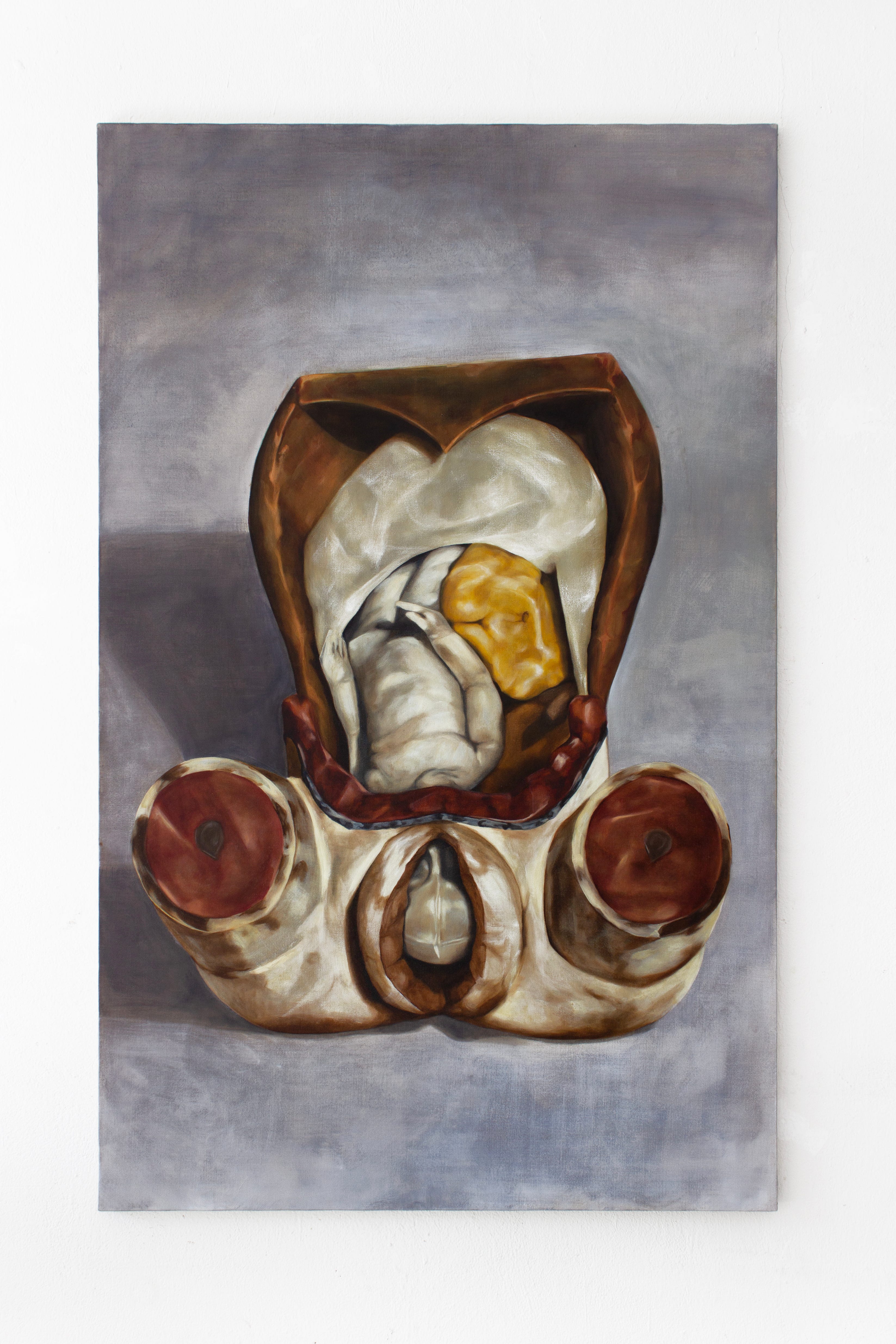
With Untitled (2021), I didn’t feel a biographic, intimate connection. It was more about the brutality of that image, and only now I see the connection with the work on my own body. At that time, I couldn’t understand why I was painting that image.
Jael Arazi: I appreciate this instinctive approach… Perhaps this is where the strength and power of your paintings come from, since you’re not deliberately constructing an image to convey a message, but allowing it to emerge naturally through the work. Over time, your work has stripped away context, placing subjects in increasingly imaginary and universal spaces, aiming to reveal the core of human experience.
Carla Giaccio Darias: Now that you mention this, I realize most of my recent production starts from the subject, and the spaces around them are built meanwhile, so there’s no premeditation. I’ve never made a preparatory drawing for a painting, never planned in advance, “this color will go here” or “this form will go there.” It only happens once I’m already inside the “battlefield” of painting. Intuitions happen, and the great thing about oil painting is being able to erase everything and start again. Painting gives me this unique freedom: to erase, rebuild, and layer in ways other media don’t, so it remains my main way of working. It lets me keep moving, without ever having to settle on definitive choices.
“I’ve never made a preparatory drawing for a painting, never planned in advance…”
Jael Arazi: At the same time, you also paint still lifes, scenes of interior spaces, and landscapes. In that case, are you painting the absence of your subject, the absence as human experience?
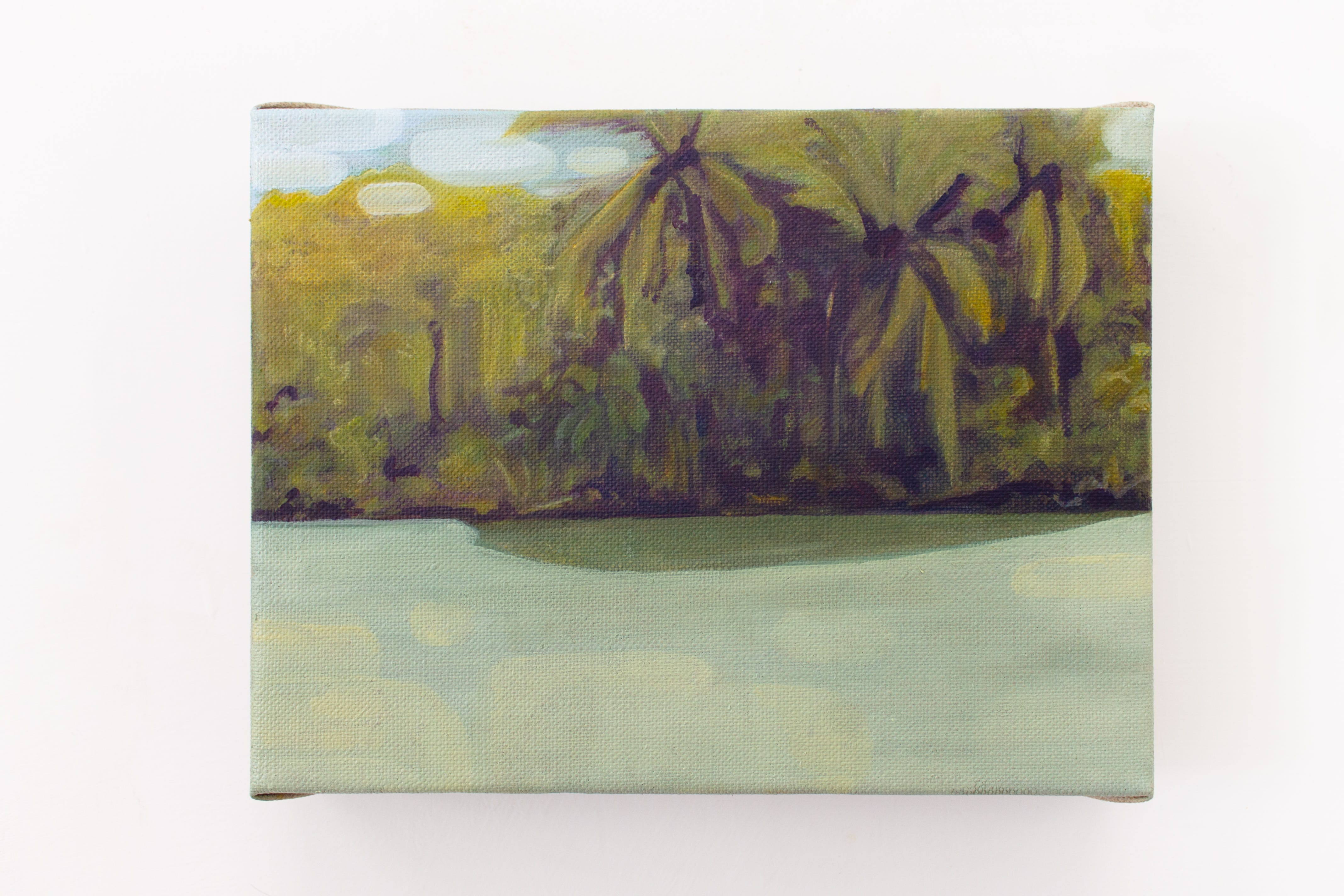
Carla Giaccio Darias: I may have started with that intention, but it has evolved differently. Even without figures, my paintings connect in a continuous flow: landscapes and interiors where a human presence lingers beneath the surface, letting me work more imaginatively and with a lighter touch.
“Even without figures, my paintings connect in a continuous flow: landscapes and interiors where a human presence lingers beneath the surface, letting me work more imaginatively and with a lighter touch.”
Jael Arazi: The indoor scenes are where I find the more openly political aspect of your work, probably because those are the most characterized images that you make.
Carla Giaccio Darias: I think it’s because they carry so much information. Paradoxically, those are the images where I stay most faithful to their origin, because of their anatomy. They’re my grandfather’s house, my aunt’s house, places I grew up in and carry very strong memories of. Painting them becomes a way of reliving those sensations and moments, especially now that I can’t go back because of the political situation in Cuba.
Jael Arazi: Memory links you to the past, but in the more imaginative works, time feels suspended, less fixed to a place. I have one last point to touch upon, regarding your latest works. Someone remarked that you’re painting Boredom. What are your thoughts on boredom as an experience? And then linking back to the theme of identity, is there a connection to your individual experience?
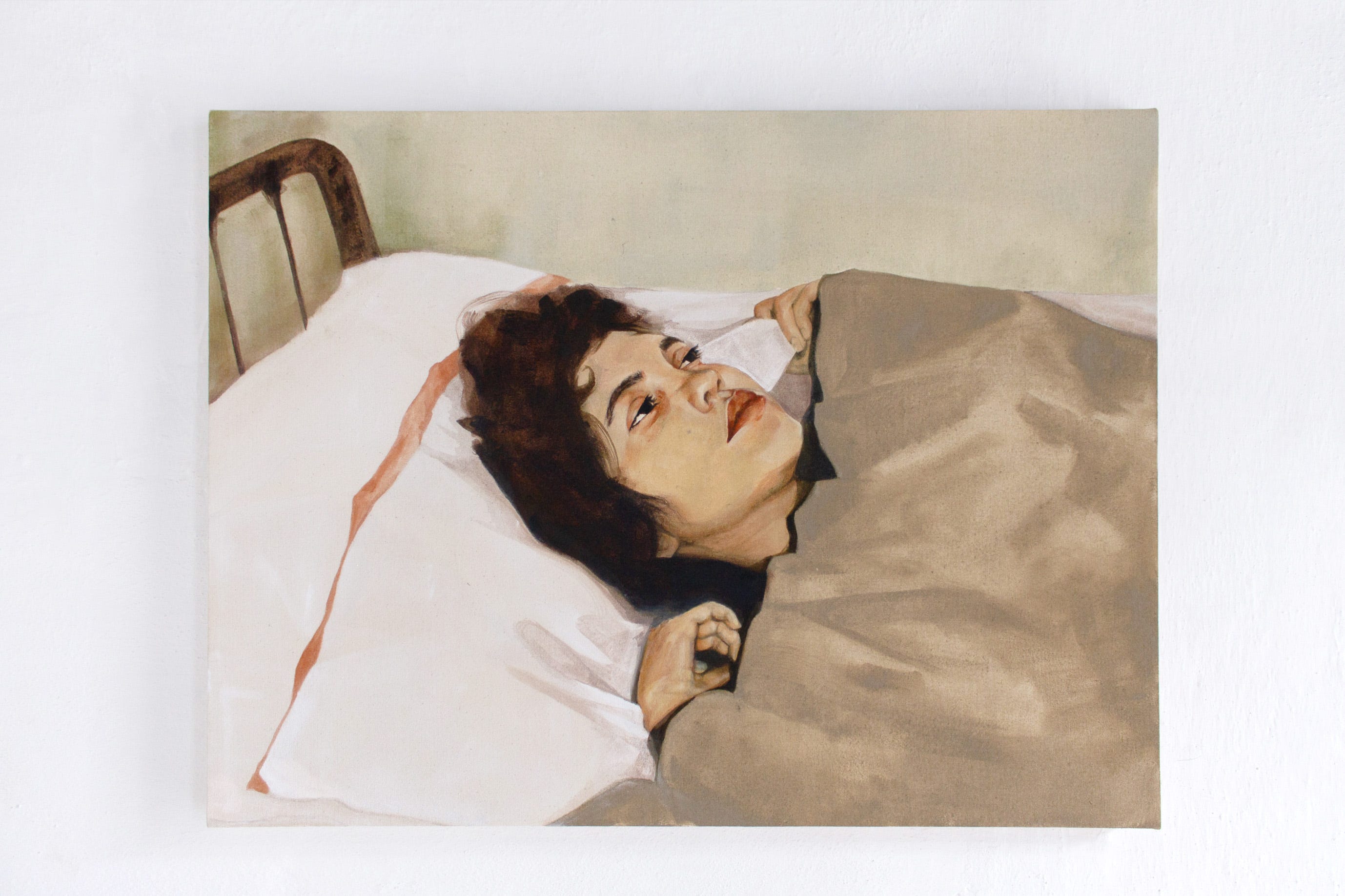
Carla Giaccio Darias: In my recent paintings, many figures appear bored, waiting, engaged only in small, unproductive gestures. While I understand this passiveness, I also sense there’s something more behind it. In Eva (2023), the woman is lying on the bed, but her gaze is not entirely absent—there’s a kind of answer there. It’s funny to think they’re all bored, I like it, it’s quite bourgeois. In Portrait of R. (2025), it’s a white man lying bored on a bed, a bored bourgeois man, but at the same time his eyes tell he’s about to cry.
It’s curious to think about how these paintings will be looked at in a few years, these paintings of bored people perhaps describing a moment in society. What did you see in them?
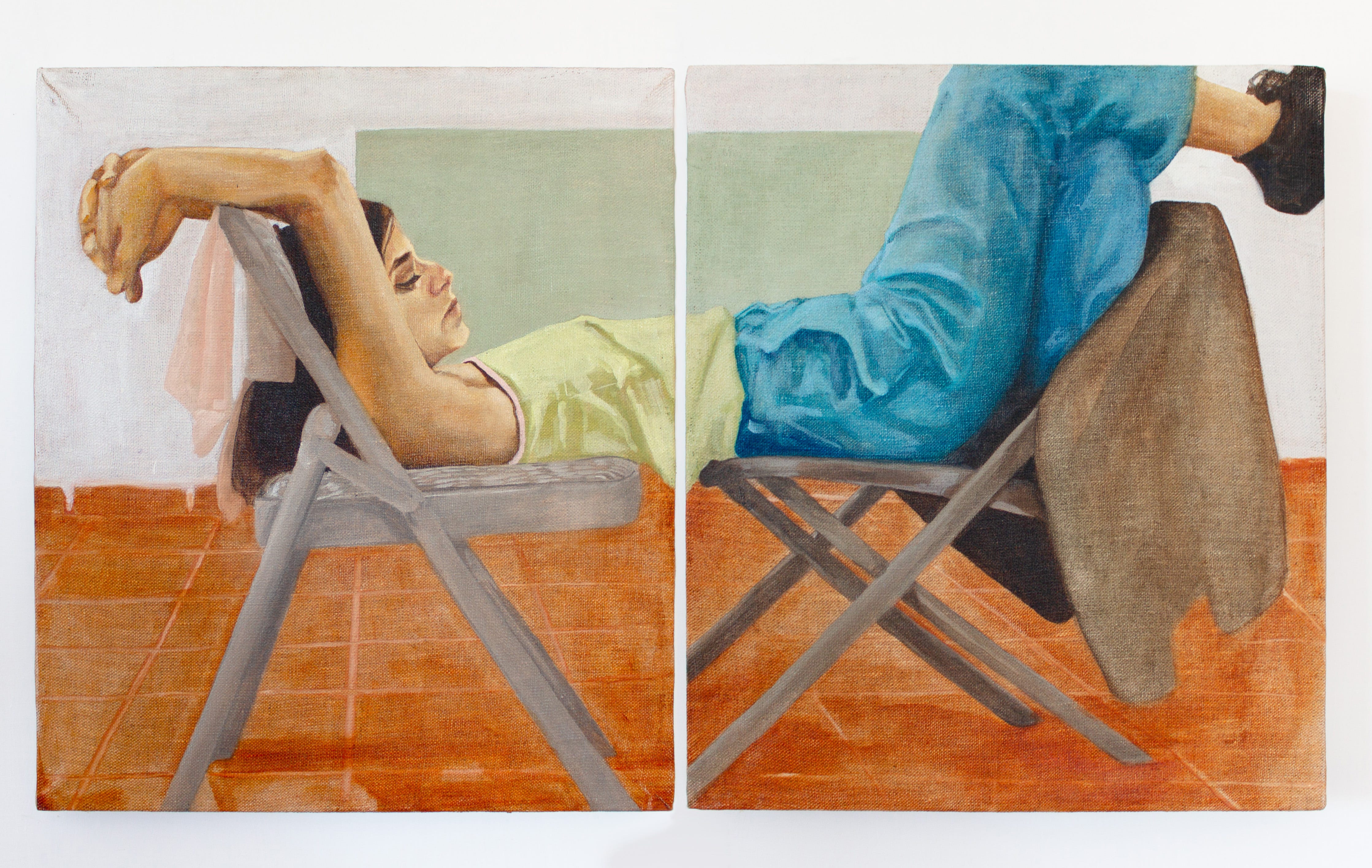
Jael Arazi: I see myself in Camara Azul (2025), with the two chairs… I see myself in it because she’s not just bored, she’s also reflecting, and I relate to that state. I think it might capture something about our time.
Carla Giaccio Darias: Yes, there is something about idleness, even in Cosas de brujería (2025), where my grandmother and my sister appear. Despite the age gap, they share this state of simply lying still, doing nothing, but with a quiet sense of joy.
About our Guest Writer:
Jael Arazi (she/her) is a curator and creative professional based in London. She holds an MFA in Curating from Goldsmiths, University of London and is co-founder of In Lucid Dreams We Dance, a curatorial and editorial platform intersecting sonic experimentation and visual arts. She is a Special Projects collaborator of ReA! ARTE, a non-profit organization based in Milan and dedicated to the promotion of emerging artists. Her research on digital culture and its impact on everyday life informs her writing, featured on international cultural platforms and translated into editorial design and image making projects, under the name Mali Godiva Studio.
To learn more about Jael Arazi and Carla Giaccio Darias, visit:
Acompáñanos en una conversación entre la curadora Jael Arazi y la artista Carla Giaccio Darias.
Carla Giaccio Darias es una artista ítalo-cubana cuya práctica abarca la pintura, el dibujo y la escultura, profundamente enraizada en la recolección y transformación de archivos fotográficos y de objetos. A través de pinturas estratificadas, composiciones fragmentadas y visiones parciales, su obra cuestiona la función documental de las imágenes, reflejando la inestabilidad y multiplicidad de las narrativas marginadas, a la vez que abre espacio para nuevas interpretaciones. Actualmente cursa un MFA en la École Nationale Supérieure d’Art de Nice, Villa Arson, y presentará su primera exposición individual en Des Bains Gallery, en Londres, en noviembre de 2025, curada por Jael Arazi.
Jael Arazi: ¿Puedes contarnos sobre tu infancia y cómo te llevó a la pintura?
Carla Giaccio Darias: Nací en Italia. Cuando tenía un mes me mudé a Cuba, así que los primeros años de mi vida, en términos de comunicación, fueron muy confusos. Desde mi infancia existía ese sentimiento latente de no ser 100% italiana ni 100% cubana, y me tomó mucho tiempo darme cuenta y entender ciertas dinámicas que ocurrían a mi alrededor.
Creo que mi trabajo puede rastrearse hasta estos temas: la comunicación, la pertenencia y la conciencia de mi entorno, que llegaron mucho más tarde en mi vida. La conciencia política, por ejemplo—tanto individual como colectiva—de mi práctica y de mi ser, se manifestó en mis veinte años. El arte también fue la herramienta que me permitió explorar mi identidad a un nivel imaginativo. El tema central en mis pinturas siempre es el “Otro”: ¿qué veo de mí misma en el Otro? ¿Qué puede ofrecer el Otro a una experiencia hipotética mía? Pienso que este proceso de tratar de construir una identidad ocurrió porque faltaba un modelo original desde el inicio.
Jael Arazi: Has tocado un punto importante: cómo tu encuentro con el “Otro” te ayuda a navegar tu propia identidad.
Carla Giaccio Darias: Sí, absolutamente. Y esa es la pregunta que sigo haciéndome. Siento que hay un momento en el que pierdo el aspecto autorreferencial, individual de mi práctica y entro en la posibilidad de empatizar con alguien más, de comprenderlo, y luego de regresar a mí misma, a un cuerpo en un tiempo y lugar específicos. Es como si al mirar algo pudieras ver simultáneamente lo que no está allí.
“Siento que hay un momento en el que pierdo el aspecto autorreferencial, individual de mi práctica y entro en la posibilidad de empatizar con alguien más…”
Jael Arazi: Es interesante cómo tu experiencia no pertenece del todo a ninguna de las dos culturas, sino que crea una tercera perspectiva en la que a menudo identificas las intersecciones y puntos de solapamiento entre ambas.
Carla Giaccio Darias: Si miras mis trabajos anteriores, notarás que elegí trabajar con archivos fotográficos. Una vez produje una serie de obras vinculadas a una investigación fotográfica sobre extraños con los que quería conectar, lo cual se transformó en lo que estoy haciendo ahora, a través de la independencia de la propia imagen. Ya no necesito una foto del 1700 que ya esté cargada con su propia historia, que esté estratificada con contextos, tiempo e incluso materialmente, de una forma pictórica. Me di cuenta de que puedo usar mis propias imágenes, personas y miradas que ya me interesan, que forman parte de mi realidad y componen todas estas diferentes identidades. Eventualmente, mi deseo de encontrar una identidad definida me mostró que nunca será solo una.
Mi investigación nunca concluirá en una sola respuesta, una sola forma o un solo momento. Así que tengo todas estas historias que siguen repitiéndose, presentándose de nuevo y superponiéndose. Ahora estoy dando mucho más espacio al aspecto imaginativo, para trabajar de una manera más subconsciente. A diferencia de mis obras anteriores basadas en archivos, que se sentían predeterminadas y cargadas de significado, mis imágenes actuales son más abiertas y menos fijas. Lo que intenté hacer con la pintura fue volver más ambiguas las escenas, descontextualizarlas, y ahora siento que estoy trabajando en sentido contrario: eligiendo conscientemente descontextualizarlas y recontextualizarlas en otro lugar, y no solo hacerlas efímeras.
“Eventualmente, mi deseo de encontrar una identidad definida me mostró que nunca será solo una. Mi investigación nunca concluirá en una sola respuesta, una sola forma o un solo momento.”
Jael Arazi: Entonces, la manera en que pintas ahora es menos para tratar de entender, y más para presentarte ante nosotros.
Carla Giaccio Darias: Sí, creo que siempre es una negociación. Ahora mismo siento que estoy arriesgando mucho más, mientras que antes jugaba dentro de la zona segura de una imagen existente que ya pertenecía a algún lugar. Aquí estoy dando un paso al frente.
Jael Arazi: ¿Alguna vez has pintado algo que sentiste completamente ajeno a tu experiencia?
Carla Giaccio Darias: Sí, fue peculiar. No lo sentí ajeno, pero fue algo hacia lo que me sentí indiferente. Y estaba relacionado con la pintura de modelo y el bodegón. Era más sobre el tiempo de pintar que sobre el tema en sí.
Con Untitled (2021), no sentí una conexión biográfica, íntima. Era más sobre la brutalidad de esa imagen, y solo ahora veo la conexión con el trabajo sobre mi propio cuerpo. En ese momento no podía entender por qué estaba pintando esa imagen.
Jael Arazi: Aprecio este enfoque instintivo… Quizás de allí provenga la fuerza y el poder de tus pinturas, ya que no estás construyendo deliberadamente una imagen para transmitir un mensaje, sino permitiendo que emerja de manera natural a través del trabajo. Con el tiempo, tu obra ha despojado al contexto, situando a los sujetos en espacios cada vez más imaginarios y universales, buscando revelar el núcleo de la experiencia humana.
Carla Giaccio Darias: Ahora que mencionas esto, me doy cuenta de que la mayor parte de mi producción reciente parte del sujeto, y los espacios alrededor se construyen mientras tanto, así que no hay premeditación. Nunca he hecho un dibujo preparatorio para una pintura, nunca he planeado de antemano, “este color irá aquí” o “esta forma irá allá.” Solo ocurre una vez que ya estoy dentro del “campo de batalla” de la pintura. Surgen intuiciones, y lo maravilloso de la pintura al óleo es poder borrar todo y empezar de nuevo. La pintura me da esta libertad única: borrar, reconstruir y superponer de maneras que otros medios no permiten, así que sigue siendo mi principal forma de trabajar. Me permite seguir moviéndome, sin tener que fijar nunca elecciones definitivas.
“Nunca he hecho un dibujo preparatorio para una pintura, nunca he planeado de antemano…”
Jael Arazi: Al mismo tiempo, también pintas naturalezas muertas, escenas de interiores y paisajes. En ese caso, ¿estás pintando la ausencia de tu sujeto, la ausencia como experiencia humana?
Carla Giaccio Darias: Puede que haya comenzado con esa intención, pero ha evolucionado de otra forma. Incluso sin figuras, mis pinturas se conectan en un flujo continuo—paisajes e interiores donde una presencia humana permanece bajo la superficie, permitiéndome trabajar de manera más imaginativa y con un toque más ligero.
“Incluso sin figuras, mis pinturas se conectan en un flujo continuo—paisajes e interiores donde una presencia humana permanece bajo la superficie, permitiéndome trabajar de manera más imaginativa y con un toque más ligero.”
Jael Arazi: En las escenas interiores encuentro el aspecto más abiertamente político de tu obra, probablemente porque esas son las imágenes más caracterizadas que haces.
Carla Giaccio Darias: Creo que es porque cargan con mucha información. Paradójicamente, esas son las imágenes donde me mantengo más fiel a su origen, por su anatomía. Son la casa de mi abuelo, la casa de mi tía, lugares en los que crecí y que llevan recuerdos muy fuertes. Pintarlos se convierte en una forma de revivir esas sensaciones y momentos, especialmente ahora que no puedo regresar debido a la situación política en Cuba.
Jael Arazi: La memoria te vincula al pasado, pero en las obras más imaginativas el tiempo se siente suspendido, menos fijo a un lugar. Quiero tocar un último punto respecto a tus obras más recientes. Alguien comentó que estás pintando el Aburrimiento. ¿Qué piensas del aburrimiento como experiencia? Y luego, volviendo al tema de la identidad, ¿hay una conexión con tu experiencia individual?
Carla Giaccio Darias: En mis pinturas recientes, muchas figuras aparecen aburridas, esperando, involucradas solo en pequeños gestos improductivos. Aunque entiendo esa pasividad, también siento que hay algo más detrás de ella. En Eva (2023), la mujer está recostada en la cama, pero su mirada no está totalmente ausente—hay una especie de respuesta allí. Es gracioso pensar que todas están aburridas, me gusta, es bastante burgués. En Portrait of R. (2025), es un hombre blanco recostado aburrido en una cama, un burgués aburrido, pero al mismo tiempo sus ojos dicen que está a punto de llorar.
Es curioso pensar cómo se mirarán estas pinturas dentro de unos años, estas pinturas de gente aburrida describiendo quizás un momento de la sociedad. ¿Qué viste tú en ellas?
Jael Arazi: En realidad me veo a mí misma en Camara Azul (2025), con las dos sillas… Me veo en ella porque no solo está aburrida, también está reflexionando, y me identifico con ese estado. Creo que puede capturar algo de nuestro tiempo.
Carla Giaccio Darias: Sí, hay algo en la ociosidad, incluso en Cosas de brujería (2025), donde aparecen mi abuela y mi hermana. A pesar de la diferencia de edad, comparten ese estado de simplemente estar acostadas, sin hacer nada, pero con una silenciosa sensación de alegría.
Sobre nuestra escritora invitada:
Jael Arazi es curadora y profesional creativa radicada en Londres. Tiene un MFA en Curaduría por Goldsmiths, University of London, y es cofundadora de In Lucid Dreams We Dance, una plataforma curatorial y editorial que cruza la experimentación sonora y las artes visuales. Es colaboradora de Proyectos Especiales en ReA! ARTE, una organización sin fines de lucro con sede en Milán dedicada a la promoción de artistas emergentes. Su investigación sobre la cultura digital y su impacto en la vida cotidiana nutre su escritura, publicada en plataformas culturales internacionales y traducida en proyectos de diseño editorial y creación de imágenes, bajo el nombre de Mali Godiva Studio.
Para saber más sobre Jael Arazi y Carla Giaccio Darias, visita:
