


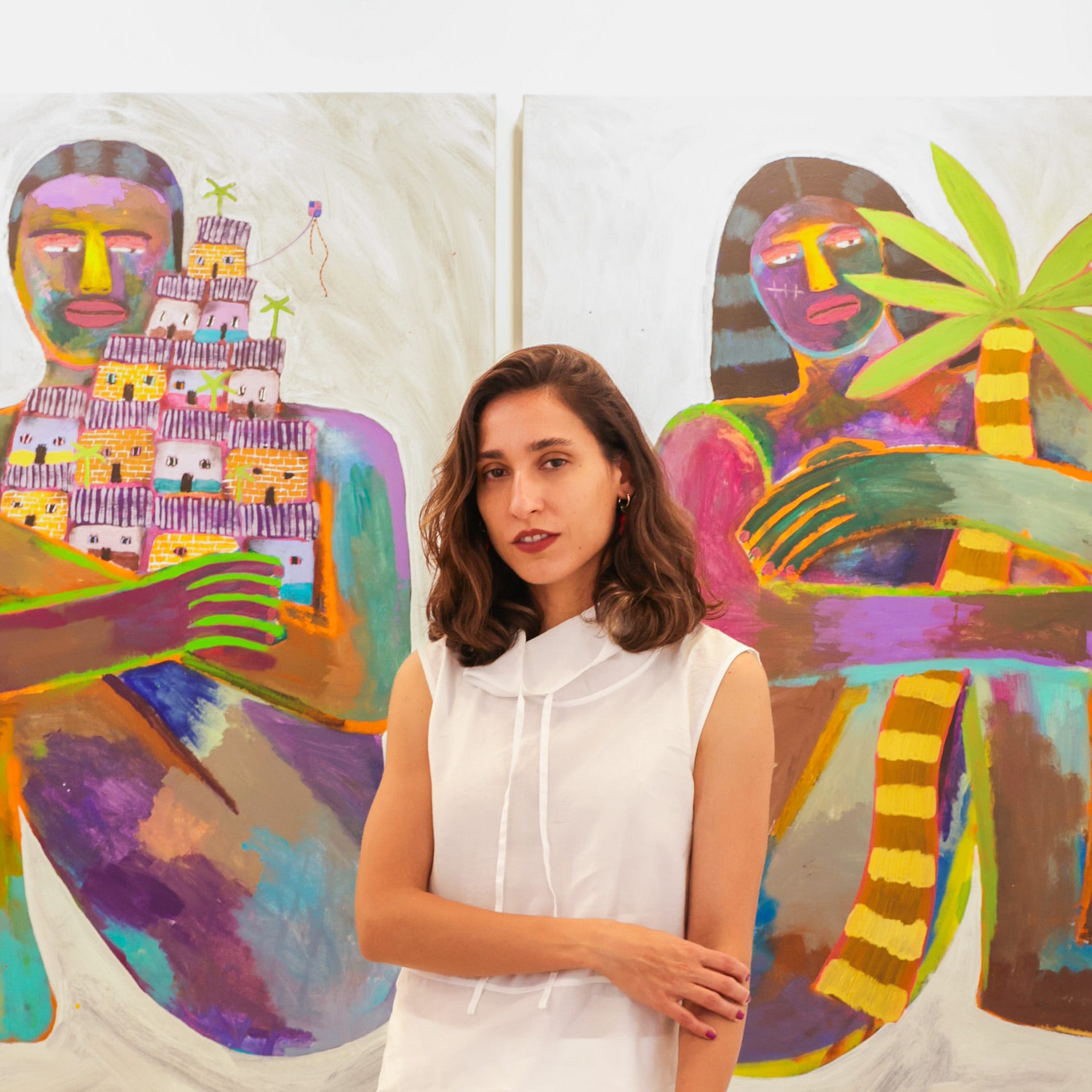
Irene Gelfman is the Global Curator and Artistic Director of Pinta Art Fair. During her tenure, Pinta has expanded its presence into different cities and art scenes, while developing a programme that extends beyond the traditional art fair format.
In this conversation, we speak with Irene about the evolution of contemporary art in Latin America, the limits of the category “Latin American art,” her curatorial approach, and what lies ahead for Pinta, from BAphoto to the 20th anniversary of Pinta Miami.
Support Art in Latin America. Unlock exclusive benefits.
Written by: Melanie Alvarado is an art consultant and writer specialised in Latin American art. Beyond the commercial sphere, she is a passionate advocate for cultural dialogue and equity in the arts. She is a Board Member of Saloon Munich, part of the international Saloon network supporting women in the arts through professional exchange, community, and programming. She also supports Amalgama Art to develop cultural partnerships that amplify cross-cultural programming and visibility for Latin American artists. Melanie holds degrees from American University’s Kogod School of Business and the Frankfurt School of Finance & Management.
After so many years exploring art scenes across different countries in Latin America, what changes do you think have most profoundly transformed the contemporary art landscape in the region?
IG: There has been a decentralization that I think is important to highlight. For years, the Global South has been shaping the cultural agenda of biennials, museums, and fairs. The axis no longer revolves around just two or three global capitals. Today, there are circuits that were once considered “peripheral” whose artistic production is gaining increasing recognition and visibility in major exhibitions.
Under my artistic direction and global curatorship, Pinta expanded from being present in three countries to six. We also began exploring Art Weeks in vibrant art scenes that may not yet have the ecosystem needed to support a fair, but that do have artists, institutions, thinkers, and others who have been working there for a very long time. There is a growing interest in discovering and engaging with these scenes. We have already held two very successful editions in Panama, four in Asunción, and we are now expanding to Medellín.
Another initiative I think is particularly worth highlighting is our Open Files, a series of videos in which Latin American artists speak about their work in their own words. More than 110 artists from 13 countries have participated so far, and notably, 54% are women. This initiative seeks to broaden and democratize access to art from Latin America. The videos are freely accessible and constitute a living archive that continues to grow.
“For years, the Global South has been shaping the cultural agenda of biennials, museums, and fairs. The axis no longer revolves around just two or three global capitals. Today, there are circuits that were once considered “peripheral” whose artistic production is gaining increasing recognition and visibility in major exhibitions…There is a growing interest in discovering and engaging with these scenes.”
Is the category “Latin American art” still useful?
IG: I think it is useful from the outside and limiting from within: it can serve as an entry point for external audiences, but it flattens the real differences between art scenes. There is a risk with that label: “Latin American” can become an aesthetic expectation—the political, the identity-based—that confines the artist. I prefer to speak of art from Latin America, as Gerardo Mosquera proposes, rather than “Latin American art.” That label is often imposed from the outside and carries an expectation that works should display a recognizable form of “Latin Americanness”—the political, the telluric, the exotic—ultimately confining artists within those expectations. Thinking about art from the region does not impose a style or subject; it points instead to a place from which one looks and creates. It shifts the focus: what matters is no longer the origin of the work, but the perspective of the person making it, with the freedom to engage with the world without having to represent where they come from.
At Pinta’s fairs, I created and organized sections such as NEXT, RADAR, FORO, Editorial, Special Projects, and Artista Homenaje, among others, which function precisely as ways of engaging with specificities rather than thinking of the region as a single, homogeneous bloc.
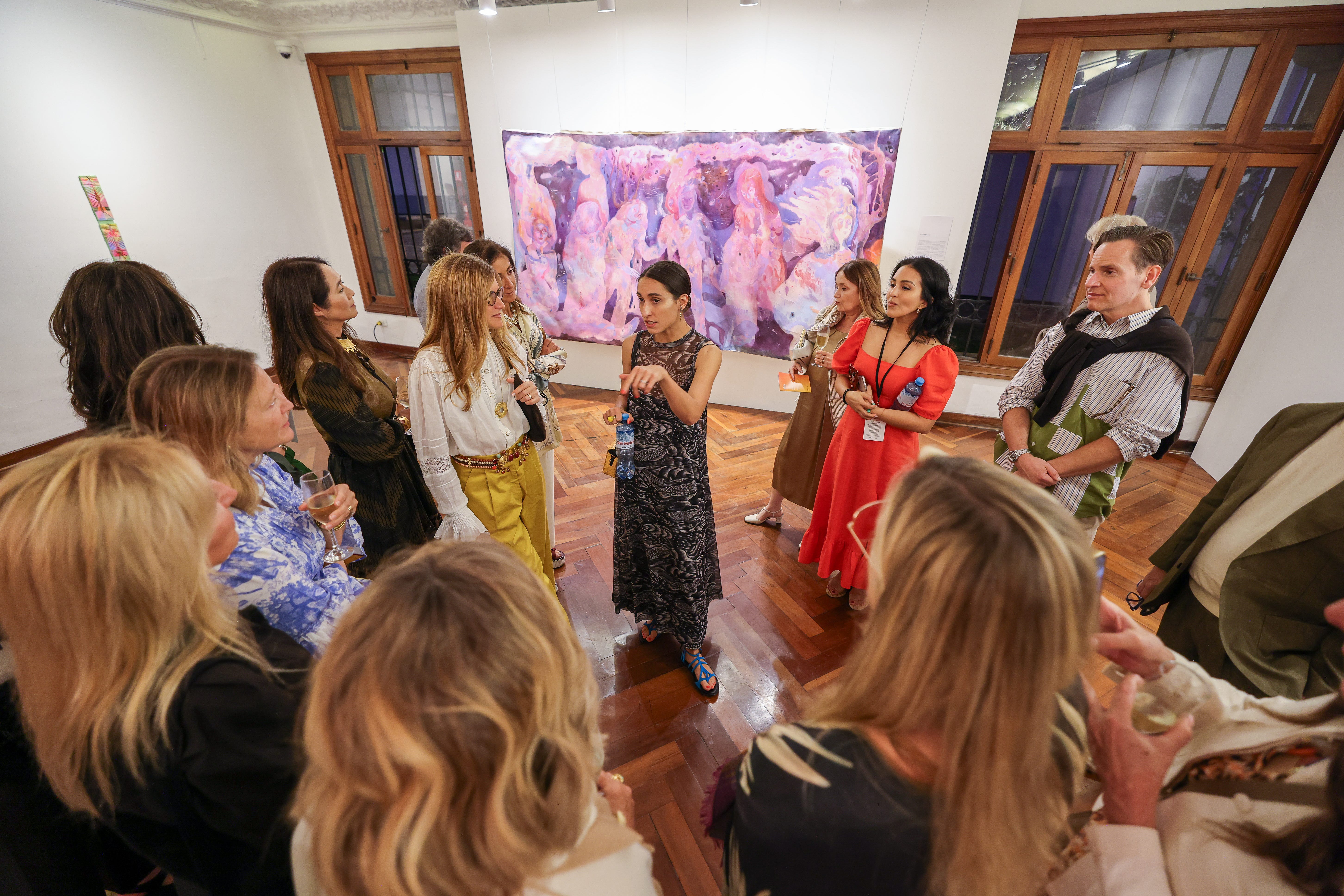
Is there a particular art scene, country, or generation of artists that has recently surprised you and that you believe deserves greater international attention?
IG: These four years overseeing the artistic direction have allowed me to discover not only scenes I was unfamiliar with, but also artists, cultural practitioners, and creators. At Pinta Asunción, I had the opportunity to get to know the work of Julia Isidrez and Claudia Casarino firsthand, and to work alongside Ticio Escobar and Adriana Almada. It is a scene that is completely different from the rest of the Southern Cone, and I think it deserves closer attention.
Panama, meanwhile, was also very enriching for me. I had the opportunity to work alongside Lulu Lobos, Milko Delgado, and Donna Conlon, artists whom I consider fundamental to the Central American art scene. Lima is undoubtedly an extraordinarily diverse and interesting scene. Although I was already familiar with most of the artists before my work at Pinta, my role gave me the opportunity to work with artists such as Claudia Coca, Martinat, Fernando Bryce, Alberto Casiari, Elena Damiani, Fátima Rodrigo, Elena Tejada Herrera, and others.
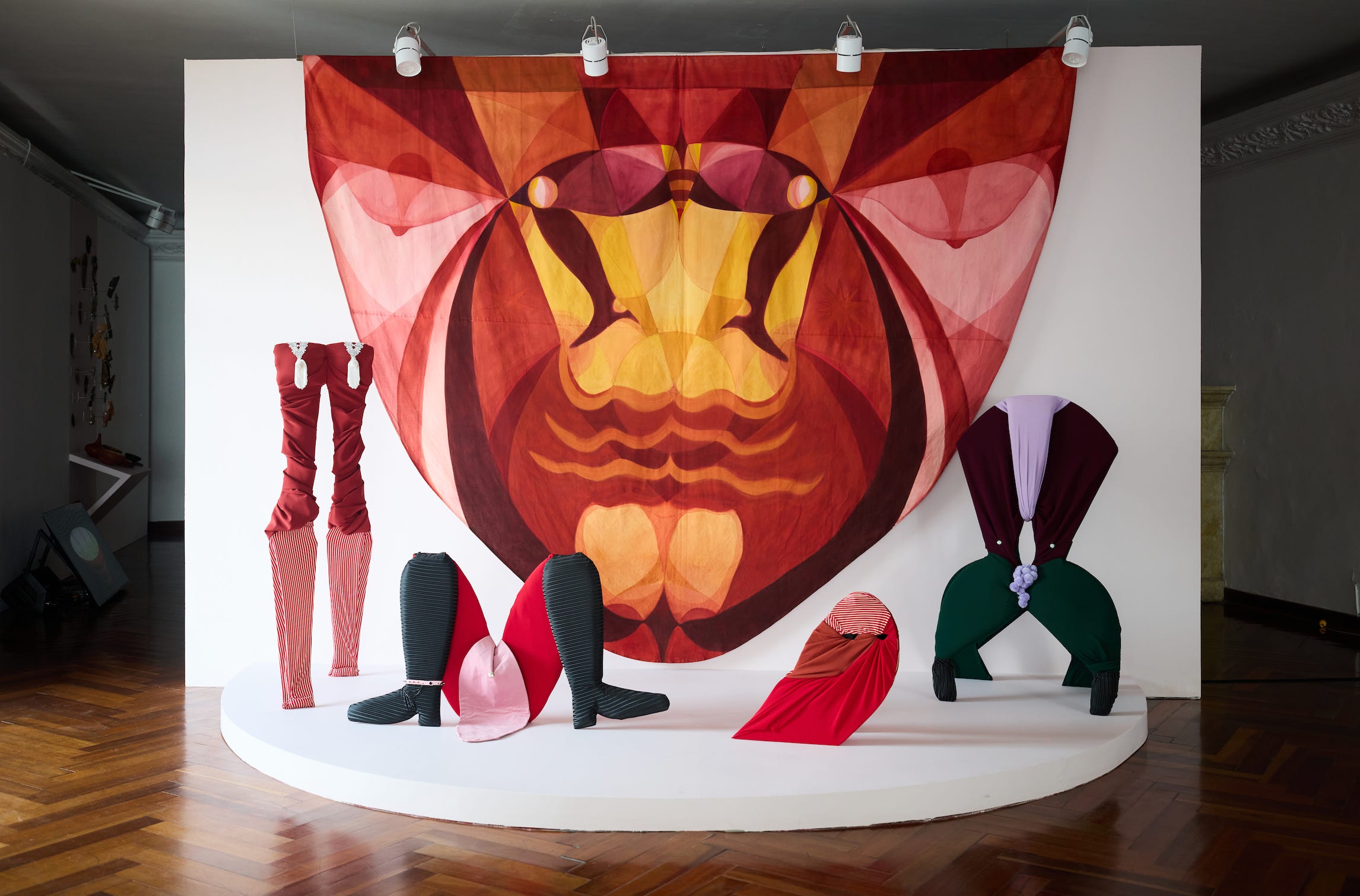
Pinta has a very distinctive curatorial identity, with the selection of galleries and the different sections creating a clear dialogue with one another. How do you build that coherence without limiting the diversity of the proposals?
IG: Over these four years, one of my goals has been to ensure that not only the individual events have a certain balance and coherence, but, above all, that Pinta’s annual program and all of its initiatives do as well.
I want it to be understood as a complete program that brings together the fairs, the Art Weeks, the partnerships we develop with Fundación Pinta, and our editorial platform, Arte al Día.
For me, coherence functions as a structure, not as uniformity. I wanted the sections to provide a framework: one focused on younger and emerging practices, others organized around themes explored through artists’ work, all coexisting with the main section. Each has its own framework, while still allowing the proposals to breathe and enter into dialogue with one another.
The dialogue between sections is fundamental. There is a relationship between them; I think of them as systems rather than compartments.
I also work with a great curatorial team with whom I am in constant dialogue. They are curators working at key institutions across the region, transforming their respective scenes from within and bringing their research processes and networks to the fairs. Coherence emerges from a conversation among curators, rather than from something imposed from above. A diversity of voices is part of the method.
I also think it is important to highlight that FORO brought together more than 100 voices between 2023 and 2026, which speaks to the diversity of perspectives we seek to bring into conversation. Coherence can coexist with scale.
“Coherence emerges from a conversation among curators, rather than from something imposed from above. A diversity of voices is part of the method.”
In a context in which many art fairs compete to grow in size and number of galleries, Pinta seems to favor a smaller selection and to place content at the center. Has prioritizing curatorial quality over quantitative growth been a conscious decision?
IG: Yes, it has been a conscious decision. I believe this approach strengthens identity, the visitor experience, and the relationship with the public, while allowing us to prioritize each individual project rather than simply focusing on quantity.
Curated content is at the heart of Pinta. We think of the fair as a space for interpretation, not only for transactions. That is why we have special projects, Artista Homenaje, and other sections that are like “gifts” for visitors. Our focus is not simply on creating more spaces to add galleries and generate sales. We think about and create projects that complement all the work we are already doing.
At the same time, growth and quality are not necessarily opposed. Pinta has grown in terms of the number of programs and events we are producing. The key is choosing where and how to grow.
“Curated content is at the heart of Pinta. We think of the fair as a space for interpretation, not only for transactions…Our focus is not simply on creating more spaces to add galleries and generate sales. We think about and create projects that complement all the work we are already doing.”
When you evaluate a gallery for Pinta, what makes a project stand out? Beyond the quality of the works themselves, what do you look for in a gallery’s proposal?
IG: Several things. First, the gallery’s artistic proposal as an argument in itself. I look for coherence between what the gallery says and what it brings. Long-term work is very important. Supporting galleries and maintaining their place within the fair is fundamental. I always ask myself what that gallery adds to the conversation of the fair.
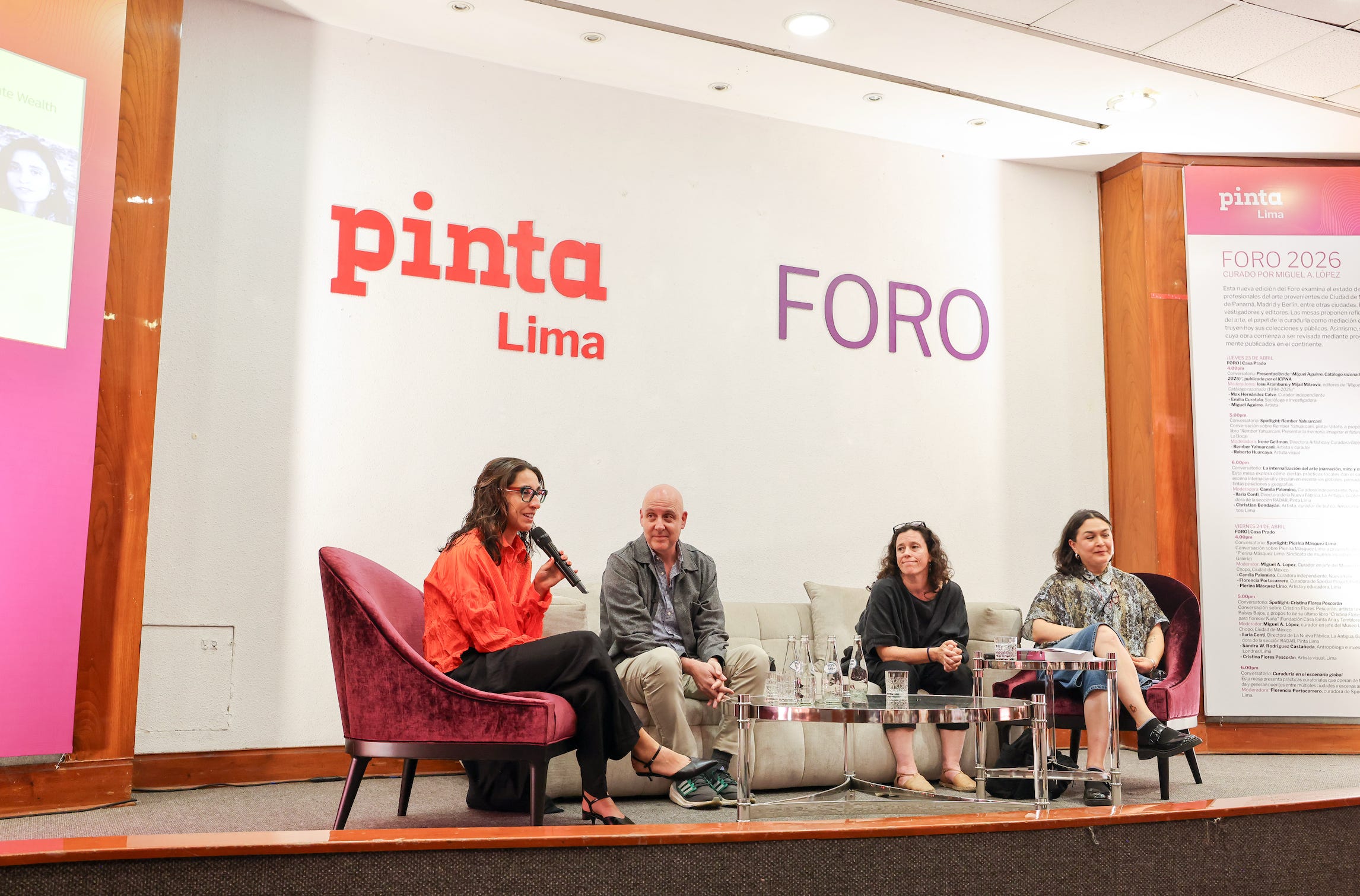
Pinta continues to expand its presence through different fairs and programs. Looking ahead to Pinta BAphoto and Pinta Miami, what are you particularly excited about, and what curatorial conversations would you like to bring to the forefront?
IG: There are several things that excite me about Pinta BAphoto. First, this edition coincides with the 200th anniversary of the birth of photography, and I think it offers a very interesting opportunity to consider what has happened to the medium over that time, how it has transformed, and how it now coexists with other languages, formats, and forms of circulation. This comes through in different parts of the fair—not only in the works themselves, but also in the special projects, the curated sections, and FORO.
We will also be welcoming some very important international guests from the field of photography. Eve Schillo, Associate Curator in the Department of Photography at LACMA; María Santoyo, Director of PHotoESPAÑA; and Thyago Nogueira, Director of the Department of Contemporary Art and Photography at Instituto Moreira Salles and founding editor of ZUM, will all be joining us. For me, it is very valuable to have them in Buenos Aires and participating in FORO, because it allows us to bring what is happening in the region into dialogue with institutions and art scenes elsewhere.
This year, Pinta BAphoto also opens a very special season for the visual arts in Buenos Aires. Just a few days later come Central AFFAIR and arteBA, and I think this concentration creates something very interesting for the city. They are distinct fairs, each with its own identity and audience, but together they create a moment of intense circulation among artists, galleries, collectors, curators, and professionals arriving from different places.
And then there is Pinta Miami, which celebrates its 20th anniversary this year. For me, it is a special edition because it gives us an opportunity to look back at the fair’s trajectory while also thinking about how to continue growing without losing its identity. Pinta Miami has a boutique scale and a highly curated approach, where each project has the space to be seen and where we seek to create a close encounter between galleries, artists, collectors, curators, and institutions. After 20 years, I am interested in continuing to deepen the fair’s place within Miami Art Week and its relationship with the different art scenes across Latin America.
“This year, Pinta BAphoto also opens a very special season for the visual arts in Buenos Aires…And then there is Pinta Miami, which celebrates its 20th anniversary this year. For me, it is a special edition because it gives us an opportunity to look back at the fair’s trajectory while also thinking about how to continue growing without losing its identity.”
To learn more about Irene Gelfman and Pinta, visit:
Pinta BAphoto 2026 will take place from October 22–25, 2026, at La Rural in Buenos Aires. Pinta Miami 2026, which marks the fair’s 20th anniversary, will take place from December 3–6, 2026, at The Hangar in Coconut Grove, Miami.
En conversación con: Irene Gelfman
Irene Gelfman es la Curadora Global y Directora Artística de Pinta Art Fair. Durante su gestión, Pinta ha ampliado su presencia a nuevas ciudades y escenas, al tiempo que ha desarrollado una programación que se extiende más allá del formato tradicional de feria.
En esta conversación, hablamos con Irene sobre la evolución del arte contemporáneo en América Latina, los límites de la categoría “arte latinoamericano”, su enfoque curatorial y lo que viene para Pinta, desde BAphoto hasta el 20 aniversario de Pinta Miami.
Apoya a Art in Latin America. Accede a beneficios exclusivos.
Escrito por: Melanie Alvarado es consultora de arte y escritora especializada en arte latinoamericano. Más allá del ámbito comercial, es una firme defensora del diálogo cultural y la equidad en las artes. Es miembro de la junta directiva de Saloon Munich, parte de la red internacional Saloon, que apoya a mujeres en el mundo del arte a través del intercambio profesional, la creación de comunidad y la programación cultural. Asimismo, colabora con Amalgama Art en el desarrollo de alianzas culturales que impulsan el intercambio intercultural y amplían la visibilidad de artistas latinoamericanos. Melanie cuenta con estudios en la Kogod School of Business de American University y en la Frankfurt School of Finance & Management.
Después de tantos años recorriendo escenas artísticas en distintos países de América Latina, ¿qué cambios consideras que han transformado más profundamente el panorama del arte contemporáneo en la región?
IG: Hay una descentralización que me parece importante resaltar. El sur global hace años viene marcando la agenda cultural de bienales, museos y ferias. El eje ya no pasa solo por dos o tres capitales mundiales. Hoy hay circuitos que antes eran considerados “periféricos” y cuyas producciones tienen cada vez más reconocimiento y presencia en grandes exhibiciones.
Bajo mi dirección artística y curaduría global, Pinta pasó de estar en tres países a estar en seis. También empezamos a explorar los Art Weeks en escenas efervescentes, que no tienen aún el ecosistema preparado para una feria, pero sí cuentan con artistas, instituciones, pensadores y demás que vienen trabajando hace muchísimo tiempo. Hay un gran interés, cada vez mayor, por conocer y acercarse a esas escenas. Ya van dos ediciones muy exitosas en Panamá, cuatro en Asunción y estamos expandiéndonos a Medellín.
Otra acción que me parece muy interesante destacar son nuestros Open Files, una serie de videos donde artistas latinoamericanos hablan de su obra en primera persona. Ya participaron más de 110 artistas, 13 países y un dato no menor es que el 54 % son mujeres. Esta acción busca difundir y democratizar el acceso al arte de América Latina. Estos videos son libres y gratuitos y constituyen un archivo vivo en constante crecimiento.
“El sur global hace años viene marcando la agenda cultural de bienales, museos y ferias. El eje ya no pasa solo por dos o tres capitales mundiales. Hoy hay circuitos que antes eran considerados “periféricos” y cuyas producciones tienen cada vez más reconocimiento y presencia en grandes exhibiciones…Hay un gran interés, cada vez mayor, por conocer y acercarse a esas escenas.”
¿Sigue siendo útil la categoría “arte latinoamericano”?
IG: Creo que es útil hacia afuera y limitante hacia adentro: sirve como puerta de entrada para públicos externos, pero aplana diferencias reales entre escenas. Hay un riesgo con ese rótulo: cuando “latinoamericano” se vuelve una expectativa estética (lo político, lo identitario) que encasilla al artista. Prefiero hablar de arte desde América Latina, como propone Gerardo Mosquera, más que de “arte latinoamericano”. Esa etiqueta suele venir impuesta desde afuera y espera que las obras muestren cierta “latinoamericanidad” reconocible —lo político, lo telúrico, lo exótico—, y termina encerrando a los artistas en esa expectativa. Pensarlo desde la región no impone un estilo ni un tema: señala un lugar desde donde uno mira y crea. Corre el foco: lo importante deja de ser el origen de la obra y pasa a ser la mirada del que la hace, con libertad para dialogar con el mundo sin tener que representar de dónde viene.
En las ferias de Pinta, creé y organicé secciones como NEXT, RADAR, FORO, Editorial, Special Projects, Artista Homenaje, entre otras, que funcionan justamente como formas de leer particularidades en lugar de pensar la región como un bloque único.
¿Hay alguna escena, país o generación de artistas que recientemente te haya sorprendido y que creas que merece mayor atención internacional?
IG: Estos 4 años a cargo de la dirección artística me permitieron conocer no solo escenas que desconocía, sino también artistas, gestores y creadores. En Pinta Asunción tuve la oportunidad de conocer de primera mano a Julia Isidrez, a Claudia Casarino, de trabajar junto a Ticio Escobar y Adriana Almada. Es una escena totalmente diferente al resto del Cono Sur y creo que merece la pena detenerse en ella.
Por otro lado, Panamá también fue muy enriquecedor para mí. Tuve la oportunidad de trabajar junto a Lulu Lobos, Milko Delgado y Donna Conlon, artistas que creo fundamentales en la escena centroamericana. Sin dudas, Lima es una escena de lo más diversa e interesante. Si bien conocía a la mayoría de los artistas previo a mi trabajo en Pinta, a partir de mi rol pude trabajar con artistas como Claudia Coca, Martinat, Fernando Bryce, Alberto Casiari, Elena Damiani, Fátima Rodrigo, Elena Tejada Herrera y más.
En Pinta se percibe una identidad curatorial muy marcada, donde la selección de galerías y las distintas secciones generan un diálogo claro entre sí. ¿Cómo construyes esa coherencia sin limitar la diversidad de propuestas?
IG: En estos 4 años, una de mis metas fue lograr que no solo los eventos individuales se lean con cierto equilibrio y coherencia, sino, por sobre todo, la programación anual de Pinta y todas sus acciones.
Me interesa que se pueda leer como un programa completo, que articula las acciones de la feria, los Art Weeks, las alianzas que realizamos junto a la Fundación Pinta y nuestra línea editorial Arte al Día.
Para mí, la coherencia funciona como estructura, no como uniformidad. Busqué que las secciones den marco: una parte más joven/emergente, otra que sean temáticas puestas en diálogo a través del trabajo de artistas y la convivencia con la sección principal. Cada una tiene su marco, pero deja que las propuestas respiren y dialoguen entre sí.
El diálogo entre secciones es fundamental. Hay una relación entre unas y otras; las pienso como sistemas y no como compartimentos.
Además, trabajo con un gran equipo curatorial con el que estamos en constante diálogo. Curadores que trabajan en instituciones claves en la región, que están transformando la escena desde sus lugares y que traen a las ferias sus procesos de investigación, sus redes. La coherencia surge de una conversación entre curadores, no de una imposición desde arriba. La diversidad de voces es parte del método.
También me parece importante destacar que FORO reunió más de 100 voces entre 2023 y 2026, algo que habla de la diversidad de miradas que buscamos poner en conversación. La coherencia convive con la escala.
“La coherencia surge de una conversación entre curadores, no de una imposición desde arriba. La diversidad de voces es parte del método.”
En un contexto en el que muchas ferias compiten por crecer en tamaño y número de galerías, Pinta parece apostar por una selección más pequeña y por poner el contenido en el centro. ¿Ha sido una decisión consciente privilegiar la calidad curatorial por encima del crecimiento cuantitativo?
IG: Sí, es una decisión consciente. Considero que de esta forma se gana en identidad, experiencia y relación con el público, y se prioriza cada proyecto que entra más allá de la cantidad.
El contenido curado es el corazón de Pinta. Pensamos en la feria como espacio de lectura, no solo de transacción. Por eso contamos con proyectos especiales, artista homenaje y demás secciones que son como “regalos” para los visitantes. No ponemos solo el acento en espacios para sumar galerías y que se venda. Pensamos y creamos proyectos que acompañen todo el trabajo que estamos realizando.
Sin embargo, crecimiento y calidad no siempre se oponen. Pinta sí creció en la cantidad de programas y eventos que estamos realizando. La clave está en elegir dónde y cómo crecer.
“El contenido curado es el corazón de Pinta. Pensamos en la feria como espacio de lectura, no solo de transacción...No ponemos solo el acento en espacios para sumar galerías y que se venda. Pensamos y creamos proyectos que acompañen todo el trabajo que estamos realizando.”
Cuando evalúas una galería para Pinta, ¿qué hace que un proyecto destaque? Más allá de la calidad de las obras, ¿qué buscas en la propuesta de una galería?
IG: Varias cosas. Por un lado, la propuesta artística de la galería como argumento. Busco que haya una coherencia entre lo que la galería dice y lo que trae. El trabajo a largo plazo es muy importante. Acompañar a las galerías y mantener sus plazas es fundamental. Siempre pienso qué suma esa galería a la conversación de la feria.
Pinta continúa expandiendo su presencia a través de distintas ferias y programas. De cara a Pinta BAphoto y Pinta Miami, ¿qué te entusiasma especialmente de lo que viene y qué conversaciones curatoriales te gustaría poner en el centro?
IG: De cara a Pinta BAphoto hay varias cosas que me entusiasman. Por un lado, esta edición coincide con los 200 años del nacimiento de la fotografía, y me parece una oportunidad muy interesante para pensar qué pasó con el medio en todo este tiempo, cómo se transformó y cómo hoy convive con otros lenguajes, soportes y formas de circulación. Eso aparece en distintas partes de la feria, no solo en las obras, sino también en los proyectos especiales, las secciones curatoriales y FORO.
También vamos a recibir invitados internacionales muy importantes para la fotografía. Va a estar Eve Schillo, curadora asociada del departamento de fotografía de LACMA; María Santoyo, directora de PHotoESPAÑA; y Thyago Nogueira, director del departamento de Arte Contemporáneo y Fotografía del Instituto Moreira Salles y editor fundador de ZUM. Para mí, es muy valioso que puedan estar en Buenos Aires y participar de FORO, porque permite poner en diálogo lo que pasa en la región con instituciones y escenas de otros lugares.
Además, este año Pinta BAphoto abre una temporada muy especial para las artes visuales en Buenos Aires. A los pocos días se suceden Central AFFAIR y arteBA, y creo que esta concentración genera algo muy interesante para la ciudad. Son ferias distintas, con identidades y públicos propios, pero juntas construyen un momento de mucha circulación entre artistas, galerías, coleccionistas, curadores y profesionales que llegan desde distintos lugares.
Y después está Pinta Miami, que este año celebra su 20 aniversario. Para mí, es una edición especial porque permite mirar todo el recorrido que hizo la feria y, al mismo tiempo, pensar cómo seguir creciendo sin perder su identidad. Pinta Miami tiene una escala boutique y una propuesta muy curada, donde cada proyecto tiene espacio para ser visto y donde buscamos generar un encuentro cercano entre galerías, artistas, coleccionistas, curadores e instituciones. Después de 20 años, me interesa seguir profundizando ese lugar que tiene la feria dentro de Miami Art Week y su vínculo con las distintas escenas de América Latina.
“Este año Pinta BAphoto abre una temporada muy especial para las artes visuales en Buenos Aires…Y después está Pinta Miami, que este año celebra su 20 aniversario. Para mí, es una edición especial porque permite mirar todo el recorrido que hizo la feria y, al mismo tiempo, pensar cómo seguir creciendo sin perder su identidad.”
Para saber más sobre Irene Gelfman y Pinta, visita:
Pinta BAphoto 2026 se celebrará del 22 al 25 de octubre de 2026 en La Rural, Buenos Aires. Pinta Miami 2026, que marcará el 20.º aniversario de la feria, tendrá lugar del 3 al 6 de diciembre de 2026 en The Hangar, Coconut Grove, Miami.