


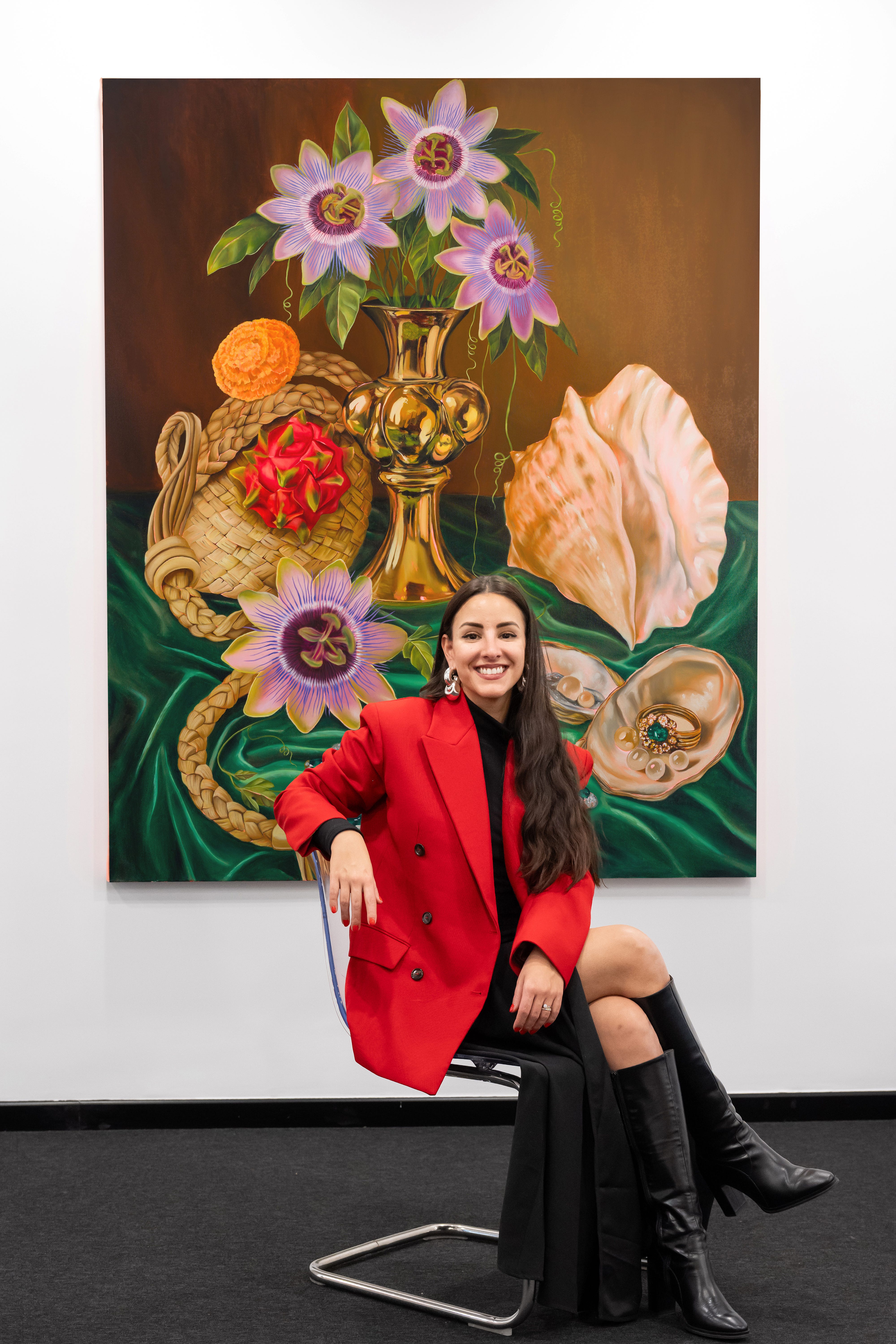
Gaby Vera is a Venezuelan gallerist based in Madrid, where she leads Gaby Vera Gallery, an ambitious platform for contemporary art. Before opening the gallery, she led El Castillete, a platform and artist residency that shaped her approach to community-building and close artistic accompaniment.
In this interview, Gaby reflects on the path that led her to establish the gallery and to shape it as an active cultural platform for contemporary art in Spain. She shares her hopes for stronger institutional dialogue in Madrid, as well as her perspective on collecting, along with the advice she offers to collectors.
You’re the first and only Venezuelan woman to found a contemporary art gallery in Madrid. What did that mean to you, and how do you take on that responsibility?
GV: It has been very enriching in every sense. The truth is, I didn’t open the gallery thinking I would occupy a symbolic place; in fact, I’m still surprised to be the first, especially considering the very strong presence of Venezuelan women in Madrid. That also reveals that there are still spaces to be opened and structures to be transformed.
I opened my space because I believe contemporary art, and especially Latin American art, deserves a professional and ambitious platform in Spain. Undoubtedly, I feel an intimate responsibility toward my country. Venezuela gave me the sensitivity and the strength to undertake projects even in uncertain contexts. Bringing this cultural formation and part of our artistic essence to Madrid is, for me, a form of continuity and presence.
I assume this responsibility with calm and with joy. I’m not interested in occupying the place of “the exception,” but in contributing so that more and more of us are here. My goal is to build a solid structure, create real opportunities for artists, and sustain a curatorial discourse that speaks on equal terms with any international scene. Being a woman, being Venezuelan, being Latina—all of this—is part of my identity, but what truly sustains the project is conceptual clarity, commitment, and the ability to take intelligent risks. That balance is what allows me to think long-term.
“I opened my space because I believe contemporary art, and especially Latin American art, deserves a professional and ambitious platform in Spain.”
Before opening your gallery, you ran “El Castillete,” a platform and artist residency in Madrid. What transformed you most during that period, and what part of that energy do you try to keep alive in your gallery today?
GV: El Castillete is the seed of the current project. It emerged as a conscious space for experimentation and thought. There I understood how to accompany creative processes up close, how to build community, and how to sustain deep conversations between artists, context, and the public.
El Castillete gave me something fundamental: a structural understanding of artistic work. I learned to read timing, to detect potential, to build trust over the long term. I also understood the limits of an independent platform and the need to create a more solid structure that could project artists into international circuits.
Opening the gallery was a natural evolution. I moved from a flexible and experimental model to a defined curatorial program, with a market strategy, annual planning, and clear positioning objectives. Today I operate with greater precision but with the same essence. Without a doubt, the vital energy in both projects lies in commitment and a close relationship with artists, a vocation for accompaniment, and a love for art in all its stages.
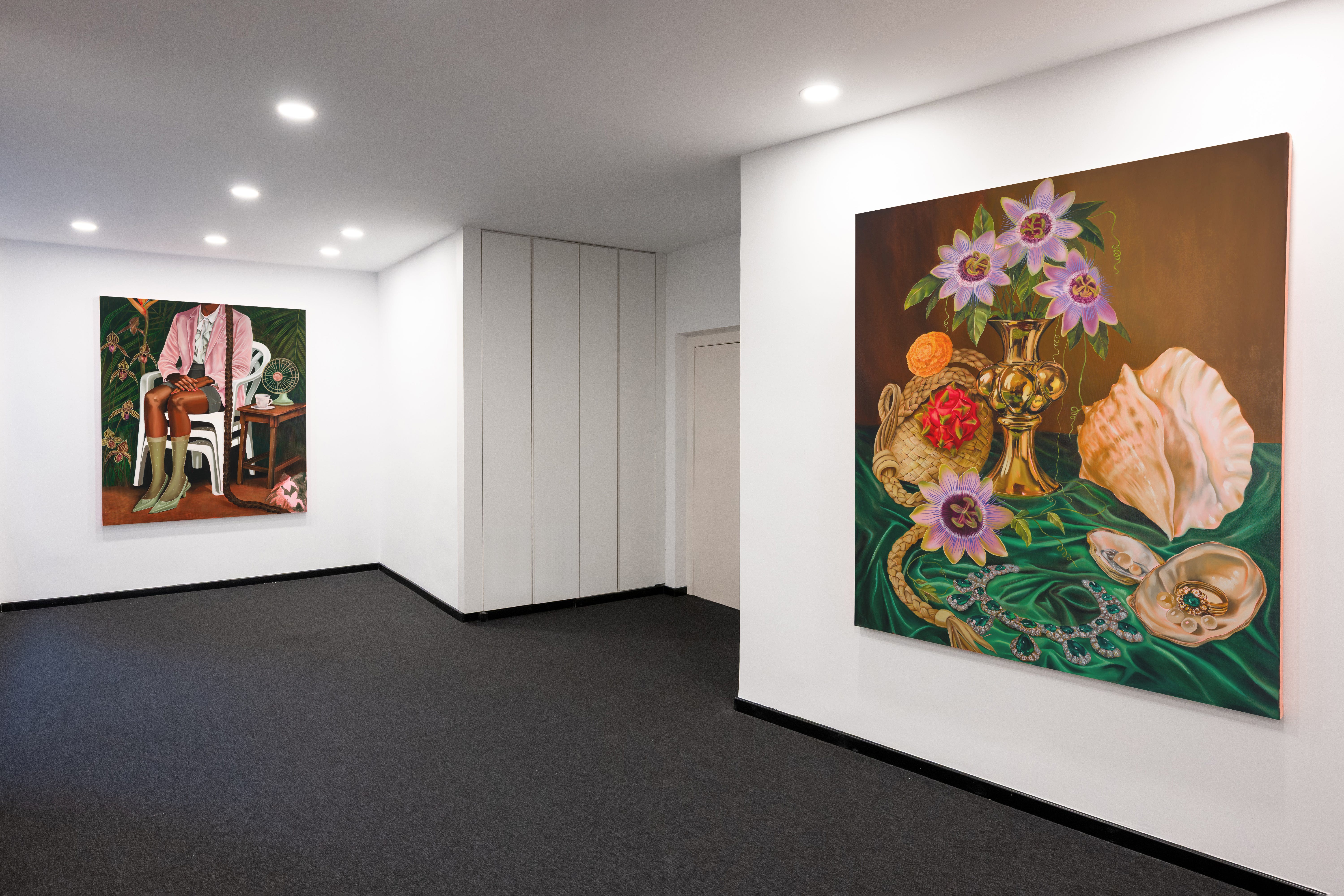
You often describe the gallery as more than a commercial space, but rather as a cultural and dynamic one. What activities or formats are you interested in activating?
GV: The gallery is an active cultural space—everyone who walks in can feel it, and that pleases me enormously. The market is an important dimension, of course, but people’s experience, the knowledge they can gain, and the joy of the space sustain its depth and are what nourish the viewer.
That’s why I’ve devised formats that expand the exhibition experience. For each show I develop reading lists linked to the artist’s conceptual universe, and believe me, people get involved. I’m interested in connecting contemporary artists’ practices with history, with theoretical references, and with broader contexts. An informed viewer looks better and collects with greater discernment.
I’ve let my imagination run free, and we’ve developed activities people don’t usually expect from galleries. For example, Kid’s Day has become a space for an early introduction to art, with an extraordinary and very lovely response. Art therapy opens up another register—more introspective and sensitive—which has been spectacular to witness.
I’m interested in curating different exhibitions, ones that open doors. Recently I opened a show centered on the collector, where five collections lent a special work and another piece by an artist they wanted to recommend. The objective was to make visible the role of collecting as a driving force within the artistic ecosystem. Among the five, I included the Ella Fontanals Cisneros collection, which meant a lot to me, since I greatly admire the consistent work Ella has done around Latin American art. In addition, we organized guided tours with the collectors themselves to strengthen community and generate dialogue.
“I’m interested in curating different exhibitions, ones that open doors.”
On social media you devote an important part to art education and to telling stories of women in the art world. What led you to do this, and why is it important for you to share those genealogies today?
GV: I decided to use social media as an extension of the gallery’s work and as a space for cultural education. There I share stories of women in the art world to bring visibility to contributions that were relegated or poorly contextualized, and to pay tribute to them.
There is also a sentimental dimension: as a Latina woman running a gallery in Madrid, I also do it because of the importance of role models, because I had them myself. I think of Sofía Ímber, who founded and directed the Museum of Contemporary Art of Caracas, or Betty Parsons, who opened daring spaces in New York for artists considered emerging at the time. We seek to provide context and genealogies that remind us that art is a collective construction, shaped by memory and historical processes.
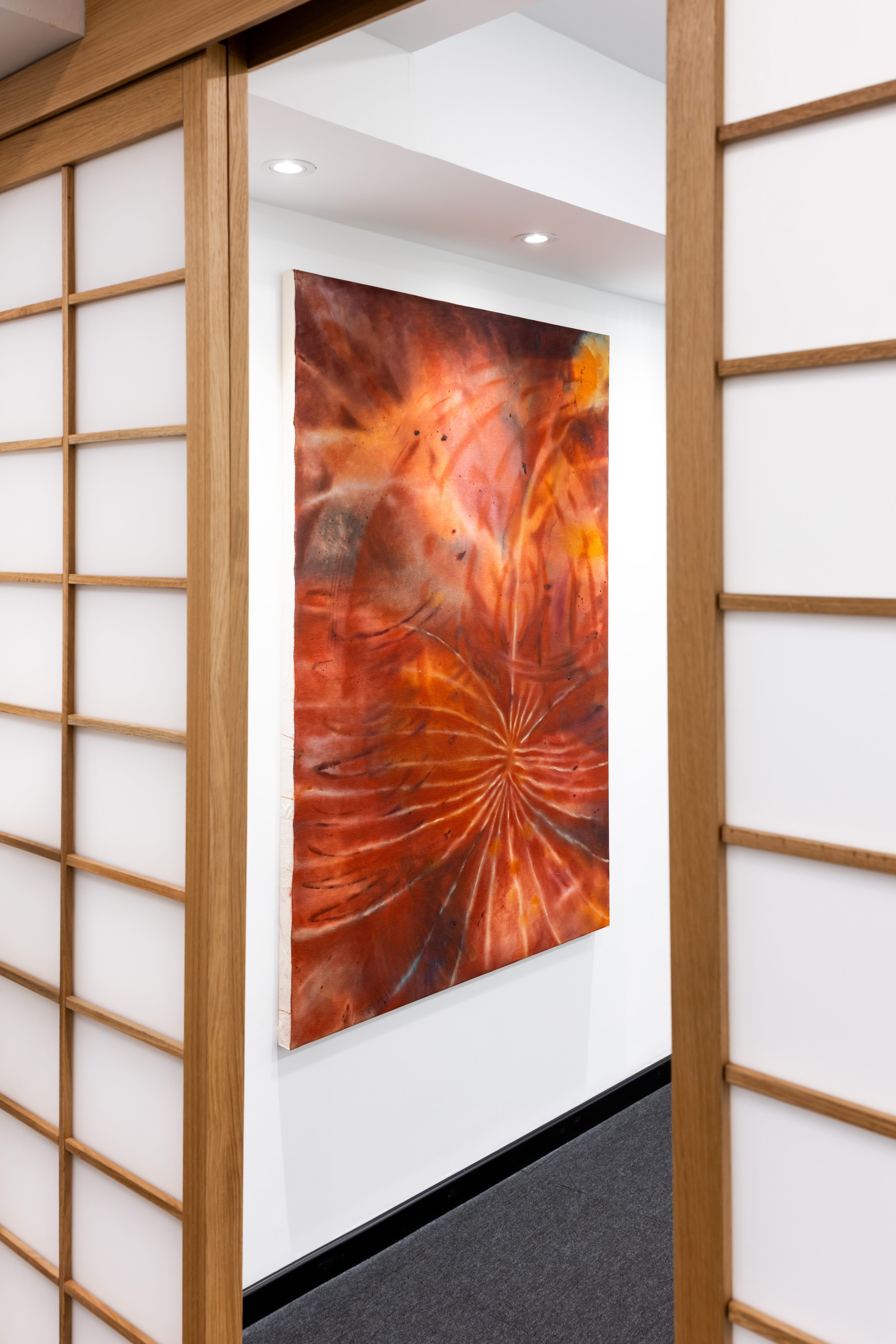
Looking ahead, how do you imagine the future of the gallery, and of the ecosystem in Madrid for Latin American art?
GV: I look to the future with excitement and ambition. There is a lot of work to be done. The ecosystem in Madrid has grown and is receptive, but the presence of young foreign artists and of Latin American art still needs greater institutional depth, greater continuity, and a more complex reading.
My objective is to keep building a solid platform that contributes to that process. I want the artists I work with to dialogue naturally with Spanish institutions, to enter public and private collections through recognition of their historical and conceptual value.
Latin America is a culturally rich region, with powerful aesthetic traditions, critical thinking, and contemporary production of enormous quality. I’m interested in that richness being understood, studied, and integrated into broader narratives. I imagine a gallery that is increasingly connected with institutions, with committed collectors, and with a curatorial program that continues breaking predictable aesthetic patterns. I want Madrid to enjoy more diverse curatorial proposals naturally and with pride. I know it takes time—I’m in no rush!
“Latin America is a culturally rich region ... I’m interested in that richness being understood, studied, and integrated into broader narratives.”
In addition to being a gallerist, you are also a collector. How has your own personal collection evolved?
GV: I started collecting in 2015 without realizing I was starting a collection. Over time I understood I was building an emotional map of my own life story. The collection has grown with me and reflects different stages, cities I’ve lived in, interests, moments of thought that have transformed me, and of course it is rooted in my origins.
Art has always helped me decipher the world. It allows me to understand what I sometimes can’t explain with words. Living with artworks has connected me with my essence, with my most intuitive and creative side. Each piece that enters the collection opens an inner dialogue, and also a dialogue between works, and over the years I’ve learned to curate my own collection: to think about how the pieces coexist, what tensions arise, what conversations are activated.
Today I understand it with greater maturity. A collector is, in the end, a custodian of art. It’s not about possessing, but about caring for, studying, and sustaining the works. That awareness has changed the way I acquire and live with the pieces. There is a strong presence of Latin American artists because they are part of my sensibility and my history. But the collection has also grown with artists whose vision of the world challenges me, beyond their origin. I’m drawn to works that question the gaze, that explore the body, identity, or perception from unexpected angles. There are threads that run through all those stages: color as vital energy, my passion for art history, my interest in materials and in the creative process. I also collect, without exception, every artist I have worked with throughout my professional career—one must be the first to believe in and support one’s artists.
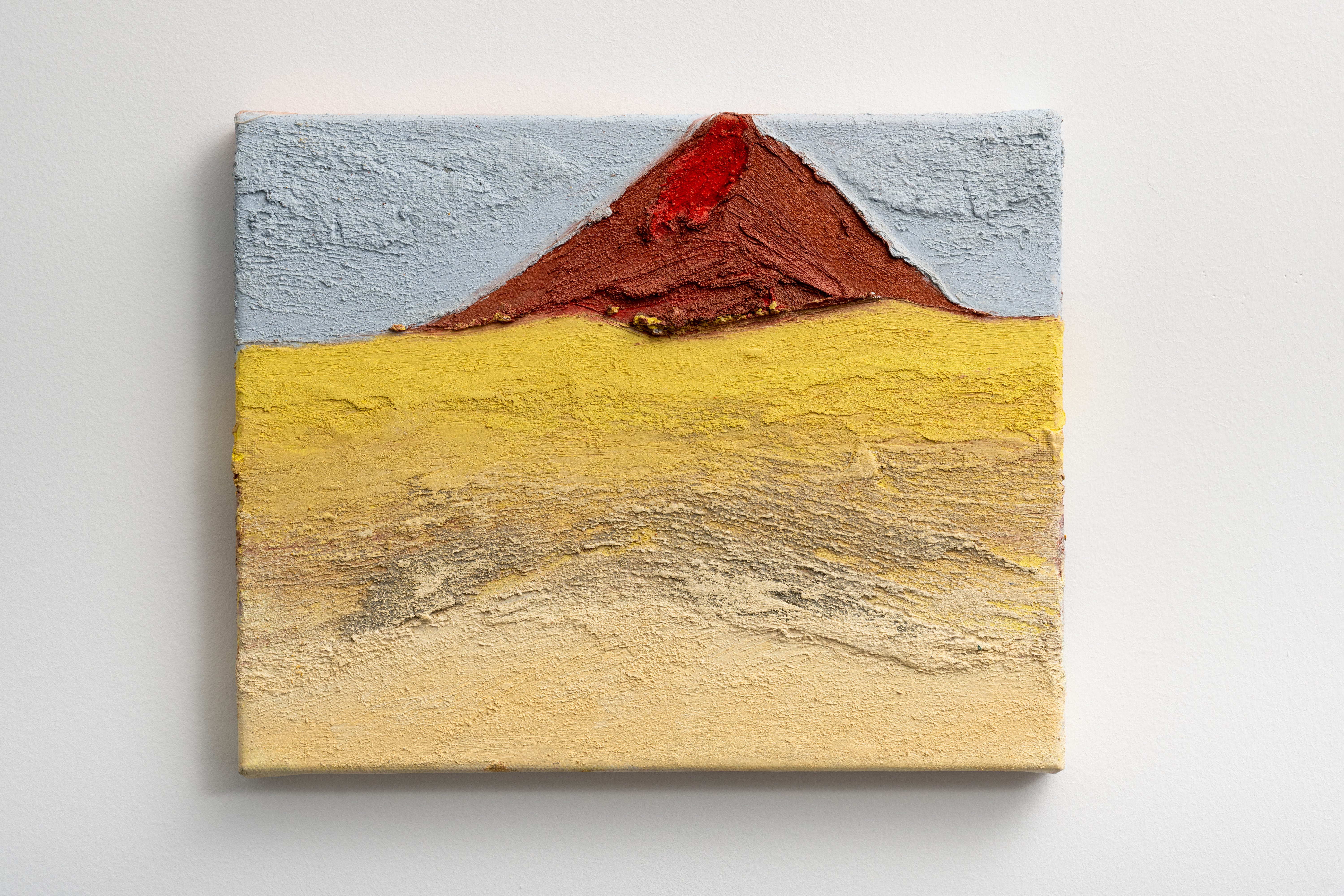
What would you recommend to someone who is interested in beginning to collect?
GV: The best advice I can give is to collect living artists who share the same space and time as you. Being able to meet the artist, support them, understand where the work comes from, and grow in parallel with them and their practice is something deeply special.
At the same time, I always say the most important thing is that the work speaks to you. You have to learn to isolate the noise of trends and fashions in order to hear clearly what truly moves you. One’s own criteria are built with study and time. A solid collection is an honest reflection of the person who builds it. When you follow only the market, you might have an impeccable collection; when you follow your own eye, you build a personal record that carries your essence.
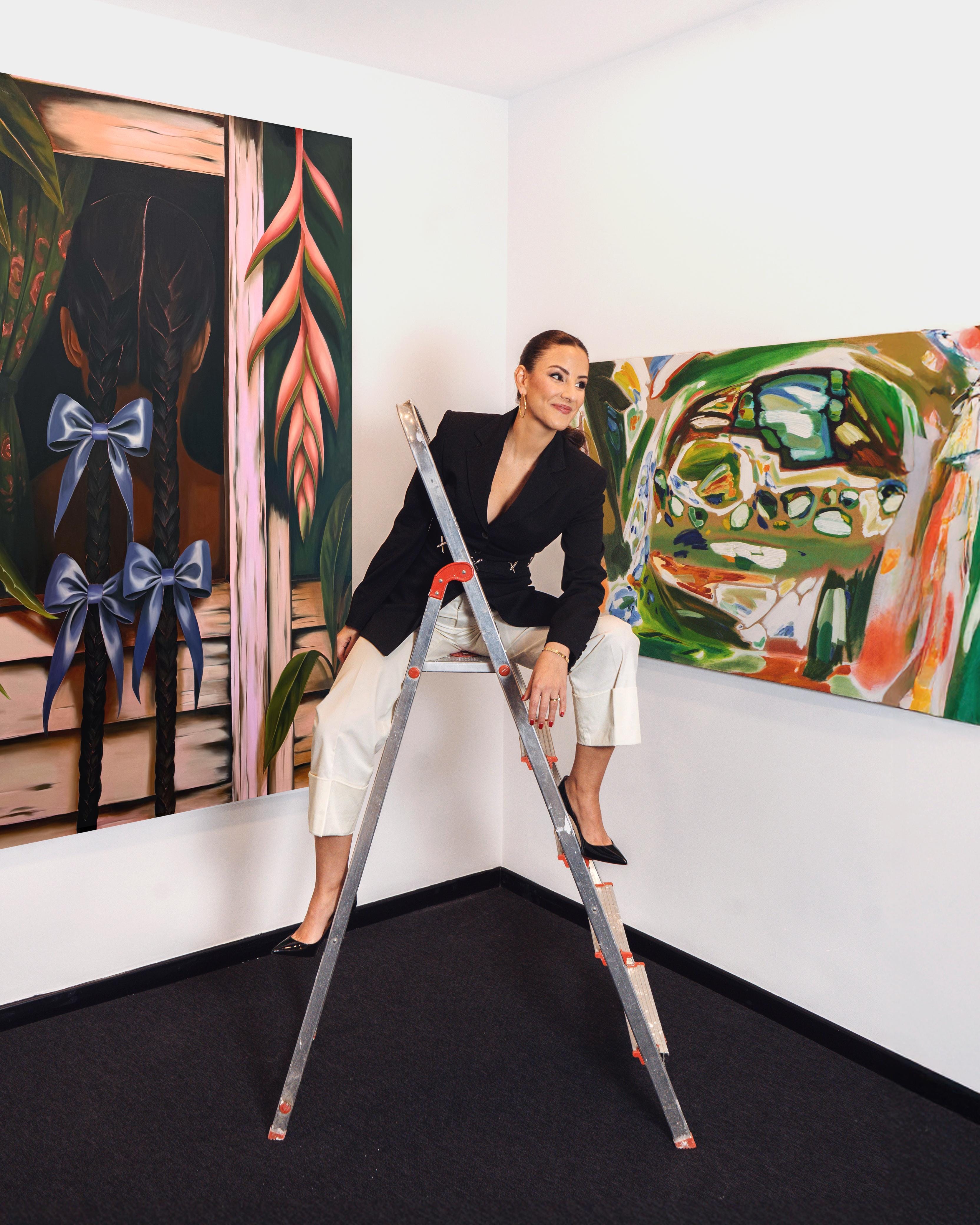
“The best advice I can give is to collect living artists who share the same space and time as you. Being able to meet the artist … and grow in parallel with them and their practice is something deeply special.”
To learn more about Gaby Vera, visit:
En conversación con: Gaby Vera
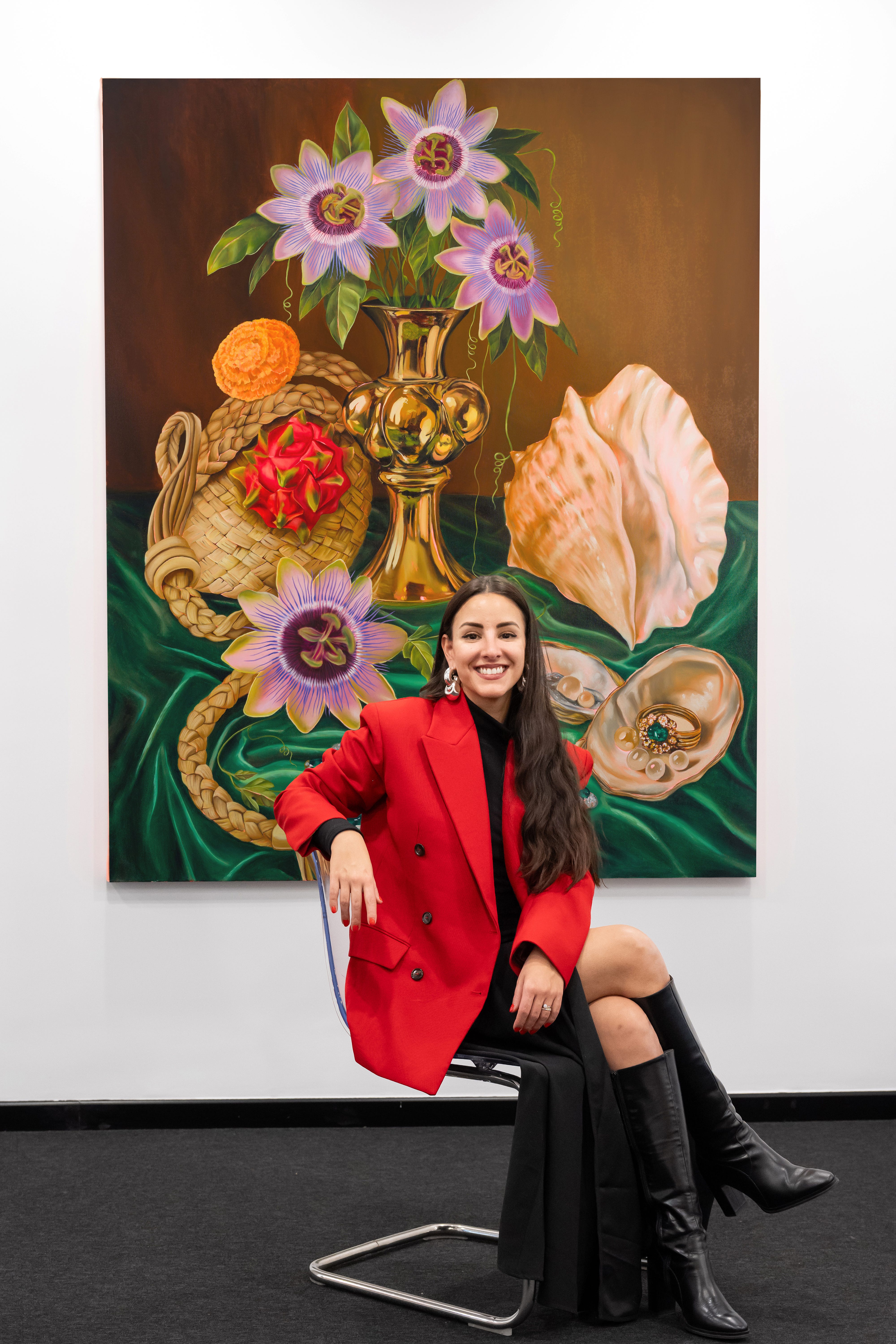
Gaby Vera es una galerista venezolana radicada en Madrid, donde dirige Galería Gaby Vera, una plataforma ambiciosa para el arte contemporáneo. Antes de abrir la galería, impulsó El Castillete, una plataforma y residencia artística que marcó su manera de construir comunidad y de acompañar de cerca a los artistas.
En esta entrevista, Gaby reflexiona sobre el camino que la llevó a crear la galería y a concebirla como un espacio cultural activo para el arte contemporáneo en España. Comparte sus expectativas de un diálogo institucional más sólido en Madrid, así como su mirada sobre el coleccionismo y los consejos que ofrece a quienes coleccionan.
Eres la primera y única galería de arte contemporáneo fundada en Madrid por una mujer venezolana. ¿Qué significó para ti ese hecho y cómo asumes esa responsabilidad?
GV: Ha sido muy enriquecedor en todos los sentidos. La verdad es que no abrí la galería pensando en ocupar un lugar simbólico; de hecho todavía me sorprende ser la primera, sobre todo considerando la presencia tan fuerte de mujeres venezolanas en Madrid. Eso también revela que aún existen espacios por abrir y estructuras por transformar.
Abrí mi espacio porque creo que el arte contemporáneo, y en especial el arte latinoamericano, merece una plataforma profesional y ambiciosa en España. Indudablemente, siento una responsabilidad íntima con mi país. Venezuela me dio la sensibilidad y la fuerza para emprender incluso en contextos inciertos. Llevar esta formación cultural y parte de nuestra esencia artística a Madrid es, para mí, una forma de continuidad y de presencia.
Esta responsabilidad la asumo con serenidad y con alegría. No me interesa ocupar el lugar de “la excepción”, sino contribuir a que cada vez seamos más. Mi meta es construir una estructura sólida, generar oportunidades reales para los artistas y sostener un discurso curatorial que dialogue de tú a tú con cualquier escena internacional. Ser mujer, ser venezolana, ser latina -todo esto- forma parte de mi identidad, pero lo que realmente sostiene el proyecto es la claridad conceptual, el compromiso y la capacidad de asumir riesgos con inteligencia. Ese equilibrio es el que me permite pensar a largo plazo.
“Abrí mi espacio porque creo que el arte contemporáneo, y en especial el arte latinoamericano, merece una plataforma profesional y ambiciosa en España.”
Antes de la apertura de tu galería, manejabas “El Castillete,” una plataforma y residencia artística en Madrid. ¿Qué fue lo que más te transformó de esa etapa y qué parte de esa energía intentas mantener viva en tu ahora galería?
GV: El Castillete es la semilla del proyecto actual. Este surgió como un espacio consciente de experimentación y pensamiento. Allí entendí cómo acompañar procesos creativos desde la cercanía, cómo generar comunidad y cómo sostener conversaciones profundas entre artistas, contexto y público.
El Castillete me ha dado algo fundamental: comprensión estructural del trabajo artístico. Aprendí a leer tiempos, a detectar potencia, a construir confianza a largo plazo. También entendí los límites de una plataforma independiente y la necesidad de crear una estructura más sólida que pudiera proyectar a los artistas hacia circuitos internacionales.
La apertura de la galería fue una evolución natural. Pasé de un modelo flexible y experimental a un programa curatorial definido, con estrategia de mercado, planificación anual y objetivos claros de posicionamiento. Hoy opero con mayor precisión pero con la misma esencia. Sin duda la energía vital en los dos proyectos recae en el compromiso y la relación cercana con los artistas, la vocación de acompañamiento y el amor por el arte en todas sus etapas.
Sueles describir la galería como algo más que un espacio comercial: un espacio cultural y dinámico. ¿Qué actividades o formatos te interesa activar?
GV: La galería es un espacio cultural activo, todos los que entran a la galería lo sienten, esto me complace enormemente. El mercado es una dimensión importante por supuesto, pero la experiencia de la gente, el conocimiento que puedan adquirir y la alegría del espacio sostienen su profundidad y es lo que nutre al espectador.
Por eso he ideado formatos que expanden la experiencia expositiva. Para cada muestra desarrollo listas de libros vinculadas al universo conceptual del artista y créeme que la gente se involucra. Me interesa conectar la práctica de los artistas contemporáneos con la historia, con referencias teóricas y con contextos más amplios. El espectador informado mira mejor y colecciona con mayor criterio.
He dado rienda suelta a mi imaginación y hemos desarrollado actividades que la gente no suele esperar de las galerías. Por ejemplo Kid’s Day se ha convertido en un espacio de introducción temprano al arte, con una respuesta extraordinaria y muy linda. El arte-terapia abre otro registro, más introspectivo y sensible que ha sido espectacular presenciar.
Me interesa curar exhibiciones diferentes y que abran puertas. Recientemente abrí una muestra centrada en el coleccionista, donde cinco colecciones prestaron una obra especial y otra de un artista que quisieran recomendar. El objetivo fue visibilizar el rol del coleccionismo como motor del ecosistema artístico. Entre las cinco, conté con la colección de Ella Fontanals Cisneros que me llenó mucho, ya que admiro mucho el trabajo constante que Ella ha realizado en torno al arte Latinoamericano. Además, organizamos recorridos guiados con los propios coleccionistas para fortalecer comunidad y generar diálogos.
“Me interesa curar exhibiciones diferentes y que abran puertas.”
En redes dedicas una parte importante a la educación artística y a contar historias de mujeres en el mundo del arte. ¿Qué te llevo a hacerlo y por qué es importante para ti contar esas genealogías hoy?
GV: Decidí usar las redes sociales como una extensión del trabajo de la galería y como espacio de formación cultural. Allí comparto historias de mujeres del mundo del arte para visibilizar aportes que fueron relegados o mal contextualizados y rendirles homenaje.
También hay una dimensión sentimental, como mujer latina dirigiendo una galería en Madrid, también lo hago por la importancia de los referentes, porque yo misma los tuve. Pienso en Sofía Ímber, quien fundó y dirigió el Museo de Arte Contemporáneo de Caracas, o en Betty Parsons que abrió espacios arriesgados en Nueva York para artistas considerados emergentes en la época. Buscamos aportar contexto y genealogías que recuerden que el arte es una construcción colectiva, atravesada por memoria y procesos históricos.
Si miras hacia adelante, ¿cómo imaginas el futuro de la galería, y del ecosistema en Madrid para el arte latinoamericano?
GV: Miro el futuro con ilusión y ambición. Hay mucho trabajo por hacer. El ecosistema en Madrid ha crecido y es receptivo, pero la presencia de artistas jóvenes extranjeros y del arte latinoamericano todavía necesita mayor profundidad institucional, mayor continuidad y una lectura más compleja.
Mi objetivo es seguir construyendo una plataforma sólida que contribuya a ese proceso. Quiero que los artistas con los que trabajo dialoguen de manera natural con instituciones españolas, que entren en colecciones públicas y privadas desde el reconocimiento de su valor histórico y conceptual.
América Latina es una región culturalmente rica, con tradiciones estéticas potentes, pensamiento crítico y una producción contemporánea de enorme calidad. Me interesa que esa riqueza se entienda, que se estudie, que se integre en narrativas más amplias.
Imagino una galería cada vez más articulada con instituciones, con coleccionistas comprometidos y con un programa curatorial que continúe rompiendo patrones estéticos previsibles. Quiero que en Madrid se disfrute de propuestas curatoriales más diversas con naturalidad y con orgullo. Sé que lleva tiempo, ¡no tengo apuro!
“América Latina es una región culturalmente rica … Me interesa que esa riqueza se entienda, que se estudie, que se integre en narrativas más amplias.”
Ademas de galerista, también eres coleccionista. ¿Cómo ha ido evolucionado tu propia colección personal?
GV: Empecé a coleccionar en 2015 sin darme cuenta que estaba empezando una colección. Con el tiempo entendí que estaba construyendo un mapa emocional de la propia historia de mi vida. La colección ha crecido conmigo y refleja distintas etapas, ciudades en las que he vivido, intereses, momentos de pensamiento que me han transformado y por supuesto está enraizada con mis orígenes.
El arte siempre me ha ayudado a descifrar el mundo. Me permite entender lo que a veces no sé explicar con palabras. Vivir con obras me ha conectado con mi esencia, con mi parte más intuitiva y creativa. Cada pieza que entra en la colección abre un diálogo interior y también un diálogo entre obras y con los años he aprendido a curar mi propia colección, a pensar cómo conviven las piezas, qué tensiones se generan, qué conversaciones se activan.
Hoy la entiendo con mayor madurez. Un coleccionista es, en el fondo, un custodio del arte. No se trata de poseer, sino de cuidar, estudiar y sostener las obras. Esa conciencia ha cambiado mi manera de adquirir y de convivir con las piezas.
Hay una presencia fuerte de artistas latinoamericanos porque forman parte de mi sensibilidad y de mi historia. Pero la colección también ha crecido con artistas cuya visión del mundo me desafía, más allá de su origen. Me atraen obras que cuestionan la mirada, que exploran el cuerpo, la identidad o la percepción desde ángulos inesperados. Hay hilos que atraviesan todas esas etapas. El color como energía vital, mi pasión por la historia del arte, mi interés por los materiales y por el proceso creativo. También colecciono sin excepción a todos los artistas con los que he trabajado a lo largo de mi carrera profesional, uno debe ser el primero en creer y apoyar a sus artistas.
¿Qué le recomendarías a alguien que tiene interés en comenzar a coleccionar?
GV: El mejor consejo que tengo para dar es coleccionar artistas vivos que compartan el mismo espacio y tiempo que tú. Conocer al artista, apoyarlo, comprender de dónde surge la obra y crecer en paralelo con él y con su práctica es algo profundamente especial.
Al mismo tiempo, siempre digo que lo más importante es que la obra te hable a ti. Hay que aprender a aislar el ruido de las tendencias y las modas para escuchar con claridad lo que realmente te mueve. El criterio propio se construye con estudio y tiempo. Una colección sólida es un reflejo honesto de quien la construye. Cuando sigues únicamente el mercado, podrías tener una colección impecable; cuando sigues tu mirada, construyes un registro personal que tiene tu esencia.
“El mejor consejo que tengo para dar es coleccionar artistas vivos que compartan el mismo espacio y tiempo que tú. Conocer al artista … y crecer en paralelo con él y con su práctica es algo profundamente especial.”
Para saber más sobre Gaby Vera, visita: