


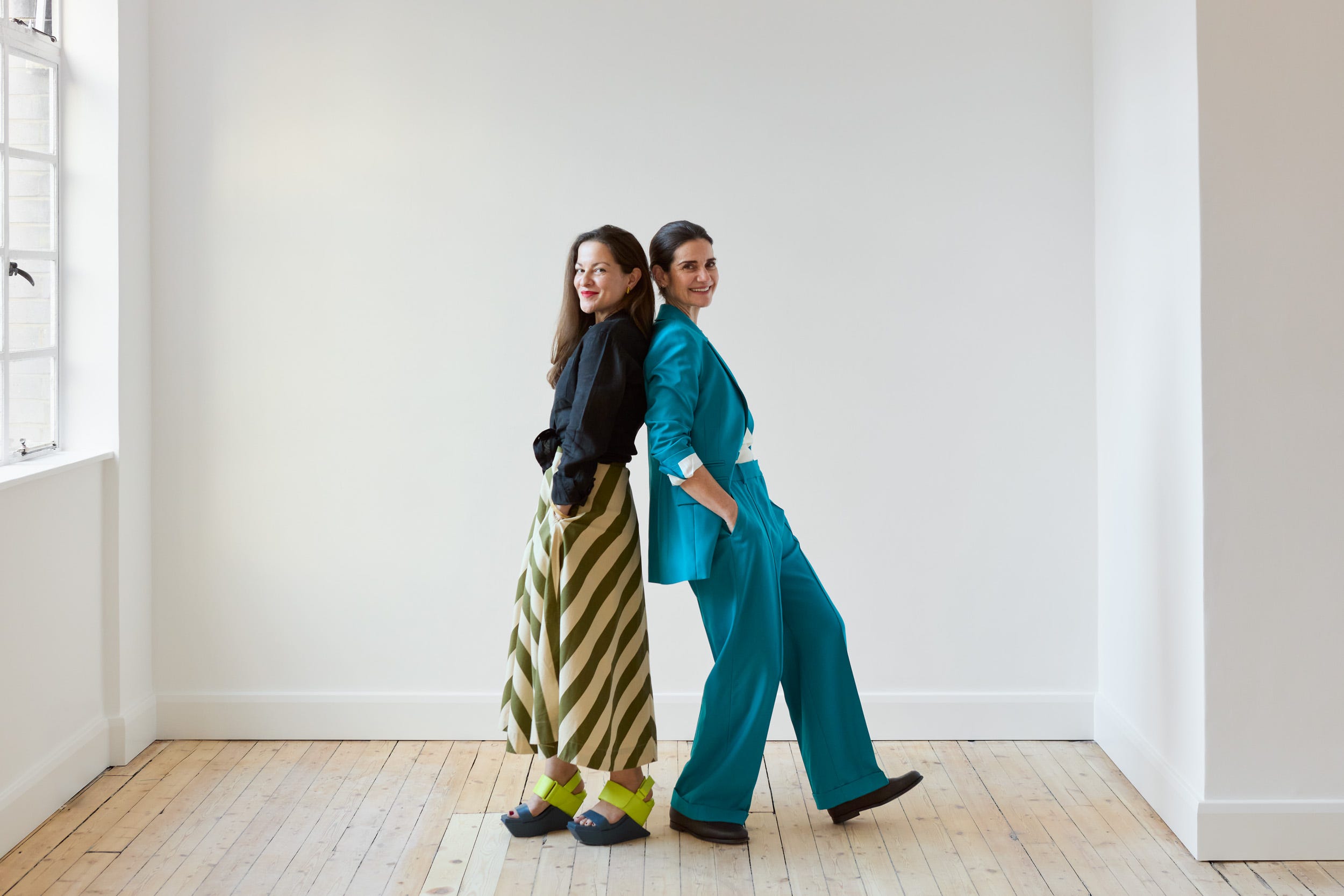
This October, Antesala opens in London, a new permanent exhibition space and curatorial platform dedicated to Latin American artists.
Founded by Brazilian collector and patron Flavia Nespatti, together with art historian and advisor Laura González as Senior Director, the project will occupy a space in Fitzrovia from which it will develop exhibitions in collaboration with artists and galleries, alongside advisory work and public programming. Its programme will include four to five exhibitions a year, with a clear intention: to foster sustained exchange between London’s art scene and the different voices shaping art from the region.
In conversation with Art in Latin America, we spoke about how Antesala came into being, why they chose to move away from the traditional gallery model, the role collecting plays within the project, and what it means to build a Latin American space in London without turning it into a niche.
Support Art in Latin America. Unlock exclusive benefits.
How did Antesala come about, and what led you to develop the project together?
LG: Flavia and I both studied at The Courtauld and completed the same master’s programme, although ten years apart. Our first connection was a professor there who suggested that we should meet. Some time passed, and we realised we had several friends in common. We eventually met at ARCO in Madrid.
From there, we became friends and, over the years, the conversation continued to grow. Last year, we felt it was the right moment to do something together.
FN: I was also following Laura professionally. She has a very interesting career and an excellent reputation as an art advisor.
From my side, I had been thinking for many years about creating a project in London connected to Latin America, but I could never quite find the right format. At one point Laura came to my house, and I felt she was the perfect person to develop it with.
What began as the idea of a physical space became something much more complex. We have spent more than a year thinking about what Antesala could be and how we wanted it to function.
LG: The physical space was always fundamental. We wanted a place in London from which we could complicate the perspective of what Latin American art is, what it means to be from Latin America, and the different ways of relating to the region.
From the beginning, it was also a very collaborative idea: a space where many different people could come together and where there would be more freedom to experiment. We wanted to be able to offer a different kind of opportunity.
“We wanted a place in London from which we could complicate the perspective of what Latin American art is, what it means to be from Latin America, and the different ways of relating to the region.”
What led you to embrace a hybrid model for Antesala?
LG: We wanted to reduce barriers to entry so that a wider range of galleries and artists could exhibit, gain visibility, and build connections in London.
The hybrid aspect developed quite organically. We are very aware of what is happening in the art market at the moment, not only in Latin America. Many models are under enormous pressure, and starting a gallery today within the traditional format is extremely difficult.
That does not mean that model is not important. Quite the opposite. But for it to continue functioning, new structures also need to emerge around it.
FN: Our model is designed to support galleries. We understand that galleries need to continue to exist, and that commercial support for artists is essential.
We did not want to become just another gallery, but rather to create something that could work with those that already exist and expand on what they do.
There is also our public programme, which is very important to us, both from an educational and intellectual perspective. And there is the patronage side, which I have been involved with personally for a long time and which, for me, fits very naturally within the project.
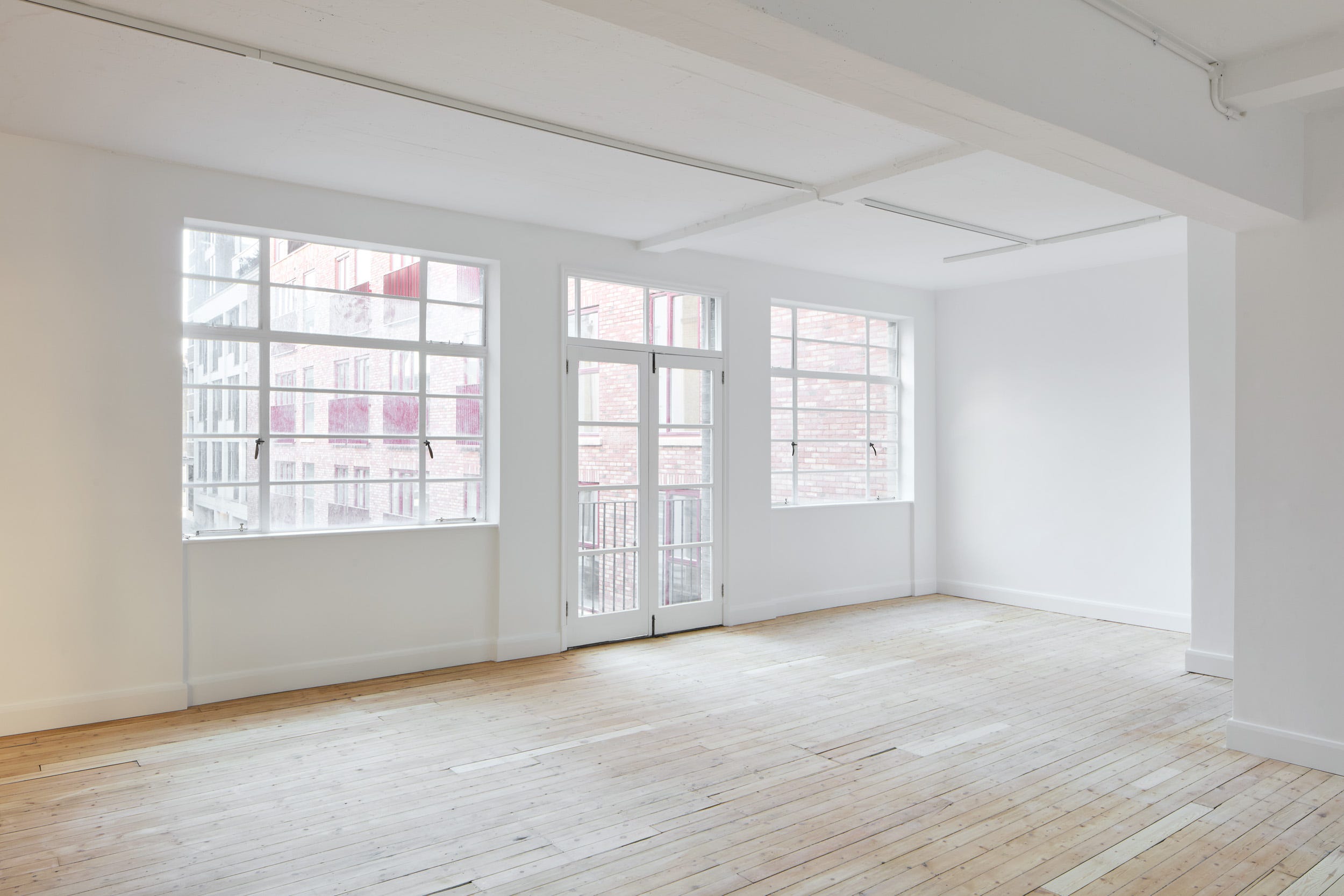
Flavia, how has your experience as a collector influenced the way you think about exhibitions and, at the same time, supporting artists?
FN: My collection is very personal. For me, it is very important to understand an artist’s trajectory, but also their practice. Having a space now where we can present that and support more artists feels like a natural next step.
And I think Antesala — even the name has something to do with this — is about being able to share those dialogues, to open doors. To give a wider group of people access to all of those experiences I have had with artists, galleries, and curators.
I have had incredible experiences that have changed my life. Perhaps this project is a continuation of that. A form of support.
“Antesala — even the name has something to do with this — is about being able to share those dialogues, to open doors. To give a wider group of people access to all of those experiences I have had with artists, galleries, and curators.”
Public programming is an important part of the project. What kind of audience do you hope to reach beyond the usual art-world circuit?
LG: A bit of everything, really. Over the summer we held a few small, very informal previews to start bringing people into the space, and there was a real mix: collectors, artists, professors, journalists, curators, children.
The programme also allows us to engage with a more academic audience that is not necessarily connected to the commercial sphere. We want to collaborate with many different people. There will be conversations between artists, curators, and thinkers around very specific subjects. I am very interested in that specificity: in a conversation really being about something.
FN: At the same time, we want the approach to remain quite open. Not everything has to be connected to a Latin American artist or a Latin American subject. It can be specific, but also expansive.
We do not want to create a divisive niche. We want people to come because they are curious. The unexpected is also important: that someone comes back because they do not know exactly what they are going to find. That is also where the idea of playing with expectations around what Latin American art is supposed to be when it is presented outside Latin America comes in.
“We do not want to create a divisive niche. We want people to come because they are curious… because they do not know exactly what they are going to find. That is also where the idea of playing with expectations around what Latin American art is supposed to be when it is presented outside Latin America comes in.”
What would you like Antesala to show those encountering artists from the region for the first time?
LG: I think we are interested in questioning the idea that Latin American art can be understood through overly neat narratives or closed categories. For someone who is only beginning to engage with the region, one of the biggest surprises may be precisely its conceptual diversity.

How do you imagine Antesala evolving over the next five years? What would success mean to you?
LG: For me, success would be longevity.
FN: Yes, being able to sustain the project over time, both financially and in terms of the programme. If, in five years, we can continue developing something ambitious and complex while also achieving a real cultural impact, that would be a major success. We want institutions and curators to find in Antesala a place where they can discover artists, ideas, and practices that they might not encounter otherwise.
LG: And I think London is the right place to develop something like this. There is a real sense of curiosity, not only in the city but across England more broadly. From the beginning, we asked ourselves: is London the best place for us? And I think it has proved to be the right one.
“We want institutions and curators to find in Antesala a place where they can discover artists, ideas, and practices that they might not encounter otherwise.”
To learn more about Antesala, visit:
Antesala está construyendo un nuevo espacio para el arte de América Latina en Londres
Este octubre abre en Londres Antesala, un nuevo espacio permanente de exposiciones y plataforma curatorial dedicado a artistas de América Latina.
Fundado por la coleccionista y patrona brasileña Flavia Nespatti, con la historiadora del arte y asesora Laura González como directora, el proyecto ocupará un espacio en Fitzrovia desde el que desarrollará exposiciones en colaboración con artistas y galerías, además de asesoría y programación pública. Su programa contempla entre cuatro y cinco exposiciones al año con una voluntad clara: generar un intercambio sostenido entre la escena londinense y las distintas voces que conforman el arte de la región.
En conversación con Art in Latin America, hablamos sobre cómo nació Antesala, por qué decidieron alejarse del modelo tradicional de galería, el papel que ocupa el coleccionismo dentro del proyecto y qué significa construir un espacio latinoamericano en Londres sin convertirlo en un nicho.
Apoya a Art in Latin America. Accede a beneficios exclusivos.
¿Cómo surgió Antesala y qué las llevó a desarrollar el proyecto juntas?
LG: Flavia y yo estudiamos en The Courtauld e hicimos el mismo programa de maestría, aunque con diez años de diferencia. Nuestra primera conexión fue una profesora de ahí, que sugirió que deberíamos conocernos. Pasó un tiempo y descubrimos que teníamos varios amigos en común. Al final nos conocimos en ARCO, en Madrid.
A partir de ahí nos hicimos amigas y, con los años, la conversación fue creciendo. El año pasado sentimos que era el momento de hacer algo juntas.
FN: Yo también seguía a Laura profesionalmente. Tiene una carrera muy interesante y una muy buena reputación como consultora de arte.
Por mi parte, llevaba muchos años pensando que quería hacer un proyecto en Londres relacionado con Latinoamérica, pero no encontraba el formato adecuado. En un momento Laura vino a mi casa y sentí que era la persona perfecta para desarrollarlo conmigo.
Lo que empezó como la idea de un espacio físico se volvió algo mucho más complejo. Llevamos más de un año pensando qué podía ser Antesala y cómo queríamos que funcionara.
LG: El espacio físico siempre fue fundamental. Queríamos un lugar en Londres desde el que pudiéramos complicar la perspectiva de lo que es arte latinoamericano, de lo que significa ser de Latinoamérica y de las distintas formas de relacionarse con la región.
Desde el principio también fue una idea muy colaborativa: un espacio donde pudiera venir mucha gente y donde hubiera más libertad para experimentar. Queríamos poder ofrecer otro tipo de oportunidad.
“Queríamos un lugar en Londres desde el que pudiéramos complicar la perspectiva de lo que es arte latinoamericano, de lo que significa ser de Latinoamérica y de las distintas formas de relacionarse con la región.”
¿Qué las llevó a apostar por un modelo híbrido para Antesala?
LG: Queríamos reducir las barreras de entrada para que más tipos de galerías y artistas pudieran exhibir, darse a conocer y desarrollar conexiones en Londres.
La parte híbrida surgió de forma bastante orgánica. Somos muy conscientes de lo que está pasando actualmente en el mercado del arte, no solo en Latinoamérica. Muchos modelos están bajo una presión enorme y empezar hoy una galería siguiendo el formato tradicional es muy difícil.
Eso no quiere decir que ese modelo no sea importante. Todo lo contrario. Pero para que continúe funcionando también tienen que aparecer nuevas estructuras alrededor.
FN: Nuestro modelo está pensado para apoyar a las galerías. Entendemos que la galería tiene que seguir existiendo y que el apoyo comercial al artista es esencial.
No queríamos convertirnos en una galería más, sino crear algo que pudiera trabajar con las que ya existen y ampliar lo que hacen.
También está nuestro programa público, que para nosotras es muy importante, tanto desde un punto de vista educativo como intelectual. Y está la parte del patronazgo, que llevo haciendo personalmente desde hace mucho tiempo y que para mí encaja de manera natural con el proyecto.
Flavia, ¿cómo ha influido tu experiencia como coleccionista en la manera en que piensas las exposiciones y, al mismo tiempo, el apoyo a los artistas?
FN: Mi colección es muy personal. Para mí es muy importante entender la trayectoria de un artista, pero también su práctica. Tener ahora un espacio donde podamos mostrar eso y apoyar a más artistas me parece un paso natural.
Y creo que Antesala —incluso el nombre tiene algo que ver con esto— consiste en poder compartir esos diálogos, en abrir puertas. Dar acceso a un grupo más grande de personas a todas esas experiencias que yo he tenido con artistas, galerías y también curadores.
He tenido experiencias increíbles que me han cambiado la vida. Quizás este proyecto es una continuación de eso. Una forma de apoyo.
“Antesala —incluso el nombre tiene algo que ver con esto— consiste en poder compartir esos diálogos, en abrir puertas. Dar acceso a un grupo más grande de personas a todas esas experiencias que yo he tenido con artistas, galerías y también curadores.”
La programación pública es una parte importante del proyecto. ¿A qué tipo de público quieren llegar más allá del circuito habitual del arte?
LG: Un poco de todo, verdaderamente. En verano hicimos unos previews pequeños y muy casuales para empezar a traer gente al espacio y había de todo: coleccionistas, artistas, profesores, periodistas, curadores, niños.
El programa nos permite también acercarnos a un público más académico, que no esté necesariamente vinculado al ámbito comercial. Queremos colaborar con mucha gente. Habrá conversaciones entre artistas, curadores y pensadores alrededor de temas muy específicos. A mí me interesa mucho esa especificidad: que una conversación sea realmente sobre algo.
FN: Pero al mismo tiempo queremos que el enfoque sea bastante abierto. No todo tiene que estar relacionado con un artista latinoamericano o con un tema latinoamericano. Puede ser específico pero también expansivo.
No queremos crear un nicho divisivo. Queremos que la gente venga porque tiene curiosidad. Lo inesperado también es importante. Que vuelva porque no sabe exactamente qué va a encontrar. Ahí también entra esta idea de jugar con las expectativas sobre qué debería ser el arte latinoamericano cuando se presenta fuera de Latinoamérica.
“No queremos crear un nicho divisivo. Queremos que la gente venga porque tiene curiosidad... que vuelva porque no sabe exactamente qué va a encontrar. Ahí también entra esta idea de jugar con las expectativas sobre qué debería ser el arte latinoamericano cuando se presenta fuera de Latinoamérica.”
¿Qué les gustaría que Antesala revelara a quienes se acercan por primera vez a artistas de la región?
LG: Creo que nos interesa cuestionar la idea de que el arte latinoamericano puede entenderse a través de narrativas demasiado claras o categorías cerradas. Para alguien que recién empieza a acercarse a la región, una de las mayores sorpresas puede ser justamente su diversidad conceptual.
¿Cómo imaginan la evolución de Antesala en los próximos cinco años? ¿Qué significaría el éxito para ustedes?
LG: Para mí, el éxito estaría en la sostenibilidad.
FN: Sí, en poder mantener el proyecto en el tiempo, tanto financieramente como a nivel de programa. Si dentro de cinco años podemos seguir desarrollando una propuesta ambiciosa y compleja, y al mismo tiempo lograr un impacto cultural real, eso sería un gran éxito. Nos interesa que las instituciones y los curadores encuentren en Antesala un lugar donde descubrir artistas, ideas y prácticas que quizás no encontrarían de otra manera.
LG: Y creo que Londres es el lugar adecuado para desarrollar algo así. Hay una curiosidad muy presente, no solo en la ciudad sino en Inglaterra en general. Desde el inicio nos preguntamos: ¿es Londres el contexto correcto? Y creo que, en ese sentido, es el sitio ideal.
“Nos interesa que las instituciones y los curadores encuentren en Antesala un lugar donde descubrir artistas, ideas y prácticas que quizás no encontrarían de otra manera.”
Para saber más sobre Antesala, visita: